Antigonick


Antigonick

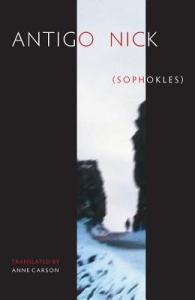
My friend and I saw this play performed in Chicago (FYI – amazing!), so when I saw a nice, affordable copy from New Directions (the publishing company that singlehandedly keeps Modernist poetry in print), I had to pick it up.

Reading it, I got a much better understanding of some of the rhetorical choices of the performance. Anne Carson wrote this play very much as poetry – as a long narrative poem, with carefully chosen line breaks. I could actually hear bits of the performance in my head and see how closely they followed and used the script.

Also, my waning faith in Anne Carson was renewed by Antigonick… again.

Old Man’s War


Old Man's War

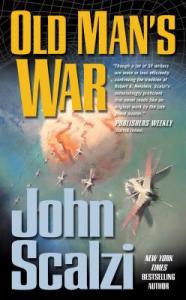
Honestly, even though author John Scalzi has become kind of a big deal in science fiction, I hadn’t intended to read this – and wouldn’t have had it not been available for $1.99 or some such amount.

It’s a solid read, with an old school, pulp feel (only with better writing and a pleasing lack of obvious sexism/racism) and I enjoyed it. The action sequences were few, but decent. It’s very much like those dusty books from the 40a, 50s, and 60s that I love discovering in used bookstores. But, let’s be honest. I’d rather read one of those, which offer an esoteric thrill of discovery/archaeology, if nothing else.

The premise of Old Man’s War is interesting, though underdeveloped (people on Earth are kind of trapped there unless, at age 75, they join a military for the colonies; except for the whole joining the military, that aspect of it reminded me of a series of Asimov books where tall, beautiful, intelligent ‘spacers’ who colonized the stars look down on the poor folks on Earth who are not allowed to migrate because we’re so icky. Asimov, however, went into the sociology of all this. Scalzi, at least here, does not.

I’ll read the sequel if it is cheap or it is at my local library branch.

Midcult


I read the (relatively) recent novel, The Golem and the Djinni while I was in Thailand.

It’s got fantasy elements – I mean, c’mon, it’s got a golem and a djinni (and also an embittered, somewhat inept, yet also villainous, reincarnating wizard; but that’s neither here nor there) – but it’s not really intended to be a fantasy novel. Or it is, but like Atwood, it writes genre fiction that is, or is intended to be ‘literary’ fiction.

Ok, but that does that even mean (though I do love Atwood)?

I liked the book, but what did I take from it? Not much.

After thinking about it, I have a revelation. I suddenly understood Dwight MacDonald’s concept of ‘midcult.’ It’s not great fiction. It doesn’t come close. It’s intended to make us feel good for not reading trash and reading something that maybe we can pretend is great, but which is really just middlebrow ‘meh.’

Also, for a moment, I kept getting him confused with McLuhan and I remembered that scene from Annie Hall which has to be my favorite scene from a movie not involving Harrison Ford or Godzilla.

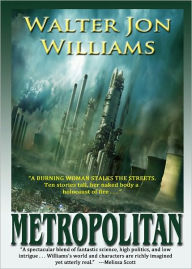
‘Metropolitan’ By Walter Jon Williams


2940014520690_p0_v1_s192x300

Metropolitan opens rather like a cyberpunk novel and maintains that veneer, but really, it’s a fantasy novel in disguise. ‘Magic’ is named ‘plasm’ and is generated by natural forces, but despite the science-y sounding name ‘plasm,’ and some of the science-y trappings about its use (copper grips and wires and batteries), it’s just another name for magic.

The main character, Aiah, is pretty well done. A somewhat desperate woman, whose risen as high as an ethnic minority (she is part of a darker skinned immigrant group) can in her ‘metropolis’ (the world is a single city, by the way, so place states are really city-states; also the earth is covered in a silvery shield and no one knows what is beyond, except that long ago, some ‘Ascended’ went up there and presumably locked the rest of folks in). She’s smart and reckless and you do fear for her in her desperation and recklessness. The titular Metropolitan, a sort of king in exile from another metropolis, Constantine, is decently done as a larger than life, charismatic figure. A good guy, but also willing to sacrifice a lot of lives to accomplish nebulous goals. Certainly, his appeal gets across. Also, he’s black, so credit to Williams for making the two main characters people of color and the lead a woman of color.

I enjoyed, but didn’t love it. And I probably won’t read the sequel. If you see it in a used bookstore, go for it, but that’s the most recommendation I’m giving.

On another note, I read this on my Nook app on my phone – mostly while stuck in Bangkok’s snarling, scrotum tightening traffic (I was not driving; there is a whole list of painful and possible fatal thing that I would do before driving in Bangkok, including taking career advice from a box of broken glass that has hated me since I was two and three quarters years old).

‘The Intellectuals & The Masses: Pride And Prejudice Among The Literary Intelligentsia: 1880 – 1939’ By John Carey


9780897335072_p0_v2_s192x300

The book got better.

I was immediately disappointed when I started reading, but it improved. Begun as a series of lectures, it still has too much tendentious point-making – like a doctoral these or, well… a lecture – but it turned into something interesting in spite of itself.

Some wonderful deep research into a series of literary figures (Wyndham Lewis, T.S. Eliot, George Orwell and others) to capture a sort of deep seated disgust with the masses (or the proles or whatever you want to call ’em; Carey makes a good point that it’s a fiction they’re appalled by and what they thought of as the masses never existed).

But his larger thesis, which is basically that works like The Wasteland (and Modernism, in general) were written complicated as a gate to keep out the unwashed was not well proven (and really, he didn’t even seem to be trying to prove it; he just said and moved on to show that some of these intellectuals were kind of morally ‘icky’).


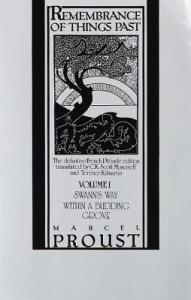
‘Swann’s Way’


9780394711829

First of all, let me say that I’m perfectly happy to continue calling it Remembrance of Things Past, even if In Seach of Lost Time or what not is more admirable, desirable, and reflective of the French. I like the elevated, Shakespearean, Miltonian, Blakean language. For a similar reason, I’m also happy to restrict myself to Moncrieff’s more ornate prose over supposedly more accurate, informal translations, just like I, a Catholic, choose to read the heathen King James Bible (because it reads better; also, I did speak to a priest and his general response was something along the lines of ‘I’m just glad you’re reading the Bible’).

After noting that superficial resemblances between Powell’s Dance to the Music of Time and Remembrance of Things Past, it was inevitable that I should lug the oversized paperback containing the first two books along with me on a trip to Thailand and take a stab at re-reading them. For me, visiting new and different places is a great opportunity to read books in new and different places. Can’t properly say, though, that being in Thailand significantly altered my reading of Proust, though.

I did, however, see clearly that really, it is only scope of time that unites Powell and Proust. Powell is more propulsive. One feels history pass. Meanwhile, Proust arguably wrote and seven volume epic about a man having trouble falling asleep. Which isn’t to say that it’s not riveting, because it is. It’s more like Joyce or Nabokov. You have to let yourself enter into an immersive state to enter the heightened, prosified world.

While re-reading the great section, Swann in Love, I was struck by how Swann’s affection for Odette was tied to relating her appearance to some classical sculptures and thought of a story from Gautier’s Fantoms who really only loves through art (and who is seduced by a Roman antiquity come to life). Certainly, I got a much better sense of the strange flow of Swann’s love affair. If you’ve ever been in love, particularly when that love is only partially reciprocated (much worse than being flatly refused), it will cause your memories to ache.
Still Not Posting, So Here’s Some Library Porn (Not Literally, So Don’t Get Too Excited; It’s Actually The Folger Shakespeare Library Reading Room)


9588475633_b960bf699e_b

Still Not Posting, So Watch Some ‘Star Blazers’


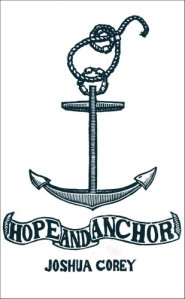
‘Hope & Anchor’ By Joshua Corey


hopeandanchor

I finished the chapbook that I bought at the Innisfree Poetry Bookstore. I used to read Corey’s blog (I didn’t stop because of an issue with it; just don’t read some many poetry blogs anymore), but this was my first, serious intro to his poetry.

They collection contains formal prose poems. By formal, I mean that he breaks it up into structured stanzas to lend a touch of formalism.

The poems are very sad and mournful. Almost a bit of a low key jeremiad. Anyway, highly recommended.

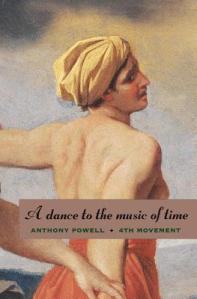
‘Hearing Secret Harmonies’ – The Twelfth And Final Book Of Anthony Powell’s ‘Dance To The Music Of Time’


9780226677187

I could tell you how Dance to the Music of Time end. That Widmerpool died a comic figure, less Machiavelli than Ignatius Reilly.

But I’d rather just include two quotes from near the end of Hearing Secret Harmonies. Two quotes and the final sentence of the book and of all the books.

The two quotes are about Jean Duport, the narrator’s one time lover and one time love.

There could have been no doubt in the mind of an onlooker – Henderson, say, or Chuck – that Jean and I had met before. That was about the best you could say for past love.

Not ‘a past love,’ but ‘past love.’

And then:

Even if other things had not been on my mind – that soft laugh of Jean’s – Victorian seascapes would have made no great appeal.

Again, not regret that he never married Jean, or that he married Isobel. Just.. regret.

The final sentence is quite final. Not a thudding finality, but an acknowledgement that though he will go on – maybe for many years – but that his dance, and his generation’s dance is over. His three schoolboy friends – Kenneth Widmerpool, Charles Stringham, and Peter Templer – have all died. Others may take up their dance, but those dances are not his story to tell, even if he should want to.

Even the formal measure of the Seasons seemed suspended in the wintry silence.


P.S.  I have begun to re-read Remembrance of Things Past. Appropriate, since Dance to the Music of Time can be roughly seen as an English equivalent to that epic, though they are very different in most of the most important ways, except for scale, perhaps.