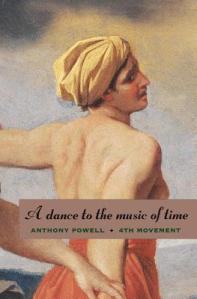
‘Hearing Secret Harmonies’ – The Twelfth And Final Book Of Anthony Powell’s ‘Dance To The Music Of Time’


9780226677187

I could tell you how Dance to the Music of Time end. That Widmerpool died a comic figure, less Machiavelli than Ignatius Reilly.

But I’d rather just include two quotes from near the end of Hearing Secret Harmonies. Two quotes and the final sentence of the book and of all the books.

The two quotes are about Jean Duport, the narrator’s one time lover and one time love.

There could have been no doubt in the mind of an onlooker – Henderson, say, or Chuck – that Jean and I had met before. That was about the best you could say for past love.

Not ‘a past love,’ but ‘past love.’

And then:

Even if other things had not been on my mind – that soft laugh of Jean’s – Victorian seascapes would have made no great appeal.

Again, not regret that he never married Jean, or that he married Isobel. Just.. regret.

The final sentence is quite final. Not a thudding finality, but an acknowledgement that though he will go on – maybe for many years – but that his dance, and his generation’s dance is over. His three schoolboy friends – Kenneth Widmerpool, Charles Stringham, and Peter Templer – have all died. Others may take up their dance, but those dances are not his story to tell, even if he should want to.

Even the formal measure of the Seasons seemed suspended in the wintry silence.


P.S.  I have begun to re-read Remembrance of Things Past. Appropriate, since Dance to the Music of Time can be roughly seen as an English equivalent to that epic, though they are very different in most of the most important ways, except for scale, perhaps.

Midweek Staff Meeting – The Man Who Taught Proust To Speak English


A detail from Joshua Reynolds’s ­portrait of James Boswell

Not literally, but if you’ve read and English translation of Remembrance of Things Past, as I have, you probably read his translation (as I have).

The Enlightenment’s most prominent unenlightened.

A review of Charles Simic’s latest books (it’s a generally positive review, but I have become less and less enamored of the poet over time; honestly, most of his poetry from this millenium feels lazy and recycled, whereas his best work is arresting, comic, and faintly melancholy).

And some poetry by Monica Ong. I love that Hyperallergic publishes the occasional poem. Appropriately, for a website focusing on the art world, these poems might be best described as vispo.

Another study of a hypothetical link between madness and creativity (in this cause, examining whether a correlation between increased likelihood of schizophrenia and participation in artistic a/vocations is the result of a shared, causative, genetic root).

Yes. Yes, it can.

On disliking poetry. And, maybe, on learning to love it.

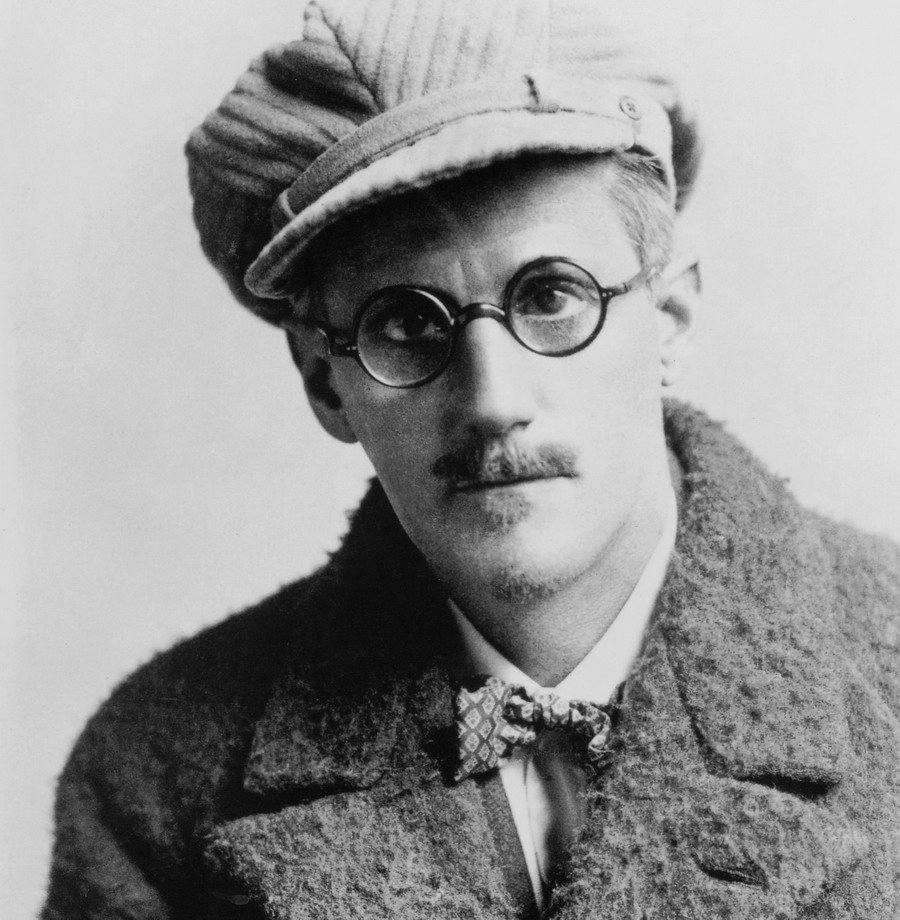
Happy Bloomsday!


joyce

‘Tartuffe’ At The Shakespeare Theatre Company


tartuffe-2014

Washington, DC is blessed with not one, but two Shakespeare theaters. One is my neighborhood stage at the Folger Shakespeare Library and the other is the glass-fronted, Chinatown edifice of the Shakespeare Theatre Company.

From the moment I saw it on the schedule, I knew I wanted to see it. I’d read Moliere, but had never seen one of his plays performed before. And the reading can’t do justice to a broad, creepy, over the top, sexual and more than a little sado-masoschistic-y production. All of which should be considered good things. Once the audience got into it, there was always someone trying to hold back their laughter in a ‘I can’t believe s/he did/said that’ kind of way.

Oh. And the titular Tartuffe looked a Anderson Cooper at an S&M club, wearing a shirt with a nipple exposing flap on the front, if Anderson Cooper were sibiliantly voiced, classically trained dancer.

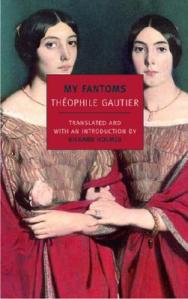
‘Fantoms’ By Theophile Gautier


Fantoms

I kept reading about Gautier, but his books were never available, until suddenly they were. I’d already read a collection of his poetry, which contained a book of poetry that he’d published late in his career and that were one hundred percent awesome (!) and then some poetry that, frankly, I just had to quit reading.

I’d read one of his short stories in a collection of French Decadent fiction and these short stories (and one melancholy essay) were definitely in that vein. Like the stories of Edgar Allan Poe, but with a lot more sex and whose dread was more openly erotic. They equate sex with death not to make sex scary, but to make it all super sexy. A priest who spends his nights in a dream-like Venice with a vampire as his mistress. A visitor to Pompeii who accidentally awakens a dead and sexy pagan aristocrat whose breasts are, apparently, fantastic (really incredible; Gautier emphasizes this point repeatedly; in fact, I think it’s fair to say that Gautier is a breast man – derrieres get short shrift, but marble white, front facing curves really get his blood pumping).

The stories are reasonably fast reads and a lot of fun. Highly recommended.

The collection ends with a paean to his friend, the poet Gerard de Nerval, who committed suicide. He clearly loved Nerval (and almost certainly saw him as the superior writer and poet) and the essay elevates his life into an exotic, sexy adventure of art as life, but also one for whom life was too difficult for such a sensitive soul. He defends Nerval against claims of madness, without denying he was mad, but madness as a way of living his art.

Weekend Reading – I Can’t Believe An Oil Company Would Want To Hide Information From Us!


BZ-052615-Bookateria-02

I’m shocked that Shell Oil didn’t want a science museum talking about… climate science. What next? People putting naked pictures on the internet? Toddler spilling food? Someone making a poor decision while drunk? It’s a world gone mad!

Bookstores. Not dead yet. Actually, they’re growing.

While Seattle and Portland buy the most total books on Amazon, DC buys the most print books.

Is nature writing America’s greatest contribution to world literature?

Boulder, The Innisfree Poetry Bookstore, And The Boulder Museum Of Contemporary Art


6b5839277b6e42358aa43af416ce4fcd

I finally made it Boulder. All it took was my niece’s wedding.

Boulder is famous for a lot of things, but if you’re a bookstore aficionado and poetaster, as I am, then the only place that matters is the Innisfree Poetry Bookstore, one of only three poetry only bookstores in America. It was smaller than I expected, but it was also filled with poetry. I might quibble with some of the curation, but have nothing but respect for their focus on Colorado poets and for stocking a good sized selection of chapbooks. Actually, one of the two books I bought was a chapbook by Joshua Corey entiteld Hope & Anchor (the other was Selected Poems by Paul Celan).

While wandering a farmer’s market in Boulder, we randomly hit on the Boulder Museum of Contemporary Art (BMOCA). It was small, but it was free on Saturdays and a pleasant way to pass an hour. Some wall hangings (thought nothing that would properly be called a traditional painting), but mostly larger installations (including a cool sound installation, based on the progression of the chakras).

BMoCA opening

The mountains are beautiful and I love a nice hike or walk, but in the end, Boulder would be somewhat wasted on me, because I’m more of a bookstore and museum guy, than I am a mountain guy.

Ho Chi Minh


My better half actually bought this for herself. A dyed in the wool capitalist, she’s got a strange obsession with Leninist-Stalinist strongmen like Mao and Minh.

But I’m the one who wound up reading it first, mainly because it was there.

What can I say? It’s light reading, but not very illuminating. Official statements for public view don’t tell one very much. The interesting bits were gleaming a few bits of history that I didn’t know (taken with a grain of salt) and it was also interesting to see an article that he had written in the early thirties about the lynching in America (something that was on the rise at the time).

At first, I thought that some of the writing (translated, of course) came across as almost an Orwellian parody of itself. Talk about ‘right policies’ and ‘right thinking’ and ‘right ideology’ (sometime with ‘right’ being replaced with ‘correct’) leading inevitably to success. This was done the context of success having already been achieved and describing as the obvious outcome of that correct thinking.

Except then I remember the translations I have read of Sun Tzu and Confucian thought, as well as the religious pamphlets (translated into English) from the Wat Thai in Maryland. This seemed something rather endemic to a lot of Eastern thought. Rather than good actions leading to goodness, as it were, good or proper thinking (or religious practice) leads to good actions and good results. Not defending Ho Chi Minh, but this particularly trend in his writing is more about a non-western way of thinking than anything else.

Columbia Poetry Review, No. 28


I was deciding between two poetry mags. One looked really interesting, but it was the final issue, so it seemed like I was a little late to the party if I wanted to support it.

So I picked up a copy of the Columbia Poetry Review.

Eschewing editorial comment, it is nothing but page after page of poetry (a good thing, surely?). A solid collection, but I fell in love with one Margaret Ronda. Here is the first stanza from a poem called Seasonal Affective:


Autumn industrial odor
                          neoplastic rusty fog
                                                                         neighbor she
nearness

                all circulations              all weekday traffic flood
                                                                        salty tea of schoolkid alley

                                                  kinds of rain: milky, tender, steeped, clawing
                      each joy slept off
corner of birds colliding

                                                    only yes, more, goodbye


Okay, So I’m Reading Comic Books Again


Planet Hulk #1

Technically, I’m reading Planet Hulk: Secret Wars. I don’t really know much about Secret Wars, except that everything has changed – Dr. Doom is god of the world, there is a country of Hulks (or should that be lowercase – ‘hulks’) with, apparently, a red skinned leader who looks as much like Hellboy as he does Red Hulk, as well a paramilitary police force of multi-ethnic, multi-gendered Thors (or thors).

I got it for one reason, and that is that hero is a gladiator version of Captain America who has Devil Dinosaur as his sidekick.

Yes, that’s right: I will read anything with Devil Dinosaur.

Devil is drawn respectfully. He is a fearsome predator; powerful, but always trying to be on the side of good.

Unfortunately, he’s also kind of denatured. He’s not a unique creature with his own history, but just an old, semi-forgotten comic book character brought back from the waning days of the silver age to be the sidekick. Which is sad. And you can see how important Jack Kirby’s kinetic style was to Devil’s action sequences, because those long, progressive panels are absent, leaving Devil just a big, pet monster, albeit as fierce one.

Also, Captain America with long, blonde hair and a battle axe to go with his shield, while a cool idea (Captain America as the world’s greatest gladiator, using his super soldier serum strength and reflexes and tactical nous [and twenty foot tall man-eating dinosaur] to defeat all comers!), in practice, it looks like Captain America doing some kind of He-Man cosplay.