Midweek Staff Meeting: Telecommuting


hirshhorn-song-1-1024x681I actually have no article to post here about telecommuting, but his Holiness is visiting DC and, even though I am writing this Monday evening, I feel confident saying that traffic will indeed by horrible and snarling today (Wednesday). A lot of folks are telecommuting and, really, I’m hoping I will be allowed to, as well, though it’s hard to say and my office doesn’t really have a policy on this.

Hume and Buddhism. Actually, I think this kind of link can be a little tendentious, especially trying to show that Hume was actually influenced by Buddhism. But, whatever. Hume is really cool, regardless.

You will be missed, C.K. Williams.

A nice, balanced article about the new head of my favorite museum in DC, the Hirshhorn.


What Do You Really Think Of Me?


I’m not really asking. I don’t think. I probably don’t want to know, do I? Not really. Or it might be like tearing off a band aid. But I’ve never believed in that either. They’re lying when they say it’s better to get it over with.

You have no idea what I really think of you, because I’m an excellent liar. Always have been. Not that my guard doesn’t sometimes slip, but I am good at being unknowable to all but my very closest friends and family and even then, many of them know far less than I think. Maybe, to steal from Sokrates, the ones who know me best know that they could very well not know me at all.

But that could easily be everybody. I think I’m special, of course. I think that I have reasons for thinking so. But I am almost entirely sure that people I don’t think are special at all are convinced beyond all doubt that they are special and have valid reasons for their conviction. Justified true belief. Or warranted true belief (hat tip to Alvin Plantinga). Take your pick.

There are people who I think like me. There are people who I think like who I don’t like in turn. There are people who I think like me who I don’t like in turn and who I think don’t know that I don’t like them.

But what do people really think of me? Surely, even in the most perceptive person, that’s the greatest blind spot. We think we are generally good and likable people, so naturally we believe that people like us as the good people we are. But these people who I don’t like and who I don’t believe know that I don’t like them – I believe that many of them like me. But what if I’m not special and perceptive or only ordinarily so and my specialness, such as it is, is limited to my vast delusions of likability and opaqueness?

Midweek Staff Meeting: Vinteuil


According this fellow, the Saint-Saens sonata above if the little piece by ‘Vinteuil’ that so inspired Swann and Odette. I’d read it was something by Franck, but this a nice piece… so whatever.

Make yourself feel bad with personality tests.

Fredric Jameson has really gotten into the philosophy of SF lately.

I feel like album covers, maybe, used to be cooler.

Midweek Staff Meeting – I Would Like A Sword, Please


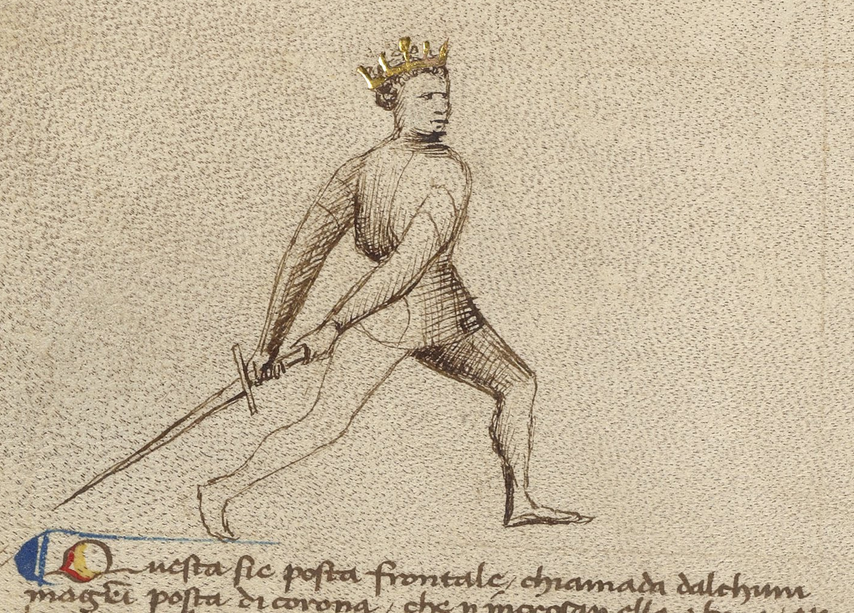
Screenshot_2015-08-17_12.54.53.0If you live in Chicago and you are not taking these classes in medieval/renaissance longsword fighting and you are not prevented from taking these classes by some combination of crippling poverty and unforeseen amputations, then I have no respect for you.

How was it that Ralph Waldo Emerson, a champion of the unique power of poetry, failed to make his own, banal poetry soar half so well as his prose?

Heidegger, or else, the Heideggerians. But who are they?

The end of an era.

On Care For Our Common Home (Laudato Si’)


laudatosiRather than give thoughts on it (other than – wow! a powerful statement for environmental and economic justice), I’m just going to copy out a bunch of passages that struck me.

Because of us, thousands of species will no longer give glory to God by their very existence, nor convey their message. We have no such right. (33)

“If we scan the regions of our planet, we immediately see that humanity has disappointed God’s expectations [John Paul II] (61)

Respect must also be shown for the various cultural riches of different peoples, their art and poetry, their interior life and spirituality. (63)

They suggest that human life is grounded in three fundamental and closely intertwined relationships: with God, with our neighbor, and with the earth itself. According to the Bible, these three vital relationships has been broken, both outwardly and within us. This rupture is sin. (66)

The Spirit of life dwells in every living creature and call us to enter into relationship with him. Discovering this presence leads up to cultivate the “ecological virtues.” (88)

For believers, this becomes a question of fidelity to the Creator, since God created the world for everyone. Hence every ecological approach needs to incorporate a social perspective which takes into account the fundamental rights of the poor and underprivileged. (93)

Underlying every form of work is a concept of the relationship which we can and must have with what is other than ourselves. (125)

To claim economic freedom while real conditions bar many people from access to it, and while possibilities for employment continue to shrink, is to practice a doublespeak with brings politics into disrepute. (129)

We know that technology based on the use of highly polluting fossil fuels – especially coal, but also oil and, to a lesser degree, gas – need to be progressively replaced without delay. (164)

Saving banks at any cost, making the public pay the price, foregoing a firm commitment to reviewing and reforming the entire system, only reaffirms the absolute power of the financial system, a power which has no future and will only give rise to new crises after slow, costly, and only apparent recovery. (189)

The environment is one of those goods that cannot be adequately safeguarded or promoted by market forces. (190)

If we reason only within the confines of [empirical science], little room would be left for aesthetic sensibility, poetry, or even reason’s ability to grasp the ultimate meaning and purpose of things. (199)

“The external deserts in the world are growing, because the internal deserts have become so vast.” (217)

It must be said that some committed and prayerful Christians, with the excuse of realism and pragmatism, tend to ridicule expressions of concern for the environment. (217)

Mary, the Mother who cared for Jesus, now cares with maternal affection and pain for this wounded world. Just as her pierced heart mourned the death of Jesus, so now she grieves for the sufferings of the crucified poor and for the creatures of this world laid waste by human power. (241)

Midweek Staff Meeting – The Man Who Taught Proust To Speak English


A detail from Joshua Reynolds’s ­portrait of James Boswell

Not literally, but if you’ve read and English translation of Remembrance of Things Past, as I have, you probably read his translation (as I have).

The Enlightenment’s most prominent unenlightened.

A review of Charles Simic’s latest books (it’s a generally positive review, but I have become less and less enamored of the poet over time; honestly, most of his poetry from this millenium feels lazy and recycled, whereas his best work is arresting, comic, and faintly melancholy).

And some poetry by Monica Ong. I love that Hyperallergic publishes the occasional poem. Appropriately, for a website focusing on the art world, these poems might be best described as vispo.

Another study of a hypothetical link between madness and creativity (in this cause, examining whether a correlation between increased likelihood of schizophrenia and participation in artistic a/vocations is the result of a shared, causative, genetic root).

Yes. Yes, it can.

On disliking poetry. And, maybe, on learning to love it.

Ho Chi Minh


My better half actually bought this for herself. A dyed in the wool capitalist, she’s got a strange obsession with Leninist-Stalinist strongmen like Mao and Minh.

But I’m the one who wound up reading it first, mainly because it was there.

What can I say? It’s light reading, but not very illuminating. Official statements for public view don’t tell one very much. The interesting bits were gleaming a few bits of history that I didn’t know (taken with a grain of salt) and it was also interesting to see an article that he had written in the early thirties about the lynching in America (something that was on the rise at the time).

At first, I thought that some of the writing (translated, of course) came across as almost an Orwellian parody of itself. Talk about ‘right policies’ and ‘right thinking’ and ‘right ideology’ (sometime with ‘right’ being replaced with ‘correct’) leading inevitably to success. This was done the context of success having already been achieved and describing as the obvious outcome of that correct thinking.

Except then I remember the translations I have read of Sun Tzu and Confucian thought, as well as the religious pamphlets (translated into English) from the Wat Thai in Maryland. This seemed something rather endemic to a lot of Eastern thought. Rather than good actions leading to goodness, as it were, good or proper thinking (or religious practice) leads to good actions and good results. Not defending Ho Chi Minh, but this particularly trend in his writing is more about a non-western way of thinking than anything else.

‘Rosencrantz And Guildenstern Are Dead’


As soon as I knew the play was on the schedule for this season, I knew that I wanted to see it. The only Tom Stoppard plays I have seen performed at Arcadia (which, oddly, I have seen on three separate occasions: once in Atlanta; once in Montgomery, Alabama; and once in at the Folger) and The Invention of Love. Being a great lover of Hamlet, it irked me that I’d never had the chance to see this particular play.

For much of the play, it is just the two characters on stage, alone. Other characters walk in an out, but they are peripheral to the ‘real’ world of Hamlet. It’s at once hilarious and terribly sad and if you’re in DC, I hope you’ll see it at the Folger. It made me think of the lines from the Pink Floyd song, Wish You Were Here: Did you exchange/a walk on part in the war/for a leading role in a cage?

Rosencrantz and Guildenstern are trapped as walk on parts in a cage, without any real agency. They exist only to propel the progress of their betters/greaters, i.e., the leading characters in Hamlet. It left me feeling very melancholy because it suggests that it may never be possible to understand one’s purpose, even if one knows one’s purpose, and that knowledge could be meaningless because it comes without a view of the larger picture.

It is probably also the only play I have ever seen that addresses George Berkeley’s metaphysics (in a short, bastardized form: does anything exist if it not perceived?).

Weekend Reading – Difficult Poets


Screen-Shot-2015-04-29-at-1.30.36-PM

Okay, so read this article about the British poet, JH Prynne. And read Prynne. You might regret it, but you shouldn’t read. I read a lot about him, all of it pretty rhapsodic, but he’s hard to get a hold of. I finally had to order a book of his collected poems from England (not cheap). But it is so worth it. I don’t think I can be sure that I understand I single poem in thick volume, but each one was also impossibly beautiful. So find a way to read him.

Let’s continue on the theme of poetry, by this look back at the second collections of Rae Armantrout and Ye Chun. I’m going to admit here that I’ve never read nor had even previously heard of Ye Chun.

How is it possible to be a progressive, a liberal, a radical while holding to explicitly conservative positions. It’s about priorities. Do you commit to an expansive vision of justice that values everyone? That especially values those who are not valued by society? Or do you focus on positions that circle the wagons? That is how Pope Francis can be a radical while still being conservative on abortion, birth control, and gay marriage.

Online dating in the nineteenth century.

‘The Thing’ By Dylan Trigg


9781782790778

This review will be necessarily vague and brief because, honestly, I don’t remember a lot of this book. A while back, I saw a list of the best books of critical theory published in 2014. The Thing not only seemed interesting, but it also referenced my second favorite Kurt Russell movie (after the awesome super classic, Big Trouble in Little China), as well having a lot of references to the equally enjoyable and problematic works of  H.P. Lovecraft.

So, while on a plane ride to Chicago, I started burrowing into the slim volume, which I had downloaded onto my nook.

Exhausting. Unfulfilling. Confused. Meandering. Lacking a coherent point.

Those were some of my initial opinions. Honestly, if it weren’t so short, I wouldn’t have kept reading it on the plane at all. But I didn’t finish it on the plane and I finally got around to finishing it a couple of months later, with too little memory of the first half of the book to attempt to understand it and too little patience with what I did remember to consider starting over.

But, here’s my summary: Husserl, mumble, mumble, Husserl, Merleau-Ponty, mumble, we are descended from aliens, Husserl, mumble, Levinas, Earth is kind of unfeeling so therefore Husserl, mumble, mumble, Merleau-Ponty, mumble, spider legs head.