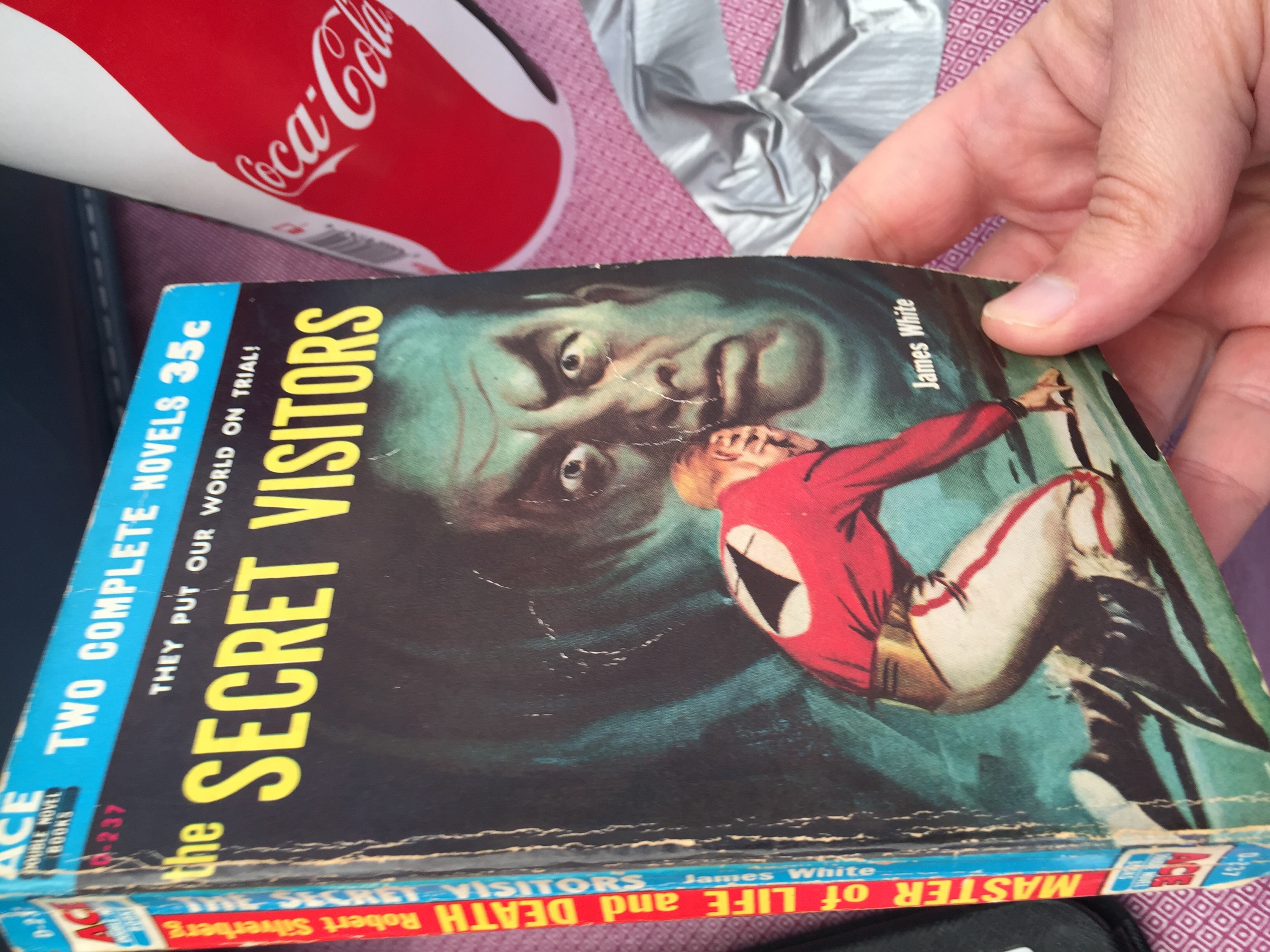
‘The Secret Visitors’ By James White


Well… it’s not nearly as good as its opposite number, which is to be expected, since Robert Silverberg evolved into quite a well respected author of science fiction and James White is more of a journeyman.

The plot is, while not confusing, entirely too convoluted to write down, suffice to say that the climax is both unrealistic and somewhat rushed. I read that White didn’t like violence and was a sort of pioneer of ‘medical scifi.’ Okay, fine, then don’t make the denouement a space battle. And after building up to a romance of sorts, he manages to leave unsatisfactorily unresolved. The only excuse would be if this is part of a series… which, apparently, it is. The first of his Sector General novels. So hopefully Lockhart and Kelly get together down the road.

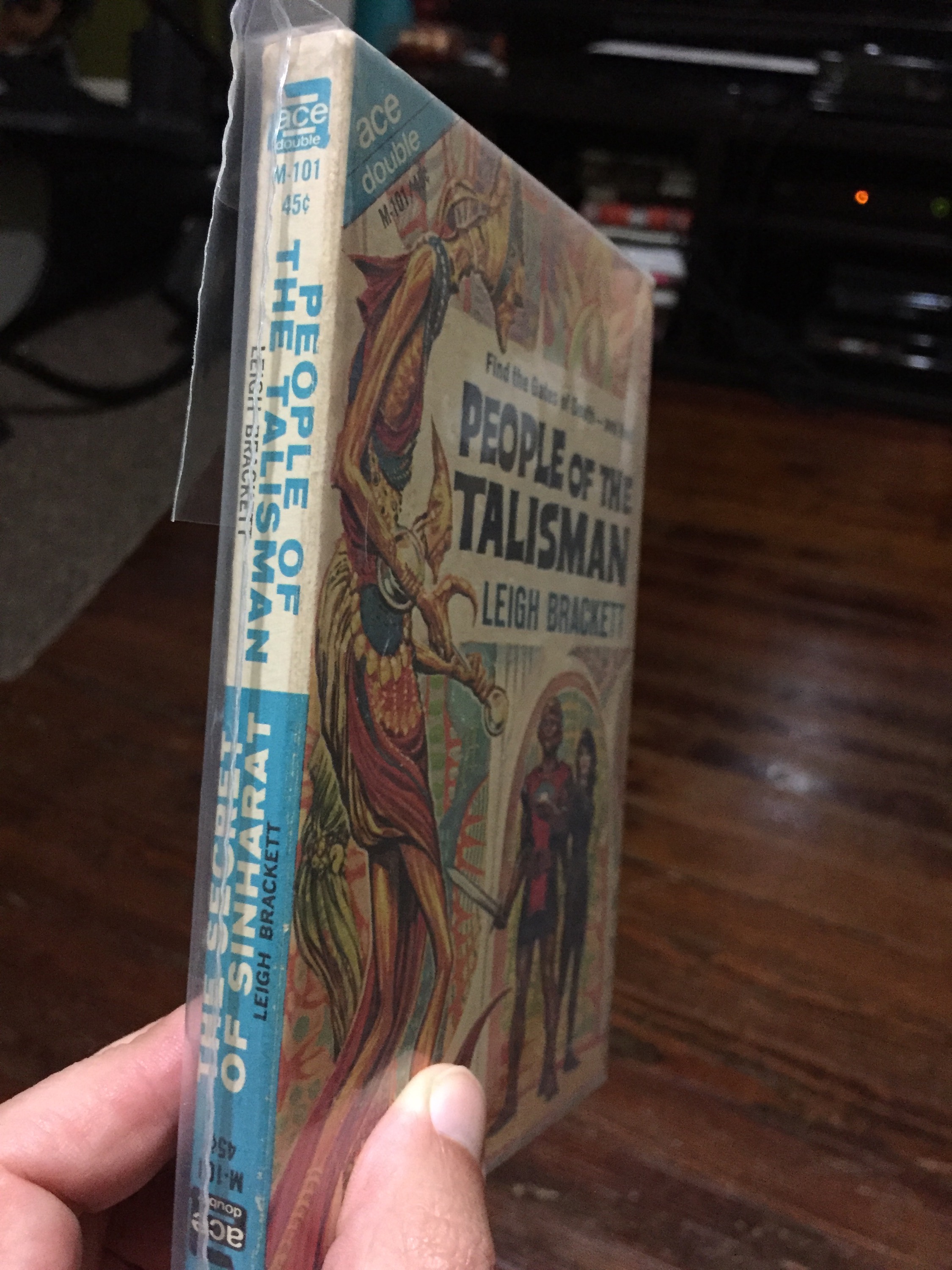
On the plus side, I’ve got some more Ace Doubles, including one with two novels by Leigh Brackett and one with a novel by Philip K. Dick, which I’m looking forward to.

Midweek Staff Meeting – Think Of The Children!


“Reading always seems to be in crisis. Two and half millennia ago, Socrates inveighed against the written word because it undermined memory and confused data with wisdom.”

The intellectual center of the world used to be a Parisian apartment.

A brief history of reading as sacramental activity.

Enjoying Call of Duty on your Playstation? Thank Dungeons & Dragons.

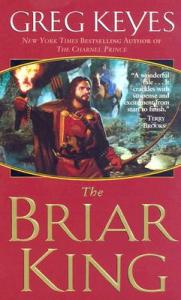
‘The Briar King’ By Greg Keyes


Briar KingSo far, The Briar King is a good, gripping read for a fan of fantasy, like myself, but also irritating in some important ways, both as a fan of fantasy and a general lover of fiction.

It’s pretty much required these days that no one right a standalone scifi/fantasy novel anymore. It’s simply not done. So I’m okay with it being the first of a series. And while it ends, clearly leading into another, it’s not an annoying cliffhanger. And Keyes avoids other pitfalls of the fantasy series by not letting the number of main characters get out of control. There are basically five main characters, but he keeps them paired up much of the time, so we don’t have a massive sprawl problem.

The world is generally well done. The ‘history’ is good, though I rarely get a strong feel for the cultures, except in the story’s heartland, which is kind of your generic fantasy land with technology similar to 14th century Europe, so knights on horseback in articulated plate armor with big swords. Some of the other areas are less well described.

There is a bit of a villain problem, because the world spanning threat, the titular Briar King… doesn’t seem so bad. Kind of nature guy. Does not inspire fear in me. Some of the human villains do – they’re pretty nasty. But it’s hard for me to feel that concerned about a apocalpytic baddie who comes across more like a less damp version of the Swamp Thing, just doing his thing and keeping his swamp (or, in this case, forest) safe. But that wasn’t what bothered me most. No, it was the names.

The names are lazy. Some are basic English names, like Anne and Neil. There’s an occasional attempt to get something more archaic or fantasy sounding into it, but generally, they’re cribbed straight from the British Isles and (disconcertingly) Italy. At least take some time to look up some old Celtic or Saxon names that sound a little different, a little alien and not immediately recognizable. What he did just creates a jarring clash. And… ugh Virgenya. A place in his world where people are and speak Virgenyan. I live next too Virginia and used to be a Virginian, so this just takes me out of it ever time he does it, which is pretty frequent. Oh, and there’s an ancient, founding heroine named ‘Genya Dare.’ Since ‘Virgenya’ is clearly in honor of ‘Genya,’ let’s put those together, shall we: Virgenya Dare. That’s right, the first child born in the English colonies in America. Ugh.

The good bits generally outweigh the bad, though. I’m glad I read it. But… Virginia Dare. Ugh.
My Whole Life Has Been Building Up To This; My Life Will Always Be This


I am able to buy cheap movie tickets through work and I was buying a few to see Sicario with my better half.

While making change, I talked to a co-worker about what I was going to see and I noted that, while I did want to see Sicario, really there wasn’t anything that deeply excited me and, when you got right down to it, I was just waiting for Star Wars.

And then it hit me. My whole life, since first seeing Star Wars in 1977, has been about waiting for Star Wars. And it will continue to be about that for as long as I live.

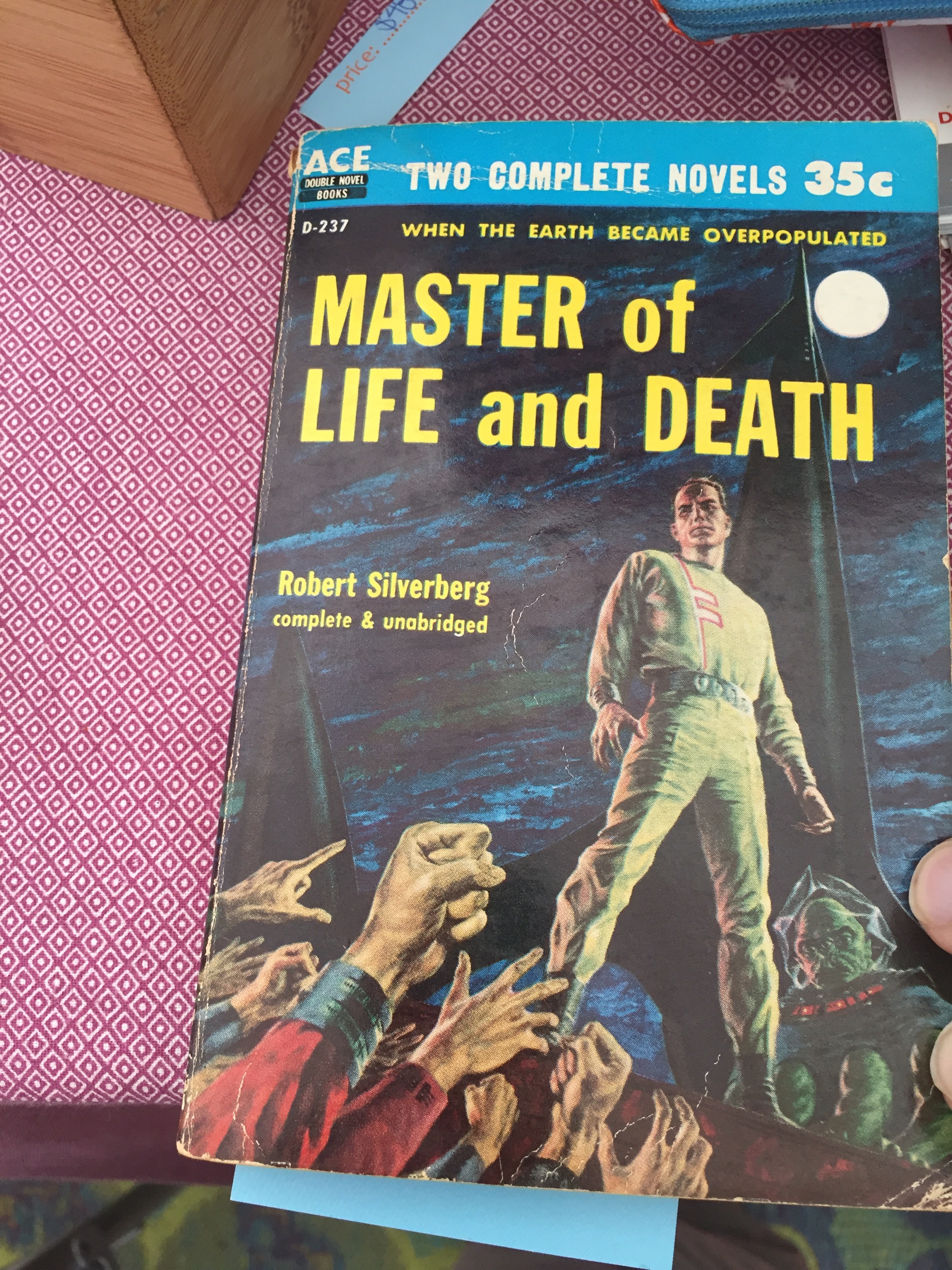
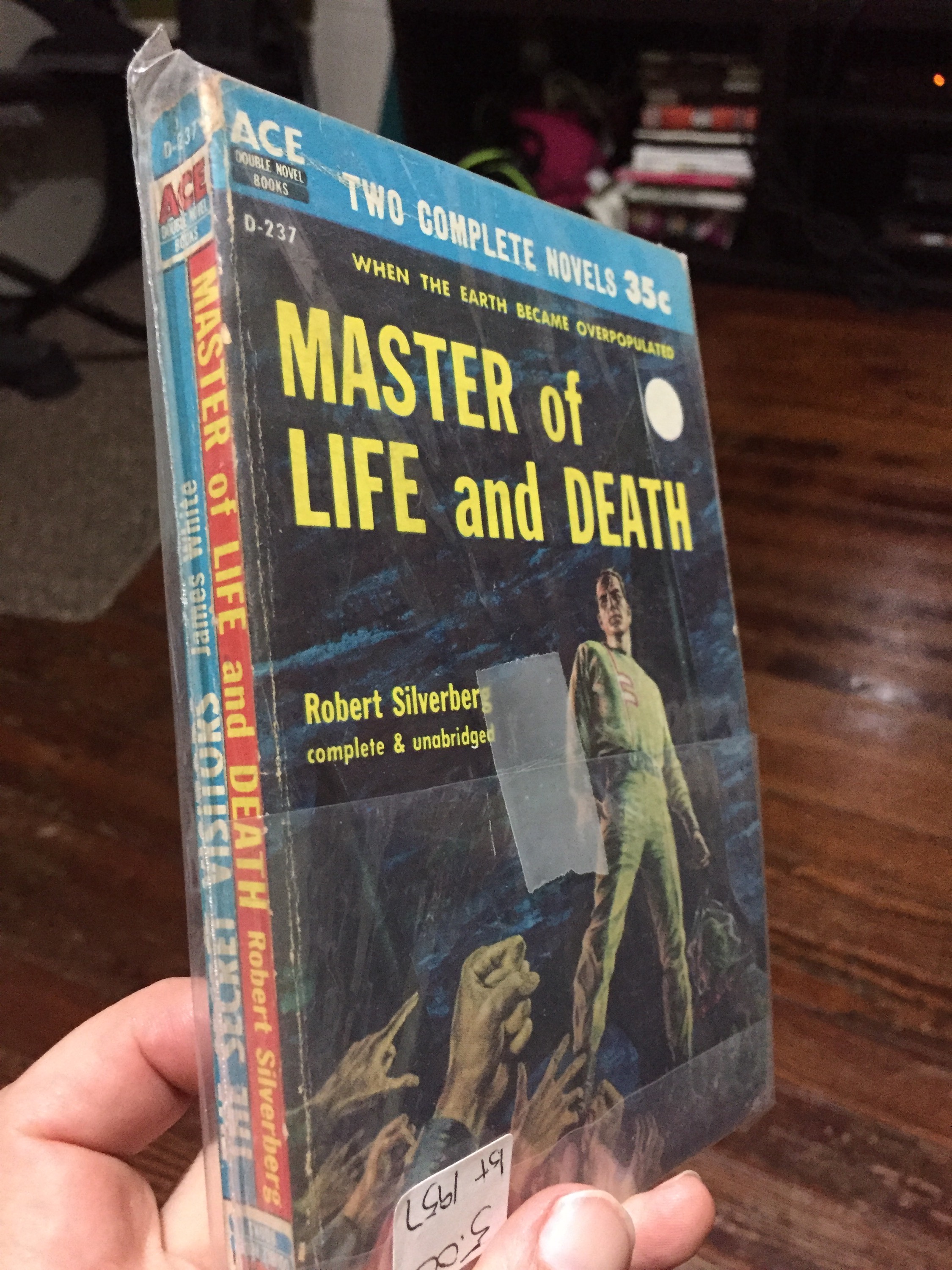
‘Master Of Life And Death’ By Robert Silverberg


This was one half of an Ace Double (the other being The Secret Visitors by James White).

I read a novel by Silverberg many years ago… a sort of combination of science fiction and old school planetary romance called Lord Valentine’s Castle. It was part of a series and never read anymore. I remember both thinking the book was good, but not great, yet also having the contradictory feeling of sadness that comes after finishing a good book and knowing that one can never read it for the first time again.

I didn’t get that feeling from Master of Life and Death, but it was still a fast, bracing read. It’s science fiction, with some faster than light travel, aliens and a global institution responsible for both euthanasia and resettlement as a means to deal with overpopulation, but really, it’s more thriller, with a touch of conspiracy style espionage. The ‘hero’ is a fellow named Roy Walton and he quickly becomes the head of said global institution. I put ‘hero’ in scare quotes because, while he clearly means well, virtually every action he takes is morally dubious. Towards the end, his efforts to escape the tightening noose become so incredibly unethical that it becomes cringe inducing. Roy is being blackmailed by his brother Fred, while trying to preserve his job and also more or less carry out his duties and save humanity. Honestly, the science fiction is just an overlay on a thriller.

But like I said, it’s still pretty gripping and ratchets up the tension nicely. You’ll probably never encounter this book, but if you do and if early silver age scifi is your bag, then this book should be your brand new bag.

Ace Doubles


I had a birthday a little while back and among my present were a classic scifi magazine and three Ace Doubles – two books in one (just flip it over and start reading from the back after you finish the first one), including novels by Dick, Brackett and Silverberg.


Old & New Star Trek


I watched Star Trek: Nemesis last night, the last of the Next Generation movies. It wasn’t a great movie (First Contact, however, was), but just before the credits started to roll, that music came on. You know it. Bright, hopeful, adventurous. The classic theme.

The new ones can’t compete. The miss what made the original series and its (best) subsequent movies iconic, as well as the joys of the Next Generation.

I was talking about this with a friend. Or, rather, I was complaining how the reboot’s version of Kirk gaming the Kobayashi Maru scenario missed the point that was made in (the real) Wrath of Khan (which was about fear of failure, but also a refusal to accept a no-win scenario, as well as the conflict between Kirk’s need to save everyone and Spock’s final statement, ‘The needs of the many, outweigh the needs of the few… or the one;’ in the reboot, it was just about Kirk being a snot nosed brat).

My friend made an excellent point: Chris Pine wasn’t playing Kirk in the two new movies; he was playing late period William Shatner was a young man.

Shatner has aged into a figure of good humored mockery, but as Kirk, he wasn’t that Shatner. You understood why he was the captain and what made him a good commander. When Chris Pine’s Kirk gets Spock riled up to show that he, not Spock, should be the captain, all it really showed (to me) was that sometimes the new Spock could be almost as much of a horse’s ass as the new Kirk was all the time.

Even a flawed film like Nemesis still had Jean-Luc Picard and the smiling, winking gravitas of Patrick Stewart, who understood what it mean to be in the Star Trek universe.

‘Heir Of Sea And Fire’ By Patricia McKillip


I’d read a couple of books by McKillip in my teenage years, namely the first book in the trilogy of which Heir of Sea and Fire is the second, and a book called The Forgotten Beasts of Eld. She’s very much a fantasy writer in the vein of Ursula LeGuin, but without LeGuin’s interest in colonialism (or rather, anti-imperialism and post-colonialism); less political and more elegiac and definitely more influenced by Tolkien (not so much Lord of the Rings; check out a short novel of his called The Smith of Wooton Major).

But anyway… In most ways, it’s not as good as The Riddle-Master of Hed, having the ‘middle book syndrome’ or being most dedicated towards getting to place where the third volume embark on its conclusion.

In another sense, though, it has something more important than its predecessor: it is about a woman’s journey. Granted, she’s looking a guy, but still, she (Raederle is her name, by the way) gets her own book with her own arc and self discoveries. But it’s not as good as the first book. Her journey still isn’t as interesting as Morgon’s in the first book (and it doesn’t have the magic of my old memories of The Forgotten Beasts of Eld). I was also hampered by having waited too long between books and being a little unsure of the characters.

Midweek Staff Meeting: Vinteuil


According this fellow, the Saint-Saens sonata above if the little piece by ‘Vinteuil’ that so inspired Swann and Odette. I’d read it was something by Franck, but this a nice piece… so whatever.

Make yourself feel bad with personality tests.

Fredric Jameson has really gotten into the philosophy of SF lately.

I feel like album covers, maybe, used to be cooler.

Midweek Staff Meeting – I Would Like A Sword, Please


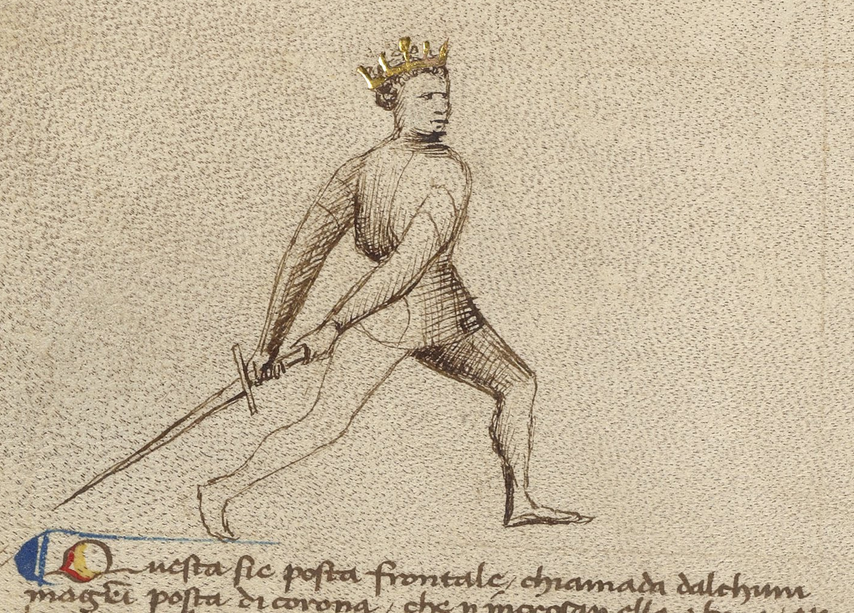
Screenshot_2015-08-17_12.54.53.0If you live in Chicago and you are not taking these classes in medieval/renaissance longsword fighting and you are not prevented from taking these classes by some combination of crippling poverty and unforeseen amputations, then I have no respect for you.

How was it that Ralph Waldo Emerson, a champion of the unique power of poetry, failed to make his own, banal poetry soar half so well as his prose?

Heidegger, or else, the Heideggerians. But who are they?

The end of an era.