Antigonick


Antigonick

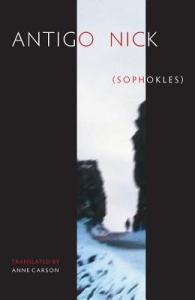
My friend and I saw this play performed in Chicago (FYI – amazing!), so when I saw a nice, affordable copy from New Directions (the publishing company that singlehandedly keeps Modernist poetry in print), I had to pick it up.

Reading it, I got a much better understanding of some of the rhetorical choices of the performance. Anne Carson wrote this play very much as poetry – as a long narrative poem, with carefully chosen line breaks. I could actually hear bits of the performance in my head and see how closely they followed and used the script.

Also, my waning faith in Anne Carson was renewed by Antigonick… again.

‘The Intellectuals & The Masses: Pride And Prejudice Among The Literary Intelligentsia: 1880 – 1939’ By John Carey


9780897335072_p0_v2_s192x300

The book got better.

I was immediately disappointed when I started reading, but it improved. Begun as a series of lectures, it still has too much tendentious point-making – like a doctoral these or, well… a lecture – but it turned into something interesting in spite of itself.

Some wonderful deep research into a series of literary figures (Wyndham Lewis, T.S. Eliot, George Orwell and others) to capture a sort of deep seated disgust with the masses (or the proles or whatever you want to call ’em; Carey makes a good point that it’s a fiction they’re appalled by and what they thought of as the masses never existed).

But his larger thesis, which is basically that works like The Wasteland (and Modernism, in general) were written complicated as a gate to keep out the unwashed was not well proven (and really, he didn’t even seem to be trying to prove it; he just said and moved on to show that some of these intellectuals were kind of morally ‘icky’).


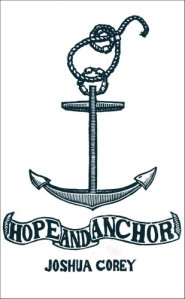
‘Hope & Anchor’ By Joshua Corey


hopeandanchor

I finished the chapbook that I bought at the Innisfree Poetry Bookstore. I used to read Corey’s blog (I didn’t stop because of an issue with it; just don’t read some many poetry blogs anymore), but this was my first, serious intro to his poetry.

They collection contains formal prose poems. By formal, I mean that he breaks it up into structured stanzas to lend a touch of formalism.

The poems are very sad and mournful. Almost a bit of a low key jeremiad. Anyway, highly recommended.

Midweek Staff Meeting – The Man Who Taught Proust To Speak English


A detail from Joshua Reynolds’s ­portrait of James Boswell

Not literally, but if you’ve read and English translation of Remembrance of Things Past, as I have, you probably read his translation (as I have).

The Enlightenment’s most prominent unenlightened.

A review of Charles Simic’s latest books (it’s a generally positive review, but I have become less and less enamored of the poet over time; honestly, most of his poetry from this millenium feels lazy and recycled, whereas his best work is arresting, comic, and faintly melancholy).

And some poetry by Monica Ong. I love that Hyperallergic publishes the occasional poem. Appropriately, for a website focusing on the art world, these poems might be best described as vispo.

Another study of a hypothetical link between madness and creativity (in this cause, examining whether a correlation between increased likelihood of schizophrenia and participation in artistic a/vocations is the result of a shared, causative, genetic root).

Yes. Yes, it can.

On disliking poetry. And, maybe, on learning to love it.

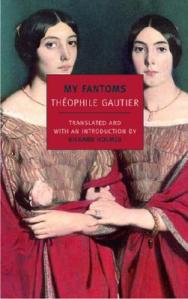
‘Fantoms’ By Theophile Gautier


Fantoms

I kept reading about Gautier, but his books were never available, until suddenly they were. I’d already read a collection of his poetry, which contained a book of poetry that he’d published late in his career and that were one hundred percent awesome (!) and then some poetry that, frankly, I just had to quit reading.

I’d read one of his short stories in a collection of French Decadent fiction and these short stories (and one melancholy essay) were definitely in that vein. Like the stories of Edgar Allan Poe, but with a lot more sex and whose dread was more openly erotic. They equate sex with death not to make sex scary, but to make it all super sexy. A priest who spends his nights in a dream-like Venice with a vampire as his mistress. A visitor to Pompeii who accidentally awakens a dead and sexy pagan aristocrat whose breasts are, apparently, fantastic (really incredible; Gautier emphasizes this point repeatedly; in fact, I think it’s fair to say that Gautier is a breast man – derrieres get short shrift, but marble white, front facing curves really get his blood pumping).

The stories are reasonably fast reads and a lot of fun. Highly recommended.

The collection ends with a paean to his friend, the poet Gerard de Nerval, who committed suicide. He clearly loved Nerval (and almost certainly saw him as the superior writer and poet) and the essay elevates his life into an exotic, sexy adventure of art as life, but also one for whom life was too difficult for such a sensitive soul. He defends Nerval against claims of madness, without denying he was mad, but madness as a way of living his art.

Boulder, The Innisfree Poetry Bookstore, And The Boulder Museum Of Contemporary Art


6b5839277b6e42358aa43af416ce4fcd

I finally made it Boulder. All it took was my niece’s wedding.

Boulder is famous for a lot of things, but if you’re a bookstore aficionado and poetaster, as I am, then the only place that matters is the Innisfree Poetry Bookstore, one of only three poetry only bookstores in America. It was smaller than I expected, but it was also filled with poetry. I might quibble with some of the curation, but have nothing but respect for their focus on Colorado poets and for stocking a good sized selection of chapbooks. Actually, one of the two books I bought was a chapbook by Joshua Corey entiteld Hope & Anchor (the other was Selected Poems by Paul Celan).

While wandering a farmer’s market in Boulder, we randomly hit on the Boulder Museum of Contemporary Art (BMOCA). It was small, but it was free on Saturdays and a pleasant way to pass an hour. Some wall hangings (thought nothing that would properly be called a traditional painting), but mostly larger installations (including a cool sound installation, based on the progression of the chakras).

BMoCA opening

The mountains are beautiful and I love a nice hike or walk, but in the end, Boulder would be somewhat wasted on me, because I’m more of a bookstore and museum guy, than I am a mountain guy.

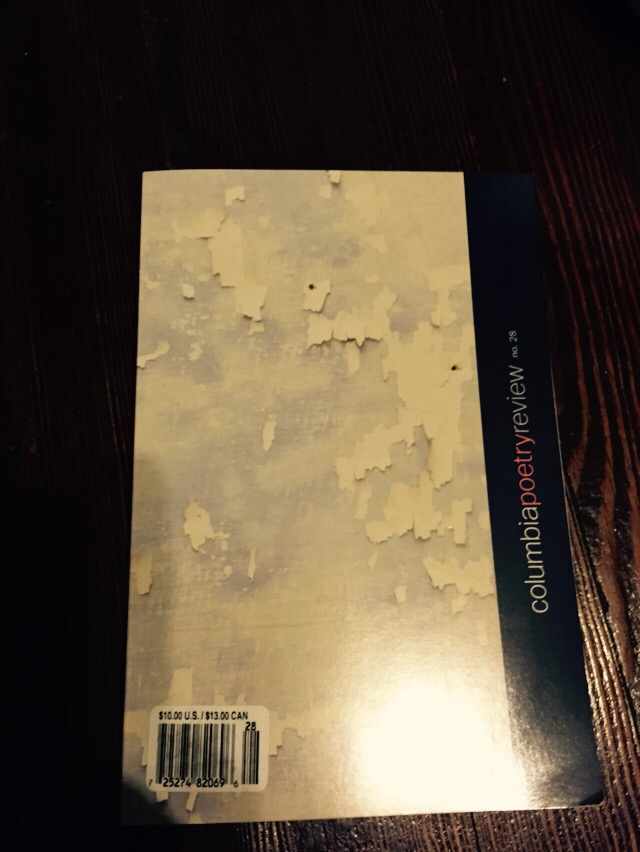
Columbia Poetry Review, No. 28


I was deciding between two poetry mags. One looked really interesting, but it was the final issue, so it seemed like I was a little late to the party if I wanted to support it.

So I picked up a copy of the Columbia Poetry Review.

Eschewing editorial comment, it is nothing but page after page of poetry (a good thing, surely?). A solid collection, but I fell in love with one Margaret Ronda. Here is the first stanza from a poem called Seasonal Affective:


Autumn industrial odor
                          neoplastic rusty fog
                                                                         neighbor she
nearness

                all circulations              all weekday traffic flood
                                                                        salty tea of schoolkid alley

                                                  kinds of rain: milky, tender, steeped, clawing
                      each joy slept off
corner of birds colliding

                                                    only yes, more, goodbye


Weekend Reading


capitol-hill-books-01_custom-fa86597c39e231830d2ea43e6994755a03c84ba1-s800-c85

A new translation tries to give Mallarme’s poem it’s proper due. On a sidenote, I have a lot of respect for Wave Books, the publisher. They are what Copper Canyon press would be if it decided to take some chances.

Our own Capitol Hill Books takes center stage in this NPR piece about how people still read books.

A kinder, gentler Marquis de Sade. Sort of.

I love the little Modern Library editions from the twenties and thirties. I’ll buy a book published by them, even if I’ve never heard of it, and it’s always been edifying.


‘Anatomy Of Influence’ By Harold Bloom


Anatomy of Influence

I bought this book, thinking it was Bloom’s seminal tome, Anxiety of Influence. You can see how I might have made the mistake.

But it’s never a mistake to read Bloom. He is old-fashioned and wedded to a very traditional Western canon, but that doesn’t make it him unenlightened nor unpersipacious – it is just something you have to be aware of and know that you’ll have to learn about writers outside the classical European tradition elsewhere.

I actually started reading this a while ago, but it’s a series of essays, some more connected than others, so I tended to pick it up and put it down again frequently. But about a week ago, I set myself to finish it and did.

When I was very young, freedom beckoned through the poets I first loved: Hart Crane, William Blake, Percy Bysshe Shelley, Wallace Stevens, Walt Whitman, William Butler Yeats, John Milton, and above William Shakespeare in HamletKing LearMacbeth, and Antony and Cleopatra.

What do you think about that? Shakespeare, of course, looms over everything. Hart Crane is someone I’ve never really read much of and Wallace Stevens has always left me a little cold. But it makes you ask: who are my poets?

Shakespeare and Hamlet, but Julius Caesar would replace those others for me.

Ezra Pound. Adrienne Rich. Charles Simic. T.S. Eliot. Edgar Allan Poe. Allen Ginsberg. Asian and Japanese poets, like Tu Fu, but specifically mediated through translation and specifically through the translations of Kenneth Rexroth.

These poets don’t all still ‘do it’ for me. I can see the flaws in Poe now, more than when I was younger. Ginsberg wrote a handful of great poems and heaping pile of very bad ones. And if you were talking about my favorites now, what about Anne Carson or Fanny Howe? But I discovered them later. Those ones above were the ones I loved early and whose influence is strongest, as a result.

Who are yours?
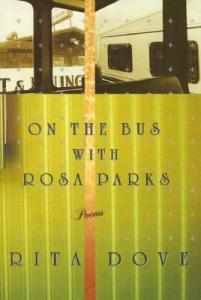
Rita Dove At The Folger & ‘On The Bus With Rosa Parks’


9780393320268

Maybe not my finest example of supporting poetry and poets, but I bought On the Bus with Rosa Parks at Politics and Prose because it was on their remaindered books shelf. If you stop by there, the poetry selections available for between $5.99 and $7.99 are really spectacular.

Rita Dove is a great speaker, able to be simultaneously engaging and intellectually rigorous (the sort of intellectual rigor lacking when Simic and Wright recently shared another stage). She has never been a favorite poet, but she is, at her best, formally interesting (at her worst, she plays with forms for the sake of playing withe forms). I didn’t catch it, but someone in the audience asked about her strategy of making the first stanza of a poem she read into a villanelle. Just a reminder that I need to read more into the traditional forms, sonnets and the like. Can’t all be free verse, my friends, can it?

No one is going to call On the Bus with Rosa Parks her finest collection, but it’s a nice showcase of her strengths. She frequently writes from the perspective of ‘characters’ and while it’s easy to say that those characters are almost invariably black, they are also frequently different from her in every other way. Dove has great way of writing unflinchingly, but also compassionately about the struggles of men with visions and expectations of masculinity.

From Graduation, Grammar School

Joe
sees hi son
flicker. Although
the air is not a glass,
watches as he puts his lips to
the brim–then turns away, bored.
He is not mine, this son
who ripens, quiet
poison on a
shelf.