Ezra Pound: Canto LXXVIII


This Canto was a lot more fun to read than its immediate predecessor.

This poem is ultimately about and the unintended consequences of even good intentions.

Near the beginning:

Cassandra, your eyes are like tigers,
     with no word written in them
You also have I carried to nowhere
           to an ill house and there is
                                no end to the journey.
                                The chess board too lucid
the squares are too even…theatre of war…
” theatre ” is good. There are those who did not want
      it to come to an end.

And then the very end:

In the spring and autumn
      In “The Spring and Autumn”
                                                    there
                                                      are
                                                       no
                                                righteous
                                                     wars

Is Pound feeling regret? How does this Canto reflect changes in his attitude? Or are there changes? He could still be a monumental fascist ass, yet oppose war, couldn’t he? That’s not a statement; it’s a question.

9780811213264


Ezra Pound: Canto LXXVII


Obviously, this is my first Canto for some time. Not really the best one, if you’re going to dive back in.

It starts out with some of Pound’s Gertrude Stein-like efforts to mimic American colloquial speech, like:

” I’ll tell you wot izza comin’
Sochy-lism is a-comon’

But the rest is interspersed with Chinese script and, oddly, one bit of Persian, which I believe comes with a reference to the Persian epic, The Shahnameh. There is even a little glossary of the Chinese characters, not that I entirely trust it (you can see why in the picture – ‘bi gosh’).

Most of the rest is a series of name droppings: Cocteau, Daudet, Voltair, Goncourt, etc.


20140729-190327-68607405.jpg

20140729-190329-68609018.jpg

20140729-190330-68610848.jpg

Monday Morning Staff Meeting – New Media Is Destroying Culture Creators


Along came the web, which swept away hierarchies — as well as paychecks, leaving behind creators of all kinds only the chance to be fleetingly “Internet famous.”

You could sign up for Kindle Unlimited and pay $120 a year for a very limited number of the books your want (but a nearly unlimited amount of Fifty Shades fan fiction), or you could walk to your local library and borrow the book you want for free. You can even borrow e-books! And, if they don’t have the book, you don’t have resign yourself to reading bad smut instead, but can use the interlibrary loan system! For free! It’s a public service! And by walking to the library, rather than sitting on your coach and downloading Fifty Shades of Bad Sex Writing, you are also fighting obesity and adult onset diabetes! Which will help bend the curve on rising national healthcare costs! You are literally saving the country from bankruptcy by going to the library instead of paying Jeff Bezos money. Word.

On being a poet in the world and on writing poetry in bars.

The ‘Poet Voice.’


13-batman-106-the-batman-puppet_jpg_r_nocrop_w610_h610

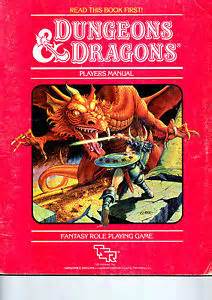
Tour Gary Gygax’s Basement (If You Don’t Know Who Gary Gygax, You Probably Don’t Care To Watch This Video)


Weekend Reading – Dungeons & Dragons Made You Possible


thCA1MWRJ8Cutting one’s writing teeth on games of Dungeons & Dragons.

The worst part: we actually need to defend the importance of critical thought.

Lots of people read poetry, but not many people buy it.

Netroots Nation & John K King Used Books


From July 17 through July 20, I was at Netroots Nation in Detroit. I don’t think that I’d been since it was called YearlyKos (and, in all honestly, I don’t intend to go back for another couple of years, without some compelling reason; it’s a great event – great speakers, great networking and catching up with old colleagues, good panelists, etc., but time and tide waits for no man).

I wasn’t about to not explore a once (and future?) great American city, with an interesting and problematic story of renewal (hipster/techie/artist gentrification which, while great in many ways, can also leave long standing communities of color behind, or worse, pushed out). I’ll write about some of my explorations later, but for now, I want to focus on one super awesome place: John K King Used Books.

An enormous, four story high used bookstore in an old glove factory. The shelves are packed inside, as tight as possible without forcing the fire marshal to take corrective action. Suitably cluttered and confusing (let’s just say that the answer to my question, ‘where can I find the poetry section,’ did not have a simple, geographic answer).

I went twice, the first time, purchasing two books of poetry. One was slim volume of Ben Jonson’s verse, the other a collection of poetry for some long gone high school syllabus (we certainly never read Rime of the Ancient Mariner when I was in high school), which I bought solely because it had Thomas Babington Macaulay’s The Lays of Ancient Rome.

The second time, I picked up John Ruskin’s collection of lectures/essays entitled Sesame and Lilies. You may remember that I read a great collection of essays and excerpts by Ruskin and was happy to find some more.

Anyway… check out the pictures of this huge and incredible bookstore. If you look closely, you can see the books piled up in the windows.


photo 1 photo 4

Midweek Staff Meeting – Unpopular Philosophies


Michael Oakeshott and  the ‘politics of mortality.’

Books and bookstores are an essential social good. So say the French. Can you really disagree with them on this?

Amazon invents a library. That costs money to rent books.

Just because I love poetry, does not mean I appreciate sentimental blather about poetry.

My all-time favorite reply to the question “What is the one thing you like least about reading in print?” came from an American: “It takes me longer because I read more carefully.” Isn’t careful reading what academe was designed to promote?

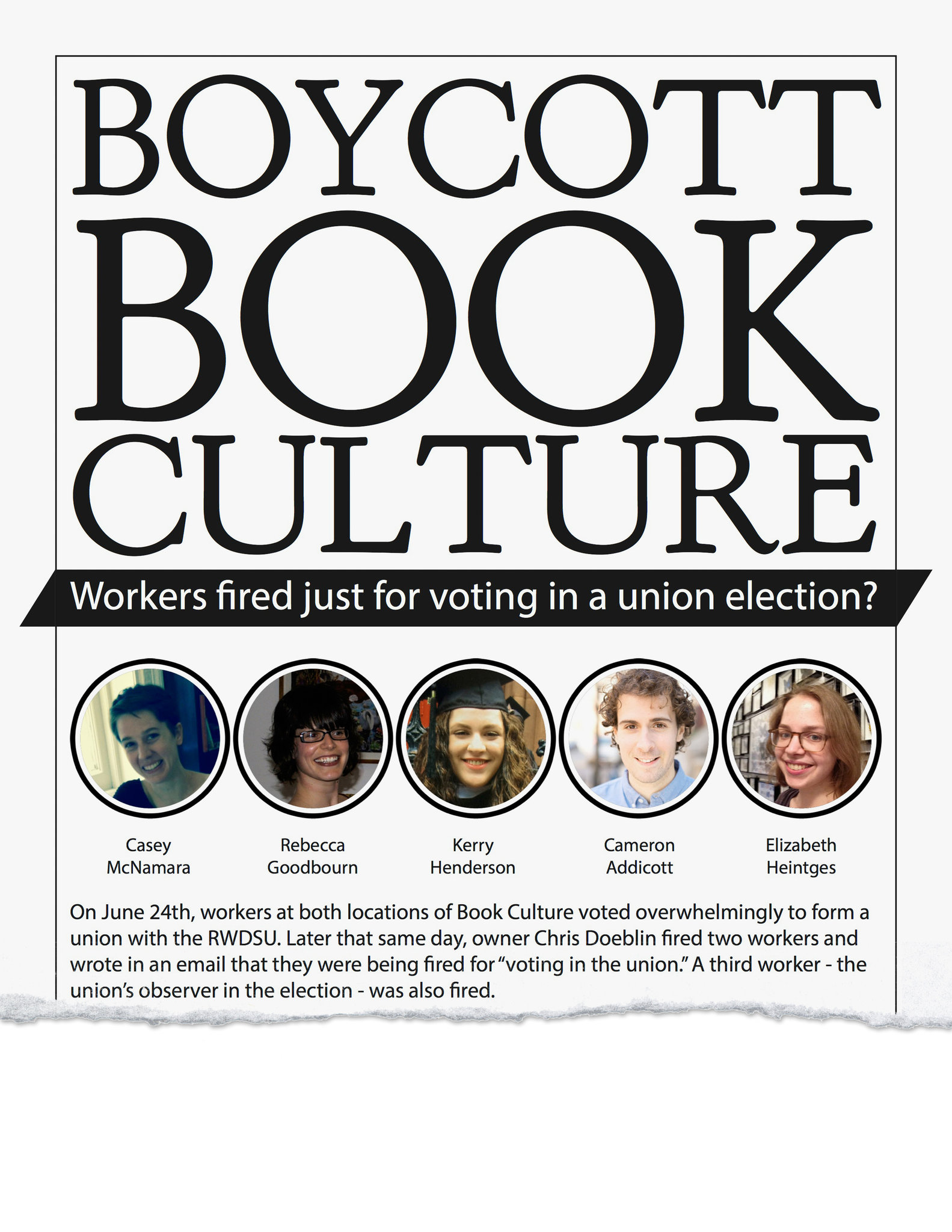
A union for bookstore employees!

Please note: this is from the organizing campaign. Book Culture employees are not unionized and the store rehired a bunch of fired workers.

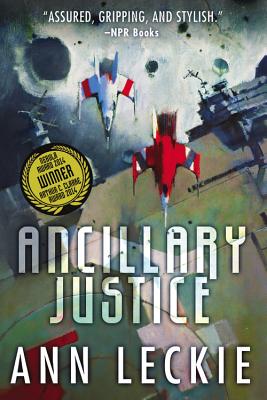
‘Ancillary Justice’ By Ann Leckie


9780316246620This is a great science fiction debut. Very good.

It’s unsubtle in its feminism, but is never aggressive in it. It plays marvelous games with language that play with identity (gender identity and on a more metaphysical level) and some tricks with linear storytelling.

The short summary is that the lead character is an AI that was formerly a giant spaceship who also simultaneously existed inside ‘ancillaries’ -humans (usually prisoners) who were turned into, well, ancillary appendages for the AI and the ship. The AI perceives all things from the perspective of all bodies (organic or mechanical) that make ‘it’ up. But the book begins when everything but one ancillary is destroyed and Leckie brilliantly writes about what it’s like to lose so much perception. Instead of seeing in hundreds of places at once, she can only see straight ahead now.

‘She.’ The language of the space empire where this takes place does not have gender identifiers. Leckie generally calls everyone ‘she’ to reflect this, but in a gendered language like English, that’s a fairly subversive strategy that creates some real (and enjoyable) dissonance for the reader. One develops images of characters as male or female, but then, through the use of feminine pronouns, all one’s assumptions are thrown into doubt. And I always thought of the main character as female, but does not even make sense? We have no idea as to the gender of the body and when ‘she’ was a ship with dozens of additional bodies… does gender even make sense?

The linearity games come by the flashbacks (it’s a two thousand year old ship). Conversations between the ship and multiple people occurring simultaneously: one between a military officer on a planet, talking to an ancillary and one between the main ship and an officer. With perfect recall and a vast mind and experiencing all aspects of ‘herself’ simultaneously, it becomes dizzying and immersive.

Finally, on a more genre level, it’s got some nice set pieces and is a beautifully realized bit science fiction world building (or galaxy building, really).

If you’re a sci fi fan or a feminist fiction fan or just like kooky conversations about existential identity, you’ll like Ancillary Justice. Or if you just like a good read and don’t mind being challenged a little bit. I’m not calling it a science fiction Finnegans Wage, but it does ask something of the reader.

Weekend Reading – Animal Metaphors


immanuel-kantI like hedgehog novels. I think. I don’t know. This is confusing.

The year of living Kantically.

‘The liberal state is in crisis, basically, because its regulatory, legal, and political institutions have either been captured, or have been laid siege to, by the economic interests they were created to control. While the liberal state was never intended to enforce distributive equality, it was always supposed to keep the power of big money from suffocating competition and corrupting the political system. This is the task it struggles to perform today and must recover fully if it is to regain the confidence and support of the broad mass of its citizens.’