Mary Ruefle At The Hill Center


Mary Ruefle appeared at the Hill Center and was a very engaging presence in the conversation with the Post‘s Ron Charles.

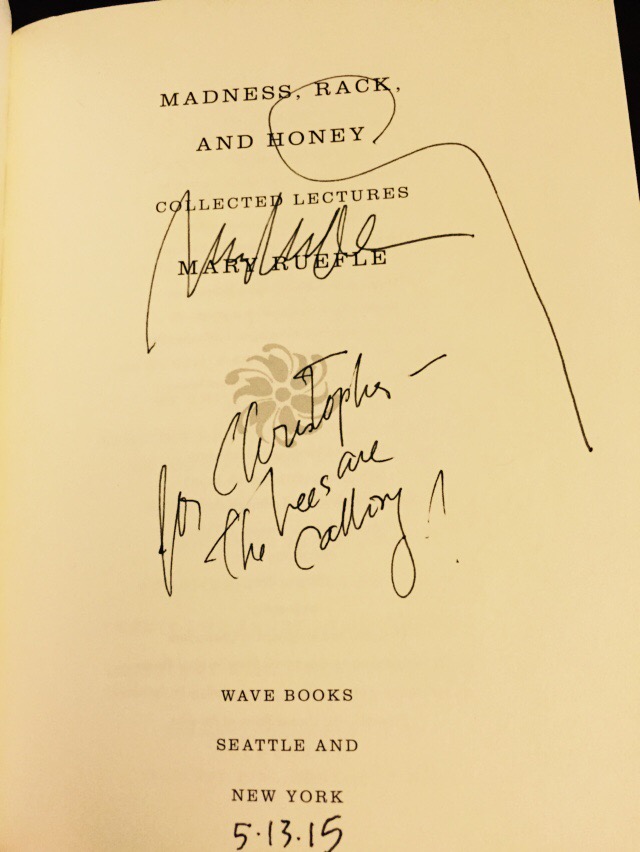
She also signed my copy of Madness, Rack, and Honey – with a special little something on account of my name (which is ‘Honey,’ by the way).


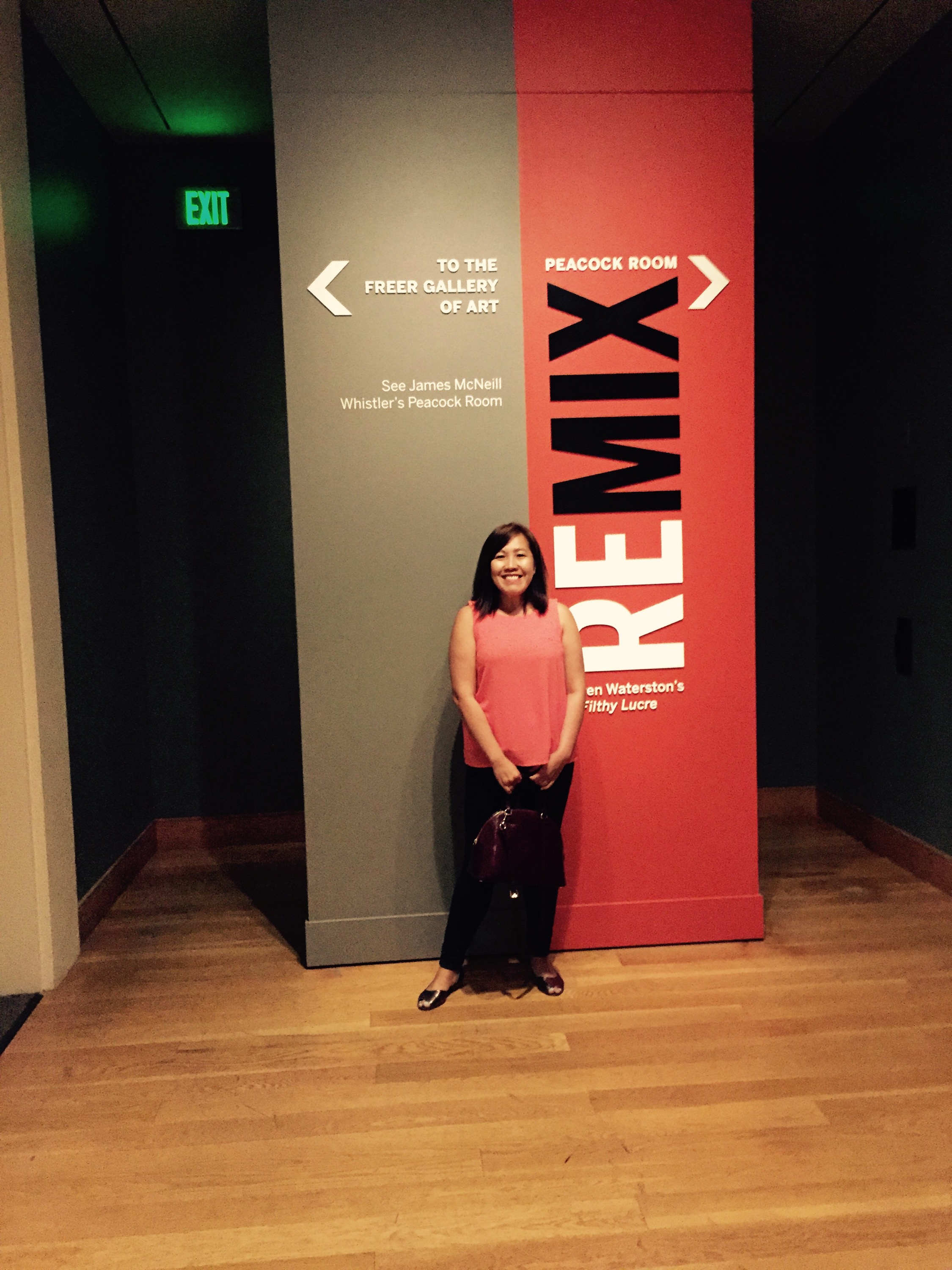
‘Persuasion’ By Jane Austen; Also, ‘Filthy Lucre’ At The Sackler Gallery


Please note: this is not me (and I don’t mean that in a ‘this is not a pipe’ way)
 I was going to go to a classics book club at my local Barnes & Noble, but instead went to an after hours thing at the Asian Art Museum. But in prep for the possible book club attendance, I picked up the chosen book, Jane Austen’s Persuasion.

When I bought it at the used bookstore, I was told (not unkindly) by the owner that I was the first man to have bought a Jane Austen novel from him. I think it was a compliment, but you’re never quite sure if it reflects as well on you as you think it does.

So, I’d read it before, enjoyed. That’s that.

But I picked it up again for this book club thing and I was… disappointed. Can one say that about Jane Austen? Pride and Prejudice is a model of gem-like perfection. My second reading of Persuasion left me a little unsatisfied.

Anne Elliot’s interior life lacks the richness of Elizabeth Bennett’s. She is frankly less interesting, yet we are held very much within her third person limited perspective. While one does not read Austen for lush geographical details nor for the richness of her descriptions of rooms or people, I dare you to read Pride and Prejudice and not come away with a very personal vision of the environs. Whereas, Persuasion‘s market town and then Bath are very vague. The people, too, leave me with no clear image of them (as for Pride and Prejudice, my generation has a very clear picture of the characters and they look remarkably like Jennifer Ehle and Colin Firth).

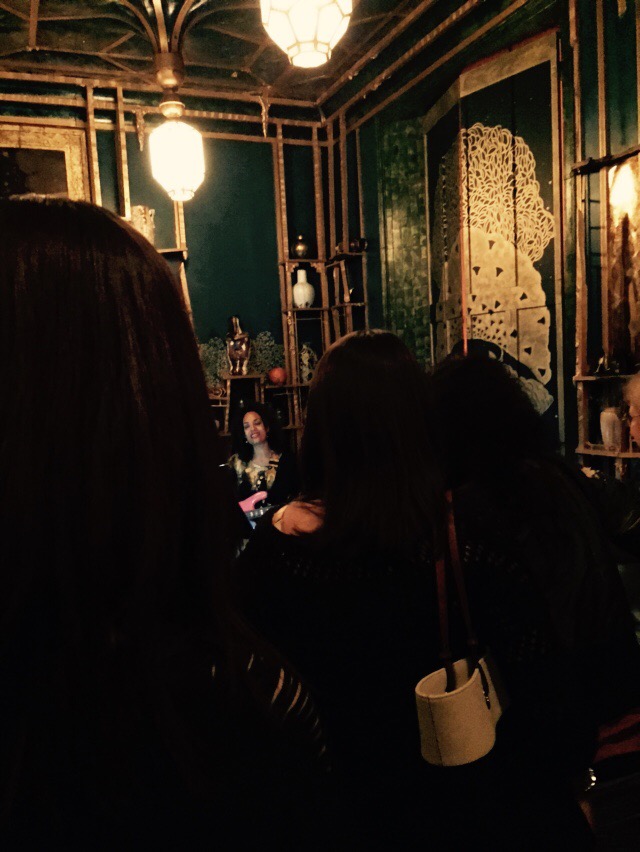
So, instead of that, we went an after hours open house at the Sackler-Freer Gallery (the African and Asian art museums, respectively, of the Smithsonian) where they kicked off an installation project riffing on Whistler’s famed Peacock Room (which is a room he decorated and designed for a wealthy liverpudlian and which has been moved entirely to the Freer Gallery), entitled Filthy Lucre. It’s starting point was the fights over money between Whistler and his patron about the final cost of the Peacock Room. Basically, it’s a closed room installation where the room is redone as someone decaying, sagging. The ceiling bursting with age and water damage; asian pottery shattered; the walls scarred with age and mold and lord knows what else. For the night, the music/performance art group BETTY played within the room. All in all, it was awesome.

Midweek Staff Meeting – It’s Not So Bad In Iowa


Art Center Courtyard bw
Des Moines Art Center

I liked that this list of 19 free art museums included the Des Moines Art Center. I visited that museum at least half a dozen times while living in that city and it’s really a great example of how a smaller museum can build a fun experience. Some great contemporary exhibits, some big outdoor sculptures that are almost landscape installations, and an interesting and fun looking building to house the collection.

Temple of Baal in Palmyra
There are so many human tragedies occurring around the world, but I would be lying if I didn’t acknowledge that the history major in me feels most deeply hurt by the cultural artifacts being destroyed. Since this was written, ISIS captured the ancient city. Let’s hope they leave them untouched.

This is what walkability creates – fitter, healthier residents.

I have not followed this controversy, nor I have read much by Vanessa Place, except the slim, co-written volume, Notes On Conceptualisms, but I’m going to fall on the side of ‘not cool, Vanessa.’

But that’s certainly not the only point of view.

Revolution Books


I found myself in New York City for work the other week, so naturally I looked to find what bookstores were near my hotel. Weeding out the ones primarily serving Japanese speakers, I came across Revolution Books.

They are attempting to raise funds to move to a new (and more affordable) location and were having a series of readings and performances, as well putting their stocks of used books out for sale – $12 got you a back and all the used books your could fill it with. I wasn’t going to take advantage of that until I saw Rose Macaulay’s The Pleasure of Ruins. So, I added Mary McCarthy’s The Company She Keeps and two books by Robbe-Grillet. My better half is a dyed-in-the-wool capitalist. She would probably be a Republican if the GOP weren’t so obviously crippled by dog whistle racism. But for some reason, she has a fascination with Asian communist leaders, so she added a collection of writings by Ho Chi Minh.

It’s a great resource and I hope that the place survives.

‘The Pleasures and Pains of Coffee’


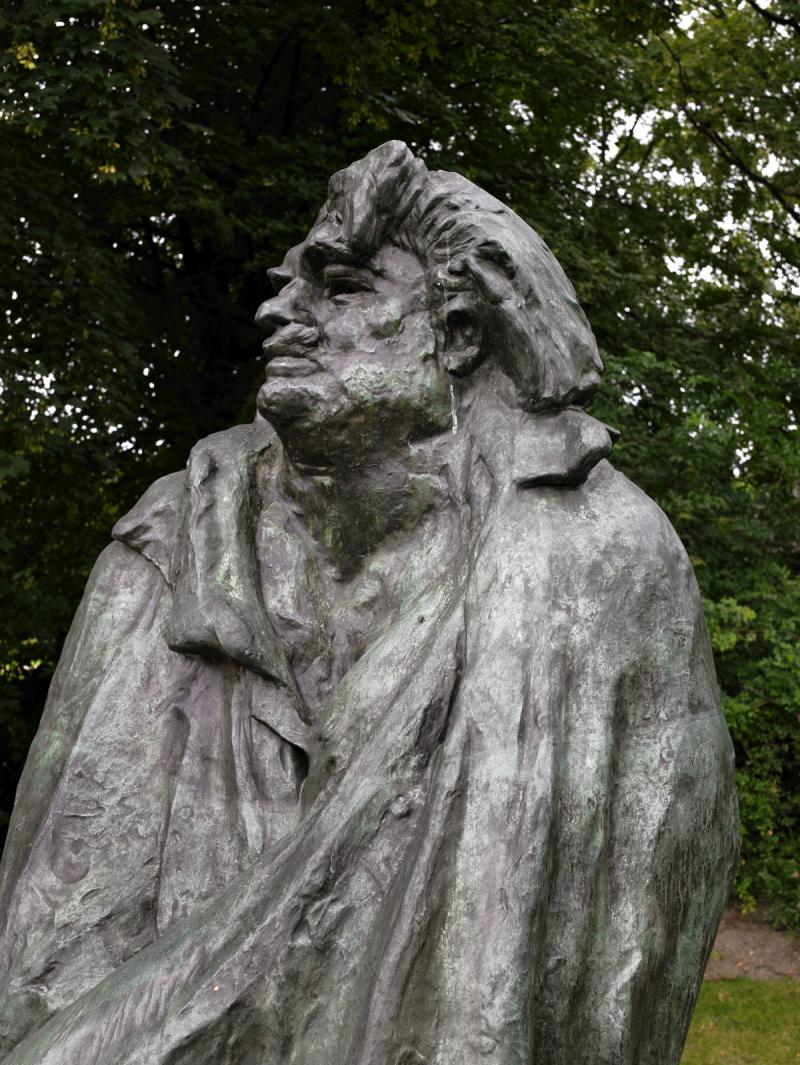
Rodin's status of Balzac
Rodin’s status of Balzac

by Honore de Balzac
translated from the French by Robert Onopa

Coffee is a great power in my life; I have observed its effects on an epic scale. Coffee roasts your insides. Many people claim coffee inspires them, but, as everybody knows, coffee only makes boring people even more boring. Think about it: although more grocery stores in Paris are staying open until midnight, few writers are actually becoming more spiritual.

But as Brillat-Savarin has correctly observed, coffee sets the blood in motion and stimulates the muscles; it accelerates the digestive processes, chases away sleep, and gives us the capacity to engage a little longer in the exercise of our intellects. It is on this last point, in particular, that I want to add my personal experience to Brillat-Savarin’s observations.

Coffee affects the diaphragm and the plexus of the stomach, from which it reaches the brain by barely perceptible radiations that escape complete analysis; that aside, we may surmise that our primary nervous flux conducts an electricity emitted by coffee when we drink it. Coffee’s power changes over time. [Italian composer Gioacchino] Rossini has personally experienced some of these effects as, of course, have I. “Coffee,” Rossini told me, “is an affair of fifteen or twenty days; just the right amount of time, fortunately, to write an opera.” This is true. But the length of time during which one can enjoy the benefits of coffee can be extended.

For a while – for a week or two at most – you can obtain the right amount of stimulation with one, then two cups of coffee brewed from beans that have been crushed with gradually increasing force and infused with hot water.

For another week, by decreasing the amount of water used, by pulverizing the coffee even more finely, and by infusing the grounds with cold water, you can continue to obtain the same cerebral power.

When you have produced the finest grind with the least water possible, you double the dose by drinking two cups at a time; particularly vigorous constitutions can tolerate three cups. In this manner one can continue working for several more days.

Finally, I have discovered a horrible, rather brutal method that I recommend only to men of excessive vigor, men with thick black hair and skin covered with liver spots, men with big square hands and legs shaped like bowling pins. It is a question of using finely pulverized, dense coffee, cold and anhydrous, consumed on an empty stomach. This coffee falls into your stomach, a sack whose velvety interior is lined with tapestries of suckers and papillae. The coffee finds nothing else in the sack, and so it attacks these delicate and voluptuous linings; it acts like a food and demands digestive juices; it wrings and twists the stomach for these juices, appealing as a pythoness appeals to her god; it brutalizes these beautiful stomach linings as a wagon master abuses ponies; the plexus becomes inflamed; sparks shoot all the way up to the brain. From that moment on, everything becomes agitated. Ideas quick-march into motion like battalions of a grand army to its legendary fighting ground, and the battle rages. Memories charge in, bright flags on high; the cavalry of metaphor deploys with a magnificent gallop; the artillery of logic rushes up with clattering wagons and cartridges; on imagination’s orders, sharpshooters sight and fire; forms and shapes and characters rear up; the paper is spread with ink – for the nightly labor begins and ends with torrents of this black water, as a battle opens and concludes with black powder.

I recommended this way of drinking coffee to a friend of mine, who absolutely wanted to finish a job promised for the next day: he thought he’d been poisoned and took to his bed, which he guarded like a married man. He was tall, blond, slender and had thinning hair; he apparently had a stomach of papier-mache. There has been, on my part, a failure of observation.

When you have reached the point of consuming this kind of coffee, then become exhausted and decide that you really must have more, even though you make it of the finest ingredients and take it perfectly fresh, you will fall into horrible sweats, suffer feebleness of the nerves, and undergo episodes of severe drowsiness. I don’t know what would happen if you kept at it then: a sensible nature counseled me to stop at this point, seeing that immediate death was not otherwise my fate. To be restored, one must begin with recipes made with milk and chicken and other white meats: finally the tension on the harp strings eases, and one returns to the relaxed, meandering, simple-minded, and cryptogamous life of the retired bourgeoisie.

The state coffee puts one in when it is drunk on an empty stomach under these magisterial conditions produces a kind of animation that looks like anger: one’s voice rises, one’s gestures suggest unhealthy impatience: one wants everything to proceed with the speed of ideas; one becomes brusque, ill-tempered about nothing. One actually becomes that fickle character, The Poet, condemned by grocers and their like. One assumes that everyone is equally lucid. A man of spirit must therefore avoid going out in public. I discovered this singular state through a series of accidents that made me lose, without any effort, the ecstasy I had been feeling. Some friends, with whom I had gone out to the country, witnessed me arguing about everything, haranguing with monumental bad faith. The following day I recognized my wrongdoing and we searched the cause. My friends were wise men of the first rank, and we found the problem soon enough: coffee wanted its victim.
Weekend Reading – Difficult Poets


Screen-Shot-2015-04-29-at-1.30.36-PM

Okay, so read this article about the British poet, JH Prynne. And read Prynne. You might regret it, but you shouldn’t read. I read a lot about him, all of it pretty rhapsodic, but he’s hard to get a hold of. I finally had to order a book of his collected poems from England (not cheap). But it is so worth it. I don’t think I can be sure that I understand I single poem in thick volume, but each one was also impossibly beautiful. So find a way to read him.

Let’s continue on the theme of poetry, by this look back at the second collections of Rae Armantrout and Ye Chun. I’m going to admit here that I’ve never read nor had even previously heard of Ye Chun.

How is it possible to be a progressive, a liberal, a radical while holding to explicitly conservative positions. It’s about priorities. Do you commit to an expansive vision of justice that values everyone? That especially values those who are not valued by society? Or do you focus on positions that circle the wagons? That is how Pope Francis can be a radical while still being conservative on abortion, birth control, and gay marriage.

Online dating in the nineteenth century.

Commonplace Books, Part II


Anthony Powell (and a cat, I think)

The first reference to a ‘commonplace book’ that I ever read was in Anthony Powell’s Dance to the Music of Time.

Now I’ve come across this article about Powell’s writer’s notebook, recently published. Seems to darn serendipitous, doesn’t it? I should read that notebook, but as I write this, I have one more book left in his quotidian epic.

The author of the article, Terry Teachout, talks about re-reading Dance to the Music of Time every few years. While I’m not sure that I totally believe him (it’s quite an investment of time at the expense of other reading to wholly repeat more than once a decade), it does bring up a question I’ve been struggling with, namely, which books to keep? I have loved every page of Powell’s magnum opus, but it takes up not inconsiderable shelf space (or, if I’m being honest, ‘stacks on the floor’ space or ‘under the bed’ space or ‘somewhere I hope my wife won’t notice that I’m storing books’ space). Would I read it again or, if I won’t, is it the sort of book that one should keep in one’s permanent library, regardless of spatial opportunity cost? Perhaps yes. I think I’ve been guilted into keeping these books.

Commonplace Books


One of my 'commonplace books'
One of my ‘commonplace books’

Here’s one definition of a commonplace book:

A commonplace book is a central resource or depository for ideas, quotes, anecdotes, observations and information you come across during your life and didactic pursuits. – Ryan Holiday

I used that definition mostly because I didn’t want to publicly resort to Wikipedia.

The term has come up twice in my recent reading. The first was in the most recently read Dance to the Music of Time novel, Temporary Kings. A now (prematurely) dead novelist name Trapnel X about whom a fellow named Gwinnett is writing and autobiography, kept a commonplace book. Then, I saw this reference to commonplace books in an interview with the poet-cum-artist Donato Mancini.

I had mostly just taken by context what a commonplace book actually was until the second encounter with the term, after which I figured I had best find out for certain. While learning did not really change my understanding of what I had read, I did give me a name to attach to what I had been doing (and I’ve read enough Ursula K. LeGuin to appreciate the power of names and naming). My vast array of notebooks, scattered across both my home and (likely) two or three continents are, in my use of them, commonplace books.

‘The Thing’ By Dylan Trigg


9781782790778

This review will be necessarily vague and brief because, honestly, I don’t remember a lot of this book. A while back, I saw a list of the best books of critical theory published in 2014. The Thing not only seemed interesting, but it also referenced my second favorite Kurt Russell movie (after the awesome super classic, Big Trouble in Little China), as well having a lot of references to the equally enjoyable and problematic works of  H.P. Lovecraft.

So, while on a plane ride to Chicago, I started burrowing into the slim volume, which I had downloaded onto my nook.

Exhausting. Unfulfilling. Confused. Meandering. Lacking a coherent point.

Those were some of my initial opinions. Honestly, if it weren’t so short, I wouldn’t have kept reading it on the plane at all. But I didn’t finish it on the plane and I finally got around to finishing it a couple of months later, with too little memory of the first half of the book to attempt to understand it and too little patience with what I did remember to consider starting over.

But, here’s my summary: Husserl, mumble, mumble, Husserl, Merleau-Ponty, mumble, we are descended from aliens, Husserl, mumble, Levinas, Earth is kind of unfeeling so therefore Husserl, mumble, mumble, Merleau-Ponty, mumble, spider legs head.

‘Temporary Kings’ By Anthony Powell (Book Eleven, Dance To This Music Of Time)


Fourth Movement

I just finished the penultimate volume of the twelve volume Dance to the Music of Time. Recently, I was musing to myself about the sadness of a series’ end, but I don’t feel that way (not yet anyway – but there’s still one more to go) about Dance to the Music of Time. Not because I haven’t enjoyed it, because I have. Immensely. But because it doesn’t feel like it’s ending. The characters are getting older – the narrator, Nicholas Jenkins, talks about the impact of turning fifty – but they aren’t dead (well, some are) and life goes on. And the books are definitely about life going on. There are some themes, yes, and it’s not really a naturalistic novel. And while it begins at the beginning of the end of empire, it’s not really a novel about decline, except insofar as fifty years old represents a sort of decline from forty years old.

There is a sort of ‘set piece’ in Temporary Kings: a literary conference in Venice where several characters converge. The conference has a sort of comic air to it, with Pamela Widmerpool’s tendency to chaos and sexual disorder causing some fuss, but the best parts were when Nicholas spent some time with an old friend of his father’s, living in Venice. A military man, he is the most unlikely figure I’ve encountered to become a leftist, socialist realist painter primarily inspired by abstract art. And he’s definitely of an old generation than Jenkins.

Widmerpool seems finally to have suffered his fall, too. Caught up in some low key espionage-esque scandals, he survives, but not unscathed. I know that he was always a left-leaning fellow – a fellow traveler, really. But it’s hard not to think of him as conservative. He loved power and never really seemed to care about the ‘proletariat.’ He ideals, if he had any, were some kind of vague ‘internationalism’ that I never really understood. But it’s nice to see him taken down a notch, though it seems he’ll never receive a literary punishment for the terrible things he did during the war.