‘The Blade Itself’ By Joe Abercrombie


9780316387316Somewhere, I’d read a recommendation of this novel. And, it’s a pretty good fantasy novel. Just the right amount of variation from the traditional tropes, while staying within the recognizable framework. It doesn’t change the genre or break new ground (indeed, it’s a product of a post-Glen Cook fantasy world; if you don’t know who Glen Cook is, imagine a bloodier, darker Game of Thrones), but it’s well paced and enjoyable.

One interesting bit: two of the major characters are ugly. That may not sound like much, but there are a lot of handsome heroes in fantasy land. The most prominent protagonist if a torturer in his mid-thirties who was himself so tortured (while a POW) that he can’t eat solid food, walk without pain, nor pee standing up. The legendary warrior and swordsman is very deliberately not described until three quarters of the way through, when another character reacts in shock upon seeing him: he’s so scarred that his eyes and mouth seem out of whack and his nose a thing of mishealed and mangled cartilage. He’s a big, brooding, bruised, and battered boxer.

This is a trilogy and I’ll probably see if I can’t find book two at the library, but it’s not a priority.
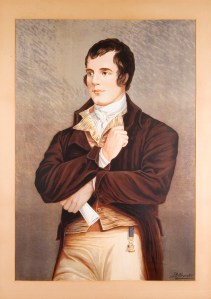
Happy Burns Night!


Burns

‘Sidney Chambers and the Shadow of Death’ By James Runcie


ChambersI saw part of an episode of the PBS Mystery (presumably, originally a BBC thing) of this, which is why I decided to download it onto my Nook for my trip to Thailand. My mother loves British mysteries, but I never got beyond Sherlock Holmes and a couple of Agatha Christie stories.

Well, this is not a novel. Really, it’s a chronologically arranged short story collection. I’m guessing each episode of Grantchester Mysteries is a story from this or another Sidney Chambers story (who is an Anglican priest for the Grantchester parish).

The stories are okay. The landscape and time period (early fifties) done in broad strokes, rather than vivid ones. I’m still not sure what, if anything, makes this dude a good detective.

Also, a couple of things ate at me. In one story, I felt a little horrified by the ending. Did we establish that a doctor was probably giving patients extra large doses of morphine to euthanize them unwillingly and did we then decide that we’d probably (by means of surprisingly secular sermon) convinced him not to do that again and then walk away from it?

And did a priest give disturbingly blase answer to how he was able to deal with having shot people in WWII (before he was a priest)? While we can all agree that Nazi Germany absolutely had to be stopped, I expect my men of God to feel, at the very least, a little squeamish about any taking of human life, no matter how morally justified. Maybe that’s just me.

I probably won’t read any more. I suspect it’s a decent or perhaps even better than average genre book. But it’s not in my preferred genres, so I’m unwilling to cut it the slack I might to a science fiction novel.

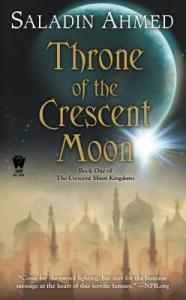
‘Throne Of The Crescent Moon’ By Saladin Ahmed


ThoneThis book got pretty good press when it came out; both as a good read and for the fact that it abandoned the traditional, Western European medieval style of fantasy world for one based on the actual medieval Middle East (or, really, on the fantastical Middle East of the Arabian Nights).

As it turns out, it is one half of a good story. A bedouin-esque girl who can turn into a lion; an ascetic swordsman; an aging ghul hunter; and a husband and wife team of magus and alchemist.

But it’s missing the other half. There are ancient pyramids and evil ‘Dead Gods’ from an ancient time (something between ancient Egypt and Robert E. Howard’s orientalist fantasies of Stygia) and child murderer buried alive in the tomb of an ancient something that was, apparently, not so dead. There are some great stories behind the villains, clearly. Too bad we never ever hear those stories. Just tiny bits. But no flavor. Not background. No glimpse of their perspective or motivations (which the reader is forced to assume are ‘power and world domination’). By the standards of today’s door stopper fantasy novels, this one is not so long and an extra hundred pages would have been well worth it. As it was, the final confrontation was disappointing because I had no feel for the enemy they were fighting.

Happy Birthday, Tom Baker


doctor-who-scarf-1-537x402

I’m Back From Thailand


_1450058904

If Nothing Else


  If nothing else, have finished a lot of reading. Eight books to be precise with a good chance of finishing my re-read of Persuasion and of finishing the Elective Affinities. And of course, there has been much else, rather than nothing else.

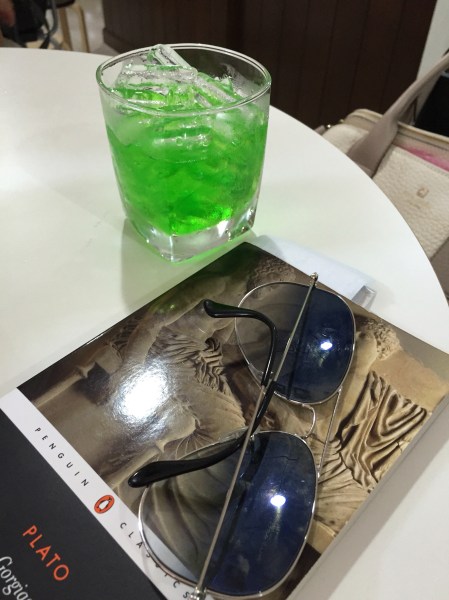
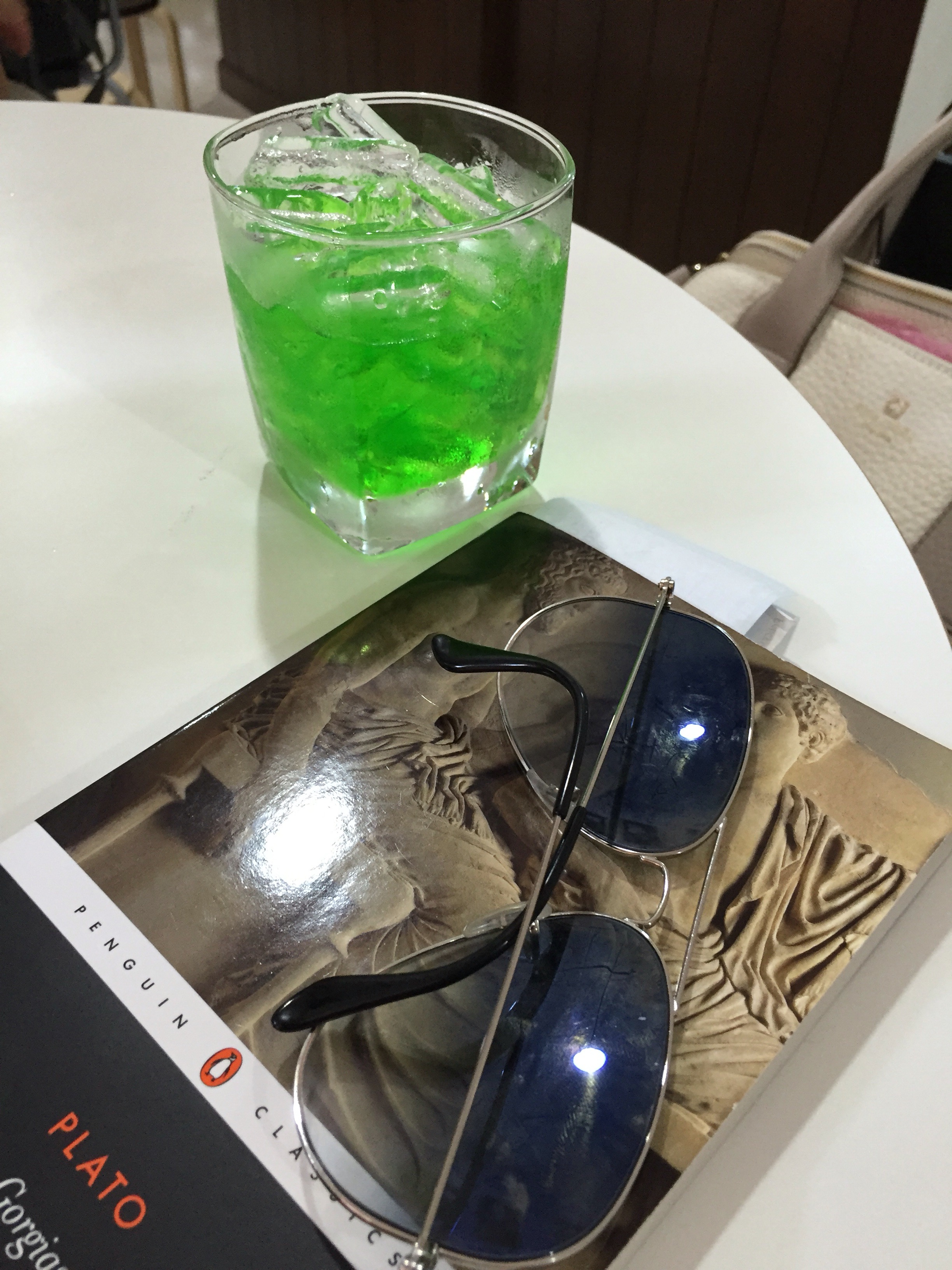
The total stands at four fantasy novels (The Blade Itself, The City of Wonders, The Charnel Prince, The Throne of the Crescent Moon), one British ‘cozy’ style mystery (Sydney Chambers and the Shadow of Death), two philosophy (Gorgias, A Short Introduction to Art Theory), and one poetry (Lunch Poems).

Obviously not the final judge of a good vacation, but being as susceptible to the temptations of technological distraction as anyone, it is good to be in a position to be able to get some solid reading done. I’ll be on my own when I get back (my better half is staying in Thailand for a few months) and can hope to do some more reading when I return, but there is a certain feeling of accomplishment in plowing through a solid number of books.

I’m Still In Thailand, So Here’s An Episode Of ‘Flash Gordon’


My Top Ten Of 2015


In no particular order and merely to get in on the game, here is a list of my top ten reads from 2015 (not the the top ten published in 2015, because I’m still catching up on the nineteenth century [I think I already made that joke earlier]).

Machi Tawara’s Salad Anniversary was just so darn enjoyable to read that it’s got to be on this list.

The Golden Lotus… it took me a while to finish it, but in addition to being an enjoyable read (somehow, the seemingly repetitive venalities of Ximen Qing never got old), I also felt that I learned a lot by immersing myself in the pages of a book about a very, very different milieu than my own. Even little stuff, like figuring out what they were actually drinking when it mentioned ‘wine’ (most likely a malted beverage, similar to sake) and, yes, reading about medieval Chinese sex toys.

Shen Congwen’s Border Town did not stay with me long, but good Lord, was it heartbreaking. I suspect that my mind is trying not to remember it, because it was so darn sad.

Jenny Zhang’s Dear Jenny, We Are All Find was not only a good read, but I felt downright prescient when, while reading it, she became minorly famous for her response to… let’s call it ‘Poetry-gate.’

You know there’s going to be some fantasy on this list, right? Nothing new, but I re-read the gentle, melancholy Riddle- Master of Hed this year, for the first time in decades.

While re-reading Proust, it was in the third book, Guermantes Way, that my efforts bore fruit and I was understanding him in a way that I had not before.

I finished Powell’s magisterial-comic epic, Dance to the Music of Time. Unfortunately, the volumes I read in 2014 were the best, but Books Do Furnish a Room was very good and I finished it in January of 2015, so it counts.

The Red Lily… a sexy, nineteenth century bit of a novel about artists, aristocrats, love affairs and what not… what’s not to like?

Seeing Antogonick performed on the stage in Chicago singlehandedly got me back into Anne Carson, who I had fallen out of love with. I picked up an inexpensive copy and read it after seeing the play and, yeah, it’s still damn good.

Epinician Odes and Dithyrambs of Bacchylides was a freaking wonderful find! Who knew occasional poetry could be so awesome!


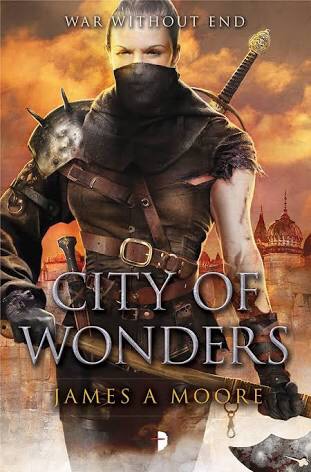
City Of Wonders


  I was pretty excited to see that Moore’s City of Wonders – the third book in his Seven Forges series – had come out. I even paid full price for the ebook, which I almost never do.

So I am disappointed to acknowledge that I was… disappointed. It was just lacking in something. Direction perhaps. Or purpose. Or discipline.

But it did add its first female main character. There have been important female characters, several, in fact, but here he added what seems to be a truly major perspective character who is also a woman (and set up to be a bigger influence in the next volume). So score one for a bit o’ feminism.