The Road To Monticello: The Life And Mind Of Thomas Jefferson


While reading it, I was constantly contrasting its view of Jefferson with that in Friends Divided.

The short version is that Road takes a significantly more positive view of Jefferson. Friends was overwhelmingly complimentary, but with notable moments of, dare I say, snark. Jefferson was sometimes portrayed in that one as a bit fatuous and image obsessed and even slightly shallow, especially in comparison to the earnest and earthy Adams. Both, interestingly, more or less skip over Jefferson’s presidency.

Road glossed over the eight years of Jefferson’s presidency because he was mostly busy with business of being president and the book is an intellectual history of Jefferson. More specifically, it is a bibliographic history of the third president, focusing on not just what he was writing, but on what he was reading. The immense research into his book buying, reading, and library contents is staggering. Others might find it boring, but not me.

Even more than in Friends, the treatment of Sally Hemmings is disconcerting. I was particularly struck by a moment when the book talked about James Hemmings coming with Jefferson to Paris and then noting that his sister, Sally, came, too. James gets mentioned quite a bit, but Sally, hardly at all and the absence feels jarring. How can you talk so much about James Hemmings and not mention the relationship and children Jefferson had with Sally? I’m sure that the author wanted to get back quickly to the particular subject of his sort of biography, but it just feels… weird.

Friends several times noted that Jefferson did not read novels (unlike Adams; the book had a slight bias against the third president, I felt, and even this felt like an attempt to imply that he didn’t have much of an inner life) and Road once, towards the end. But Road also repeatedly stressed his great love of… what for it… the novels of Lawrence Sterne! Yes, that’s right! Tom loved Tristram Shandy! For some reason, I got a kick out of that.

If there is one thing that this book will do, it will make you want to move into a house on a Virginia mountain or hill and fill up a large library and read all day long.
Books In The Field


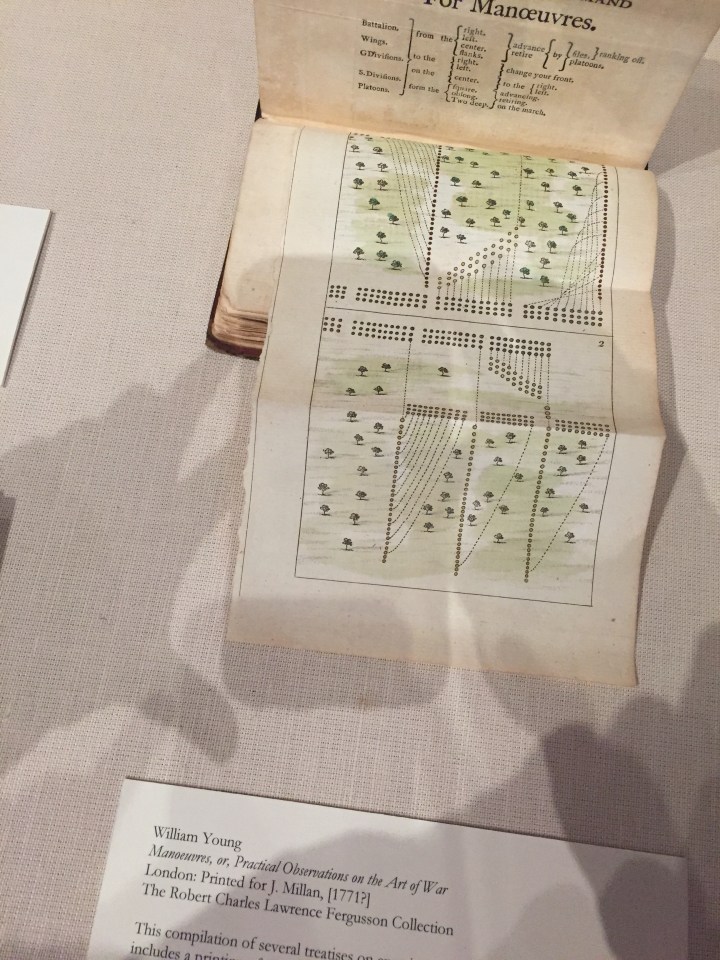
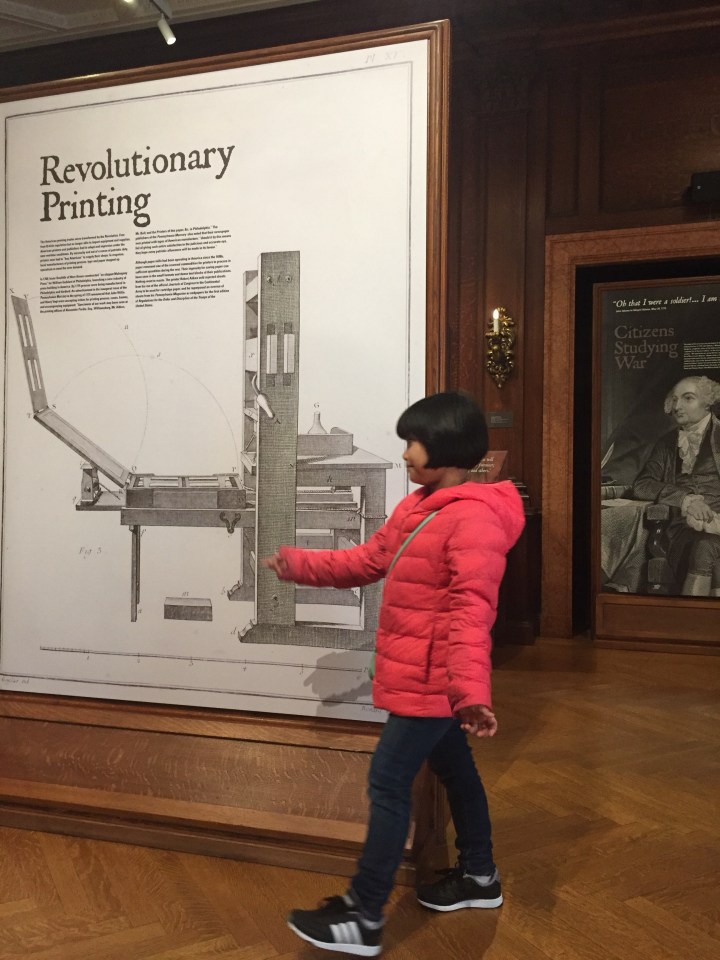
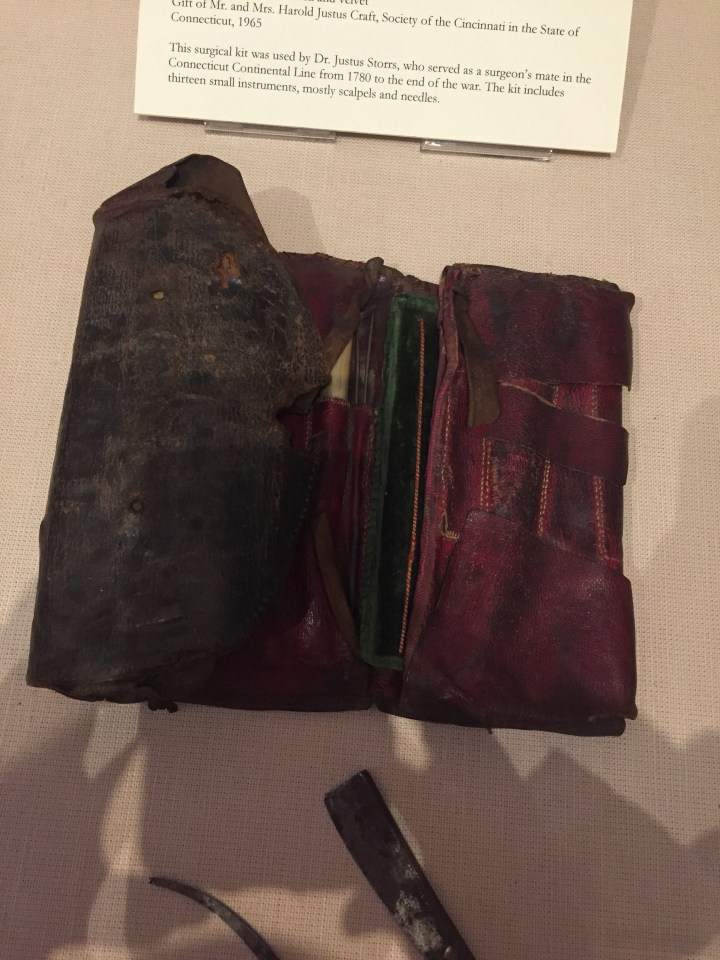
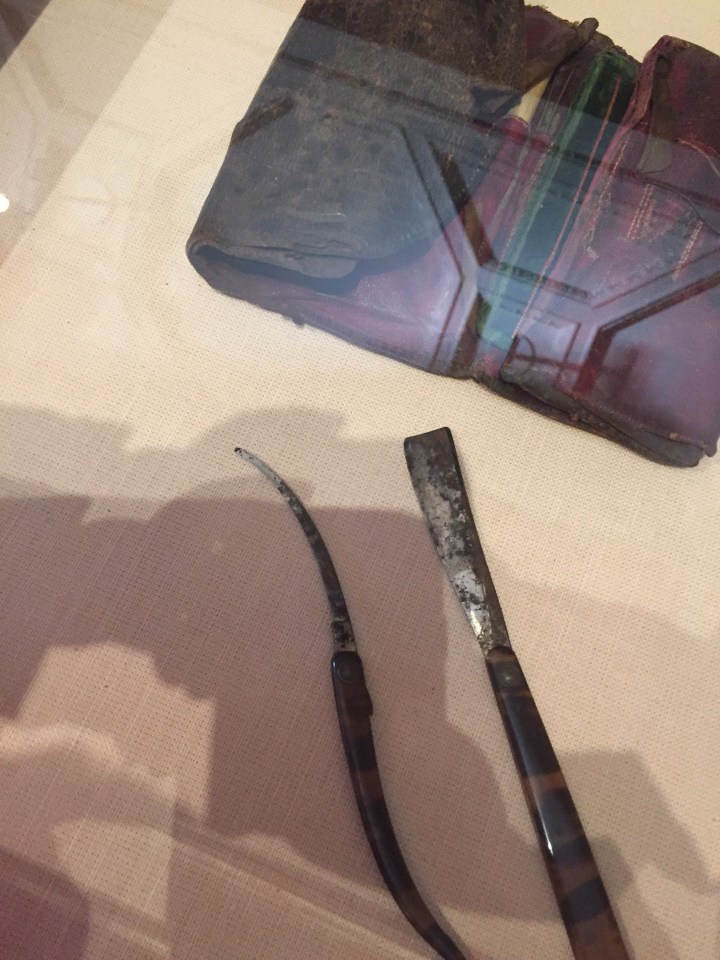
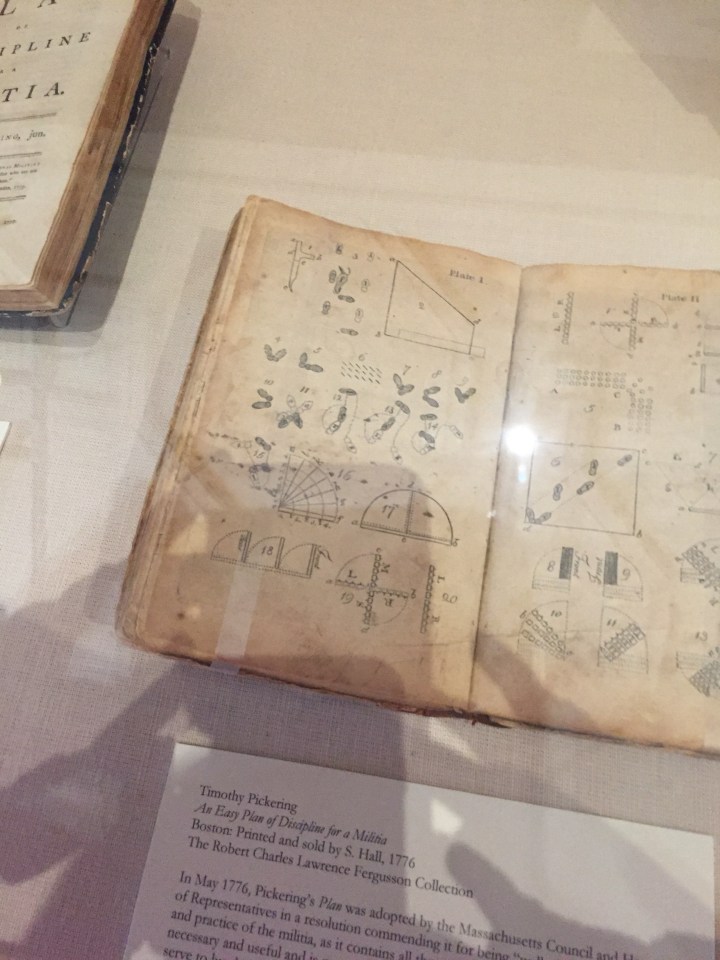
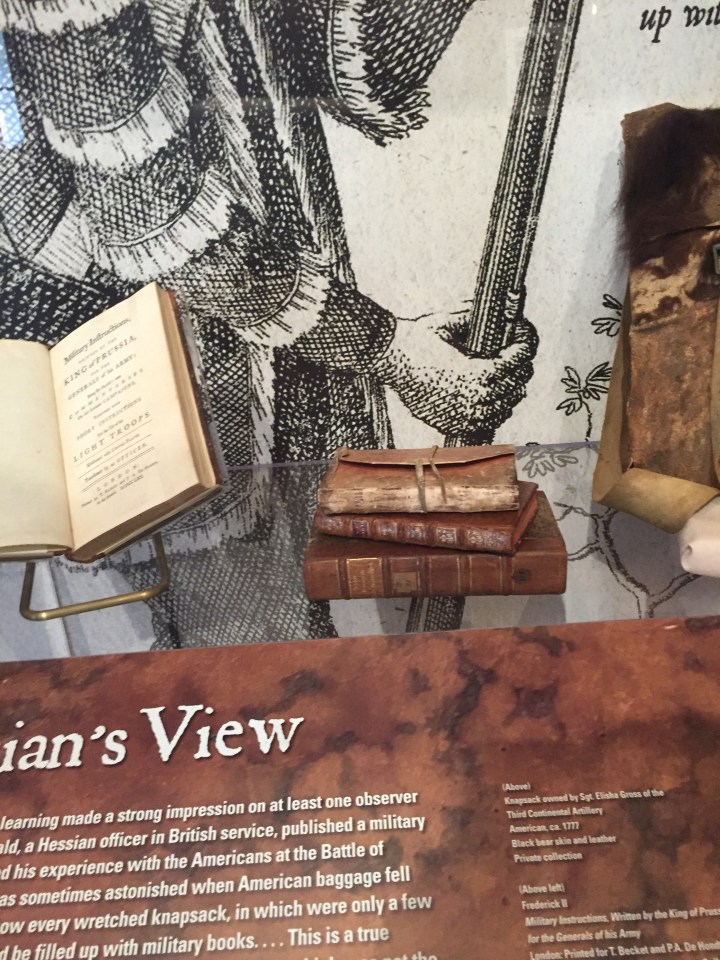
That was the title and subject of an exhibition (now closed – I caught it on its penultimate day) at the Society of the Cincinnati, housed in the Anderson House, near Dupont Circle. The Society focuses on Revolutionary War history (Cincinnati comes from the Roman general, Cincinnatus, who you can look up on your own, but which connects to George Washington both resigning his commission and also only serving two terms). The books in question are the books used by Continental Army soldiers and officers during the war against Britain – mostly, as you might expect, books on military strategy and exercises and on medical/surgical techniques.
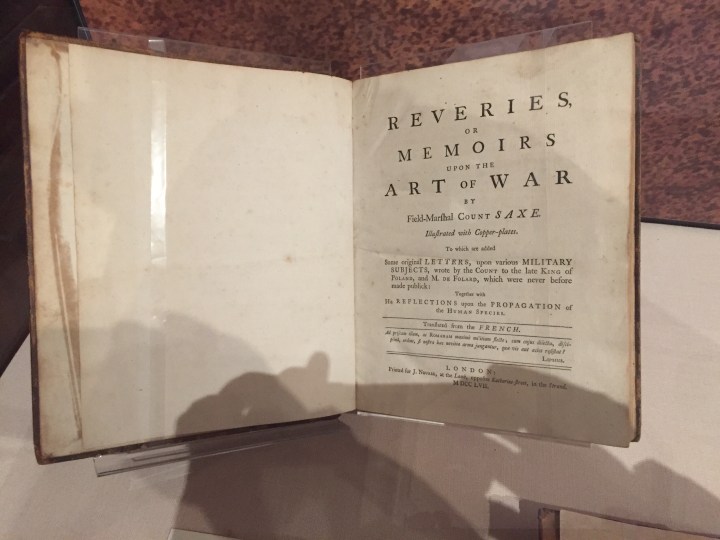
I am a sucker for exhibitions about books. I love looking at old books.

I will admit, it was a struggle to really linger over the volumes because my little one, unsurprisingly, is less enthralled by such exhibits than her father. I didn’t even try to complete a tour of the house later. But I hope to go back some day and see it all (the next exhibit is on Alexander Hamilton who is, of course, having a bit of a moment).

The Prisoner Of Zenda


This Washington Post article calls Anthony Hope’s wonderful, brisk novel, ‘The most romantic book you’ve never read.’

Well, I’ve read it many, many times. A dozen at least (though not for many years). And it is as awesome as Michael Dirda claims. Despite taking place in the 1880s, Hope is never afraid to make his heroes choose swords over pistols.

However, I have to break with the esteemed reviewer over his praise for its sequel and though, in the days before Amazon and the internet of things, I searched long and hard for it, I wish that I had never had it and that The Prisoner of Zenda had remained as it was: a single, perfect adventure.

Anyway, I may have to read it again. But not the sequel.

This is what my old edition looked like

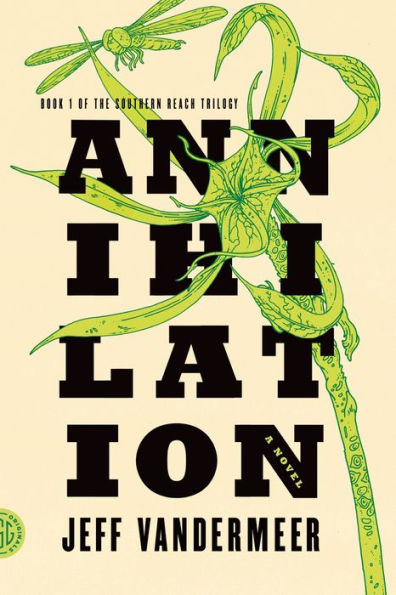
Annihilation


Annihilation got excellent reviews and while I’d wanted to read it for a while, was only compelled to read it, for fear that I might see the upcoming movie before reading the book.

Let’s just say that I was surprised. Read more

#Instapoets


I have picked up copies of books by Rupi Kaur and Lang Leav and leafed through them. Like the alliteration of ‘Lang Leave and leafed,’ I am not convinced by their quality. Actually, I’m pretty convinced of their quality and don’t think they have much. I have seen, in magazine articles, screen shots of work by other ‘instapoets’ and it has made me think that the genre as a whole is pretty lacking.

I also don’t have much affection for slam poetry. If we are ranking these things, slam poetry ranks orders of magnitude above instapoetry in my estimation.

Me? I learn and comprehend best through interaction with the written word. I like to read, is what I’m saying. More than that, reading is how I engage in dialogue with the world around me.

So neither forms are really aimed at folks like me.

And I really don’t know what to say nor what to add to the current kerfuffle over instapoets and, to a lesser extent (mostly because of this article, which singled out a particular, recently published in book form, slam poet), slam poets. It’s not the first kerfuffle and it won’t be the last. Or, more likely, it’s all the same kerfuffle, which has been going on for a couple of years, at least.

But my two cents. It’s not good poetry. I haven’t read deeply into the genre, but I feel like I’m on pretty solid ground. Both in terms of my critical evaluation of what I have read and as regards the follow up question as to whether I’ve read enough to form a valid opinion.

But… I’m glad poetry is selling. I didn’t think the poetry collection by the singer, Jewel, was very good either (though, of course, I listened to her first  album constantly in the mid-nineties and nursed a mild crush on her in my early twenties). But I believe that having read one poem, people may read another. Having bought one book, they may buy another.

Also, though we may feel resentful that someone has achieved success with what we believe to be pretty shoddy work, most of these folks are in their twenties and I think we must forgive people their awful youthful poetry, even if it does get published, sell in the millions, and make them rich. And we should try not to be too bitter about it.

Six Four


The novel was mostly better than I expected and then worse than I had expected.

I don’t read many mysteries, but I know enough that this was not your typical police procedural – to its benefit. Mikami is a former detective; former because he was transferred to media relations and made the department’s director.

The tension comes from the protagonist seeming to discover a conspiracy to cover up police misconduct during the investigation of a now fourteen year old kidnapping case (internally nicknamed ‘Six Four’).

When that is revealed, the author keeps up the tension, but something slips. It’s not clear what the endgame is nor what Mikami will actually have to do with it. And, in the end, the resolution seems to have little to do with him.

Six Four got a good bit of favorable coverage in the press and after reading another Japanese mystery some time ago, I decided to give this one a try. This one is more a psychological tale and the differences between American and Japanese norms both more and less visible. Perhaps the ‘more’ has to do with with I found unsatisfying about the last hundred pages or so.

That all being said, if you read a lot of mysteries, chances are, Six Four is better than ninety percent of what you’ve been perusing.


Happy Burns Night


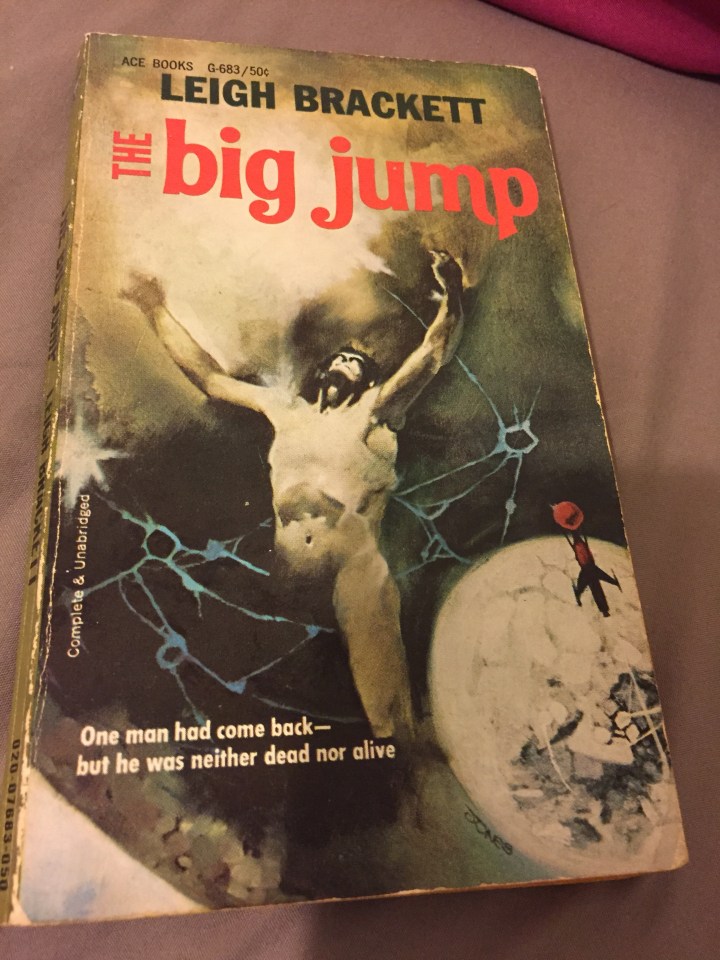
‘The Big Jump’ By Leigh Brackett


Leigh Brackett is one of the great pulp science fiction writers of the twentieth century. While definitely writing pulp, most of the time, her writing is several degrees better than most every one of her contemporaries. And if you’re a feminist, she was one of the few female sci fi writers of the period (Andre Norton is probably the one who comes closest in output and quality; LeGuin was something like a contemporary, though a little later than Brackett, but is one a whole other level – which is no dig on Brackett [nor Norton]; at least 99.9999% of all writers are not as good as LeGuin). Read more

Poet Tips


This website is awesome – you enter the name of a poet you like and it spits out some awesome recommendations. And just by some brief checking, the suggestions are excellent and the range of poets suggested even better (I checked for Anne Carson, Kenneth Rexroth, and Cathy Linh Che).

https://poet.tips/

‘Shadowplay’ By Tad Williams


Point number one, Williams’ writing is not relentlessly grim, but his books are far too grim, at least, for the writer to go by ‘Tad.’ It’s just weird.

Second, I think I have merely transferred my bibliomaniacal tendencies to buy books towards checking them out from the library. Books on hold are being made available faster than I can read them (and certainly, fatherhood has slowed down my reading – a nearly seven year old, precocious, and active adopted child does not lend itself to quiet contemplation, though the trade off is certainly worthwhile). I had to renew this book once and I feel like the other two borrowed books in my possession will not be done before they are due. And I have more in the queue. We all have problems. This one, I suppose, is not even the worst of mine.

The level of ‘high fantasy’ – magic and monsters and the like – is higher than before. In fact, this series is actually, pretty textbook high fantasy, but it feels like it isn’t, because there is a certain grimness running through it.

I miss the realpolitik of the first volume, but it did a decent job of fleshing out the world and making the threats faced by the ‘good guys’ (two of whom are actually girls; arguably to primary protagonist is a self-possessed adolescent girl) more three dimensional than before.

But I still don’t feel one hundred percent convinced, though his writing is good enough, clearly, that I have now read five books by him (in two series).