Simone De Beauvoir’s Office


Or a replication/re-creation thereof.

And a brilliant idea by the National Museum of Women in the Arts.

The Second Sex is brilliant and I have read The Mandarins at least three times, but when I first read about this exhibition, I didn’t put two and two together and realize that it was right here in Washington, DC. It was just coincidence that we happened to visit the museum that day.

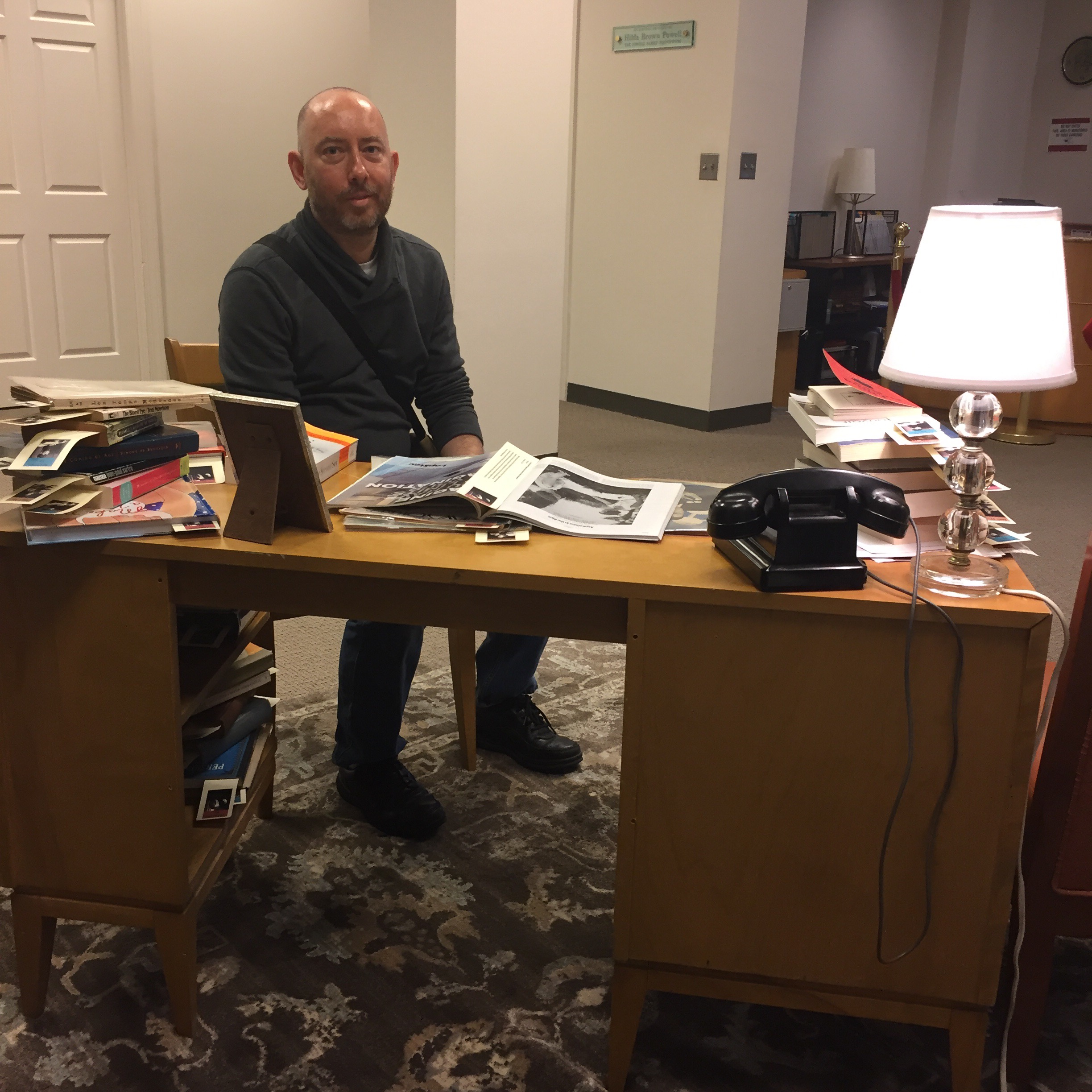
As you can see, I got a kick getting my picture taken while sitting at a re-creation of her desk.

While much of the stuff were merely examples of things from her study and not actual originals, there were two handwritten pages from The Second Sex, which is pretty awesome.

A friend is a security guard there and she took me to see a marble statue and when I looked at the name, it was by Sarah Bernhardt, the famous actress of the late nineteenth and early twentieth century stage – who was, apparently, a skillful sculptor in her spare time.


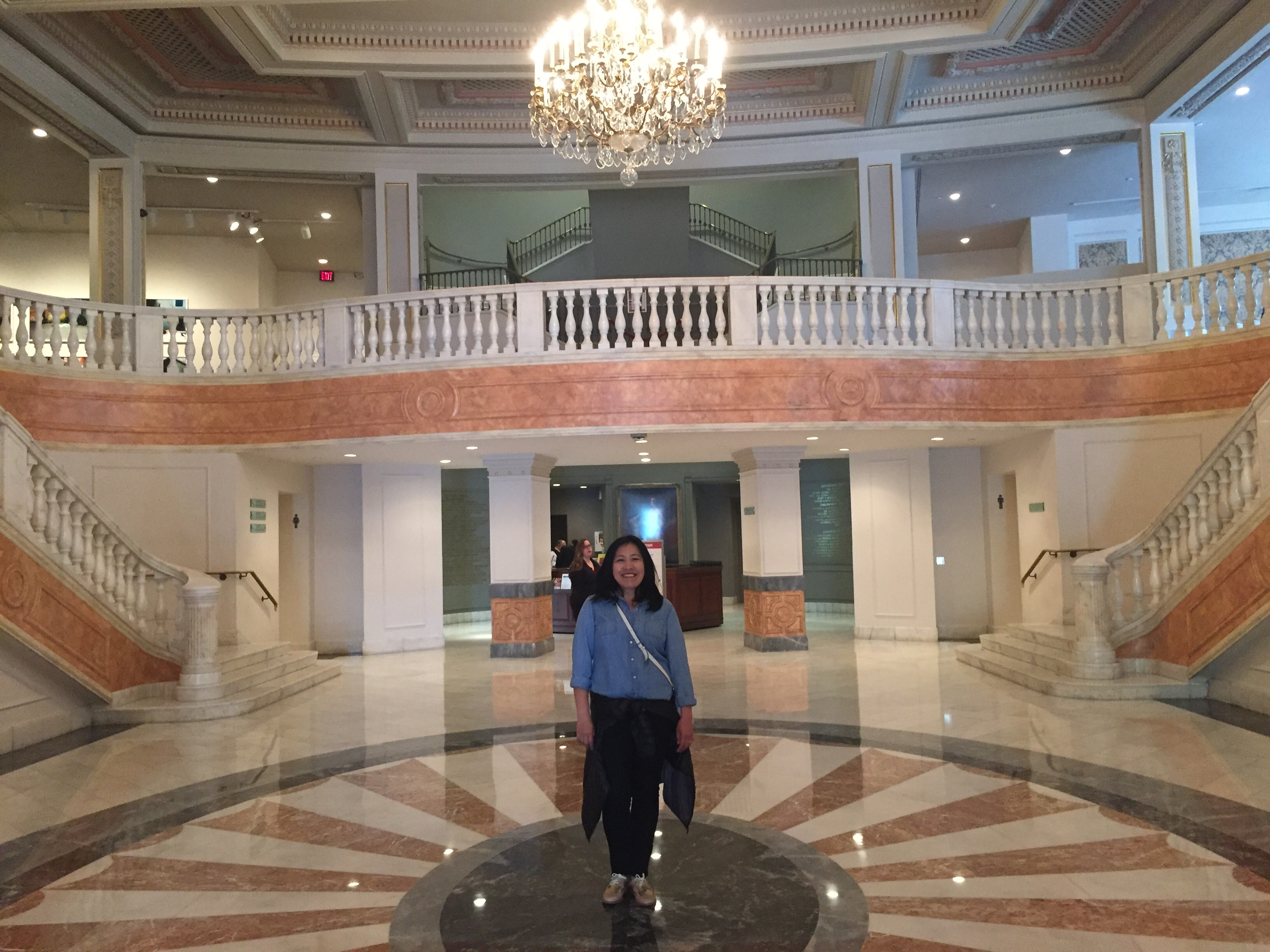
The museum is a beautiful building inside, to boot.

Matisse/Diebenkorn At SFMOMA


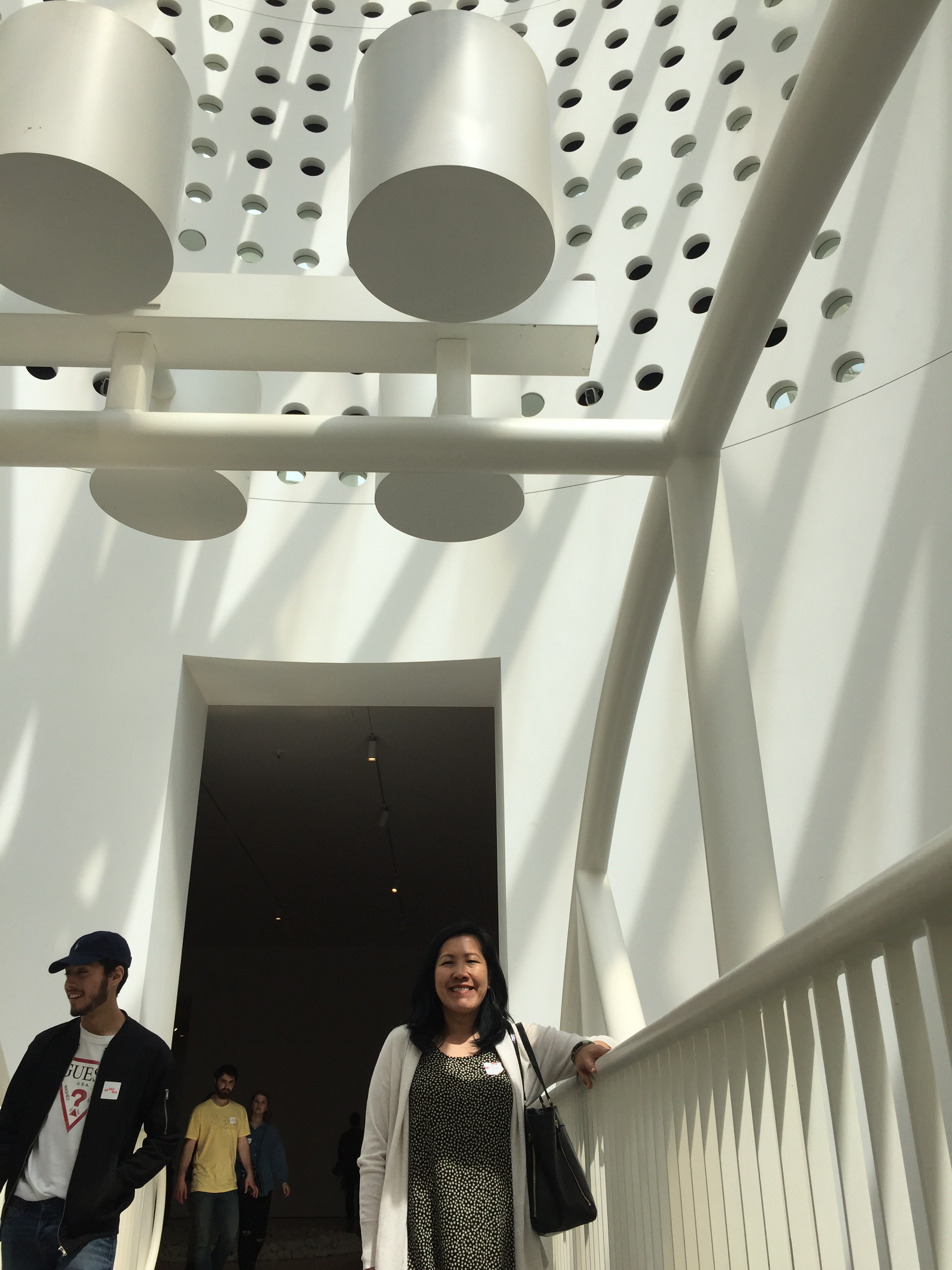
While in San Francisco for a wedding (congratulations, L-!), my better half and I visited the San Francisco Museum of Modern Art.

While I appreciate the theory behind pairing Diebenkorn with Matisse to bring attention to the work of a NorCal painter (and I applaud SFMOMA for staging a blockbuster style exhibit that highlights a local artist) and appreciate them trying to find a new way to show a lot of Matisse paintings that isn’t just another retrospective, but… it all came together in a way that was unjust to both artists.

Besides the obvious: very few artists will not see their work pale with paired with one of the greats, like Matisse.

But also, Diebenkorn, someone I had not been familiar with before, but who is clearly an amazing painter, is reduced to his relationship to the influences of Matisse (for myself, I saw more Cezanne and Hopper than Matisse, but my opinion is suspect because, by the end, I was openly rebelling against the exhibit’s paradigm).

And we are presented with all these wonderful Matisses and they feel suffocated on the walls. Many of these works needed a little room to breathe and be appreciated for their own sake and not smushed (psychically and geographically) with someone else’s oeuvre.

Unrelated, they had two metal floor sculptures by Carl Andre that I made my better half stand on (because you could – as long as you wore shoes).

I first encountered his work at the Pompidou Centre. I swear it was his 144 Zinc Squares. An internet search revealed that that museum has Tin Squares, but my memory is so clear, I have to believe that it was Zinc Squares that I saw that day. But this is all besides the point.

The first time I saw 144  [Some Kind of Silvery Colored Metal] Squares, my mind was blown. But I didn’t realize you could walk on it. I went back (because I loved that museum so much) and read that visitors could walk on it. And if my mind was blown the first time, then this time, well, insert some kind of metaphor (maybe something involving nuclear explosions, but nothing tasteless that directly references actually nuclear disasters, which includes the dropping of the atomic bombs in World War II and morally outrageous nuclear tests on Pacific islands, but feel free to make some kind of Godzilla reference). To this day, I can still remember the sensation of walking on a piece of art and the electric sensation that ran from my feet to my brain. Probably, my love of conceptual art stems from that day.

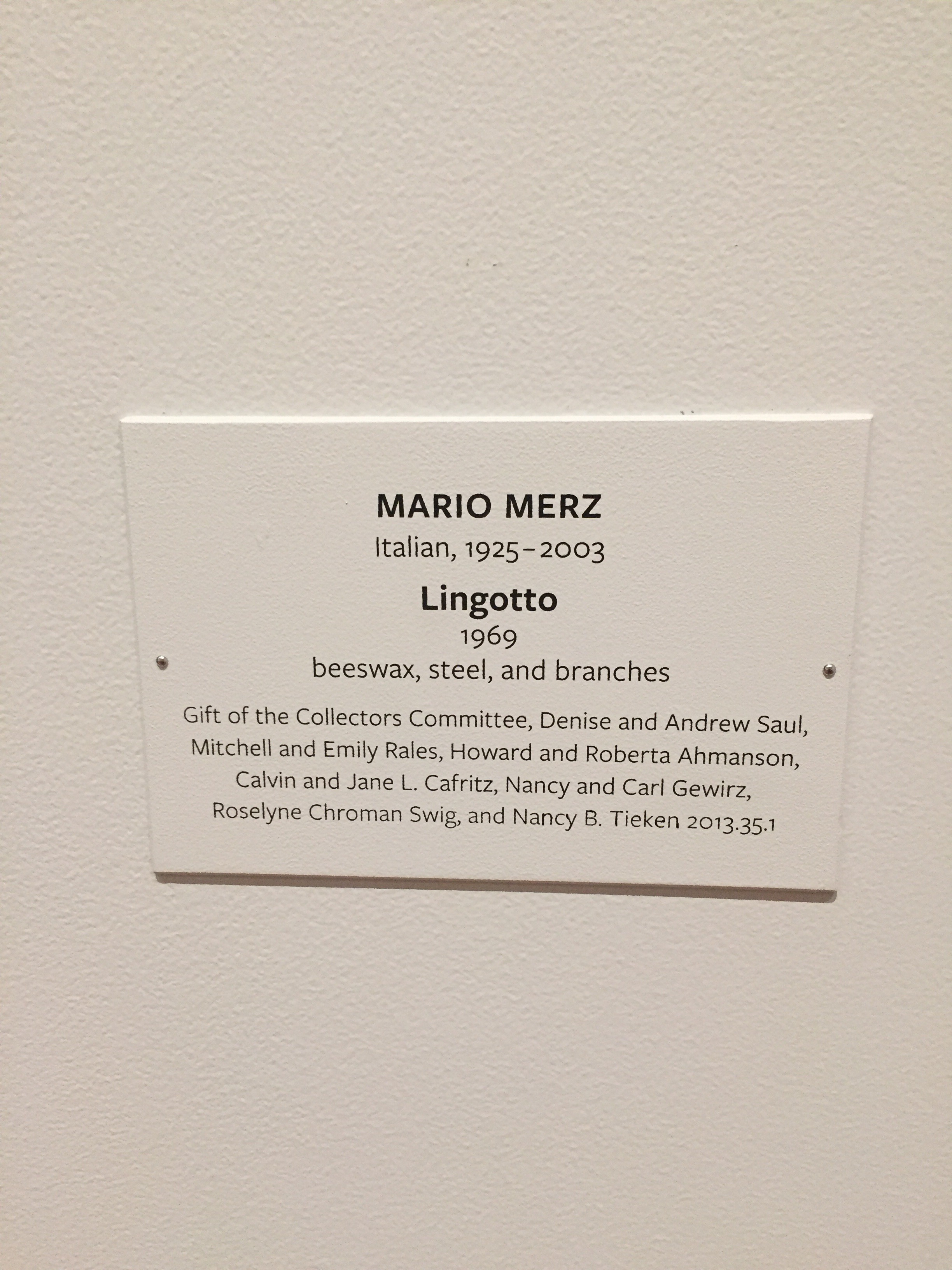
‘Lingotto’ By Mario Merz


I have no idea who Mario Merz is (though I suppose I could look him), but I loved this piece. Maybe I couldn’t even tell you why.

I finally visited the fully renovated East Wing of the National Gallery of Art. They added a lot of useful gallery space and I give whole thing an unreserved thumbs on for practical improvements. For some reason, though, I was in a mood to see paintings by the time I got there. Not just paintings, but traditional paintings. Nineteenth century landscapes with ruins and picturesque peasants. You know the type.

But was making a good faith effort to walk through the galleries and I came out of one space and into another and Lingotto was directly opposite the doorway I passed through and I was instantly struck by a my own little Stendahl episode. There was just something about it. Maybe the ritualistic aspect, the shrine-like quality. But I was just amazed.

Wilmington, Delaware


So, I was in Wilmington, Delaware the other weekend. On Saturday, I walked from Brandywine Park to the Delaware Art Museum, which is famous for its collection of Pre-Raphaelite paintings and related works. The museum was originally founded to house and preserve the works of Wilmington based illustrator, Howard Pyle, who died in 1911.

On Sunday, I walked through the park and up a set of stairs and wound up at an eighteenth century Presbyterian church which is only open one day month and only for two hours on that day and, by strange coincidence, I walked up there on that day.

My notes are all mixed up, so I’m just going to post a bunch of pictures up and make whatever comments I want in the caption.

This is from the church, obviously

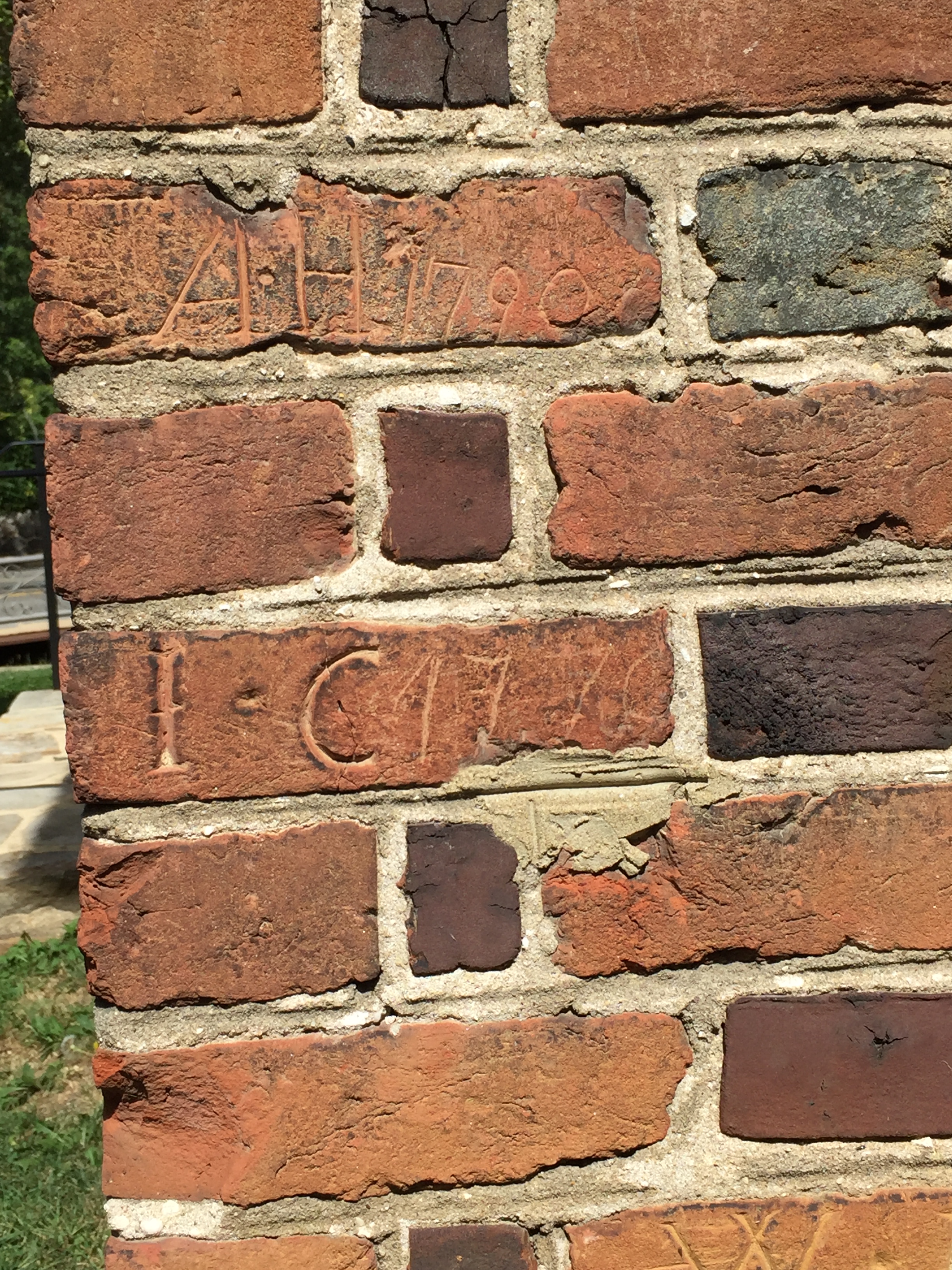
You can see the date of its construction written in 'brick' on the side
You can see the date of its construction written in ‘brick’ on the side

Colonial graffiti
Colonial graffiti

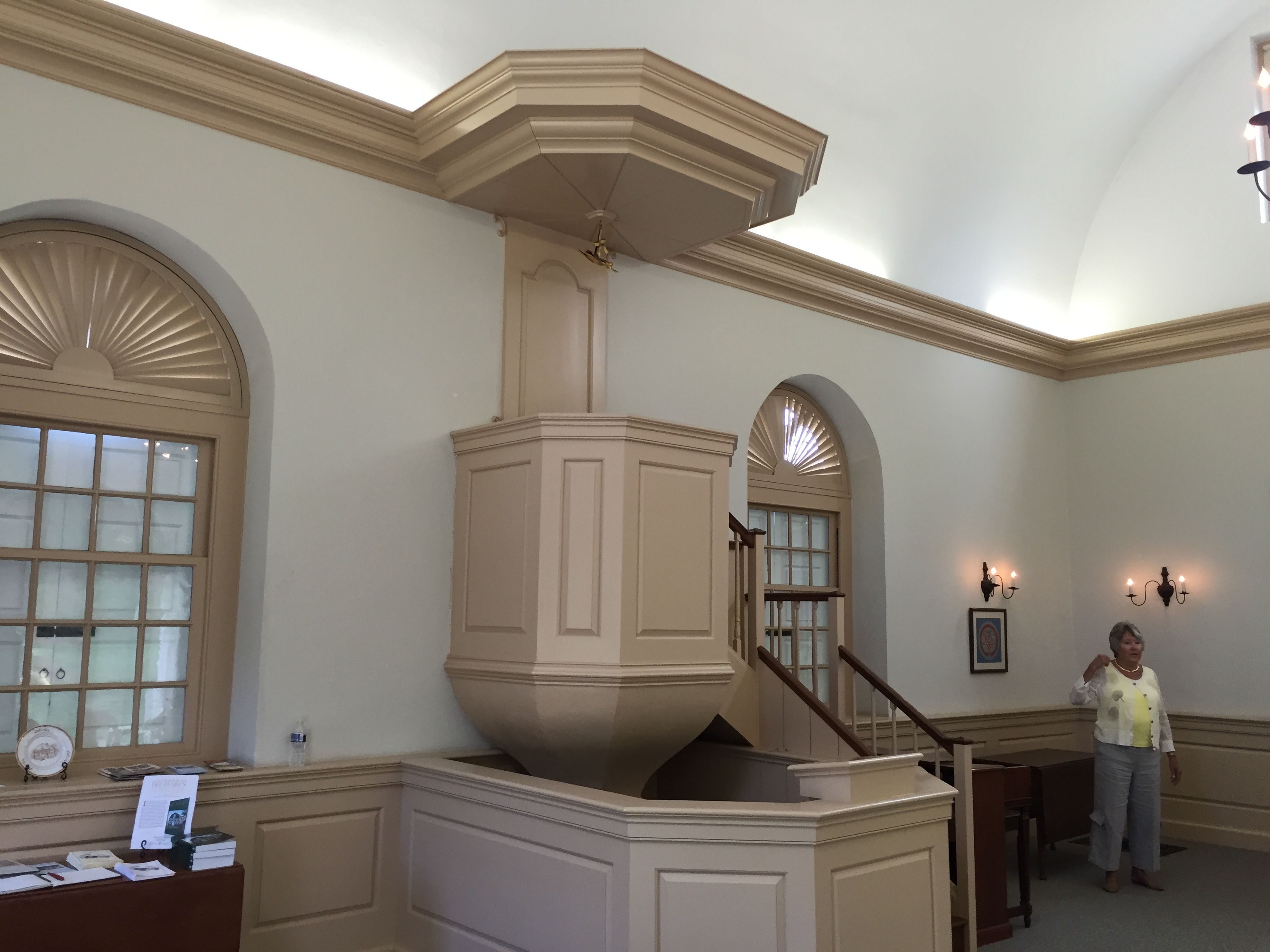
The classic colonial pulpit

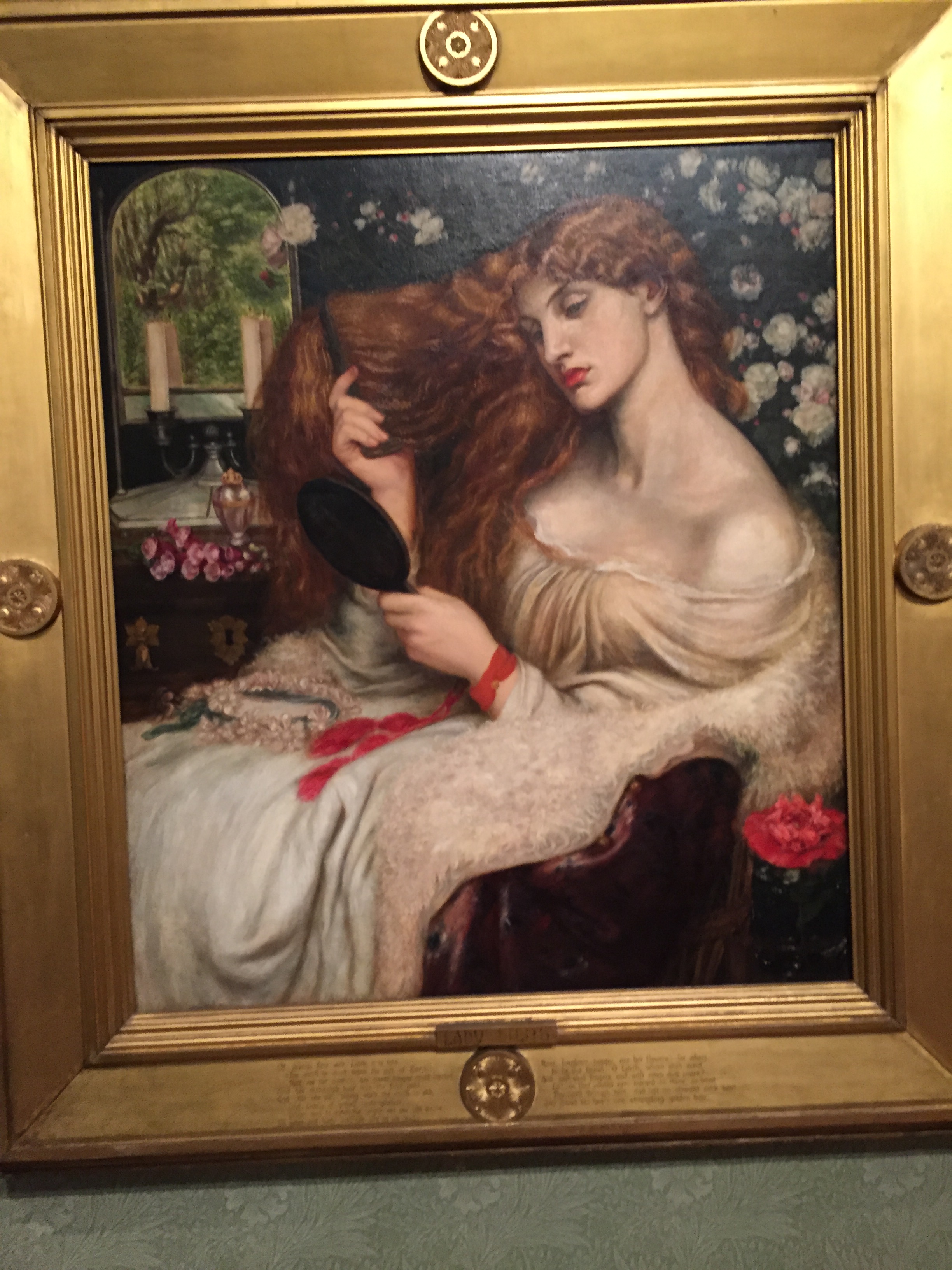
A quintessential subject (Lilith) by the quintessential Pre-Raphaelite artist (Rossetti)

'Hymenaeus,' by Edward Burnes-Jones
‘Hymenaeus,’ by Edward Burnes-Jones

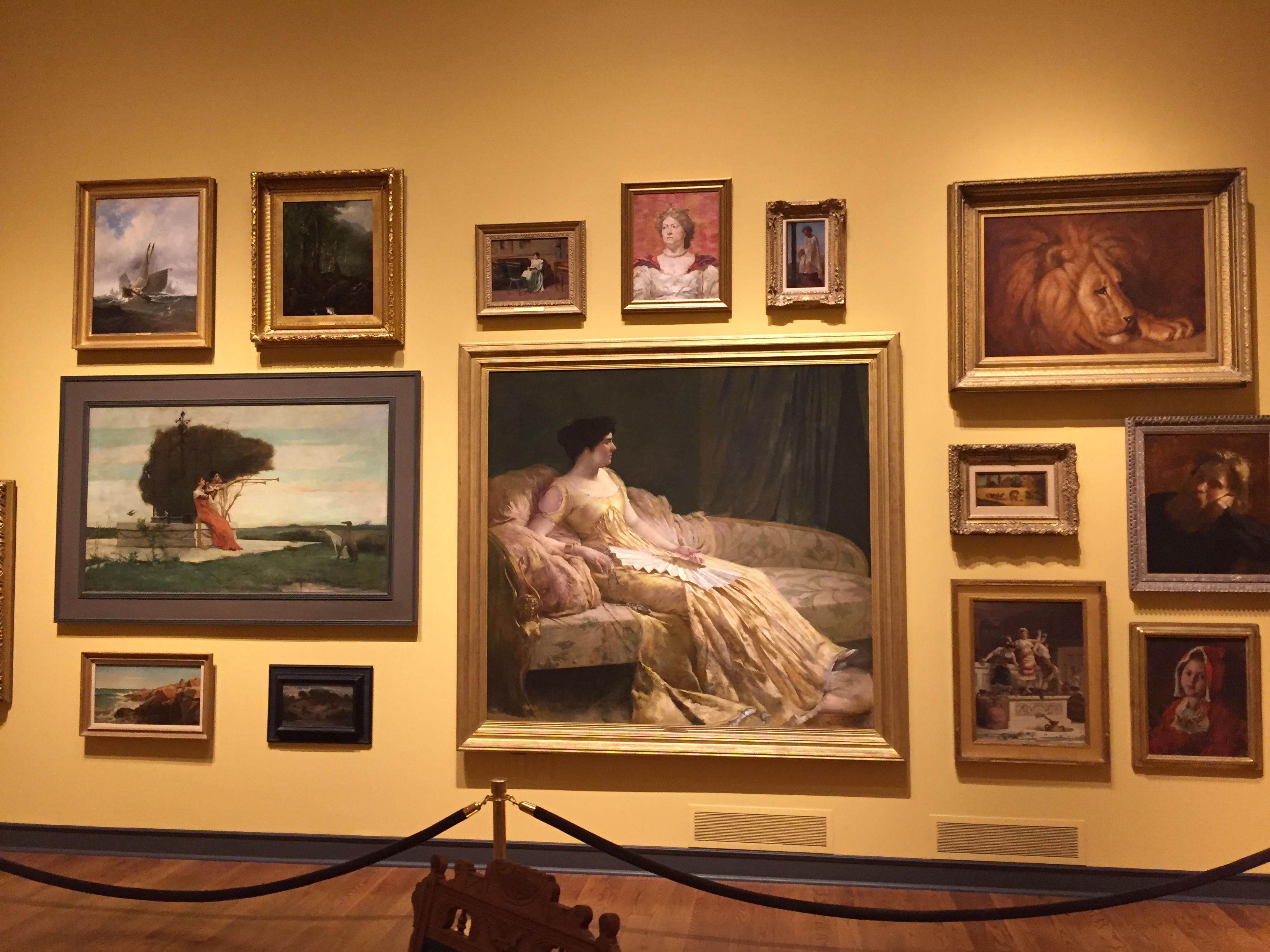
I took a picture of this just because of the salon style display of the works

Another example of how charmingly welcoming this museum is!

Most museums won't let you sit in the nice chairs in the galleries
Most museums won’t let you sit in the nice chairs in the galleries

Another very Rossetti-like Rossetti... they did love red-haired women
Another very Rossetti-like Rossetti… they did love red-haired women

From the Pre-Raphaelite gallery; I should note that the museum took a wonderfully liberal view of photographs; no flash, of course, but if the museum owned the piece, you are welcome to snap away

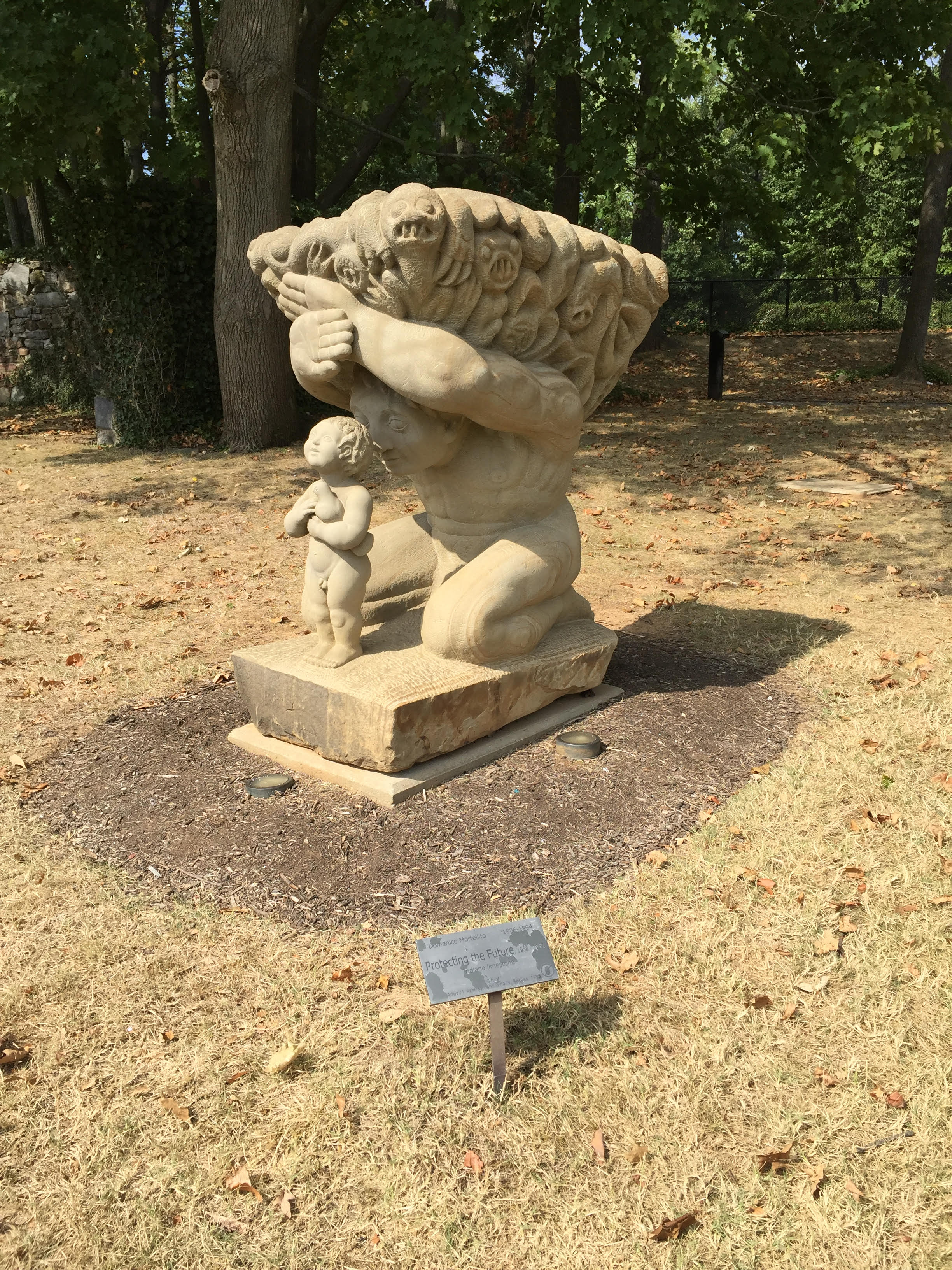
What I like best is that the man is smiling despite his burden; protecting children is inherently rewarding

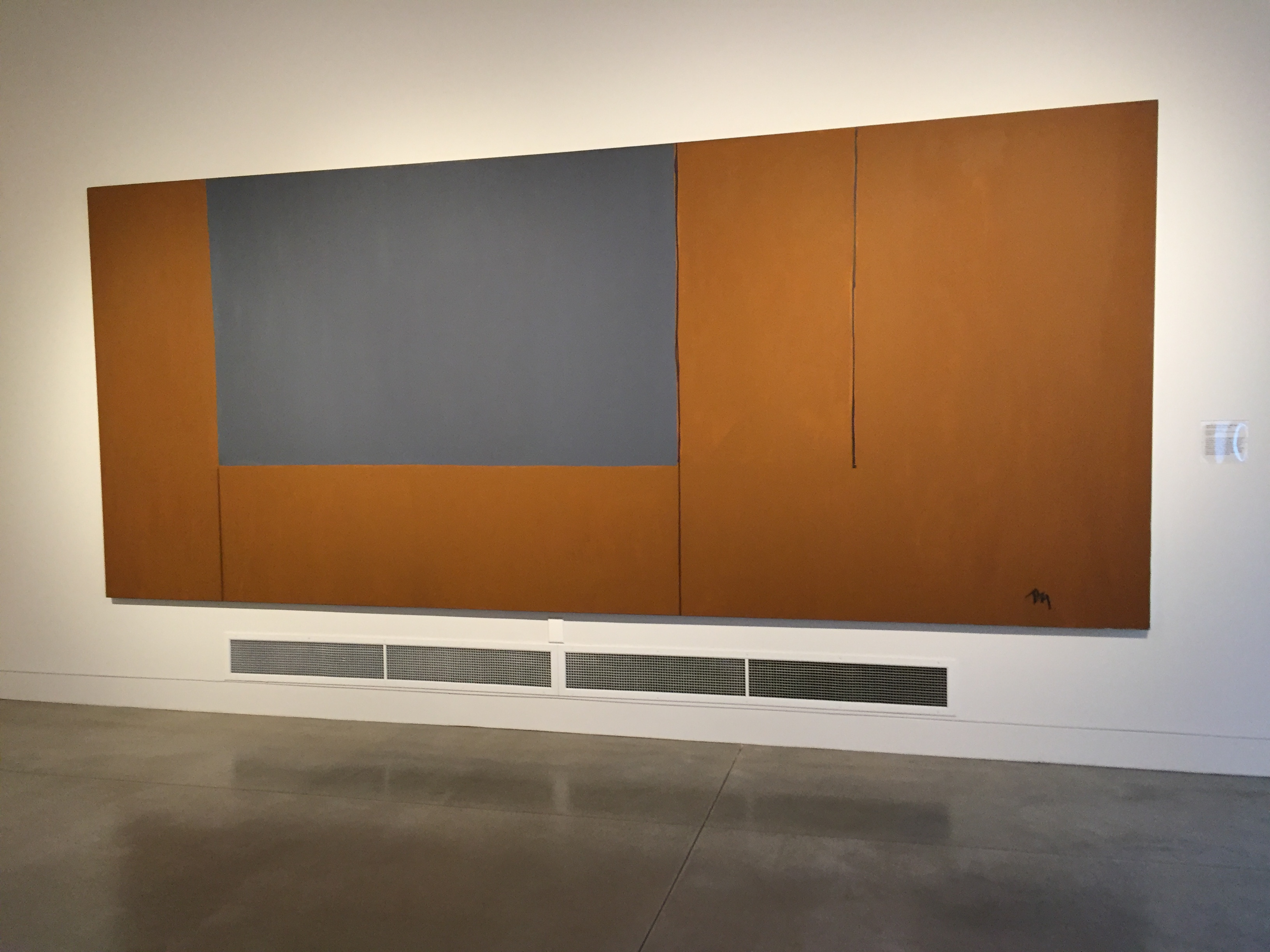
This is a great Motherwell, but also exemplifies the challenge of the smaller, regional museum; how does one work around having an eclectic collection that doesn't really illustrate a movement or artist? What good is one Motherwell, in a way?
This is a great Motherwell, but also exemplifies the challenge of the smaller, regional museum; how does one work around having an eclectic collection that doesn’t really illustrate a movement or artist? What good is one Motherwell, in a way?

Completely random, but cool - a set of Art Deco elevator doors!
Completely random, but cool – a set of Art Deco elevator doors!

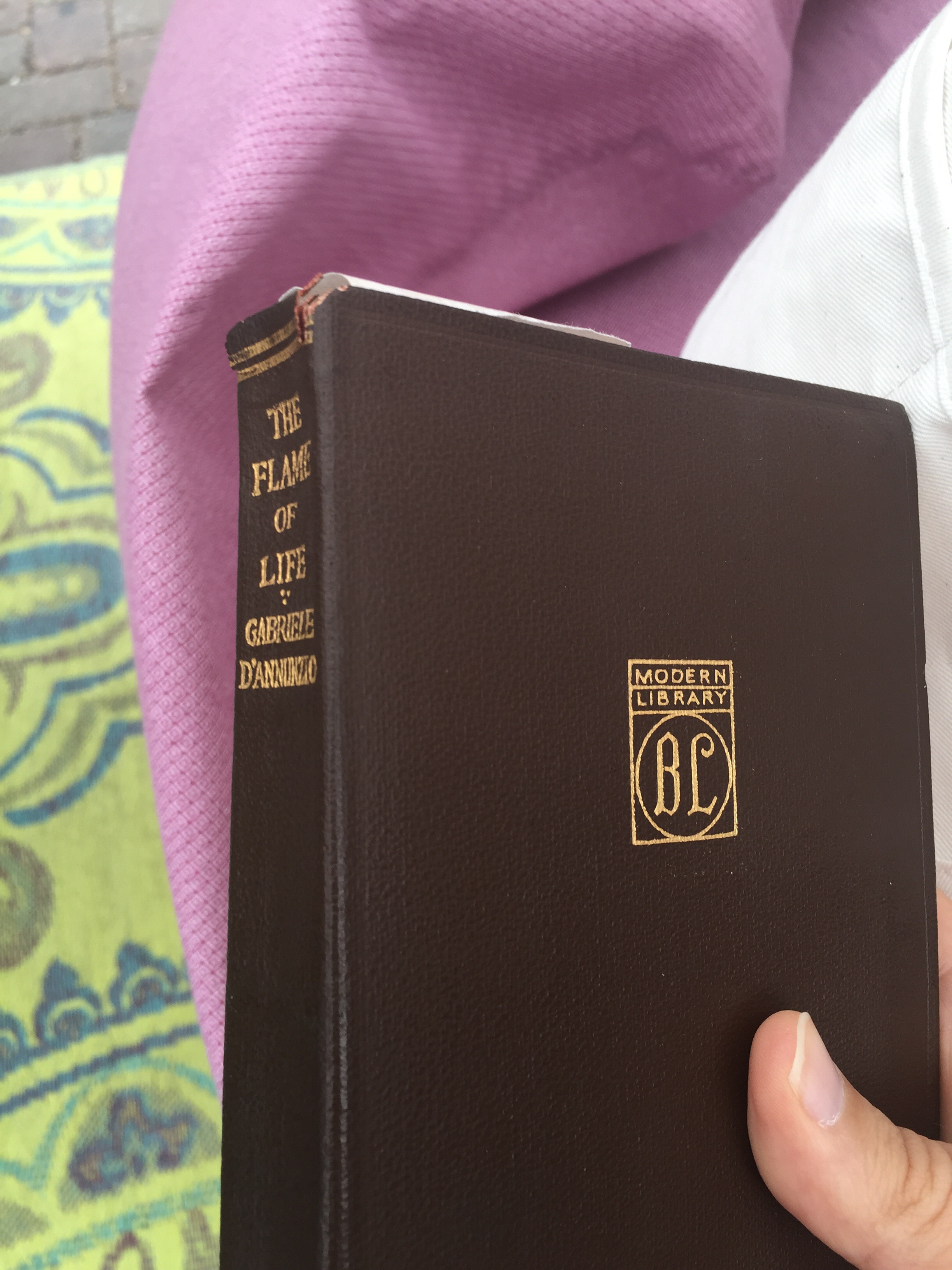
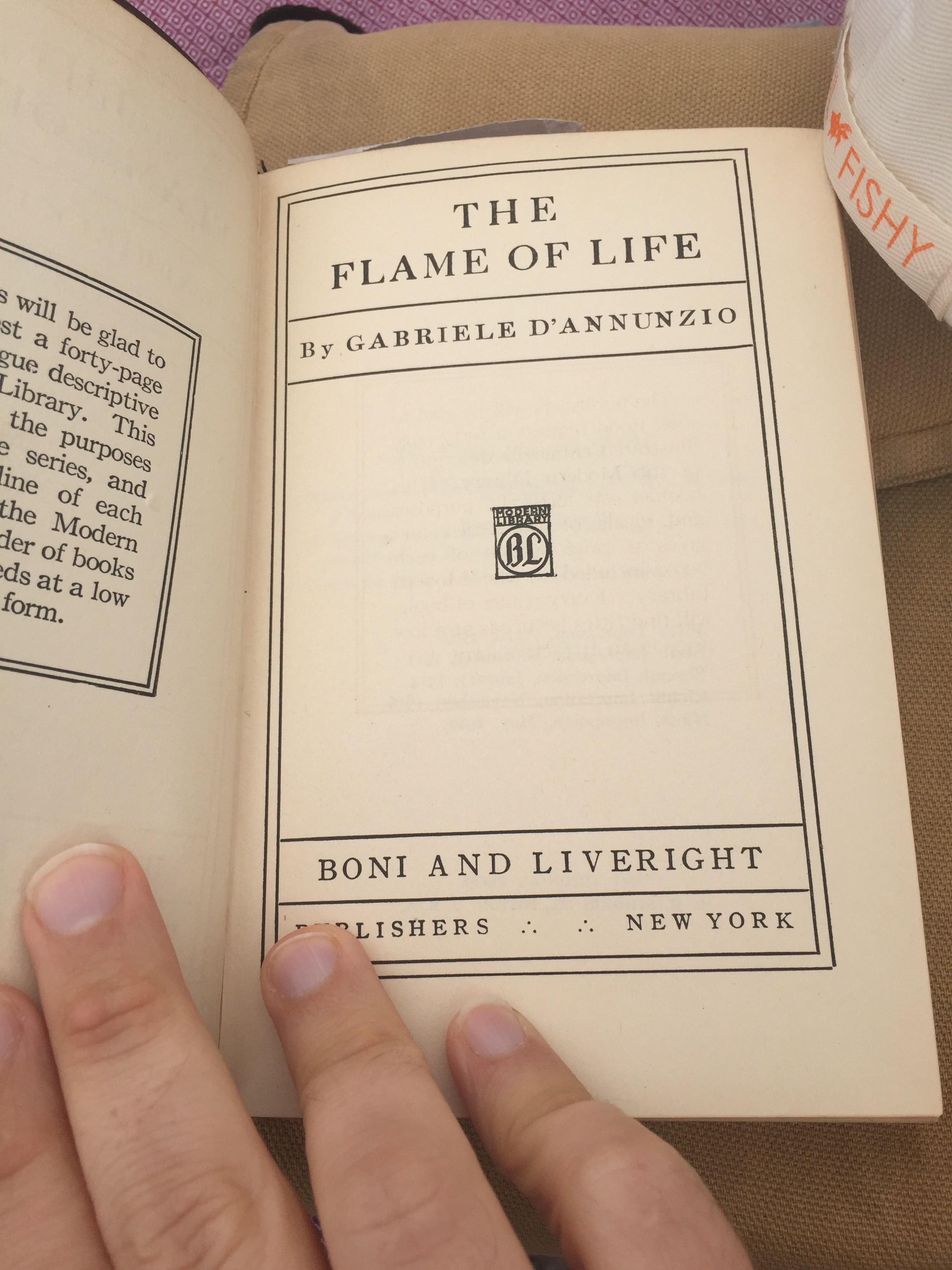
‘The Flame Of Life’ By Gabriele D’Annunzio


I bought this book in complete ignorance of anything buy visual and tactile beauty; as a physical object. But I wasn’t wrong in guessing that I would enjoy what would surely be some wonderfully overwrought prose.

The plot is wafer thin (Monty Python reference) and driven by issues and concerns that seem positively ridiculous. A dionysian poet named Stelio enthralls a lushly imagined Venice with his wild declamations on art and beauty. Among those enthralled a beautiful actress (former courtesan, too?) alternately called Perdita and La Foscarina. Their love (and presumably, their passionate sex, though that is never mentioned nor described) is voluptuously erotic, but it is haunted by La Foscarita’s greater knowledge of impending knowledge. Yes, she is a nearly decrepit thirty-four (I’m guessing the young genius poet is in his mid-twenties). I’ll admit, those concerns pulled me out of the narrative a bit. Maybe if he had been twenty and she was thirty-nine, I’d have seen the problem more clearly… She is also haunted by the memory of a beautiful and, needless to say, virginal singer named Donatella. Poor Perdita believes that Donatella is destined to be Stelio’s life partner.

But it’s not about plot. It’s about lengthy digressions on art and poetry and architecture and Richard Wagner’s death (which bookends the novel; placing the action around the year 1883). It’s about painfully decadent prose stylings that you will either love or that will force you set the book down before the fifth page.

Contemporary North Korean Art: The Evolution Of Socialist Realism


On the very last day of the exhibit, my better half and I went to the Katzen Gallery (the art museum of American University) to see a visiting selection of North Korean. There was also an exhibit of contemporary South Korean but, as interesting as that was, the real driver of our desire was not the autocratic society’s democratic neighbors.

At the end of this, I’ll include links to an article about the exhibit, as well as the gallery’s page on it.

My own thoughts…

I really liked it. A lot.

I didn’t go in expecting certain things. Formal innovation, for example. Deep subtext. I went open to enjoying what I was likely to encounter (and did also encounter some stuff that surprised me).

The large scenes of heroic military and industrial figures, but despite the size, focusing on a small number of relatively nondescript people, so that the otherwise quotidian individual becomes the focus – the hero of the painting.

I expected that. I did not expect the small ink paintings (actually, they were all ink wash on rice paper in a style/technique called chosonhwa) of dismembodied flowers/branches/flora framing some rough calligraphy (I really wish they had translated the calligraphy for us; were they poems? paeans to the Korean people or leaders? mapquest instructions to reach a nearby gas station?).

My favorite was an unfinished painting of people waiting at a bus stop. It was so marvelously prosaic and contemporary looking. While obviously a painting of Korean people, it was not otherwise culturally distinct, which made it weirdly wonderful. Little touches, like a young man who seemed like he might have been glancing at a pretty young woman who was at the comparative center of the painting.

As an art lover and, more importantly, someone who believes in public support for the arts, North Korea’s massive investment in artistic production and support for the artist as a professional is enheartening… but this North Korea. You can’t say anything good about the regime, can you? It’s brutal, totalitarian, and directly responsible for so many deaths.

Artsy editorial on the exhibit.

Katzen’s page on it.

North KOREAN ART

I had seen this painting before; I think it is relatively famous; the title is “Farewell” by Park Ryong

Robert Irwin Exhibit At The Hirshorn Museum


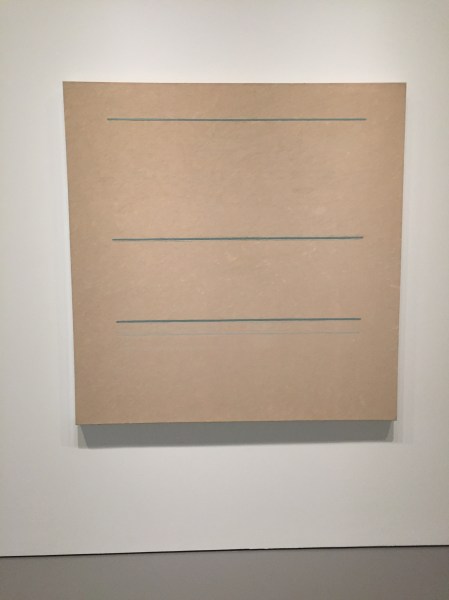
After opening with one of his later, convex disc sculptures, the exhibit moved on to a series of thickly painted, mannered pieces, with a three dimensional effect caused by the thickness of the layers of paint and the areas carved out of the three dimensional layers (some seemingly carved with a palette knife). The appearance, then, of his classic, geometrical, and spare line paintings was like a Stendahlian explosion (as in the syndrome). In some, the lines were so narrow and precise that I had to look closely to convince myself that they weren’t glued on. The dot paintings that followed, though, left me cold. Even though close examination allowed me to see the diffusion. shapes, and patterns, they felt contemptful of the viewer. Likewise, his ‘light and space’ sculptures – mostly convex discs (like the first item) and a couple of columns only made me want to walk back and see the line paintings again. At the end was a massive, site specific trompe l’oeil installation that has to be seen to be understood, so I won’t try to describe it. If you can’t get here to see it, well that doesn’t feel much like a ‘me’ problem, now does it?

The Sunday Paper – Kung Fu!


14.-D.A.-Jasper_Two-Champions-of-Death-652x1024Did you know that there was a tradition in Africa of hand painted posters for martial arts movies? Me neither. But now I want one.

Reinventing Shakespeare(‘s book covers).

The Etruscan language is nearly lost and much of their culture a mystery, so, while this stele is not a Rosetta Stone, it is something rather big.

On a related noted (in that it’s also a question of archaeology), some folks were tipped off on the location of a second Viking settlement in the New World by some photographs taken from outer space. Actually, I hadn’t realized we’d only found one Viking settlement. Honestly, because their presence in North America has been known for so long, I’d just assumed it was more widespread. And it might have been widespread, but this is the first evidence that were was more than one (semi-)permanent settlement.

The fine folks at DCist have compiled a list of the best used and independent bookstores in the District. Of course, with the closure of the downtown Barnes & Noble, there are only used and indie bookstores in DC: not a chain in sight. And I appreciate this list acknowledging the truly magnificent poetry selection at Bridge Street Books.


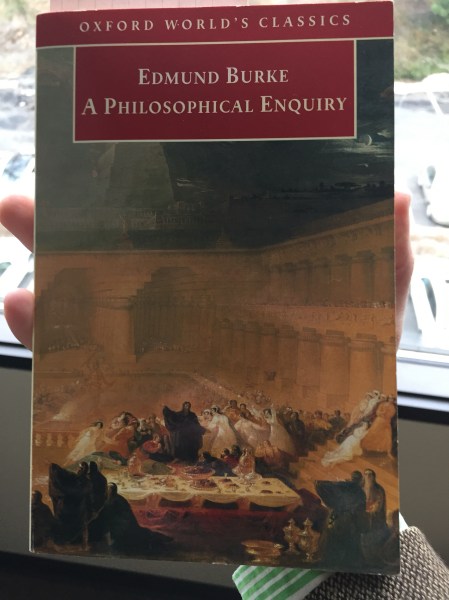
A Philosophical Inquiry Into The Origin Of Our Ideas Of The Sublime and Beautiful


 I was just doing my lonely wandering thing and slipped into that old favorite, Capitol Hill Books, and sort of casually looked for something to spend my store credit on. There were one or two books of poetry (I can’t even remember which ones) and a couple of sci fi/fantasy novels that caught my eye, but not enough to pick up, but rather than keep in the back of my head while I looked for something better.

Somehow, while drifting over the philosophy shelves, my eye was caught by a faded Oxford edition whose spine had the inadequate title A Philosophical Inquiry. I picked it up because I figured this had to be an eighteenth or early nineteenth century something or other. Well, you can obviously tell what it turned out to be.

I have a little selection of random Burkean stuff (letters, speeches, essays, and excerpts), but have long been curious about this early and atypical seeming work. I know that he published it as a sort of offering to provide him entry into London’s literary and intellectual society.

I’m simultaneously making my very slow way through the work that Adam Smith considered his magnum opus and lasting claim to fame. Hint: it’s not Wealth of Nations.

Ok, it’s his Theory of Moral Sentiments.

While, having not finished it, I should probably not make too many claims for my understanding of it, but the idea seems to be a combination of a sort of innate (biological? evolutionary?) a priori moral sense that is defined in relation to others, in a natural tendency to seek the moral approbation of others and follow a sort of moral peer pressure.

While not the most interesting bit of Burke’s book, his idea of ‘taste’ strikes me as downright Smithian (Smithite?). In some senses, beauty and appreciation of the aesthetic good is innate, but it is also guided by educated taste makers who help develop a sort of cultural peer pressure, similar to the broader peer pressure Smith seems to stipulate and motivating moral behavior (or moral sentiments, as he would put it in his classic, eighteenth century fashion).

His answer as to the origins of the sublime are surprisingly psychological. The sublime comes from negative emotions. Even though we usually experience the sublime in something beautiful, the source of its sublimity is not its beauty, per se, but it’s connections to pain and fear.

One example is charging bull. A bull quietly chewing cud is not sublime. A bull hitched to a plow and helping till a field is useful, but not sublime. An angry bull charging at you can be sublime, however, because you can be struck by its size (reminding you of your own smallness in the universe) and ferocity and the fear inspired can be sublime.

Part of this is because pain is greater than pleasure, illustrated, he argues by the fact that we will do more to avoid pain than we will the achieve pleasure, which is also why he believe that the sublime must have its origins in pain.

For some reason, this little bit struck me. An example of how the painful end of the spectrum lends itself to the sublime. Also, what an absolutely amazing depiction of Stonehenge. Alone, that passage is worth the price of admission (‘Nay, the rudeness of the work increases this cause of grandeur, as it excludes the idea of art, and contrivance;’).

IMG_5725

The word ‘aweful’ appears, a reminder of the actual root of ‘awful,’ which has been reduced from causing a terrible awe to a rather minor nastiness.

At times, Burke seems to take a sort of sadistic glee in the ‘painful’ origins of the sublime, which also helps, stylistically speaking, to compensate for his tendency to engage in something very close to an eighteenth century equivalent to listicles (there are a lot of very short sections, like the one pictured, that can get very repetitive and which do not all seem to add very much to the topic).

At one point, he rather succinctly sums up one of his important premises: For sublime objects are vast in their dimensions, beautiful ones comparatively small…

The association with ‘vastness,’ is really, I would say, an association with (terror or awe inducing) infinite (he uses the term ‘artificial infinite’ to capture this idea), whereas he views beauty as small and precious (in both senses of the word). Because the more powerful sublime has its… not origins, but, to use a term Burke himself uses to describe it, its foundations in pain and fear. Beauty, meanwhile, has its less powerful foundations in pleasure and positive emotions.

He ends with about a dozen pages on words, including poetry. By words, he means a bit of linguistic theory and classical rhetoric. It’s all interesting enough, but he never really explains what it has to do with the sublime nor with the beautiful.

If I can find it, I need to find that old selection of Burke’s writings and try and look for parallels. While I’m sure that this is an outlier in terms of his output – he was a politician and orator, not a philosopher – surely there must be hints of some of his ideas and prejudices underlying his other writings and positions.


Power & Pathos & Trios


Next weekend, I’ll start working for my better half for the foreseeable future, which made using Sunday well more than usually important. At the National Gallery of Art, an exhibit called Power and Pathos: Bronze Sculpture of the Hellenistic World was going to be winding down and having blithely ignored numerous opportunities to see it, today (or, rather, that day) needed to be the day.

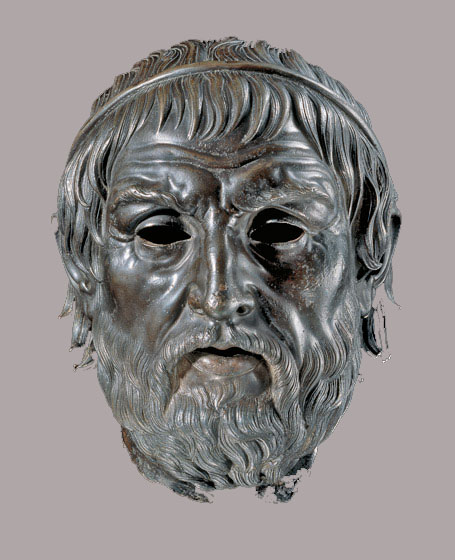
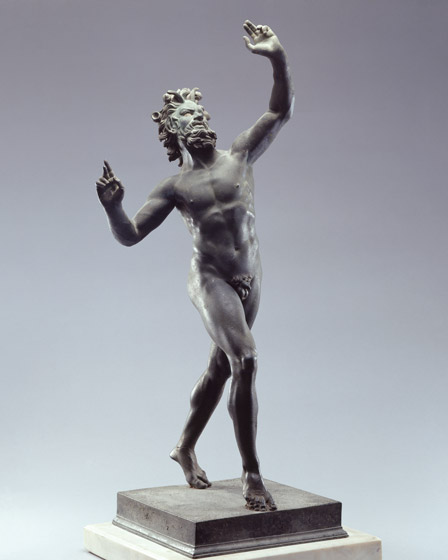
00309897001_HI’m sorry, but I was disappointed. There were some wonderful pieces (a weary Herakles leaning on his club and the head of a poet), but only one that was truly powerful (a statue of the god Pan) and more than a few ‘meh’ pieces and, certainly, I didn’t feel much power nor pathos (besides alliteration, what was the ‘pathos’ supposed to be?).

You still try to get a nugget of something interesting from any exhibit and for me, that was the head of a poet. It was labelled a poet because his hair was longish and his beard full and those were the signs of a poet. philosopher, or intellectual (and, in the late ancient world covered by this period, an intellectual would frequently also be a philosopher and poet; there wasn’t so much parsingDancing-Faun of the difference back then). The idea was that they were less influenced by vanities, so let their hairs grow out. So, the idea of the shaggy poet or thinker wasn’t an invention of Parisian bohemians, nor Greenwich Village poets, nor any other group from the last two thousand years, but dates all the way back to ancient Greece.

After finishing the exhibit, I kept wandering around the museum, stopping in some galleries to look at some nineteenth century landscapes. I walked towards one of the atriums when a woman walked in front of me, handed me a program and asked me if I was here for the concert.

Naturally, I said, yes.

Apparently, the National Gallery of Art had spent the previous two days doing several concerts a day in order to complete a cycle, as it were, of Beethoven’s trios. This particular concert would be his final string trios (which were actually early works; he moved on to string quartets after composing these).

The first one was a string trio in G Major and the players ended the trio so abruptly that we (the audience) was stunned into sudden and sustained applause. It was a very odd moment, as if a long silence had been ended by an invisible man suddenly clapping in our ear. We kept to our feet not because the performance was good (though it was), but because shock impelled us.

The second trio, in D Major, had a menuetto as its penultimate movement and I just loved it. Beethoven should have done more dances.

The third, in his famed C Minor key, was surprisingly upbeat for a chamber piece in a minor key.

The acoustics felt good, which is not always the case in there. The sound was clear and very, very bright, with the inevitable echo being an inconsequential factor.

Just an awesome coincidence that I walked in on it.