Happy Bloomsday!


From the beginning of Upshur Street Books Ulysses marathon reading:

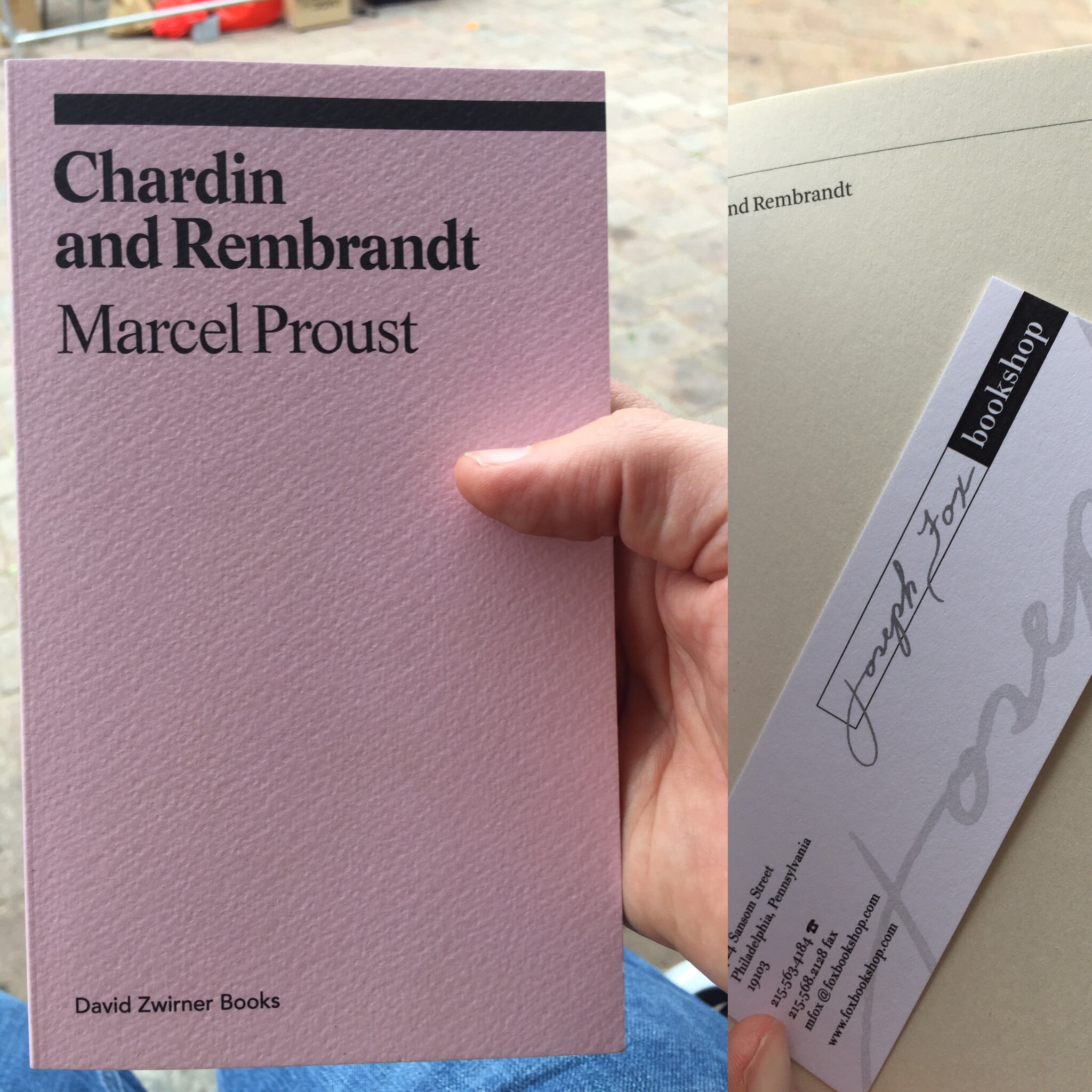
‘Chardin And Rembrandt’ By Marcel Proust


It was pretty exciting when this was published in English. It’s a little padded, to make it the length of a long chapbook, but that’s okay.

Chardin and Rembrandt opens with a description of a young man (clearly upper middle class, at least), looking around the dining room table and is disgusted. The half eaten food. The meats laying out. The ash strewn fireplace. In retrospect, it reminds me of the reactions of the narrator of Sartre’s Le Nausee.

But then he says to go to the Louvre and check out the still life paintings of Jean-Baptiste-Siméon Chardin. By doing so, you will see the sublime in the quotidien. You don’t have to be a scholar nor even to have read Proust’s masterpiece to see the comparison to the episode of the madeleine or, really to the whole damn book to know that.

As for Rembrandt… he starts to write about Rembrandt representing something more traditionally sublime, but then he trails off. Literally. It ends with “…”

This is not a mature book, by any means. Proust is famous for his long sentences, but he also has a certain economy. This is more… florid. A younger man’s essay.

Ezra Pound: Canto LXXXII


If the previous Canto was about composers, this one is about poets. At first I thought it was a narrative about a sort upper class, English house visit – only this one happened to include friends of Algernon Swinburne. But then Whitman gets named dropped and it’s hard to find two more different poets than them (arguably all they share in common is that they are both great poets and wrote a lot, if often obliquely, about sex). But it still seems like, in large part, the over educated fragments of educated English people (‘Lytton’ is mentioned; Lytton Strachey? Is this the Bloomsbury circle?).


Ezra Pound: Canto LXXXI


A much shorter one than its immediate predecessor (which was over twenty-five pages). It is much concerned with Spain, but a contemporary Spain (and some anti-Catholicism; there is much Catholicism here, he writes, but no religion).

It is a crude and comic Spain and it is mocked by somewhat uncouth English speakers (I’m not sure whether the English speakers are British or American). I was imagining Fawlty Towers – a working class Englishman and his incompetent Spanish servant.

I don’t think I’ve remarked on this before, but high modernism tends to mix its pretensions with close reading of lower class/working class speech and slang. Joyce’s ear for the Irish manner of speech in… well, everything he wrote. Stein’s well regarded rendition of early twentieth century African-American speech in Tender Buttons. And The Wasteland, for all of its reputation of being a bastion of arcane learning, is chock full of lower class English speech.

Ezra Pound: Canto LXXX


It’s been almost three years since I last wrote about one of the Cantos, but it felt good to be back.

Maybe it was distance, but I was struck by the natural similarity between this one and The Wasteland. Pound famously edited Eliot’s masterpiece and some scholars think that it was almost to the point of co-authorship. But also, by this time, The Wasteland was rightly admire as one of the crowning works of the century and could, ironically, have been a reciprocal influence on Pound’s later works. I’m not going to guess here, though. Just something to think about.

The bad news: LXXX is pretty fascist.

Multiple references to Mussolini (some ever so slightly veiled, like a reference to ‘the Duke’ – il Duce, of course, being his nickname). More than a little anti-semitism. Blum (clearly Leon Blum, the Jewish Prime Minister of France) defends a bidet (implicitly attacking his masculinity and sexuality), in Pound’s estimation and is negatively compared to the collaborationist Petain, who, as Pound writes, defended the Verdun. The Sadduccees are mentioned in connection to Eliot, for some reason that I won’t pretend to understand.

In the beginning, I thought it might be about music. Finlandia was mentioned and a few lines, so was Debussy (leading my to think that ‘Finlandia’ is not a reference to a country, but to Sibelius’ tone poem). Later, Bach and Gluck get name dropped.

This canto feels, for long stretches, like the tale of young man, traveling to world (mainly Italy, France, and then England) and seeing historical sights and places associated with writers and artists and then relating them to himself and his understanding. I’m not sure if I’m explaining myself well here. I love history and when its comes to my mind or I’m in a place that I can relate to something I know from history, it feels very present (almost Faulknerian).
Explore Booksellers


A nice, warm inviting bookstore in Aspen, Colorado with well stocked shelves. The attached cafe was closed until the season started up again, but it was still a nice place to spend an hour. 

Booktrain


We were driving back from one of the titular hot springs of Glenwood Springs, Colorado when was passed this bookstore. My better half saw the look on my face and said, let’s pull over.

It’s not a large bookstore, but doesn’t try to completist, but instead on having a nice selection. In classics and in poetry it had essays and poetry by the American philosopher of the outdoors, Wendell Berry, as well as a lovely looking edition of The Count of Monte Cristo. In sci fi and fantasy, there was Joe Abercrombie’s The Blade Itself.

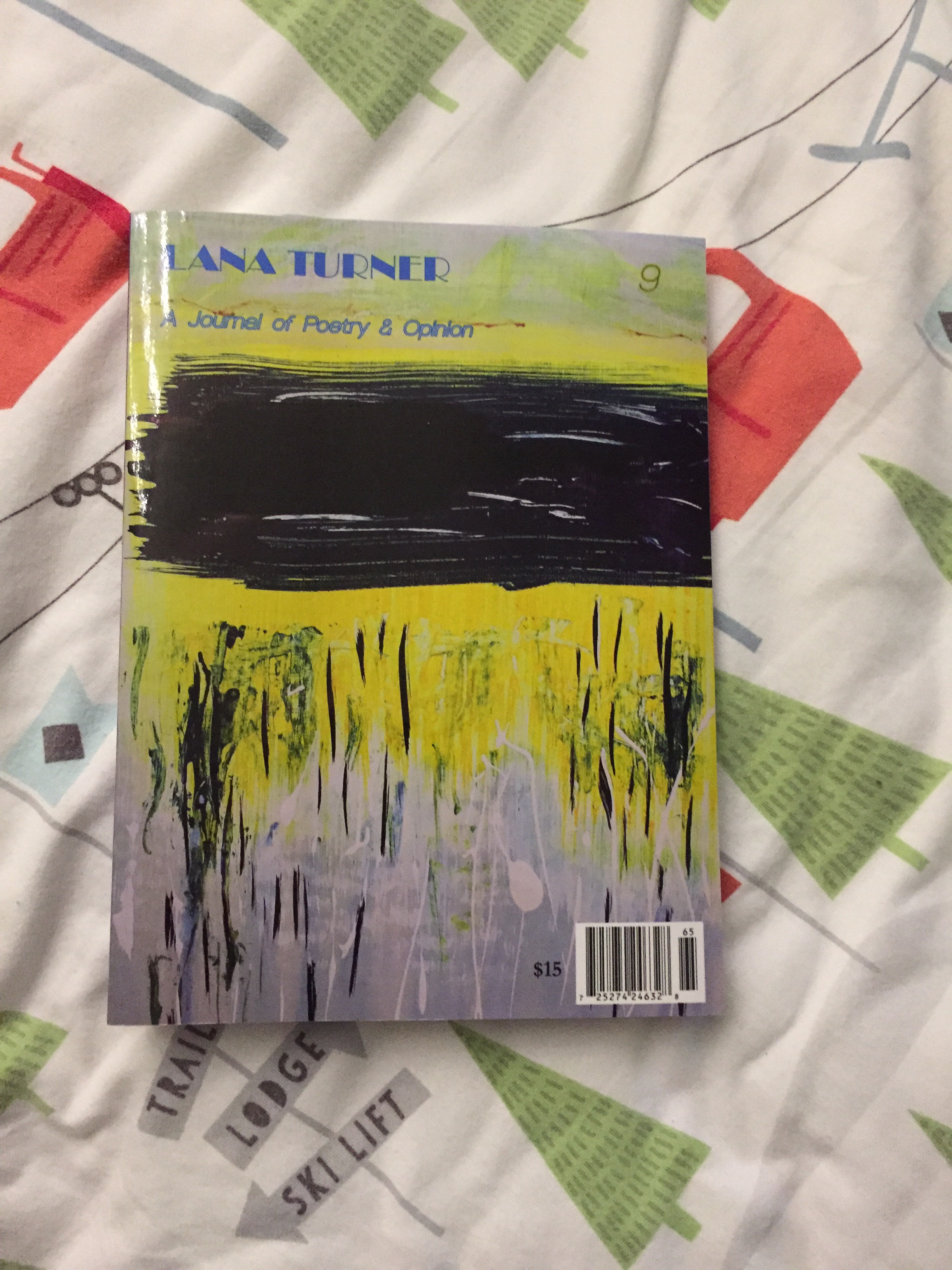
The largest single section were the racks of periodicals stretching down the length of the store and part of the back wall. Very near the door were their lit mags, including Lana Turner Journal, one of my favorite publications.

My better half also pointed out a large-ish selection of nudie mags – at least twenty different ones, partially covered by the shelf and wrapped in plastic. In these modern days, you don’t see that much anymore.

Ancestors


I’m bouncing between two books: one is Meher McCarthur’s Confucius: Throneless King and the other Walter Pater’s Marius the Epicurean.

I’m barely into either of them, but so far both are focused on their figures’ obsession with honoring their ancestors and their mothers.

Both are also works by men writing about figures centuries distant from them, but that’s not really my point.

Nor is my point that the discursive novel of a nineteenth century essayist is very much like a non-fiction book by a contemporary academic.

Actually, I’m not entirely sure what my point is.

Why Is The Entire Staff Of ‘Brooklyn Rail’ Leaving?


Staff and Board Members Leave Brooklyn Rail En Masse‘ read the headline from Hyperallergic, an arts blog that I regularly read.

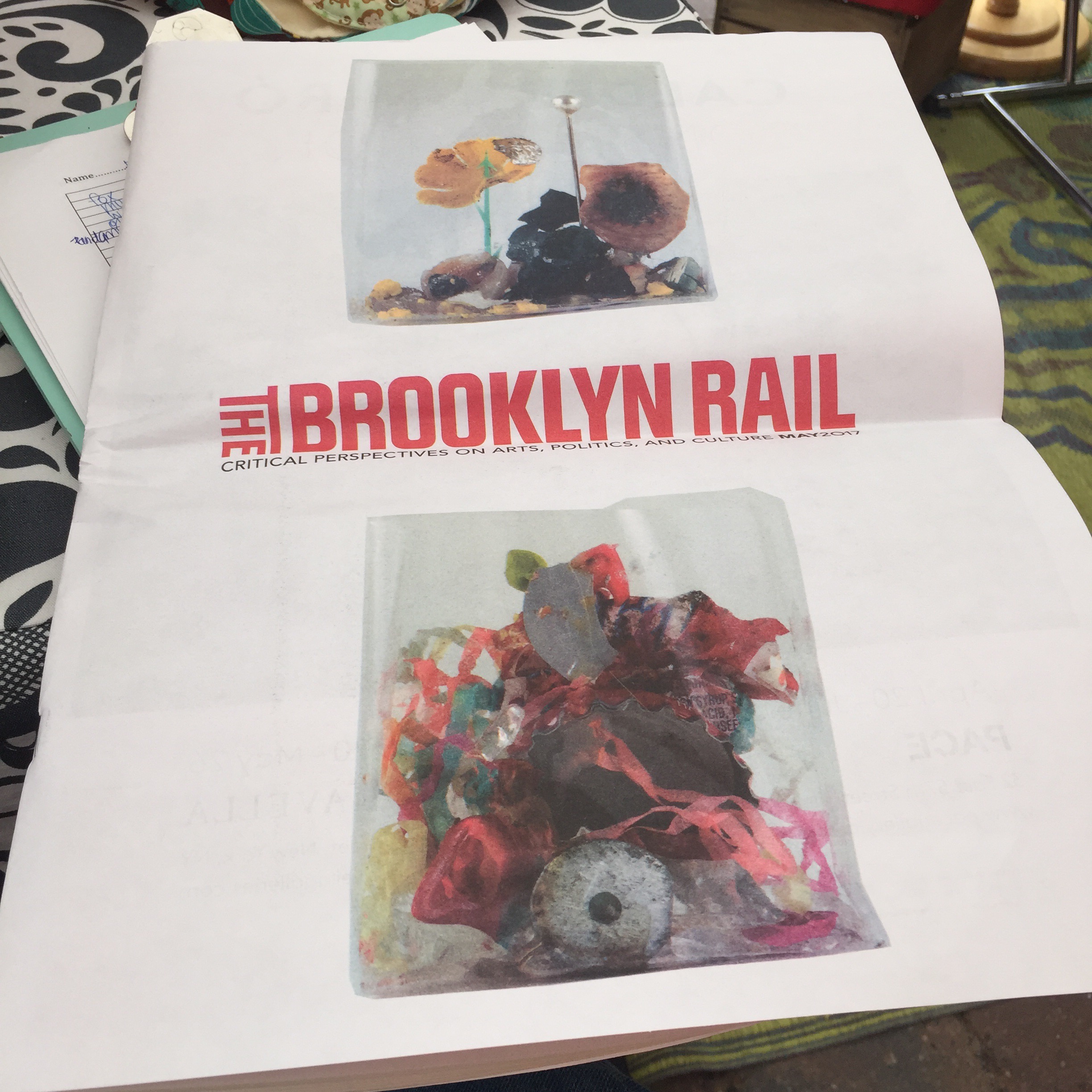
It caught my eye because I subscribe to Brooklyn Rail. It was happenstance (I got it concurrent with a subscription to Poetry; I’m always on the look out for deals on periodical subscriptions) that I did, but I enjoy reading it. It’s rather like reading The New Yorker when you don’t live in New York. There’s a lot to get from it, regardless of personal geography, but at it’s heart, it is a regional publication (even more true of Brooklyn Rail than its glossier cousin).

The Hyperallergic article doesn’t give any insight into why everyone is leaving (because no one involved will say), but it feels sad. Journalists are already such a precarious damn place. Arts journalists, more so. Does your local paper have a full time arts reporter? Or book reviewer? Much less an arts editor? Probably not.

For this revolt of thine methinks is like/Another fall of man.
– Henry V by William Shakespeare


I Love Godzilla


Godzilla was on the other night. The terribly edited one with Raymond Burr spliced in and the most terrifying moments cut out (a mother and child crushed underfoot) in order to satisfy the delicate sensibilities of white americans.

But I love Godzilla so much.

The looping crescendos of the music, reminding us that Godzilla does not care about us, barely notices us. It’s not ‘scary’ music like the strobe light sounds of Pyscho or the rising, precision hunting of Jaws. Like the monster himself, it is merely inexorable.