Tintin In Tibet


We actually bought this for a child, but she hasn’t been able to pick it up yet.

I read it years ago (though I was never a Tintin devotee, I was a fan) and when we were shopping at a children’s bookstore in Baltimore, it was one of the books I picked up (knowing that I would get a chance to read it before giving it away).

Tintin in Tibet is considered a bit of a turning point in the series, marking when they started becoming something worthy of classic status. And it is fun, exciting and a wonderful read for children.

Read more

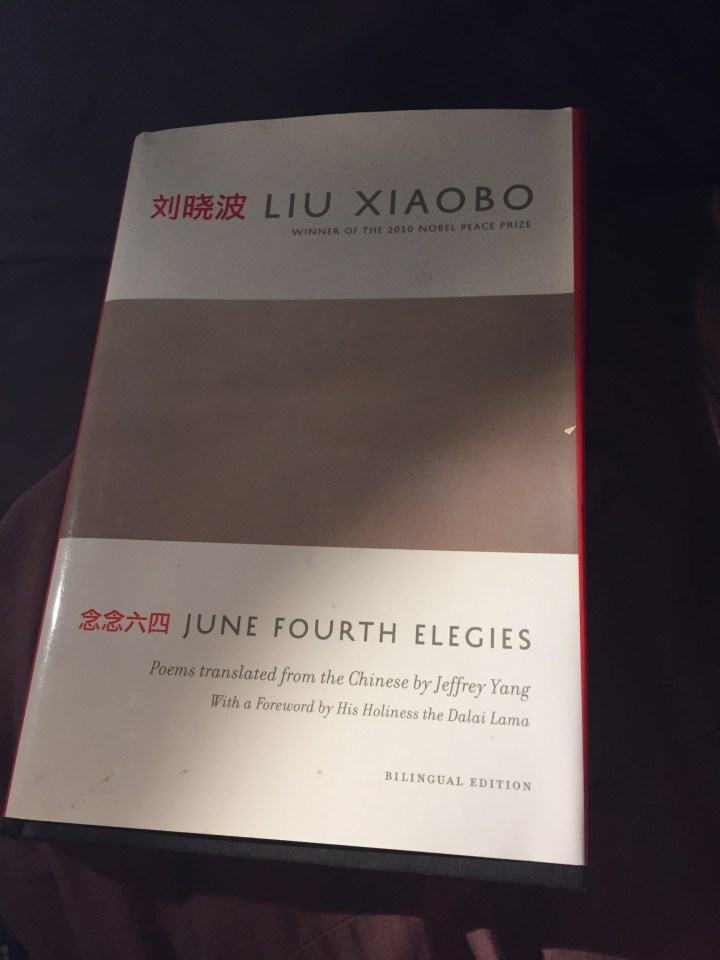
‘June Fourth Elegies’ By Liu Xiaobo


I already owned this book, but re-read it because of the tragic death of Liu Xiaobo, which, felt both inevitable and like a punch to the gut.

Of course, I ‘know’ him primarily as a poet, rather than as an activist. But now that he’s gone, I can’t separate the two enough to judge this series of poetic remembrances of Tiananmen Square, bookended with poems to his wife (also a poet: Liu Xia).

It does make our (still righteous) national grievances against Trump seem small.

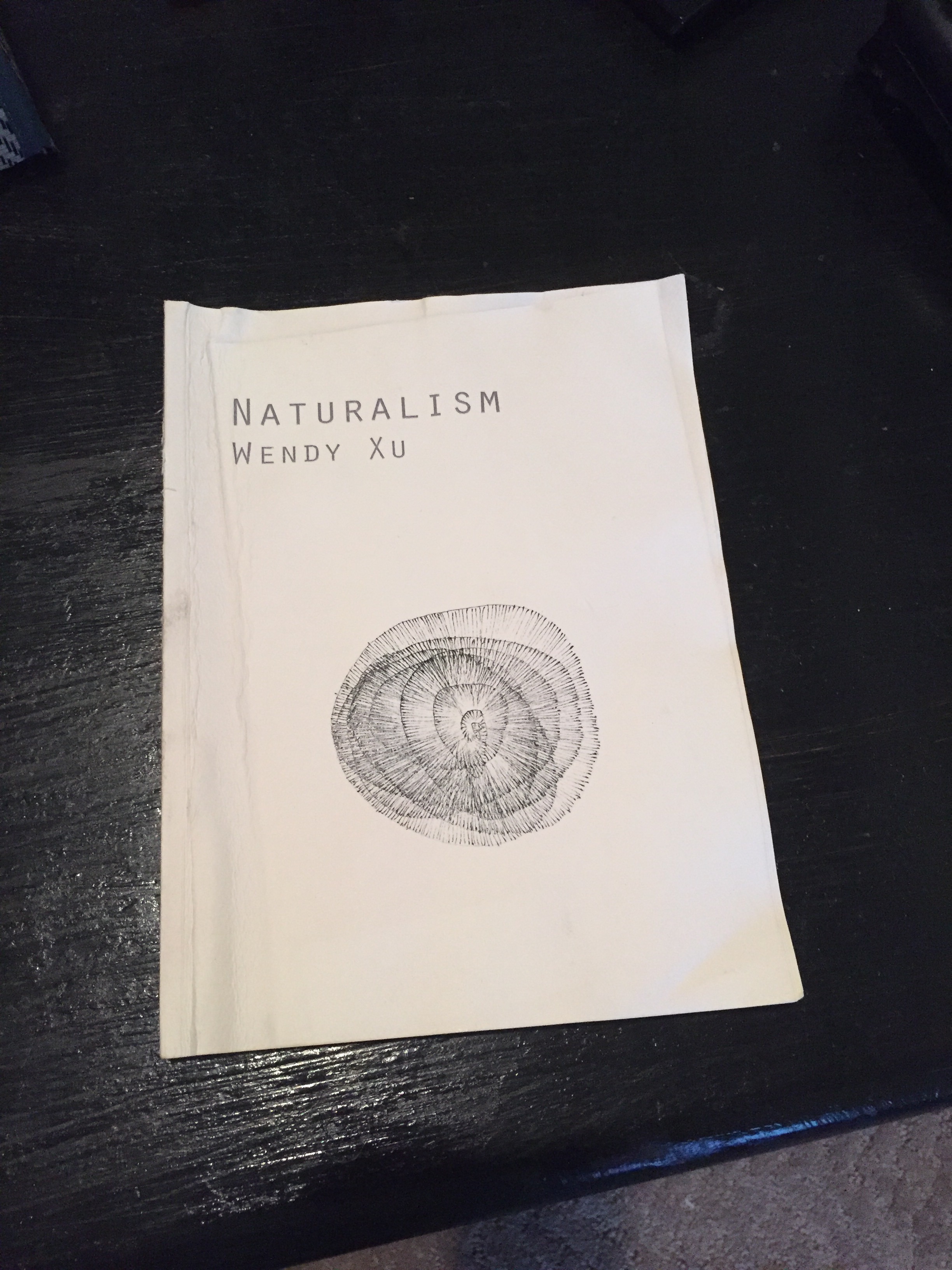
‘Naturalism’ By Wendy Xu


If the book looks like it was rode hard and put up wet… well, it was. And not so much metaphorically, as literally. It mail man placed it under our welcome mat, but it was in a relatively flat package and it was towards the edge, where people don’t normally step, so it remained unnoticed for I don’t know how long. By the time I discovered it, it had gone through more than one thunderstorm, so I couldn’t even begin to start it for several days after bringing to poor volume into the house.

It’s more of a long, super fancy chapbook than a full collection and it does feel like a work in progress. In fact, I swear that at least one of these poems also appears in her new collection, Phrasis.

Naturalism, in many cases, doesn’t feel quite mature. The best poems are very, very good. Some though, feel like filler; and in a such short book, it doesn’t take too many underdone poems to overwhelm the final sensation (nor does the fact that the very best poem appears at the very beginning).

I am happy to say, though, that Phrasis (which I am reading) is falling on the very, very good side so far.

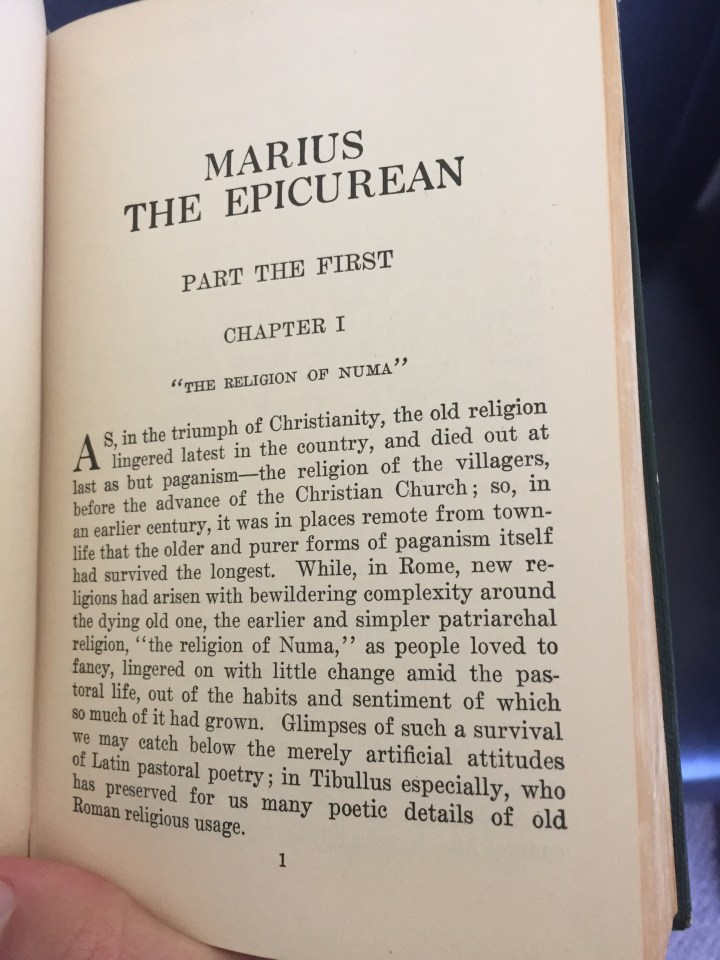
‘Marius The Epicurean’ By Walter Pater


This is an old fashioned kind of book. Very much a certain kind of nineteenth and early twentieth century kind of book (this book was written in the early 1880s). A wordy philosophical novel.

It’s not a novel that illustrates or explicates a certain philosophy. You won’t learn much about Epicureanism (and really, Marius is never actually, so far as I can tell, a followed of Epicurus). But you will, if you’re willing, be able to drift back into a Rome of late antiquity (the Stoic philosopher-king Marcos Aurelius is emperor), but really, you’re in a European, upper class milieu of intellectuals.

The plot, insofar as there is one, is Marius, a devout young man, goes to school nearby (which schooling consists of learning history and philosophy) and then to Rome, where he is first deeply impressed by Stoicism, but slowly is impressed by a Christian family and possibly becomes a Christian at the end.

Marius the Epicurean is also an exercise in envy for the reader. What must it be like to have financial independence without much responsibility and to spend one’s time thinking about the meaning of life and what is good in life (which is not intended to be a Conan joke, but an acknowledgement of the primary question of Roman philosophy) and to read the best that minds have to offer and study at the foot of great thinkers. Again, all while not really having to worry about housing, food, healthcare, etc.

Finally, it is a slow read. Or should be. In truth, I finished the final third too quickly. My better half had noted how long I had been reading this book and I think that I felt a little sheepish about my slow pace and rushed a bit so that I could complete it while she was out of town.


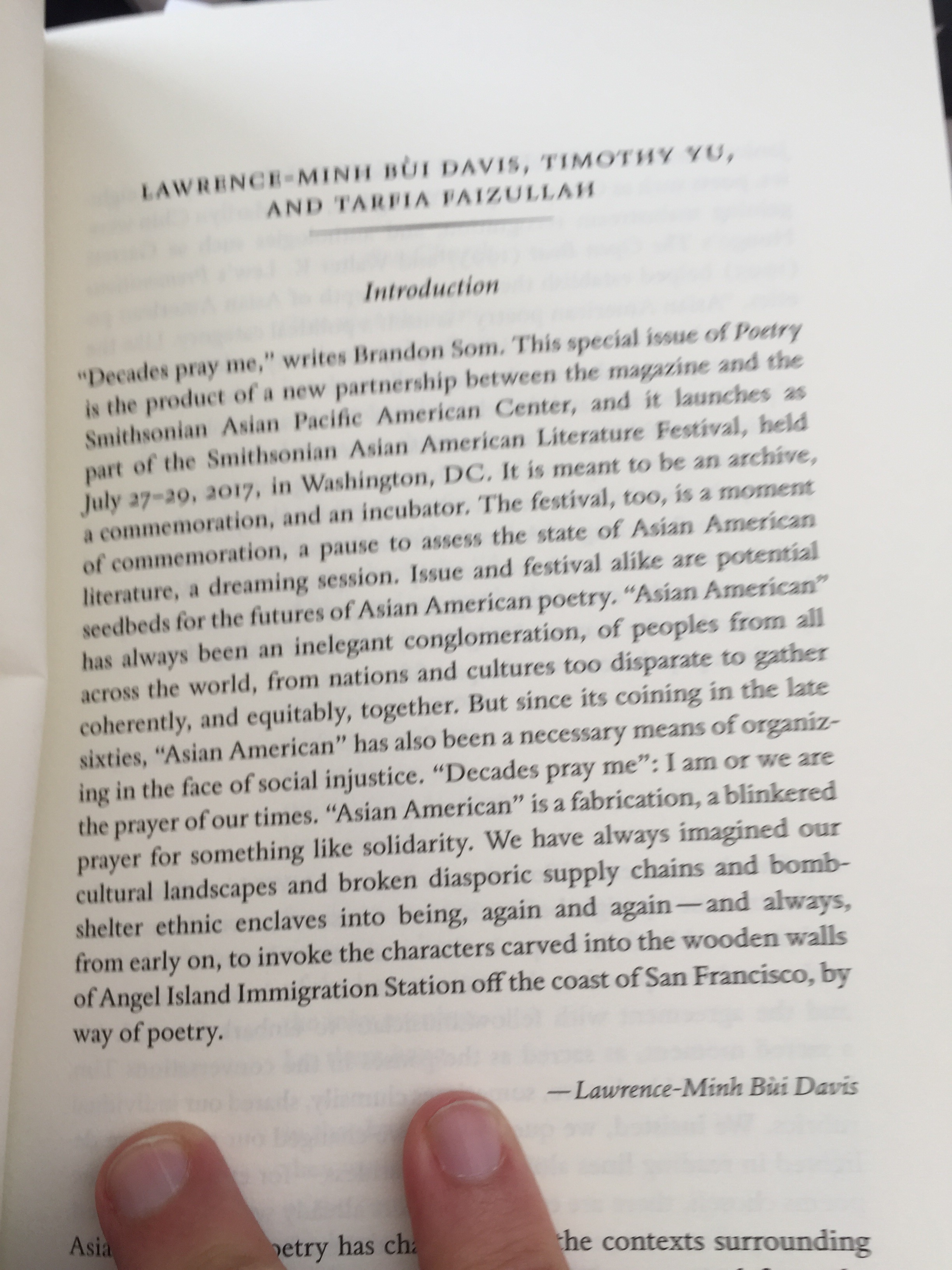
Asian-American Literature Festival


I won’t be able to make it to any of the Asian-American Literature Festival, taking place at various venues (mostly museums) around DC because I’m hard at work, but at least I was able to bring this with me.

‘Leisure: The Basis of Culture’ By Josef Pieper


Pieper begins the book as almost a marxian (though also anti-communist and anti-totalitarian) tract and ends as an apologist for Christian philosophy (though not, necessarily, for Christianity the religion).

Part of this is that he writes as a German in the years immediately following World War II. Neither Stalin nor Hitler nor the devastation of war can be ignored. Leisure, he notes, seems a luxury in such times, when so much rebuilding is necessary. And, though he doesn’t explicitly say it (though I think it implied in the book), when so much recompense is necessary.

He rejects the idea of intellectual ‘work’ in favor of less loaded words. How is ‘work’ loaded? It is for him because he wants something that does not demand an outcome, as in the product of work. He wants something that reflects contemplation and wonder (and revelation? It naturally follows, though he eschews such gnostic language).

The obvious comparison is between ‘pure’ scientific research and ‘practical’ scientific research (which, as Pieper would no doubt be quick to point out, had he made the comparison, is founded upon the results of pure scientific research).

Ultimately, though, the title is really misleading. He is not advocating, in the end, for leisure, but for philosophizing as a vital part of life.

He most frequently cites Plato and Aquinas (which made me wish I knew more than broad strokes about his philosophy), but it is Heidegger who most clearly haunts him. He mentions him, but tries to avoid mentioning him (not unsurprising, considering the time when he was writing). Like Heidegger, he seeks a way of being in the world and this leisure, which is really philosophical contemplation and study, is his solution. But while Heidegger’s is nearly theological, Pieper’s is, in the final analysis, explicitly theological. Sort of. He doesn’t argue that Christianity is necessary for man, only existentially profitable, arguing, as it were, but not proselytizing.

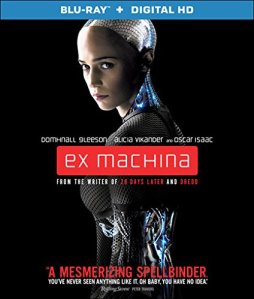
‘Ex Machina’ & Ted Lieu


Ex Machina is an excellent, creepy, and faintly problematic movie. Ted Lieu is a congressman from Southern California. As a just meaningless side note and, arguably, a moment of pointless name dropping, I met him a dozen years ago when I canvassed for him when he ran in a special election for an open seat in the California General Assembly.

This was part of a series by a nonprofit called Future Tense. It’s one of many semi-political, semi-advocacy, vaguely but not quite thinktank-y orgs that exist all around DC.

Lieu spoke well and amusingly and amazingly non-partisanly about technology legislation around the hacking of driverless cars, cells, etc. But I’ve always liked him. He even mentioned universal basic income or UBI as something worth attaining.

This was the second time I’d seen Ex Machina and I was able to better appreciate parts of the performance, script, and direction better. Like watching a surprising mystery, it can be fun to go back and re-see things again, knowing what one knows. The manipulations of the sparse cast.

But… the nudity seems problematic. There’s not a lot, except, towards the very end, there is a scene with great deal of extended nudity (there was an earlier nude scene which felt less problematic, as well), all of women (and all, my better half noted, women of a certain body type). I can understand why the director did it, in one sense, and I can outline why, I expect, he felt needed and why he felt it was okay. The gaze was female, for example. It was about becoming a woman (and a human). More reasons, too. But even though it probably wasn’t more than a minute or two, it felt like it lingered and it’s hard to fully explain away voyeurism. I won’t truly condemn voyeurism (I’m a man who’s used the internet, so it would be disingenuous), but maybe this movie didn’t need it.


Another Episode Of Facebook Poetry In Translation


It’s been a while, but it’s time for more “Found Poetry That Is Actually Facebook Translations of Posts from Thailand.” Enjoy.

I knew it.
It’s raining. It’s not going to go out.
It’s raining through a mirror
a movie.

I’m putting sleeping pills in the rice again
Good night.

My eyes… the birds are very satisfying.
It’s more fun than that, Dr. Wig,
eyes on the. A bird.

Beatriz At Dinner


The movie had gotten great reviews and while it wasn’t absolutely at the top of my ‘if you’re going to see a movie that’s out right now, it’s definitely this one’ list, it was on that list, so when a friend suggested we all see Beatriz at Dinner, I was one hundred percent down with it.

And it’s a really good movie. It’s a little too cinematic, though, not trusting in its actors (Salma Hayek is great and plays Beatriz’s subtle, aggressive power very well and John Lithgow makes a truly horrible person three dimensional, yet also sympathetic because he is a real, three dimensional human being, without shying away from the fact that he is an awful blight). I feel like it could have been a more politically and ecologically minded My Dinner with Andre (one of my all time favorite movies), if the director had trusted the audience to be able find the clash of ideas in conversation to be riveting.

Also: Chekhov’s gun appears.

If you don’t know what that means, don’t just look it up online. Read a book. Go to the library.

‘Cat Town’ By Sakutarō Hagiwara


In case I forgot to say it before, it is almost impossible to go wrong when you buy a book from the NYRB (New York Review of Books) imprint. I don’t think I’ve encountered a bad book published by them (and I’ve read at least a dozen from them). More than that, the books they publish are almost always enjoyable; you can read a book by an author you can be proud to be seen reading on the subway and enjoy it immensely.

Cat Town is a fine example of what they offer. A fun, interesting (often melancholy) collection by a modernist, Japanese poet from the first half of the twentieth century.

Note to cat lovers: it’s not really about cats, or at least not very much. Except for a prose poem at the end, dogs probably outnumber cats.

There are some lovely, erotic poems, as well. Erotic, I would say, but not sexy, if that makes sense. Hagiwara suffered, apparently, from mental illness, and you can tell. This isn’t to say that this is a example of outsider poetry. He was clearly steeped in poetic traditions (the introduction makes it clear that the translator isn’t wrong to translate the poems as being influenced by poets like Baudelaire and Eliot) and an excellent poet, who just happened to struggle with mental illness (rather than a crazy person who wrote poetry, if you can see the difference).