
Mary Karr’s Reading – Was I Unfair?


Sandra Beasley responded to my criticism of Mary Karr’s appearance. It made me wonder if I had been too harsh. Specifically, whether my own take down of  Karr was any different from her take down of Armantrout?

Perhaps it was. Part of my response was purely literary. I found her poetry to be quotidian and uninspiring (though isn’t saying that a repeat of the same behavior by her that angered me and the same behavior by me that has caused me to question my judgment?).

I think a lot of my frustration was caused by how much I enjoyed listening to Van Clief-Stefanon’s poetry and her remarks and how much a very little of Karr goes a long way – and there was a lot of Karr relative to Van Clief-Stefanon.

So, in short, my attempt to re-evaluate whether I was fair or not to Karr has resulted in me basically repeating all my complaints. Not really a successful effort after all.

In an effort to make up for that failure, let me end by suggesting that, at the very least, many (or most or all) of my criticisms of Mary Karr could quite fairly be directed at me.

The Million Dollar Poetry Blog


Sadly, I don’t think this will be happening to the Coffee Philosopher anytime soon.

Bill Young a DCCC Target (Again)


The DCCC is running some paid media against Bill Young on the Republican plan to cut Social Security and Medicare benefits (apparently a combination of live calls, robo calls, and newspaper ads; they are running this in ten different districts and it’s not clear whether Young is being targeted with all three kinds of media, or just the robo calls). This is a recurring theme. There is no doubt that the Florida 10th Congressional District is winnable seat, and that’s why the DCCC consistently runs it up the flagpole. But the problem is, we haven’t seen a candidate yet with the kind of national fundraising contacts to quickly raise $100k and appear able to raise $500,000 without outside help (like the DCCC stepping in and helping set up some fundraisers with some big hitters).

On another note, it has come out that Rick Scott yelled at Haley Barbour over Barbour criticizing his ad that (unfairly in many people’s eyes) tied Bill McCollum to the indicted former chair of the Florida Republican Party, Jim Greer. So, despite picking up a prominent Florida operative, it doesn’t look like Haley will be getting Scott’s endorsement. On the other hand, that might be a good thing for Haley’s prospects, seeing as how Rick Scott is about as popular as the plague right now.

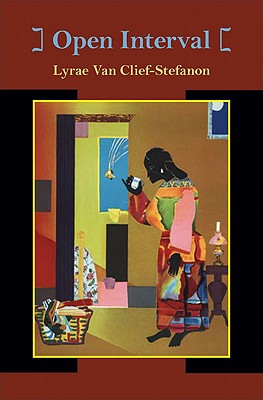
Poetry Review: Lyrae Van Clief-Stefanon’s “]Open Interval[“


Lyrae Van Clief-Stefanon’s reading at the Folger Shakespeare Library was wonderfully done, but also read beautifully on the page. With the rise of performance poetry, slam poetry and the like, we have seen the rise of poetry that doesn’t hold up well on the written page (if you don’t believe me, take a song and write it out  on a page and see if it’s as good on paper as it is being performed; chances are, unless you decided to write out a Leonard Cohen song, it’s looks like a poor piece of poetry when written out, however beautiful it was when sung).

While at that reading, I purchased her most recent collection, ]Open Interval[.

One of the poems she read was called “Bop: The North Star.” Reading it on the page, it was far more complex and rich than the reading implied. Lots of formal play and grammatical games. For example, check out the last stanza:

At the prison at Auburn I cross the yard. Inmates whet tongues against
my body: cement–sculpted–: poised for hate–: pitch
compliments like coins:–(wade)–their silver slickening–(in the water)–:
uncollected change. A guard asks Think they’re beautiful? Just wait
til they’re out here stabbing each other.
Oh, Harriet, the stars

throw down shanks–: teach the sonnet’s a cell–: now try to escape–

Read it out loud and you can hear how it might read gorgeously. But also compare that to the written word and notice what a purely oral transmission might miss.

I have loved these sorts of grammatical ever since I discovered Adrienne Rich in high school and noticed the way she would bring the reader to a startling halt by putting an extended break (ten spaces or so) within a line. The strategy would stop a reader even more than a simple line break.

Van Clief-Stefanon also recognizes the power of this sort of play to force the reader to stop and think, but never at the expense of a readable, enjoyable line or poem. Again, the comparison to her reading compatriot, the memoirist cum poet, Mary Karr, and her formally simple, narrative poems works strongly in Van Clief-Stefanon’s favor.

Mary Karr and Lyrae Van Clief-Stefanon


Memoirist and occasional poet Mary Karr joined poet Lyrae Van Clief-Stefanon on stage at the Folger Shakespeare Library this evening as part of the museum/theater/library’s O.B. Hardison Poetry Series. I vaguely remembered reading about Karr’s third memoir, Lit, but knew nothing about her poetry nor anything about Van Clief-Stefanon.

I would guess that Karr’s poetry is very similar to her autobiographical prose. Narrative and formally uninteresting. This was my opinion of her work while browsing through their books before the reading and Q&A session began.  Now, I would add “garrulously loud and asinine.” But that’s more of a personal description than an aesthetic statement.

I started dislike her when she kept hogging the spotlight from Van Clief-Stefanon (the visuals weren’t good either, with the white poet, Karr, hardly letting the black poet, Van Clief-Stefanon, get a word in edgewise when they shared the stage together). Then she made a comment about 90% of what Emily Dickinson wrote being “s–t.” I don’t necessarily disagree (Dickinson was incredibly prolific, but in practice we really just read a relatively small percentage of her work), but she started doing a version of the “I’m going to tell it like it is” (though her version was “someone has to say it”). Generally, when someone says, “I tell it like it is,” that person is about to be an enormous a–hole. Then Karr laid into the poet Rae Armantrout, calling her precious and saying that to like her poetry you have to “give a s–t” about the thoughts in her head “and I just don’t give a s–t.” Leaving aside the fact that I appreciate Armantrout’s work, the way Karr kept going about Armantrout was just irritating. And the purported impetus was a question about poets they liked. At least they agreed that they liked the Philadelphia versifier Terrence Hayes.

On the other hand, Van Clief-Stefanon was charming. Her work was formally inventive – and successfully used a variety of forms with amazing success, even introducing me to a new poetry form, the Bop. She also managed to write about the personal without seeming to vomit real life, unfiltered and unpoeticized onto the page. Van Clief-Stefanon is also a fellow Floridian and anybody who manages to become a relative success in a state that looks at people like Rick Scott, Mike Haridopolos, and Dean Cannon and says, “we should totally put those people in charge,” well, let’s just say that the person that overcomes that deserves some credit (I would include myself in that list, but I’m pretty sure that I’ve been traumatized by the sheer volume of stupidity and misbegotten garbage spewing out of Tallahassee).

Needless to say, I purchased and had autographed a book by only one of the poets.

]Open Interval[ was the book I chose. When I’m done reading it, I’ll tell you more.

On another note, the exhibit going on that the Folger is called Beyond Home Remedy: Women, Medicine, and Science. It’s great exhibit about early medicine and the curation (as the title suggests) gives it a strong feminist slant.


Adam Hasner Definitely Running for Senate (As If We Didn’t Already Know)


Former State House Majority Adam Hasner is really running for Senate. He kicked off his exploratory committee (despite the name, no one actually starts an one of these and then doesn’t run) and even said that he planned on following the “Rubio path to victory”™ (patent pending).

This is a cunning plan wherein some one deeply ingrained in the corrupting and corrosive, special interest dominated culture of Tallahassee runs as an outsider. They do this on the basis on not being in Tallahassee at this exact instant, as opposed to their primary opponent, who is currently serving in office in Tallahassee (for Rubio, this was Crist; for Hasner, it’s current Senate President Mike “the Appeaser” Haridopolos).

This will probably work (unless former Hooters employee, Connie Mack IV runs). Haridopolos’ career as a U.S. Senate candidates has opened up with controversy about the time he wrote a children’s book, when he was actually paid (using taxpayer dollars) to write a college textbook on the history of the Florida legislature. And then there was that time last week when Gary Fineout pointed out that Haridopolos’ fundraising during the legislative session may violate the Rules of the Florida Senate.

Hasner is laughing to himself and thinking that Haridopolos has set the bar, as regards ethics and basic competency, so low that the entire Miami Heat basketball team, standing on each others’ shoulders, could limbo underneath it.

Of course, what most people think when they look at these options is, “Congratulations on your re-election, Senator Bill Nelson.”

Anne Carson


I was reading Scarriet (a poetry blog) the other day and read about them crashing Anne Carson out of their little March Madness for poets.

Naturally, I disagreed with the result.

I have loved Anne Carson since 2001. I was browsing through books in a Books-a-Million (which once upon a time was not just crap that other bookstores only put on their bargain shelf, but actually stocked good books) on DuPont Circle back in 2001 when I stumbled on Men in the Off Hours. Just a few moments of flipping through the pages convinced me that this was something I had to purchase right then and there.

She has been one of my favorites ever since. The mixture of the arch, the classical, and the quotidian – I love it. Men in the Off Hours or Glass, Irony and God would be good places to start if you haven’t read her yet and were looking for a good intro to her style.


Postscript: Check out this Paris Review interview with Carson.

Barbour Picks Up a Florida Operative


Haley Barbour, the soon to be term-limited governor of Mississippi, is still putting together infrastructure for a presidential campaign. Most recently, he picked Jeb Bush’s long time political adviser and former Mitt Romney operative, Sally Bradshaw.

This is evidence of both  Barbour’s growing ambitions of poor Mitt Romney’s “rats leaving a sinking ship” effect (Mitt is still the favorite to win the nomination, on the basis of sheer inertia, as much as anything else, and he is still favored over Barbour right now).

Barbour’s path to the nomination runs straight through the South, and adding Bradshaw to his team is another sign that his plan is to try and sweep the South (a plan which would be complicated by a Mike Huckabee campaign) and leverage that into frontrunner status.

Caveat lector: I lost an election to Haley Barbour in 2003, when I was working on the Musgrove for Governor campaign and am frankly a little bitter.

The Archaeology of the Last Days of Borders


This article lays out what those of us on Borders email list already know – the sad desperation of the decline (and fall?) of the second largest bookstore chain in America. Once or twice a week, Borders send me an email offering my 30% off or more on virtually anything I want. And despite my oft stated preference for indies, sometimes I acquiesce (mainly when my better half takes me on her shopping trips – she makes baby clothes, by trade, and often takes me to a Jo-Ann’s  a few stores down from a Borders in Columbia, Maryland).

I cannot be happy to see any bookstore go under. Not even a big, evil chain. Especially since I have such good memories of a particular Borders location.

Also, I once remember reading that they kept books on their shelves longer than Barnes and Noble. What that means is that newly published and less heavily promoted books had more time to be seen, perused, and bought by a passing patron. Which means that, if true, Borders was better for new and emerging writers and smaller publishers than Barnes and Noble.

Trading In; Trading Up


Sundays, Mondays, Thursdays, and Fridays from 4-6pm are when you can trade in your old books for cash or store credit at Capitol Hill Books.

The proprietor is comfortingly curmudgeonly and doesn’t brook argument nor negotiation in the process. I brought in six books and was given seven dollars store credit, which was noted and filed on an index card.

I brought in four volumes of the late Robert Jordan’s Wheel of Time series. Seeing as how the Wheel is twelve volumes (and counting – the series is being completed by Brandon Sanderson, based on notes left behind by Jordan, who was not caught unaware by his death and made plans for someone else to be able to finish the series, more or less as he had intended) and not particularly good, I can’t imagine going back later and re-reading them. Don’t get me wrong – I’m going to finish the damn series. I’m on the sixth book and have invested  (wasted?) too much of my time to give up now. But to cling to volumes I’ve finished, when the writing can best be described as “cluttered” and “lacking in humor” seems to be a gross misuse of bookshelf space, which is at a premium right now.

Another book I brought in was one of the Harry Potter novels. This may sound like heresy, but it seems to have escaped many people’s notice that the Harry Potter novels are crap. I’d bought this one for some young relatives and found it still in my possession because it turned out they already had that volume. I did read the first one and the strongest sensation it generated what the strong desire to read something better. If you enjoyed Harry Potter, may I suggest you pick up a copy of Ursula K. LeGuin’s A Wizard of Earthsea to find out how it’s really done.

Finally, I traded in a copy of Richard Wilbur’s Inner Voices. Normally, I would never get rid of a book of poetry, but Wilbur is an exception. I can’t stand him. I wish I could remember what misguided thoughts compelled me to purchase this book from the Hollywood Borders so that I would know to ignore them in the future.

This was the bounty for which I received seven dollars.

I browsed to crowded (with both books and patrons) aisles for something to spend my new riches on. Mostly, I was torn between a Modern Library edition of the selected writings of Saint Thomas Aquinas (a beautiful little volume, with a smooth, hard red cover and the smell of suitably aged tome) and something from Harvard’s Loeb Classical Library. In the end, I didn’t get anything. Partly because the Aquinas was $8.50 and the Loebs were $15 – which is to say, more than the value of my credit. Also, I wasn’t sure how my better half would respond if I brought home another book (she was working near the book store and would undoubtedly have seen me pass by, carrying my new used book. Maybe I’ll see if there is anything else I can stand to be rid of on my shelf to try and build up to either $8.50 (plus tax) or $15 (plus tax).