Bach’s Birthday


Johann Sebastian Bach was born on March 21, 1685, so his birthday has already past. Fortunately, Classical WETA in Washington, DC (90.9) has been celebrating all month long. Sadly though, March is almost over. I’ve loved being able to turn on the radio in the car and know that there is a darn good chance of being able to hear some baroque (generally, my favorite period of classical music – love me some harpsichord).

On a vaguely related note, coming up on April 17, the Folger Shakespeare Library is celebrating Shakespeare’s Birthday and for the last three years WETA has sponsored the event and a brass quartet representing the station has played in one of the book rooms.

It’s also a great event for kids (I brought friend’s daughter last year).

Oh, and my father’s birthday is coming up, too.

Before the Internet


I miss the days before the internet when I couldn’t find everything I wanted. No more searching for an unabridged Count of Monte Cristo or a copy of Richard III. No more days when used bookstores were the only place to find certain books. No more buying copies of Richard Wagner’s overtures to discover that what I was really looking for Carl Orff.

Horace Walpole’s House Restored


Horace Walpole’s estate, Strawberry Hill, was ground zero for the Gothic Revival craze in architecture in England. Until recently, it was falling apart, but seven years worth of (expensive) restoration work have gotten it into shape. Now, it’s worth visiting again.

Now, I’m not actually that interested in the history of Goth Revival in the late eighteenth and early nineteenth centuries. But I am interested in the gothic literature of the period.

Walpole gets credit for writing the first gothic novel, a gem called The Castle of Otranto. I first came across it in a volume that had three gothic novels published together, the other two being Vathek and Frankenstein. It was in a now departed used bookstore in downtown Clearwater. I bought it at the same time as I bought Pascal’s Pensées and Thoreau’s Walden. It was good  bookstore and I’m sad it’s gone. In it’s place (at least the last time I was there) is a sort of hippie coffeehouse.

An Unexpected Impact of the Borders Bankruptcy


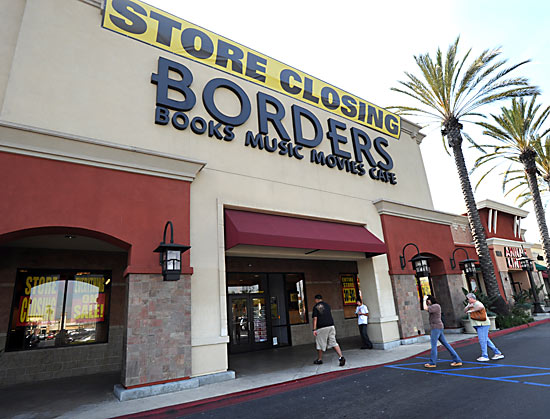
The city of Pico Rivera in eastern Los Angeles County used federal grant money to lure a Borders to their community. Unfortunately, this particular Borders is on the list of stores to be closed. This article suggests that the city may have to continue to subsidize either all or part of the store’s rent for another three years (though the shopping center owner is responsible for making a good faith effort to fill the space).

When I worked for a member of Congress, Pico Rivera was in my congresswoman’s district (and I can attest that the Pico Rivera Councilman Bob Archuleta, mentioned in the article, is a good man, as is his son Matthew, who graduated from West Point last year).

Though this may seem like a cautionary tale, I would argue that bringing a bookstore to a community that lacked one is an admirable and important effort. Too many towns and cities are becoming “book deserts,” where citizens have to drive long distances to find a bookstore. This is an especially bad situation for the next generation – children benefit from being exposed to a culture that values books and reading as civic virtues and part of the common good. In addition, until the closure, the city was pulling in more than three times as much in sales tax revenue as they were paying out in subsidies (and that doesn’t event include the benefits that came from having the creation of jobs and other multiplier effects).

Cool New Word: “Agnotology”


Agnotology: the study of culturally-induced ignorance or doubt.

The concept was developed Stanford University professors of the history of science, Professors Robert Proctor and Londa Schiebinger (who are married, by the way).

I’m Note Sure What I Think About This


Thanks for the attention, I guess. I am glad she’s promoting poetry and poets. But, I must confess, I don’t really know what I should be thinking when I read this. Do I not have the right clothes for writing poetry? Is that why the New Yorker still hasn’t published me?

But how much of uncertainty is due to a pointless elitism? The silly old punk rock ethos: whatever is popular is no longer worthwhile.

One thinks about the fuss when Jonathan Franzen expressed doubts about his novel The Corrections becoming an Oprah Book Club selection. What was he afraid of? Of more people reading it? Of course, we all understand what he was afraid of – a mixture of sexism and anti-populism. Sexism because Oprah specifically targets middle class (read bourgeois) women and anti-populism because, well, she is insanely popular and most things she endorses also become unreasonably popular. And if the appreciative audience of one’s work extends beyond a certain intellectual and artistic elite, is it still high art or literature?

One could also be reminded of how award winning author Jon Banville, who writes “literary” books under his own name and genre books under a nom de plume as an example of someone who feared that mass appreciation would depreciate the literary value of his other works.

Eric Foner Wins Bancroft Prize


Eric Foner’s The Fiery Trial: Abraham Lincoln and American Slavery just won the Bancroft Prize in history. When I studied history at college, I specialized (informally) in the history of slavery in the America and Foner, naturally, came up. His lengthy volume, Reconstruction: America’s Unfinished Revolution is the best work on Reconstruction out there (though John Hope Franklin’s Reconstruction After the Civil War is the best short history of Reconstruction).

Foner is often characterized as a Marxist historian, but let’s honest. All “Marxist” often means in an academic context is writing books that address the issue of class.


The Decline of the Cultural Omnivore


NPR recently ran a piece about the decline of the “cultural omnivore,” though the title was more hopefully entitled In Praise of Cultural Omnivores.

The premise is that so-called high art (ballet, classical music, literary fiction) is declining in popularity not because the number of people who prefer “highbrow” cultural declined, but because the number of people straddling the middle declined. People who watch reality television and listen to top 40 radio, but also make not entirely infrequent appearances to listen to their local symphony or some other example of highbrow culture.

I’m not entirely sure where I fall. I suppose I am an omnivore – I love my genre fiction (fantasy and sci-fi) and popular television (Castle, Family Guy). Though I wonder if I don’t fall a little closer to the highbrow side. I also wonder if it’s not the case that I want to fall closer to the highbrow side and so view myself through that lens without necessarily being correct in that assumption. Do I really prefer classical and jazz, densely written literature and poetry, opera and foreign fills – do I really prefer them more than pop music, genre fiction, and summer blockbusters?

It can be hard to distinguish image from reality, even in one’s self.

Hauntology


Just came across the most lovely neologism – “hauntology.” What beautiful word to be able to use to demonstrate the melancholy within certain philosophies and cultural criticisms.

The word is redolent of Jacques Derrida’s mournful spectres.

New Coffeehouse on the Hill: Pound


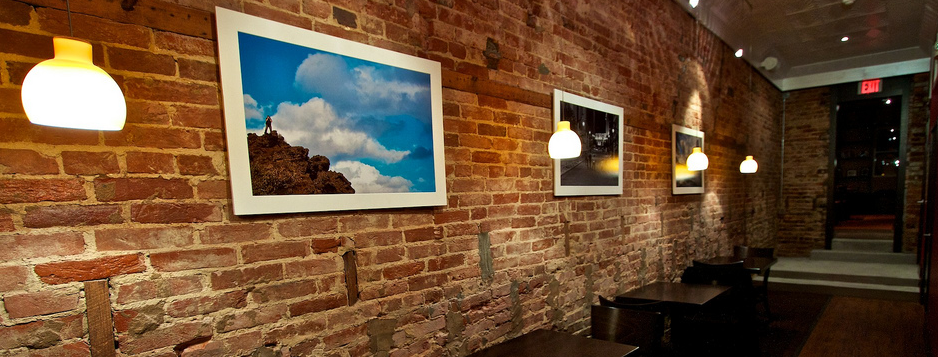
While my better half was away doing real work, I took the opportunity to head up to Pound, a new hipster coffeehouse on Pennsylvania Avenue. While the coffee is not nearly as good as that at Peregrine Espresso, the ambiance is certainly more inviting to sitting down and staying for a while (though this may be a bad thing for the long term financial prospects of Pound; Peregrine’s ability to get someone inside, make them a great cup of coffee, and then get them out the door is certainly a recipe for better financial turnover). I brought my laptop with me, but the wireless at Pound was password protected and I felt too embarrassed to get up and ask what the password is. Of course, it might not even be available to the public. They don’t have cash registers or credit machines, just iPads and Squares to calculate tax and run credit cards. Certainly they’d want that running on a secure network.

Anyway…

The place manages to be bright and airy without sacrificing the dim and cramped vibe one expects from a coffeehouse. I know the first adjectives are pretty much entirely in contradiction to the second two, but I stand by my statement. If you are suffering from some sort of brain lock from that, pick up a copy of Kant’s Critique of Practical Reason and read until he starts talking about antinomial thought and then come back and complain to me if you still don’t understand, but keep in mind, I will be quizzing you about the book, so make sure you’ve really read it and made a good faith effort to understand what Kant is trying to say. And also keep in mind that I could just tell you that Critique of Practical Reason is part of a philosophical trilogy and insist that you read the first book, Critique of Pure Reason, and call me back in two weeks. This is all for your own good. If you can’t be bothered to read canonical works of western thought before pissing and moaning about me holding two seemingly contradictory beliefs (bright, airy – dim, cramped), then I’m not sure I can be bothered to listen to your small minded complaints.

Pound also has a small but interesting menu. I haven’t eaten anything yet, but they seem to be trying to focus on just a few things, so there’s more chance they’ll get it right than if they tried to cram the supplies to run a full kitchen in their narrow space.

So Pound basically gets a conditional thumbs up from me. I’ll bring a book here and notebook here every so often and settle down for a while, though until I (or they) figure out a way to get me some free wireless, I won’t be bringing my work here on regular basis to have lunch or a snack and a large coffee. And if all I want is a really good cup of coffee and to get back home or wherever I’m going, I’ll still go to Peregine.