Poetry in the New York Times; Also, the Function of Poetry


I still have a beef with the short shrift the New York Times gives to poetry in its book reviews. No, poetry may not be a bestseller nor what the average newspaper is looking to read about, but doesn’t our media have obligation to expand our horizons and our minds?

Today, the Times still failed to write a review of book by contemporary, living poet. But the Sunday book review, in its semi-obligatory, monthly write up of “something kind of to do with poetry,” managed to include a literate, wide ranging (within the Western poetic tradition), and dare I say impassioned argument for the necessity  and purpose.

The Poetry of Catastrophe,” as the piece is called, identifies poetry as the tool best equipped to speak about great tragedies.

This is not a new argument by any means. It is a repetition of the thesis that poetry is the literary form best equipped to (or even the one solely able to) describe the ineffable.

Being a piece in a New York paper, September 11 was mentioned.

The poets who were name dropped and quoted included John Milton, Walt Whitman, T.S. Eliot, William Shakespeare, W. H. Auden, William Butler Yeats, and Adam Zagajewski.

One at least hopes that some readers will be inspired to (re)examine some of these poets and find some meaning in them and also find some meaning in the mere act of reading poetry.
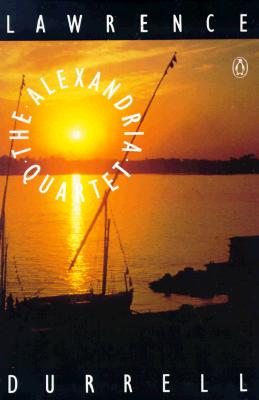
Justine & the Alexandria Quartet


I was watching the Spike Jonze movie, Stranger Than Fiction, and noticed that the literature professor played by Dustin Hoffman had written on the chalkboard a list of name’s and ailments. It wasn’t until the final name that a lightbulb turned on in my head – Pombal (who had gout) from Lawrence Durrell’s Alexandria Quartet.

My Aunt Anna and Uncle Buddy had the Alexandria Quartet high up on a bookshelf in their living room. When I would visit, Aunt Anna and I would stay up talking late into the night. For some reason, those four books kept catching my eye and I would ask her about them, but she was usually noncommittal. Finally, I took down the first book, Justine (not to be confused with the novel by Donatien Alphonse François de Sade, better known as the Marquis de Sade, which I once purchased at Bridgestreet Books in 2001).

I loved it. I am a little afraid to go back, though. I suspect that it is a book best appreciated by a slightly younger man.

Nonetheless, at the time. Such lush writing. The highest literary eroticism, without ever being explicit. The way that the narrative, rather than following chronology, revolved in a circle around a central event and a central theme.

I never finished the quarter, finally stalling while reading the fourth and  final volume, Mountolive. Each succeeding book after the first was less and less satisfying. The second book, Balthazar, while not nearly as good (in my eyes) as Justine, was at least enjoyable.  But the third, Clea, was more a slog. By the final volume, I simply had no more interest in trying to finish the quartet.

I didn’t take Aunt Anna’s copies with me and bought my own copy. I lost that first copy and sometime in my late twenties, I felt the urge to read it again. The only copy I found while prowling used bookstores had an embarrassing cover, with some sort of blonde on it (who I suppose was intended to represent Justine, though I can’t imagine her as a blonde – she was a Jew of Mediterranean descent, after all). Even worse, it made it look like some cheap romance and no guy wants to be seen reading that kind of stuff in public. I don’t know where that copy is now. I may miss those first, heady days reading Justine in high school, but I don’t miss that stupid cover.

One of My Favorite Bookstores; And Some Musings About Denny’s


One our way back from an early appointment, we stopped at Denny’s for breakfast. I don’t think I’d been to a Denny’s in several years. For your information, I had a veggie cheese omelette and coffee.

The coffee struck a chord with me. The familiar, thick Denny’s mugs. I remembered so many afternoon and late night trips to the Denny’s by the corner of U.S. 19 and Main Street/580 in Dunedin, Florida. How many times did I sit down there with Matt or Damian or Scott or Jeremy and pretend it was the Left Bank in Paris in the 1920s? Discussing our still nascent understanding of philosophy, literature, politics, and art?

Across from that particular Denny’s was a now defunct bookstore called Bookstop. Bookstop was (I believe) a subsidiary of B. Dalton (which was bought up by Barnes and Noble). Bookstop was the first bookstore near my home that was more than just your run of the mill, shopping mall based, Waldenbooks or B. Dalton, with their collection of bestsellers and tripe. This one had poetry and philosophy and literature in translation and hosted readings by authors. It blew my mind.

It’s gone now. And, if I could travel back in time, I wonder how it would compare to the bookstores I love now. But, based on personal history alone, Bookstop has to be considered one of my favorite bookstores.

The Marginalia Handwringing Continues


I don’t know I’m so fascinated by this, but now The Atlantic has gotten into the game. Read their writer’s take on it here.

The Function of Philosophy


I am not here preparing to offer some sort of be all to end all. Rather, I am commenting on a particular work.

I recently took advantage of a Barnes & Noble gift card to download Georg Simmel’s The Philosophy of Money to my Nook. The author’s preface gives a very persuasive (at least to this reader) argument for the intellectual function of philosophy in understanding the world. It is all the more interesting in that this does not come in the context of a book about spiritualism or the meaning of life or finding one’s “purpose.” Rather, it opens up a lengthy discussion of money.

Simmel writes that any topic of study has “two boundaries making the point at which the process of reflection ceases to be exact and takes on a philosophical character.” He points to the first boundary as being the “lower boundary of the exact domain.” Now, I admit to not being too clear what he is saying here. Perhaps a reference to the philosophy that pre-dated modern science (the ancient Greeks, for example).  But the real meat is what he considers to be the philosophical domain that comes after the upper limit of the “exact domain.”

Philosophy, he says, is what can turn the disparate fragments of scientific and empirical knowledge in a world view. Essentially, philosophy as the science of hermeneutics. These things cannot be fully determined, he writes, by science. To get past this upper limit of scientific knowledge requires philosophy.

As to whether philosophical interpretations can ever be replaced by ever growing empirical knowledge… he compares that to the idea to the idea that photography could replace painting and sculpture. Purely mechanistic depictions are beside the point.

Simmel tries to explain the “essence [of money] and the meaning of its existence.” This is, to him, a purely philosophical exploration. Thus, no matter who often it might have recourse to the science of economics, it remains a philosophical study.

On another note, it appears that Routledge Classics is publishing a new edition of The Philosophy of Money for just $29.95 retail – a far more affordable from the $67.95 (plus tax) that I paid. The high price of the book was one reason that I took so long to purchase it (having desired the tome since 1997).

Coffee Addiction


I used to be addicted to coffee. A hardcore addiction. In high school, one of my teachers let me use his coffeemaker as long as I brought my own coffee and filters, so I started having that second cup (after my morning cup at home, before driving to school) in the afternoon everyday. But sometimes, we would run out supplies and I would forget to bring more. On those days, I would get the shakes and sweats, I would get terrible migraines (as if there’s any other kind), and would even vomit. Eventually, I made the connection between these two things. After that, I rarely missed my second cup.

This need became part of the image I projected both to myself and others and I had no desire to quit.

But quit I did, but entirely accidentally.

After my kidney transplant, I was on an IV for both nutrition (which is to say, a steady drip of sugar water) and pain. So, during the several days when I would normally be going through withdrawal hell, my doctor was keeping me on painkillers.

So here we are,  more than a month after my surgery, and I no longer need coffee or caffeine to get through the day. None at all.

The thing is, I kind of miss it. I was such a huge part of life. As I mentioned, it was part of my self-image, but it was also a structure to my day.

I am not so foolish as to deliberately get my addiction back, but I am starting to make an effort to drink more coffee (mostly from one of two coffeehouses near my apartment – Peregrine Espresso and Port City Java – the first one is where I go for the best coffee, the second for when I want to bring my laptop, a book, or a journal and relax in a comfy chair).

Adam Hasner Thinks Mike “the Appeaser” Haridopolos Is a Weak Candidate


A guy who is currently out of office (former Florida House Majority Leader, Adam Hasner) has looked at Mike Haridopolos youthful campaign for the U.S. Senate and said to himself: “I will beat this guy like a drum.” Yep. Hasner is officially “testing the waters” (which is actually a technical term and lets him start raising some money and traveling).

Yes, Haridopolos’ campaign is inspiring tons of confidence, but in his opponents, not his supporters.

A Recovering Atheist’s Take on the Rob Bell “Controversy”


For those of you who haven’t heard, Rob Bell is the charismatic pastor of a Michigan megachurch with a national following. Like most megachurches, it began as part of a conservative, evangelical tradition. Certainly, it appears that Bell was raised (theologically speaking)  in that tradition. But he now appears to be going the way of many religious minded young people, who take a far more progressive view of politics and religion (the best covered issue from this trend is the movement towards an evangelically oriented environmentalism – which is causing something of a schism with the older generation, who fear that an attachment with environmentalists will damage their close relationship to the Republican Party and the political right).

Rob Bell’s fame has skyrocketed with his latest book (due to be published in March 15), Love Wins: A Book About Heaven, Hell, and the Fate of Every Person Who Ever Lived. The book is accused of flirting with the concept of universalism – the idea that everyone will eventually be saved.

American evangelicals tend towards a far more limited and deterministic view of salvation.

Pope John Paul II once wrote that it is possible that there is no one in hell and that there is not necessarily a reason to believe that there is anyone there. This was no written ex cathedra (from the seat), so it does not carry the weight of papal infallibility. That said, when I read that, it was one the concepts that led me to the Roman Catholic Church.

The Church views hell not so much as a Dante-esque place, with fires and demons. Rather, hell is the state of being completely removed from God. Taken from this point, hell requires God to be willing to deny his light to one of his children. Personally, I have difficulty seeing a truly merciful and loving God being able to so deny his love to anyone. I base this on the belief that though I have no children, I also have trouble imagining anything my child could do that would cause me to stop loving him or her. I could be disappointed or angry. I could even hate would they had done and support their punishment (though I follow the Church’s teachings on capital punishment). But deny my child my love?

If you believe in God, do you believe he could deny his love to one his children.

What A Founding Father Thought Constitutional Originalism


Some men look at constitutions with sanctimonious reverence, and deem them like the arc of the covenant, too sacred to be touched. They ascribe to the men of the preceding age a wisdom more than human, and suppose that what they did to be beyond amendment. I knew that age well; I belonged to it, and labored with it… I think moderate imperfections had better be borne with; because, when once known, we accommodate ourselves to them, and find practical means of correcting their ill effects. But I know also, that laws and institutions must go hand in hand with the progress of the human mind. As that becomes more developed, more enlightened, as new discoveries are made, new truths disclosed, and manners and opinions change with the circumstances, institutions must advance also, and keep pace with the times…

Thomas Jefferson, from a letter to Samuel Kercheval, July 12, 1816


Sorry, Scalia, but it appears your originalism is actually against the original intent of this Founding Father.

Liberalism


This is a little embarrassing, but I’m about to quote an article from Slate.com.


Liberalism, at its core, is not so much a doctrine as a disposition, a habit of mind, and it’s compounded of two principal elements: An abhorrence of cruelty and a sense of the provisional nature of human knowledge.


Despite my lingering shame at admitting to reading Slate, I was struck by this particular phrase, within a piece about the French essayist (arguably, the original essayist) Michel de Montaigne.

I was struck by how well that sentence encapsulated my own sense of my ideology – and how it is not truly an ideology. Perhaps it is more truly something closer to Kantian categories than a true ideology, or doctrine, as the author write.