Public Poetry


The April edition of Poetry contained an essay in the form of two reviews about public poetry by the New York Times‘ David Orr. Similarly, Julia Baird questioned the proper role of a public poet in the Philadelphia Inquirer.

Both authors primarily view the public poet as being, in effect, a public intellectual and activist. Baird criticizes W.S. Merwin’s stewardship of the U.S. Poet Laureateship on the grounds that the elderly and physically retiring Merwin (who does not often leave his Hawaiian estate) would not bring what Baird sees as a necessary activism.  She similarly suggests that his predecessor, Kay Ryan, was too emotionally retiring to be effective.

Orr reviewed four collections that he believes correspond or attempt to correspond with his view of public poetry. The thread connecting these books is political engagement.

Baird also sees the type of engagement called for by our poet laureates as political. He singles out the Russian expatriate who become the U.S. Poet Laureate, Joseph Brodsky, as the ideal – and specifically references how Brodsky called himself a “poet activist.” The other laureates he mentions, he notes the particular socio-politico issue they tackled.

Absent from this list is Robert Pinsky, who did more than poet laureate I remember to evangelize poetry.

Neither of these two see a public poet as one who necessarily tries to expand the reach of poetry among the reading public, but rather, as I said earlier, as being simply a public intellectual who happened to earn their public perch through poetry.

While I love the idea of the public intellectual, surely we can have a view of the public poet as different from a Cornel West-like  figure who happens to write poetry?
Poetry and E-Books


Basically, the issue is that poetry is a massive failure in e-book formats because ePub and other e-book software have no respect for line breaks. This is not such a big deal when you’re talking about prose, but it’s death for poetry.

As e-books become a larger and larger segment of the book market, the failure of poetry to be included will become more and more of a problem for poetry in America.

Right now, about the only solution out there consist of using PDFs, rather than than “traditional” (what is the best word to use here? I don’t know) e-books. Bookmobile’s Ampersand is an example of this.

The Allen Foundation did recently give Copper Canyon Press a $100,000 grant to search for a solution to this problem. While I have somewhat mixed feelings about Copper Canyon – they are the most prominent publisher of poetry in America, but they are also amazingly conservative in the poets they choose to publish – there is no doubt that, of all publishers of poetry, they have the commitment and profile to actually get this done.

Harbor Stories


The other day the mail man (and it is man) delivered  package from my father. Actually, I’m not sure when it arrived. My father claims that he sent it something like a month ago, but I’m not sure if it’s true. We have two apartments and one of them is mainly used by my partner for her business. Things get lost there.

This particular package contained a lit mag called Harbor Stories, so named after the town Palm Harbor (a few miles north of where I grew up). A writing group called the Palm Harbor Society for the Novel put it out.  The mag was perfect bound with a picture of the harbor as the cover (not a great looking picture; I suspect the resolution wasn’t high enough for print). My loving father was featured twice, once for his short story Tienes Fosforo and once for one of his stories about a lawyer in small town Arkansas (the fictional town of Eclectic). The first story won first prize in the group’s short story.

Being me, after reading my father’s pieces, I went to the poetry. Nothing special, to be quite honest. I would surmise that most of the poets do not read much contemporary poetry.

This is not intended as a plug for contemporary poetry. One doesn’t have to like it. One could prefer Byron or Marvell or Whitman. But it is important to read it, to be aware of contemporary currents and strategies and I’m not sure these particularly poets are.

Analysis of E-Book Consumption


Someone did a(n imperfect) analysis of the states and their consumption of e-books. They compiled Smashwords e-book sales data from Barnes & Noble from December 2010 through March 2011. This is, of course, a limited and limiting sample, using a single e-book publisher and only looking at sales on one e-book device (of course, that’s my device – the Nook), presumably because the Kindle doesn’t support Smashwords books.

They put together two charts. The first is basically useless. It measures what percentage of total e-book sales take place in each state. Unsurprisingly, the four states with the greatest percentage are… the four states with the largest population (Texas, California, New York, and Florida).

The second chart puts together a list of per capita e-book consumption, which could actually tell us something. The first four states are among the most rural and sparsely populated in America (Alaska, North Dakota, Utah, and Wyoming). States where visits to a bookstore could become problematic.

My own “state” of Washington, DC is actually dead last in the per capita sale of Smashwords e-books. Again, despite my own ownership of a Nook, I can understand this. DC is just chock full of bookstores – Politics & Prose, Busboys & Poets, at least two Barnes & Nobles (and we used to have two Borders), Second Story Books, Capitol Hill Books, Bridgestreet Books, Kramerbooks & Afterwords… In other words, there’s no lack of access to bookstores in this town.

Oddly (or not – the state does have some great independent bookstores), California, the home of Silicon Valley and much of nation’s tech industry, ranked next to last.

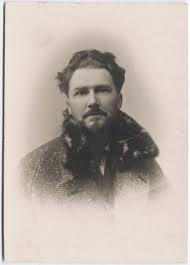
Ezra Pound and T.S. Eliot.


I came across a photograph of a young Ezra Pound. When he was young, beautiful, and romantic. Before we had to question his work for fascism and anti-semitism.

Around the same time, I brought my copy of T.S. Eliot’s Four Quartets to read on the Metro. In comparison to his earlier work, the poems disappoint.

We already know how influential Pound was in determining the final form of The Wasteland. But how much of Eliot’s genius evolved from part of the literary circle orbiting around Pound’s artistic generosity? And how much of his genius atrophied in its absence?

Christopher Hitchens in the London Review of Books


Here is a link to his pieces in the LRB.

Feeling Better Every Day


I had some fairly major surgery on February 2nd. While the first week afterwards was more than a little scary and frustrating, it’s been amazing how much better I feel. I need less sleep, I don’t feel tired all the time. One of my favorite diversions is walking. Not necessarily for exercise, but as more of a meditative activity. Before the surgery, I was still walking but not more than half a mile a day. Now, I’m walking two miles more on a regular basis. And even though I get tired after walking a particularly long ways (more than five miles on one day – though not all during the same outing), it’s a different kind of tired. Before, I would feel a kind of bone tired, numbing exhaustion. Now, it’s the normal muscle fatigue. The difference may sound academic, but doesn’t feel that way to me.

A benefit more relevant to this blog is that I am able to read and write again. While ill and early in my recovery, it was impossible to concentrate long enough to read more than a few pages at time. Similarly, I was almost completely unable to write poetry or fiction. Now, the both these favored activities are slowly returning to me.

Not the Best Coffee Anymore


I was thinking about my recent post about Pound, a new coffeehouse on the Hill. In particular, about the comparison with Peregrine Espresso. I have to admit something. It’s hard to admit and not something I like to talk about.

Peregrine‘s coffee isn’t as good as it used to be. It’s better than Waffle House or Denny’s or IHOP. But it’s otherwise no better than your average coffeehouse (though I’m talking about coffeehouses that do spend some time on their coffee; not the kind that primarily function as a gathering place for budding anarchists). Their cappucinos (I don’t normally drink lattes) are still the best around, but I’m not sure their coffee is still worth an extra trip. Or rather, I’m more likely to go a little ways down the street to either Pound or Port City Java.

Anis Shivani Points Out That the New York Times Book Review Sucks When It Comes To Poetry


The New York Times’ book reviews have long given short shrift to poetry and it’s something that has been bothering me for a long time. The Huffington Post’s Anis Shivani (who, I admit, I often find to be a little glib) agreed with me during a longish take down of them called The Death of the New York Times Book Review: And Why That Is a Very Good Thing for Books.

He has also noted that they have almost totally eliminated poetry from their pages – implictly saying that poetry is not worth reading. And when they do review poetry, it is only established figures who get the attention (though Anis doesn’t mention it, the only other time they review poetry is on behalf of dead, canonical poets).

It seems that only place to consistently read decent coverage of poetry is by a hit or miss process of scrolling across blogs. It would be nice if the paper that strives to not just be parochial, but of value to national and international readers, would pay some attention in its literary coverage to what is, quite literally, the man’s first literary venture – poetry. Instead, they consistently disrespect poetry in what they omit and what they include.


The Poet’s Chair


Did you know that Crate & Barrel used to have a “Poet Chair?” Yes. You could buy a chair for poetry (writing or reading it, I wonder?) at a reasonably upscale (in a Restoration Hardware kind of way) chain store.

My guess is for reading, because there is no way you could pull this thing up to a desk and write comfortably. And I’m not sure why poetry would be this particular shade of persimmon.

The sad part of all this is… the chair is no longer available.

If Crate & Barrel has no room for poet’s anymore, what hope have we to loved and appreciated? Oh well, I suppose I shall just have to buy my bohemian cred elsewhere. Maybe at Pier One Imports?

At least I still have cool desk for writing poetry.