 Has art become philosophy? And does that mean the end of art, in a certain sense (and the beginning of something else; the guy this article is about it all about Hegel, well not all about Hegel, but more about Hegel than most people are, which is a low bar, really, because how many people incorporate a lot of Hegel in their lives? Not even philosophers, leastwise, not philosophers in America, do that regularly. So… I don’t know. Take from this what you will. And by the way, Brillo Boxes is awesome. Thought you should know.)
Disconnecting
Weekend Reading – Howling At The Moon

Day Of The Doctor
 Why yes! Yes, I am going to see the fiftieth anniversary special, Day of the Doctor in 3D at Georgetown on Monday, November 25th. Why do you ask?
And for all those who don’t know me and haven’t figured it out yet… we are talking about Doctor Who here.
‘The Kindly Ones’ By Anthony Powell (New Year’s Resolution, Book Thirty-Eight)
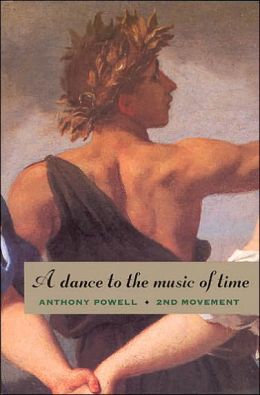 The Kindly Ones of the title are the Furies of Greek Mythology. There’s a reference to them in a painting early on, but I suspect the symbolism – if there is any – relates to the approach of the Second World War (the end of the book has Nicholas Jenkins, the narrator, managing to find a connection to provide him with an officer’s commission for the not yet exploded war).
The premonition that Widmerpool would become the villain of the novels is coming true, as he malignly scuppers some work relating to metal trading with Turkey that would have benefited England just so as to screw with a character he didn’t like.
That character was Bob Duport, the now ex-husband of Jenkins’ former lover, Jean Duport, née Templer (the sister of his school days friend, Peter Templer).
I have said before and I have said again, Jean was Jenkins’ great love. He seems scarcely to care about his wife. She is someone he married because he ought to have gotten married. But it’s the memory of Jean who keeps haunting him.
Bob reveals that she had another lover at the same time she was involved with Nicholas, and that this other man was more likely the truer focus of her affections. In fact, she left Nicholas to meet her then still husband in South American, so Bob says, because it would actually have been easier to keep carrying on with the other fellow over there. Finally, he adds that Jean is now remarried and living in Argentina.
Nicholas is clearly rocked by these revelations and I can’t but think (and also to hope) that Jean keeps reappearing in some fashion, even if only as a phantom memory.
Midweek Staff Meeting – They Can Take It Away Whenever They Want To
 In the ‘cloud,’ corporations own everything you think own (and everything you used to own).
The next American winner of the Nobel Prize for Literature?
A very earthy sort of ‘vie boheme’ near Covent Gardens in the eighteenth century.
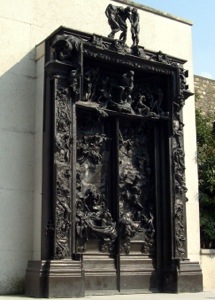
Happy Birthday, Rodin!
By the way , Camille Claudel is one of my favorite movies. Wore out that VHS tape.
Library Late
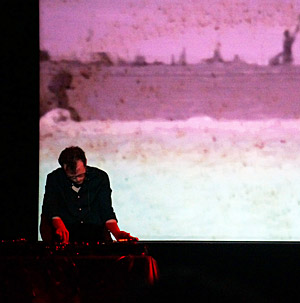 Last Friday, the day after Albert Camus’ 100th birthday, the Scandinavian video art duo ‘Orchid Bite’ performed a piece entitled Library Late at the Atlas Theater on H Street.
And it was amazing.
The centerpiece was long stretches of an audio recording of Camus reading from his first published novel, L’etranger. While there were short passages that were written on the screen in English, as is subtitling the narration, that was infrequent and, what’s more, my limited French was enough to tell me that often the English passages were not those Camus was reading aloud at that moment.
It didn’t so much matter that I could not truly understand what Camus was saying, because the magic was the fact of this voice coming from across time, his voice speaking to us from the grave. Especially since, hundredth birthday aside, Camus has been having a bit of a ‘moment’ these last few years. For me, it started when I read the late Tony Judt’s The Burden of Responsibility: Blum, Camus, Aron, and the French Twentieth Century. But even then, I was catching on to something already fecund in the zeitgeist. Camus was back, baby.
Orchid Bite mixed… not so much music, as sounds and fragments. A piece of a song vaguely familiar, but mostly just evocative tones, mixed with images that directed the mind to Camus’ origins and the setting of the novel: Algeria.
Not an Algeria of camels and orientalist exoticism, but beaches and roads and houses and trains. A place where people lived.
And, again, behind it all, the firm, ghostly, and insistent voice of Camus calling us to… ?
I don’t know.
 the coffee philosopher