Go to #15 and replace “Carol” with “Christopher.” I’d say replace the age, too, but it’s close enough to being true that arguing the point would sound pathetic.
Dungeons & Dragons: Part III
The party are met at the Amran docks by a refugee from the empire and guided to meet with two invididuals: an elf named Elimelech and a gnome named Nadab. Elimelech explains that he has been in Amran as an intelligence officer for the Sunward Emperor for five years and Nadab has been working as a merchant, but also passing information to the imperial navy.
A lead takes them to a proto-industrial slum outside the city walls, near the river which, along with the sea port, is the other half Amran’s mercantile dominance. After a few days of surveillance, where they also learn that other, interested parties are also watching them, the party makes their move.
They’re a little late, though. Someone had been minting currency in the name of non-existent empire and using that currency to hide involvement in paying for the invasion of the Sunward Empire. Oh, and the ringleaders transform into humanoid snakes. So, there’s that.

I’m Watching ‘Outlaw Star’ While The Missus Is Away
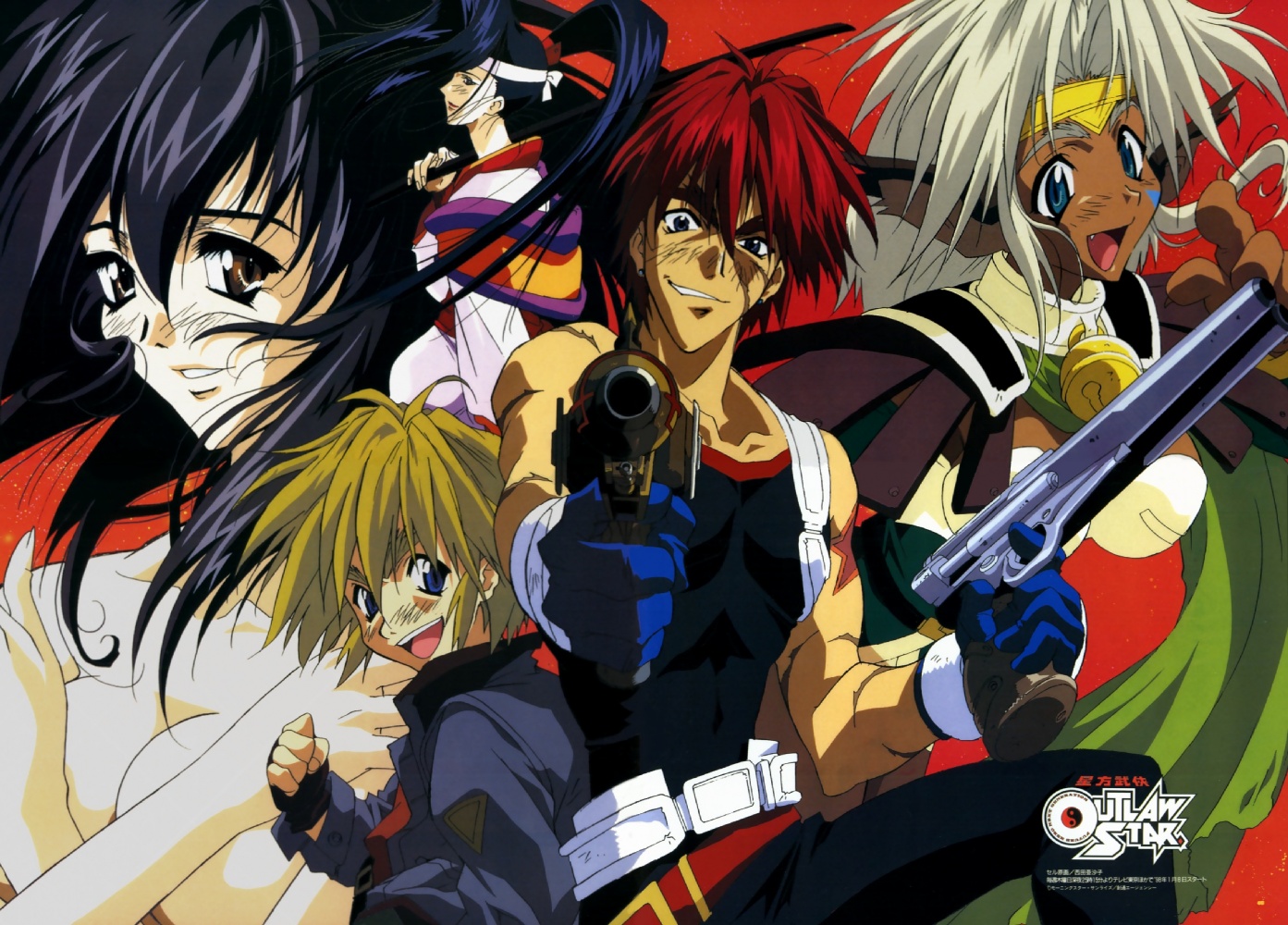 I’ve been taking advantage of some time as a single man to watch DVDs of my favorite bit o’ japanimation: Outlaw Star.
If you’ve never heard of it, don’t worry. I gather it’s not widely known.
So, while walking back from the Kennedy Center (I’d just seen Anna-Sophie Mutter perform), I got myself in the mood to watch an episode or two (out of a total of twenty-six) and thought about the gender roles. Or rather, depictions of women.
The primary female protagonist (Melfina) is typically young, school girlish, and large eyed. Most of the time, she’s little more than that. An innocent, virginal object who desires (and is eventually, but only eventually, desired by) the primary male protagonist (Jean Starwind), in the seventh episode, while she’s still dealing with being a ‘bio-android’ (I gather, essentially human, but with some subtle differences and also grown artificially, rather than born) and not having the memories to go along with her mental age, she falls asleep on Jean’s shoulder. His young friend, Jim Hawking, hits him on the head with a frying pan in looney tunes fashion, when Jean gets a little, shall we say… fresh with the sleeping Melfina. Jim then cuddles up with her and says, ‘She’s like my mom.’
Never before or again are his parents or how a ten year old (roughly) boy came to be living with a shiftless twenty-something bounty hunter, but that one little moment sets up a rare and totally contrary way to view Melfina (who is otherwise a generally sisterly figure – until she becomes a lover figure, but even that is portrayed in a somewhat platonic fashion: she and Jean are friends first) and is one of the few times when Jim’s needs as a child are acknowledged.
There is a beautiful assassin named Twilight Suzuka. Actually, that should really just be Suzuka, shouldn’t it? She is beautiful, but towards the very end, she meets the man she most wants to kill… and he is wearing her face. He wears baggy, shapeless, sexless clothes, but without those other signifiers and a masculine voice, her face is perfectly adequate as a beautiful young man. She also very noticeably avoids the question of whether she loves Jean. She promises an answer later, but never gives it. But why does she stick around?
Well, there we are. I’ve just made a big deal of a sixteen year old cartoon. Whatever. I like it.
Weekend Reading – It Turns Out Entrepreneurs Less Concerned About Tax Rates, More Concerned About Not Living In A Nightmarish, Ayn Rand Fantasy World

Midweek Staff Meeting – Stop Screwing This Up!

‘A Memory Of Light’ By Robert Jordan/Brandon Sanderson
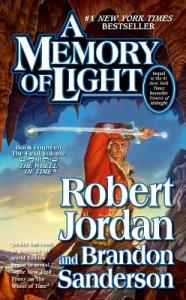 It’s finally over. I’m kinda sad. Part of the sadness comes from the knowledge that I’ve never read these books again. Basically, I will probably never have the time. Fourteen books, averaging over 800 pages each… not gonna happen. I have yet to read the complete works of Dostoyevsky and that has to be a priority over re-reading the Wheel of Time series. Still. A bit sad.
This one is also only a bit over nine hundred pages, which, I guess is an improvement.
I want to go back to something that’s actual from the previous book, involving how the Children of Light (a kind of radical/reactionary military society that’s very unyielding) somehow agreed to work with a person totally antithetical to their beliefs. I know that the person (Perrin, if you must know) is ta’veren, which means that things just kind of happen around him (the Pattern bends around him, to use Wheel of Time speak) and there was good faith authorial effort to show some development in the Children of Light, but it was just too damn fast. I don’t buy. I didn’t buy it then. And this book is reminding me how I didn’t buy it.
But, the book does one thing very, very right. It picks up speed very, very fast. Very. Fast.
Less than halfway through, it turns into an enormous set piece, with three major, multi-day battles – not including the more individualistic, ultimate showdown between the mythic hero and ultimate evil. Sanderson shows a good touch for this sort of thing (his battle scenes in the Mistborn Trilogy were pretty good, so it’s not unexpected, but it is appreciated). The action is non-stop, exciting, and propulsive. The battle scenes, at least.
Rand al’Thor, the great hero of the book, has his final confrontation with the nebulous evil that is the ‘Dark One.’ And it’s a little disappointing. Parts of it seem, I kid you not, ripped off from The Last Temptation of Christ. While one can figure out what happened (Rand won, but how is the question) and what was done and the reasoning, it was not clear. Not in a ‘making the reader think’ way but in a ‘sloppily rushed to a not very well described conclusion’ way. There is some irritating deus ex machina regarding some of the main characters and the way in which they survived. And the very end, with Rand sneaking off while (most) everyone thinks he has died and is being burned on a pyre… well, what is the body being burned? And what is he doing to do about his two unborn children? It’s… I don’t know. Some big enemies were brought into the fight without a real explanation of why they were there and what they were and what exactly was motivating them.
But, hey. I finished. Fourteen freaking books. I took the last of them to the used bookstore the other day (not the final book, which I bought in hardback; not used bookstore wants hardback genre fiction, so I will likely donate it to the library). A part of my life that began in 2009 is over and that’s good and bad, but certainly not something I regret.
Monday Morning Staff Meeting – Yes, But Was He Any Good?
From Sir Philip Sidney’s ‘The Defence of Poesy’ (Published 1595)
If reading be foolish without remembering, memory being the only treasure of knowledge, those words which are fittest for memory, are likewise most convenient for knowledge. Now, that verse far exceedeth prose in the knitting up of the memory, the reason is manifest: the words, besides their delight, which hath a great affinity to memory, being so set as one cannot be lost, but the whole work fails: which accusing itself, calleth the remembrance back to itself, and so most strongly confirmeth it.
Weekend Reading – If You Don’t Find This Cool There Is Something Irrevocably Wrong With You
William Butler Yeats on modern poetry!
Dungeons & Dragons: Part II
 I’m just going to keep on recording the events of my Dungeons & Dragons campaign. You will probably keep on not reading it, but… I don’t know. Maybe someone will. Or no one will. Or just me.
The party took a boat, along with a helpful gnome named Peleg and an obnoxious, arrogant elf named Aelat, to the capital city of Hazakis. Inside the city, Teague, the cowardly, but also passionate, venal, cruel, and impulsive bard, managed to insult the emperor by suggesting that the Sunward army was doomed. Fortunately, after the party was summarily thrown into prison, some wiser heads prevailed and smuggled the party out and sent them to mainland to determine what was behind the invasion. The invaders had already been determined to be the Hoshen, a warlike nation of humans not normally known to be seafaring; as well, a strange symbol had been found on an amulet worn by some leaders: three parallel, vertical, wavy lines.
Teague, Regdar, and Finian set off for the prosperous and tricky city of Amran, the Sunward Empire’s main trading partner, hoping to meet up with an agent of the Sunward Empire who had been stationed in Amran for many years…
 the coffee philosopher