‘Apollinaire: Selected Poems’


Let’s just put one thing out there: I’ve always loved surrealist poetry. Eluard, Char, Desnos. Awesome. All of them.

Apollinaire, though maybe not a surrealist, or perhaps proto-surrealist, shares one thing with all those poets I mentioned: he is very readable.

Surrealist poetry gets a bad reputation (Real surrealist poetry. The classics. Couldn’t tell you why. It’s classified as something difficult and weird, but while it contains some interesting leaps, it’s almost invariably a far less taxing read than Eliot or Frost [who has undeserved reputation for being easy to read; he’s only easy if you don’t bother to understand him, for example, Road Not Taken is about the lies you tell people to explain your past decisions; there, I’ve said; it has nothing to do with being different or taking a less traveled road because you’re awesome and unique – and do you know why? BECAUSE BOTH ROADS LOOKED EXACTLY THE SAME! THERE WAS NO ‘ROAD LESS TRAVELED’ SO STOP READING THAT POEM AS SOME SORT OF PAEAN TO BEING INDIVIDUALISTIC BECAUSE IT’S ACTUALLY A PAEAN TO LYING TO YOUR GRANDKIDS ABOUT WHY YOU DIDN’T TAKE THAT JOB IN BILL GATES’ GARAGE IN NINETEEN SEVENTY-NINE AND INSTEAD KEPT YOUR GOOD JOB AT THE FACTORY THAT MANUFACTURED WALKMAN PORTABLE TAPE PLAYERS]).

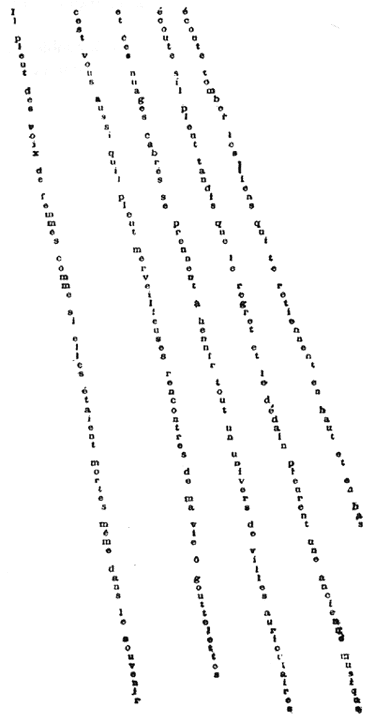
His visual poems or typographic poems, where the words on the page and the image they create (as in resembling rain falling from the sky in Pleut) can be difficult far the impossibly far from fluent French reader (like myself) to fully appreciate on the page. The strategy of simply writing the translation on the opposite page, exempt from the visual structure, was probably the best solution, but not really satisfactory. You know what I’d love to see? A big art work, like painting, of those poems. Go full out VisPo.
apollinaire-rain


10488123_729597133768268_9091376862308802918_n

West End Cinema


thI knew it existed, but there’s a significantly closer art house cinema, so I’d never been, until I got it into my head that I would see Snowpiercer while my better half was away. Just on the edge of Foggy Bottom, before you cross the bridge into Georgetown, it’s a tiny theater with three tiny screens. I saw Snowpiercer on a screen perhaps ten feet wide on a chair that, despite being a fancy folding chair, with a cup holder and thick padding and everything, was still a folding chair. But’s a lovely experience for particular kind of bohemian-hipster quaint experience seeker. Also, Snowpiercer is awesome. A beautifully cramped actioner with a pretty brutal portrayal of economic inequality taken to extremes, plus a global warming message, as well.

I had a soda, popcorn, and junior mints. They also had beer and wine and cocktails, but, honestly, it was a four o’clock movie and I hadn’t eaten anything all day, so alcohol sounded like a recipe for a bad movie.


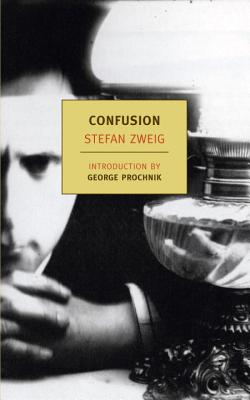
‘Confusion’ By Stefan Zweig


9781590174999I guessed the twist well before it was revealed, but I also filed it away as unlikely. I didn’t give Zweig enough credit for his frankness (though the book is quite frank; which is not to say graphic or erotic, but it is precisely neither) and it was exactly what you think it is early on.

It is the story of how a lazy lothario goes to a small, provincial university in Germany to study English literature – though only after his father visits him in Berlin during his first year at university and interrupts him en flagrante delicto with young shopgirl.

All those folks who loved Donna Tartt’s The Secret History should be reading this book. It’s much better and also captures that strange spirit of being young and caught up in the glow of your elders or perceived intellectual betters and the secret language and social ties that arise out of the intensity of the environment.

The narrator, who is recounting this tale, decades later, from the vantage point of being an esteemed and aging scholar, able to remember (and mourn?) his school days. And like all such tales, it is also a loss of innocence.

And I shouldn’t have said it wasn’t erotic. Because the act of the student and his professor working feverishly on an academic study of Elizabethan drama is an erotic act, an erotic transference of knowledge. And the professor’s wife… when the buckle on her bathing suit slips, revealing one breast, the youthful students’ shame and desire and inability to turn away are palpable and linger with the reader, even though the description itself is little more than two or three short sentences.

And the secret? The professor is gay. The wife knows and he sneaks off the big cities for sexual encounters that shame him. And he loves his student. At the end, their last moment, he kisses him on the mouth. The narrator goes to become an esteemed scholar in English literature. More esteemed than his mentor, held back by his secret and shame, ever became. And everything is clear. The attitudes of other students and professors, who saw clearly what he did not and assumed that the student was already enmeshed in a sexual relationship with the professor.

The whole thing is sad and sparse and beautiful.


Thursday Morning Staff Meeting – Reuse, Recycle


Attention is a debt, a tax; and no one likes those.

Palimpsets. Look it up, or else just click.

If you love to read old books, you’ve seen these.

bookpattern3

75 Years Of The Golden Age Of Science Fiction


It was with the July, 1939 edition of Astounding Science Fiction that the golden age of science fiction was born. Or, at least, so it is generally agreed. John Campbell took full editorial control with that issue and insisted on (comparatively) better characterization and more emphasis on, if not hard science, more plausible science. Sci fi greats Isaac Asimov and A.E. Van Vogt were published in this issue.

afac77337a3ee2df56eec7529ee35c3b

‘The Way Of Kings’ By Brandon Sanderson


9780765365279I had to kind of slug it out with this book, because, after a good beginning, it turned into a big slog in the middle. Sanderson loves him some magical systems. A lot. That’s really his thing: creating a system and logical framework for how magic might work in a fantasy world. In this case, it’s a world with these occasional magical storms called ‘Highstorms’ and energy from them is held in gems and a very few number of people can draw on that energy and there are also magical devices called fabrials that can turn gemstones into food or other forms and transmutations and there ancient swords called shardblades and ancient plate armor called shardplate that give super strength and agility. And the ecosystem is deeply affected by the fact of the earlier mentioned Highstorms, because plants have hard shells or else sink into the ground and cities are built among protective rock formations.

See how complicated that was? It’s too much. And it’s too much to ask of the reader, to both see the characters and situations as real and adapt to a radically different environment, magic, etc. Gandalf wielding his staff and fighting dragons is magic I understand instinctively because it’s ingrained in our culture. Sanderson don’t do that. Which is fine, I guess, but it makes for a lengthy adjustment process on the reader.

Also, one of the main characters (there are too many, but not George R.R. Martin nor Robert Jordan levels of too many) is named Kaladin. Too close to ‘paladin,’ especially with the way that character is developing. But he’s a decent character, which is more than I can say for an assassin character, who starts out cool and awesome in a well done set piece near the book’s beginning, but eventually becomes kind of whiny. The other characters are cool: a lord/knight type of fellow named Dalinar and a sneaky scholar named Shallan are fun to follow. There were also a couple of red herrings (at least in this book; I assume they become important threads in future novels) characters with chapters focused on them. The organization is like what George R.R. Martin uses: sections written in third person limited, focusing on a particular character.

But, the book, god bless it, picks up steam.

It’s got some nice action set pieces and things do pick up and get significantly better. Of course, this the first of a bloated, projected ten volume series called The Stormlight Archive, so I assume things will get very bad, very quickly for everyone soon.

In the meantime, I was hooked. Hooked enough to immediately go looking for the second book in the series, Words of Radiance. But not enough to buy it in hardback. I’ll wait for the paperback.


Library, Death Valley National Park, California

Weekend Reading – Patriotic Edition


500x327xFrom-left-Ford-Madox-Ford-009_jpg_pagespeed_ic_LzJe_rwvBb
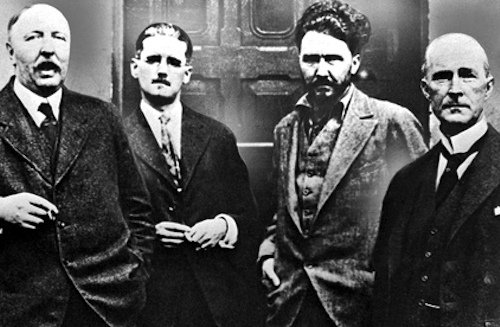
Doesn’t Ezra Pound (third from the left) look badass in this picture?

You’re darn right, it’s vital!

Take back the word.

It forgot to add that David Brooks is a monumental douche.

Lost classics of literary criticism.