Most Blessed Of The Patriarchs: Thomas Jefferson And The Empire Of Imagination


I, uh… I am not sure what the second half of that title is doing there. While I am sure that Jefferson was imaginative, that’s not really what this book is about (and most folks, including the authors, do not consider Jefferson to be an original thinker). And while you could make a strong argument for Jefferson having helped create an American Empire (the Louisiana Purchase and also the war against the Tripoli pirates).

But the first part makes a great deal of sense, because the authors’ main line seems to be that Jefferson saw himself and the world through the lens of an agrarian view of the family, with the patriarch at the head. Even democracy was a democracy of small patriarchs. It’s well understood that the Founding Fathers were deeply invested in protecting the rights and political prerogatives of landowners, so this isn’t that different, but the emphasis on family – and most especially on the role of the head of the family – is where they make their mark.

If you read my last post, you know I am struggling with Jefferson right now.

So also, I think, are Gordon-Reed and Onuf.

They want to praise Jefferson, but like Antony to Caesar, they seem rather to have ultimately come to bury him (yes, I know, a literal reading, rather than a true understanding of Antony’s intent in that speech).

They cannot get beyond his hypocrisy, because their unearthing sees it everywhere in his ideas. Even worse, they see him as being less and less committed to even the idea of ending slavery as time went on.

Like many writers, they view his time in Paris as crucial. But they see a sort of reaction wherein Jefferson reinvented himself in his mind as uniquely American (and also invents an image of America) that pushes him away from criticism of slavery, because he saw many European thinkers as inherently critical, so he wound up dropping the subject within himself.

On Having No Time For Thomas Jefferson’s BS


I’m reading my fourth book on Thomas Jefferson over, roughly, the last year. And after I finish this one, I’ll likely start on a fifth (a selection of Jefferson’s writings).

I posted a picture on social media of the current one (Most Blessed of the Patriarchs) and friend made this comment:

I find him so annoying, so self-absorbed and extremely petty. How he was able to accomplish anything is amazing with these as his driving traits.

My first instinct was to respond with a defense, of sorts. Acknowledging his many faults, but still defending his role in our history and, ultimately, his role as a generally admirable person.

Here’s where I should mention that the commentator is a black woman.

Which is much of reason why I paused.

Because it’s easy for me to make a nuanced case for his virtues, in spite of his rank hypocrisy on the issue of slavery. But… I’m white. That’s a pretty simple for me to do, isn’t it?

And isn’t it also a fairly obvious reaction by someone whose ancestors were enslaved, were sexually assaulted by slaveholders like Jefferson (and while he may have loved Sally Hemmings, lets be clear that when you own a person, genuine consent is not possible)?

I can’t say, despite my desire to like Jefferson, that she is wrong to effectively state, ‘I have no time for his BS.’

The Road To Monticello: The Life And Mind Of Thomas Jefferson


While reading it, I was constantly contrasting its view of Jefferson with that in Friends Divided.

The short version is that Road takes a significantly more positive view of Jefferson. Friends was overwhelmingly complimentary, but with notable moments of, dare I say, snark. Jefferson was sometimes portrayed in that one as a bit fatuous and image obsessed and even slightly shallow, especially in comparison to the earnest and earthy Adams. Both, interestingly, more or less skip over Jefferson’s presidency.

Road glossed over the eight years of Jefferson’s presidency because he was mostly busy with business of being president and the book is an intellectual history of Jefferson. More specifically, it is a bibliographic history of the third president, focusing on not just what he was writing, but on what he was reading. The immense research into his book buying, reading, and library contents is staggering. Others might find it boring, but not me.

Even more than in Friends, the treatment of Sally Hemmings is disconcerting. I was particularly struck by a moment when the book talked about James Hemmings coming with Jefferson to Paris and then noting that his sister, Sally, came, too. James gets mentioned quite a bit, but Sally, hardly at all and the absence feels jarring. How can you talk so much about James Hemmings and not mention the relationship and children Jefferson had with Sally? I’m sure that the author wanted to get back quickly to the particular subject of his sort of biography, but it just feels… weird.

Friends several times noted that Jefferson did not read novels (unlike Adams; the book had a slight bias against the third president, I felt, and even this felt like an attempt to imply that he didn’t have much of an inner life) and Road once, towards the end. But Road also repeatedly stressed his great love of… what for it… the novels of Lawrence Sterne! Yes, that’s right! Tom loved Tristram Shandy! For some reason, I got a kick out of that.

If there is one thing that this book will do, it will make you want to move into a house on a Virginia mountain or hill and fill up a large library and read all day long.

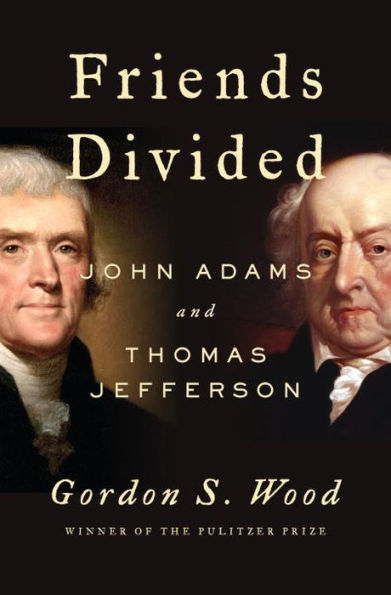
Friends Divided: John Adams And Thomas Jefferson


9780735224711_p0_v1_s600x595I got fairly excited when I read about this book because it was described as being more an intellectual biography of Adams and Jefferson. As a child, visits to Monticello happened probably twice every three years, so I always felt a closer connection to Jefferson, a sense that was only partially relieved by reading McCullough’s biography from 2001. Read more

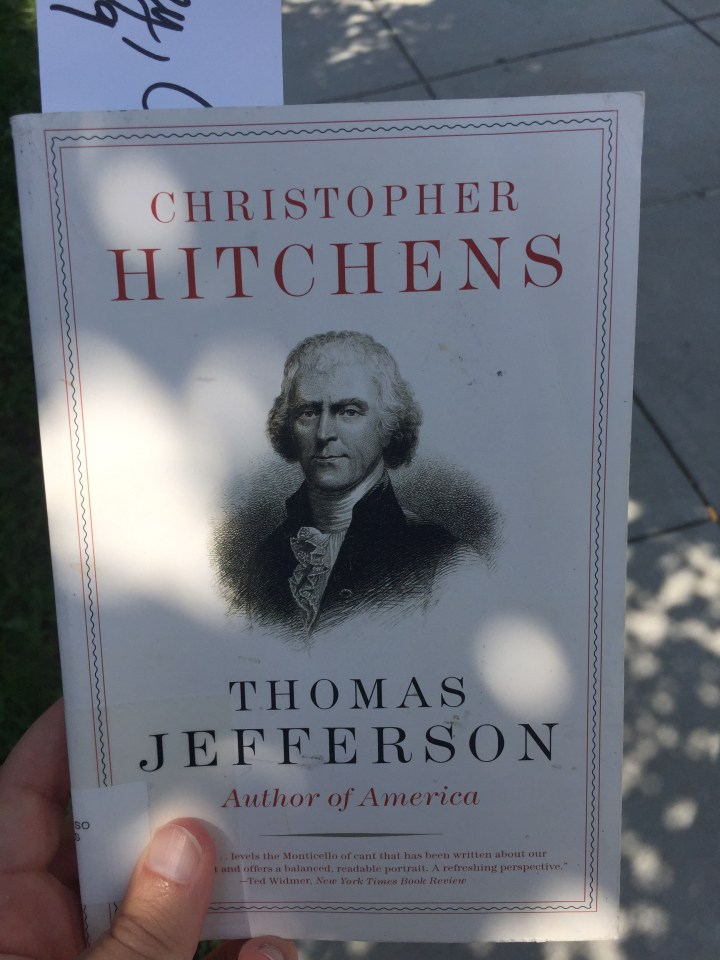
Thomas Jefferson: Author Of America


Having finished Hitchens’ brief biography of Jefferson, the final question must be: is this anything more than an adequate biography of our third president?

And I am not sure that it is.

Read more