Hitchens On Paine


I felt a little bad reading this because I have a nice, inexpensive copy of The Rights of Man which I have never finished and here I am putting the cart before the horse and reading about it before actually reading it. I suppose that makes me like most readers of this book but, to be honest, I have always thought I was better than most people, at least as regards my reading habits, if not morally and hygenically.

We read Hitchens, of course, for Hitchens, regardless of the ostensible focus, but we can see the appeal: a polemicist and pamphleteer in the Enlightenment tradition who made a widely recognized contribution to the course of human events. In dedicating the book to the then president of a post-Saddam Iraq, he must have been hoping, somewhere, that one day he might be recognized in some small way as contributing to a similarly successful product, even if the years appear to have only proven him more wrong on that particular adventure than it seemed even when he wrote this.

I had never heard it before and won’t vouch for its provenance, except to express my belief that Hitchens would have made a good faith effort to examine its sources, but I love the anecdote about William Blake, the mystical poet, warning Paine, the (small ‘r’) republican pamphleteer, that he was in danger of arrest, inspiring the latter to immediately cross the water to revolutionary France.

Learning about Paine’s career was the fascinating. My own knowledge, prior, was rather thin. While no substitute for a biography by a professional biographer or historian, I am not likely to read one, so I’m glad that I got this brief look at his career.

‘Through Nature To God’ By John Fiske


Have you ever had one of those experiences where you agree with someone, but really wish you didn’t, because the person was so annoying?
That is how I felt about Through Nature to God.

How did I even come to this point? I was reading through a selected works of the great American philosopher, Josiah Royce, and came across some references to some other American philosophers from the late nineteenth and early twentieth centuries, including… John Fiske. I decided, foolishly, to look for him and found Through Nature to God.

Whether it was the unsupported leaps, the leaning on poorly understood science (giving, though, some allowance for the fact that our understanding has grown since Fiske was writing), or the references to Herbert Spencer, which always, to me, at least, carry a pungent whiff of social darwinism.

He argues that the biological sciences, mostly, though not exclusively, evolution, argue for  God. He does not make a particular argument for the Judeo-Christian God, but clearly for a theistic one.

While I do, personally, see God working, at a distance, through evolution, his strident tones and arch language make it all seem… icky.

The best thing I can say about it… it’s a short book.

‘Walking’ By Henry David Thoreau


Walking began it’s life, according to the introduction, as a lecture. It’s a fine, well-written piece by one of America’s finest stylists.

But Thoreau feels a little juvenile to me nowadays. Frankly, when I was reading this, I kept thinking: wow, I should really read some Emerson.

Varieties Of Religious Experience


9781593080723_p0_v4_s600x595

I thought that I’d read this before, but now I’m not so sure. Surely, I wasn’t thinking of Henry? More likely, I was imposing some stereotypes and prejudices onto my memories.

What my memories left out was how gentle and credulous the scientist was of religious experience and feelings, most especially towards a sort of combination of positive thinking and what we would call ‘new age faith healing.’ He is slightly less gentle towards of forms of Christian belief and gives the impression of personally being a vaguely agnostic Methodist (except when receiving positive energies from new age healers).

James, when speaking about knowledge, frequently uses the term ‘warranted.’ I bring this up because of Alvin Plantinga’s advocacy of using the word ‘warrant’ instead of ‘justified’ when defining knowledge. I am cruelly and inadequately simplifying here, but one reason is that he didn’t like the moralism implied in ‘justified,’ at least not in an epistemological context. How much did Plantinga take from James’ gentle treatment of religious feeling and his use of ‘warranted?’

Things Overlooked


Not really adding anything, because I’m not in a great position to go back and re-read and re-examine, but how, when I was reading Julian, did I not think to go back and look at it Pater’s Marius!

Both are about Roman aristocrats from late antiquity with pretensions towards philosophy. Marius, of course, goes from living as a pagan (or, as Julian would have called, a Hellenic) to becoming a Christian, whereas Julian was raised in a rapidly Christianizing empire, but chose to adopt the gods of his ancestors.

A missed opportunity. I did see Marius sitting on my shelf, however, and maybe I will try and go back while Julian is more or less fresh in my mind.


Exact Thinking In Demented Times


Apparently, we’re doing back to back Viennese themed books.

The last one was better.

This one is good and interesting, but keeps failing to do more.

You see, Exact Thinking in Demented Times is about the Vienna Circle, a group of philosophers, mathematicians, economists, and physicists who roughly made up the core founders of (now mostly… I don’t want to say discredited, because that’s not fair, but let’s just say that it’s not something many people identify themselves as these days) logical positivism.

While it does a good job of showing how physics, in particular, played a fascinating cross-pollination role in this philosophical school, it doesn’t really tell us much about the actual philosophy. It also spends too much time on people who weren’t really logical positivists nor participated in the meetings on the Vienna Circle (I’m looking at you, Wittgenstein!).

And aspects of the depiction of the historical milieu seem a little half-baked. For example, I am assuming that the ‘demented’ references mainly to Nazism and fascism, but somehow, until the last quarter of the book (in a way that feels tacked on), he manages to elude the urge to talk about this key aspect of the time period.

So we neither get an exact picture of their thinking nor a good view of demented Nazis.

Which isn’t to dismiss it entirely. It was a worthwhile read, just not what it could have been.

And it did inspire me to try and dig up some Carnap make another go at reading him after some abortive efforts in college (I used to study at a table very near the shelf where The Logical Syntax of Language could be found, taunting me).

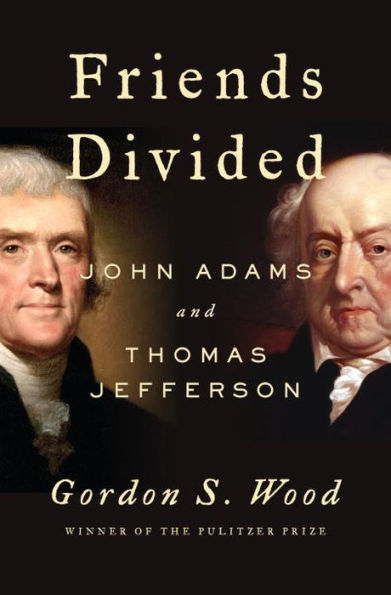
Friends Divided: John Adams And Thomas Jefferson


9780735224711_p0_v1_s600x595I got fairly excited when I read about this book because it was described as being more an intellectual biography of Adams and Jefferson. As a child, visits to Monticello happened probably twice every three years, so I always felt a closer connection to Jefferson, a sense that was only partially relieved by reading McCullough’s biography from 2001. Read more

Adopting Older Children


I do not have any great wisdom to impart in dealing with the particular issues parents face when they adopt an older child, because I haven’t been such a parent for very long. But I would like to make a pitch on behalf of older children needing parents.

First, ‘older children’ can be a bit of a misnomer. The sad truth is, if a child is not matched with a prospective couple by the time he or she is two or three… that child will probably never be adopted. Never. They’re done. Sure, it can happen, but so can winning the powerball lottery. Have you won forty million dollars lately? I didn’t think so.

There are a lot of (justified) complaints about how a woman over forty is no longer valued, but this is a class of people who are no longer valued when they might still need potty training.

It was easy for us to choose to adopt our child. She was five when we first saw her picture (and almost seven when we were finally able to adopt her), and we were in love instantly; we didn’t have any interest in any other children after that – younger, older, whatever… we knew who our daughter was.

But the circumstances that led us to her – to that photograph, at just the right time when it was available to be seen – were convoluted and unlikely. A butterfly sneezes in Latvia in 1989 and maybe everything transpires differently and we never see her.

And if we we hadn’t, the sad and terrible truth is, our beautiful, intelligent, loving child would almost certainly never be placed with adoptive parents. It feels shocking to say. Who would not want her?

Most prospective parents only want babies or toddlers. And I can understand that, but now I can also understand how terrible a bias that is. That an adopted child is not a replacement for a hypothetical biological child is one of the first lessons you learn, but by adopting mewling little one who still needs diapers changed, it is easier to pretend that he or she is a replacement. We cannot pretend that. It’s okay – because she is wonderful for who she is (and she is quickly and weirdly beginning to resemble both her parents). But we did have to shed an illusion that many adoptive parents would rather cling to.

Beyond how wonderful our child is, there is a moral calculus. Ultimately, adopting is a moral decision. A parent has already taken the first step to decide to take into their home, a child who needs a family.

So take an additional step and consider an older child. Most people won’t do that, so babies will always be more ‘valuable’ than other children. But adopting a child who is six year old is a more moral act than adopting a baby. People who adopt children over ten are saints.

You will miss out on things, but the child was in danger of missing out on nearly everything. You have to accept that it is not about you. But that is part of what being a parent is, I guess. I guess because I do not know anything yet.

But while I may not know much about parenting. But while I may turn out to be a really bad dad who messes everything up. For all that, I do know that some actions are better than others.

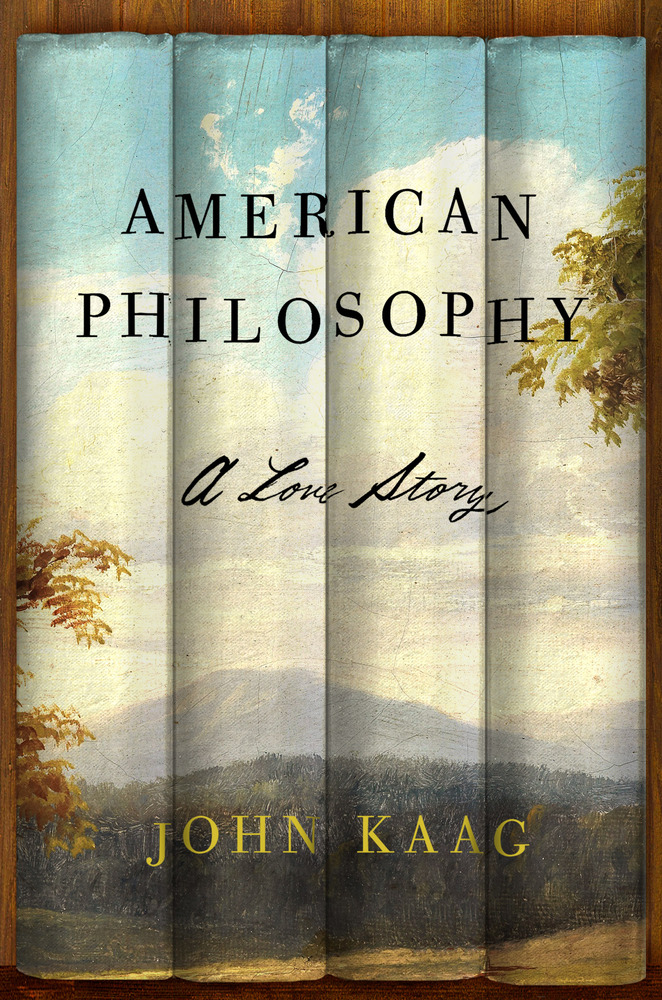
‘American Philosophy: A Love Story’ By John Kaag


Within this relatively brief book (less than 250 pages) is a beautiful meditation on the evolution of American philosophy as a unique branch of thought, from Ralph Waldo Emerson through the 1920s, more or less. The conceit holding it together is the private library William Ernest Hocking, a once prominent philosopher who was deeply influenced by William James (the dominant figure in American philosophy, as this book sees it). The books in his library, discovered in a poorly climate controlled and slight dilapidated house in rural New Hampshire, cover almost the entire history of philosophy, but also religion and poetry, and illustrate how great American philosophers, like James, Hocking, and Emerson, and also others, like Josiah Royce and Charles Peirce, are both part of and outside of the main stream of western and world philosophy.

Wrapped around that excellent book is a depressing sort of autobiography about the author’s failing marriage and probable drinking problem (the former is sort of resolved – though he’s clearly a terrible husband; the latter feels like it’s sitting there, like a drunken turd in the corner of Hocking’s library). Kaag does not come across as very likable, but does come across as anxiously self- justifying. I have resolved to read more James and to read the copy of Hocking’s The Meaning of God in Human Experience that has been sitting in my library for far too long. I might also resolve to read some more academic books by Kaag, but not until the bad taste has faded.

Empedocles On Etna


I’m going to admit that I am liking Matthew Arnold’s poetry better than I would have thought. I still have no desire to go back and re-read Dover Beach again, ever, for any reason, but if you’re willing to adjust yourself to the rhythms of nineteenth century verse (and Arnold, a traditionalist), then you can definitely enjoy him.

Empedocles on Etna, especially, I enjoyed.

While I won’t question Arnold’s knowledge of the classics, you still shouldn’t read him for a detailed and accurate understanding of Empedocles’ philosophy.

But, the worried friend (Pausanias) and the musician-cum-pastoral poet, Callicles following the melancholy Empedocles on part of his journey makes for a nice philosophical narrative.

Even after the suicidal Empedocles asks for quiet, he can still hear snatches of Callicles’ carefree poetry and music as he contemplates his own theories and the lack of job in his life. Arnold makes the philosopher’s decision a little bit political (exile having made him depressed), though he shifts back to the idea of someone maybe too smart for his own happiness (one can imagine Arnold thinking there’s a little Empedocles in himself, too).

If you like poetry, if you have immersed yourself in poetry, so that the style of Matthew Arnold isn’t foreign or anathema to you, you might enjoy it, too.

No, thou art come too late, Empedocles!
And the world hath the day, and must break thee,
Not thou the world. With men thou canst not live,
Their thoughts, their ways, their wishes, are not thine;
And being lonely thou art miserable,
For something has impair’d thy spirit’s strength,
And dried its self-sufficing fount of joy.
Thou canst not live with men nor with thyself—
Oh sage! oh sage!—Take then the one way left;
And turn thee to the elements, thy friends,
Thy well-tried friends, thy willing ministers,
And say:—Ye servants, hear Empedocles,
Who asks this final service at your hands!
Before the sophist brood hath overlaid
The last spark of man’s consciousness with words—
Ere quite the being of man, ere quite the world
Be disarray’d of their divinity—
Before the soul lose all her solemn joys,
And awe be dead, and hope impossible,
And the soul’s deep eternal night come on,
Receive me, hide me, quench me, take me home!