Triplanetary


The first of the Lensman novels by E.E. Smith, aka, E.E. ‘Doc’ Smith, Triplanetary never mentions Lensmen and you might not even know that it’s a series, except that the masterful, manly, monogamous, and magnificently named hero (Conway Costigan) is begging for more appearances.

Clearly the product of serialization, you can see where each installment began and ended. Pirates attack a space liner/cruise ship, but Costigan and Captain Bradley escape and lead a counterattack against the evil pirates. Then aliens appear and wipe out everyone but Bradley, Costigan, and a love interest. (Cliffhanger!) The escape from the aliens and send super technology info to Triplanetary, a space super spy/military agency, who finally and fully defeat the space pirates – but the aliens are back! (Cliffhanger!) Manly men in awesome space ships fight the aliens to a draw and peace is achieved.

The end.

Smith tries really hard to make his science believable by the standards of the day (he first wrote it in the thirties) and I’ll probably read more of these.
High Deryni


I had to read this via ebook. Not only did the library not have a hard copy, I couldn’t find hard copies on the Barnes & Noble website.

I don’t mind reading via ebook. I do it a lot. When I fly to Thailand next month, you can bet I’m bringing my nook e-reader.

But I remember browsing the genre shelves at B. Dalton and Waldenbooks and the books in this series were ever present. It feels strange that people don’t read them anymore, at least not like they used to. They have, I supposed, been supplanted by newer authors. People don’t listen as much to Suzanne Vega, the Pixies, and My Life with the Thrill Kill Kult anymore, either. Times change. People get older and the newer people feel much younger. The way of the world.

Neither here nor there.

The series has been growing on me. There are two more trilogies; one that follows and one that takes place long before the events of High Deryni. Will I read them? Maybe. I’m more likely to than I was when I finished the first book.

But even as the books win me over, they also always disappoint me. The ending is an anticlimactic deus ex machina that makes a decent portion of the final fifty pages seem pointless. And while fantasy can often be criticized for its portrayals (or lack thereof) of women, I would have hoped that a woman writer could have given us one strong and well-developed female character, but no. And the one romance is SO sentimental and cheesy. Ugh.

‘Black Panther’ By Ta-Nehisi Coates


In truth, it’s not fair to say this is by Ta-Nehisi Coates, since so much more than the writing goes into a comic book: the colorist, the penciller, the inker, etc. But we should be honest: we are reading this because his name is attached.

I haven’t been reading much in the way of comics lately, but ever since I heard that The Atlantic essayist was going to be writing for the Black Panther, I wanted to read it. And when I saw some comics in my local library, I figured I put volume one on hold.

Now here we are.

Leaving aside difficulty one: I haven’t read the arcs and stories that came more or less immediately before, so I really don’t understand what’s going on. But you just have to suck it up, honestly. Comics were around before you started reading them. They’ll be around after you’ve stopped. Just dive in and hope for the best.

So far, it doesn’t quite work. But I really want it to. Questions of power. Implied questions regarding a monarchy existing simultaneously in a liberal society. Gender. The inability to act or know what’s right.

But not enough threads come together. The dialogue can be a little over baked and too arch by half. Too talky and not well paced. And outside of the writing, the action sequences rarely popped.

Maybe I should have just gone for one his (non comic) books instead?

Mushroom Men From Mars


A battle of wills and stratagems betwixt Ru, the cunning and enslaving fungal sentience from Mars and Zaro, the last man not conditioned to avoid violence and war. And a secret tribe of Anarctican survivialists. And three or four deus ex machinas.

But you know what? It’s a brisk, snappily paced read, pleasantly and constantly propelled forward.

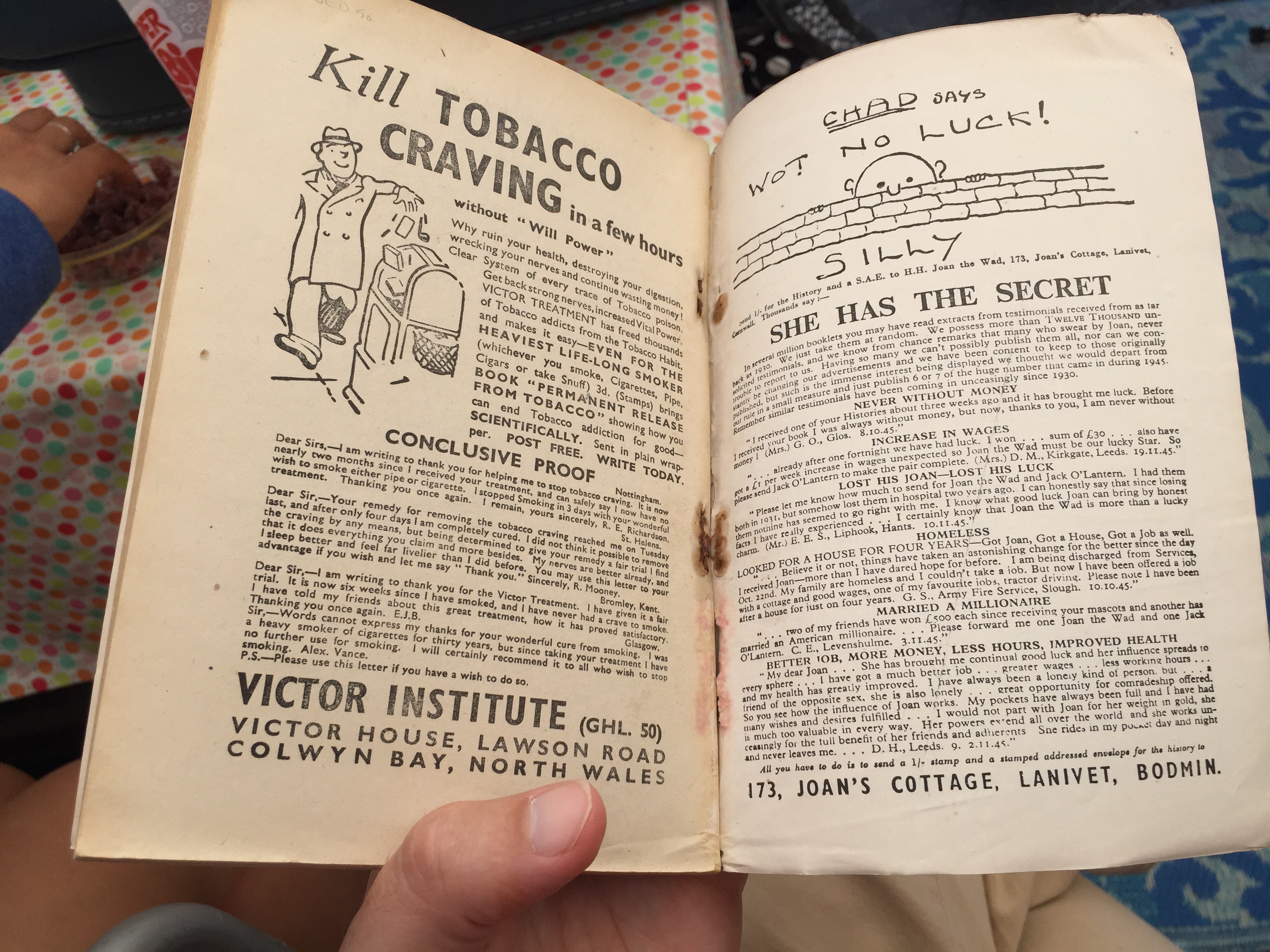
Also, these awesome ads at the end.

Deryni Checkmate


http://amzn.to/2xORJpl

I might not have read this book at all, had I not finished all the books I brought with me for a day outside and had the nearest library not had this sequel to a novel I read maybe a year or two ago. Read more

‘The Children Of Hurin’ By J.R.R. Tolkien


Lately, in honor of the 80th anniversary of The Hobbit, there have been some defenses of Tolkien’s works as more morally nuanced than they are given credit for.
It is this truth which makes The Children of Hurin so difficult to read. The book is mostly about Hurin’s son, Turin. A great warrior and a charismatic figure, he inspires great love from most of those he meets. As the reader, I kept waiting for his revelation. For him to grow up and stop being petulant, impetuous, pointlessly wrathful. It never happened.

A few other characters realized that, beneath his good intentions and ability to kill evil monsters, he was kind of a jerk.

And everything, felt in vain, in the end.

Stylistically, it is more like the Silmarillion than the Lord of the Rings or the Hobbit. It’s affect is less naturalistic and more in the style of northern European sagas (think Beowulf or Njal’s Saga).

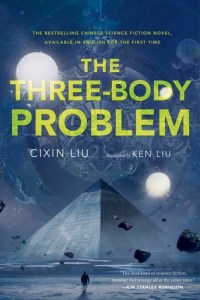
The Three Body Problem


This has been on my ‘to read’ list since it was translated in English a couple of years ago. It got great reviews and was deemed interesting, beyond its qualities as literature, for insight into a lesser known aspect of contemporary Chinese culture, which is to say, its science fiction.

The Three Body Problem is ‘hard’ science fiction, more or less. My friend Ryan gave a succinct definition of hard science fiction as being sci fi that depends on one thing being true that is not currently true. That could be a change to the laws of physics or it could be something like a technology not currently available. But the idea is to keep everything more or less the same, except for that one thing, but incorporating the projected, cascading effects of the change.

In this case, it is that contact was made with alien civilization living in the three star solar system of Alpha Centauri (the book’s title comes from the difficulty of determining orbital patterns when there is the gravitational effect of three stars on an object; the question, I gather, is whether it is possible to determine or whether the complex factors involved make it impossible and also whether it is a repeating pattern or not).

Something I see in Chinese movies, too (I watch a lot of Chinese actions movies – from the heyday or the Shaw Brothers to the latest one on Netflix), where the current government is not only not criticized, but more or less praised. There may be local corruption, but the theory is sound, as it were. That said, it was pretty darn critical of the Cultural Revolution.

It also implied that environmentalism is an alien plot to stop science. That felt a little weird, not in the least because China is now taking climate change and environmental degradation seriously.

Over all, it’s a surprisingly tense book, especially since we don’t really encounter the aliens (yet), but instead it’s a journey through scientific concepts and Umberto Eco-level conspiracies.


Happy Anniversary, Bilbo


This is the particular edition from which my mother read to me

This week is the eightieth anniversary of the publication of The Hobbit and so I’ll add my two cents to the celebrations.

I can still recite the opening several sentences of  the novel from memory (‘In a hole in the ground there lived a hobbit. Not a nasty, dirty, wet hole, filled with the ends of worms and an oozy smell, nor yet a dry, bare, sandy hole with nothing in it to sit down on or to eat; it was a hobbit-hole, and that means comfort.’). Read more

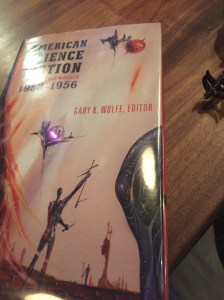
‘The Shrinking Man’ By Richard Matheson


If you’re a fan of the Charlton Heston classic, The Omega Man or the less classic, but more recent, I Am Legend, you have been exposed to the sci fi writer, Richard Matheson.

Some time ago, I read I Am Legend (the actual name of the novel; both movies are based on it) and while I wasn’t much interested in delving further into his oeuvre, this was in a four book collection of mid-fifties science fiction from the Library of America, so I read it.

And it ain’t bad.

Scott Carey is shrinking inexorably by approximately 1/7 of an inch a day. The narrative runs on two parallel tracks. First, when he is one inch tall (seven days to live!) and being stalked by a black widow spider in the basement in which he is trapped. This tales alternate with him shrinking over time and watching his life and family fall apart under it all. The tales converge when the second timeline reaches when he gets trapped in the cellar.

Half of it is exciting, survival fiction in what is, effectively, an alien environment. The other half is more thinking person’s sci fi, about the personal implications (finances; becoming shorter than one’s daughter; ceasing to be sexually attractive to one’s wife; being mistaken for a child by bullies).

‘More Than Human’


To dispel some, perhaps, common misconceptions: the novel More Than Human by Theodore Sturgeon is not very much like the White Zombie classic, More Human Than Human. One is grand guignol rock classic and the other a meditation on identity.

The novel dragged a bit to begin with and it wasn’t until about a third of the way through that the disparate pieces started to come together. There was a bit of second rate Faulkner-ism in the third person limited narrative sections featuring children and brain damaged adults and I honestly couldn’t see what Sturgeon was doing. I now see, but I’m not convinced it was worth it.