Ancient Rome is relevant. Ancient Rome is not relevant.
What could we learn from the Britain’s Marxists?
The Barnes & Noble nearest me, the one downtown, at 12th and E, will be closing this December.
The joys of the inevitable closing sales are not mitigants enough to make up for the loss. Yes, Capitol Hill Books is very close to my home and, yes, there are many great indie bookstores in Washington, DC, but this store, owned by a huge, evil corporation though it is, fulfills a very particular and useful function in my life.
Whenever we go downtown to see a movie, either at Chinatown for the big blockbusters of the E Street Cinema for the cool foreign, indie, and documentary movies, this Barnes & Noble provided a welcome space for a bookish type like me to browse and shop. Besides the fact that the only place to buy books downtown now is Urban Outfitters (and I’m making an angry and melancholy joke here, because humorous books about poop and cats and 99 ways to ruin good scotch by mixing it with other things do not feed my soul), it represents a kind of ‘third space,’ a welcoming, public location for people. That, and it has a huge selection of scifi and fantasy paperbacks.
Politics and Prose is a better bookstore, but it’s not half as close nor a third as easy to get to; Capitol Hill Books is a used bookstore, which is a different kind of space, and doesn’t serve coffee.
And… it’s just sad when a bookstore closes.
 Border Town is a languid, beautiful, and painfully sad book, moving inexorably towards a conclusion that the reader can see miles away, forcing the reader to desperately pray to be wrong. But you weren’t wrong, you were right. A small blessing is that maybe, even the worst case scenario for the life that proceeds in the fictional world of the book, after the last page, might not be so bad.
Cuicui’s parents killed themselves because they couldn’t see a way to be together, so the girl is raised by her grandfather, the ferryman who takes passengers back and forth over the river to the titular border town.
She and her grandfather are happy, she starts to grow up and the two sons of the the town’s most prominent family notice her and each wants to marry her.
There are confusions and one of the sons dies, but mostly, I was crushed because the grandfather didn’t know how to properly explain about love and marriage and men and women and Cuicui never properly understood the stakes and advantages (two handsome, honorable scions of a wealthy family want to marry a poor girl!), so she never makes a choice.
The book is a sort of anti-Golden Lotus. The prominent citizen, the equivalent to Ximen Qing, is good and honest. The equivalent to Ximen’s most sycophantic hanger-on is, in Border Town, an honest man who makes a beautiful sacrifice to help a friend and community member.
I finished it a couple of days ago and I’m still sad, which the best thing I can say about it.
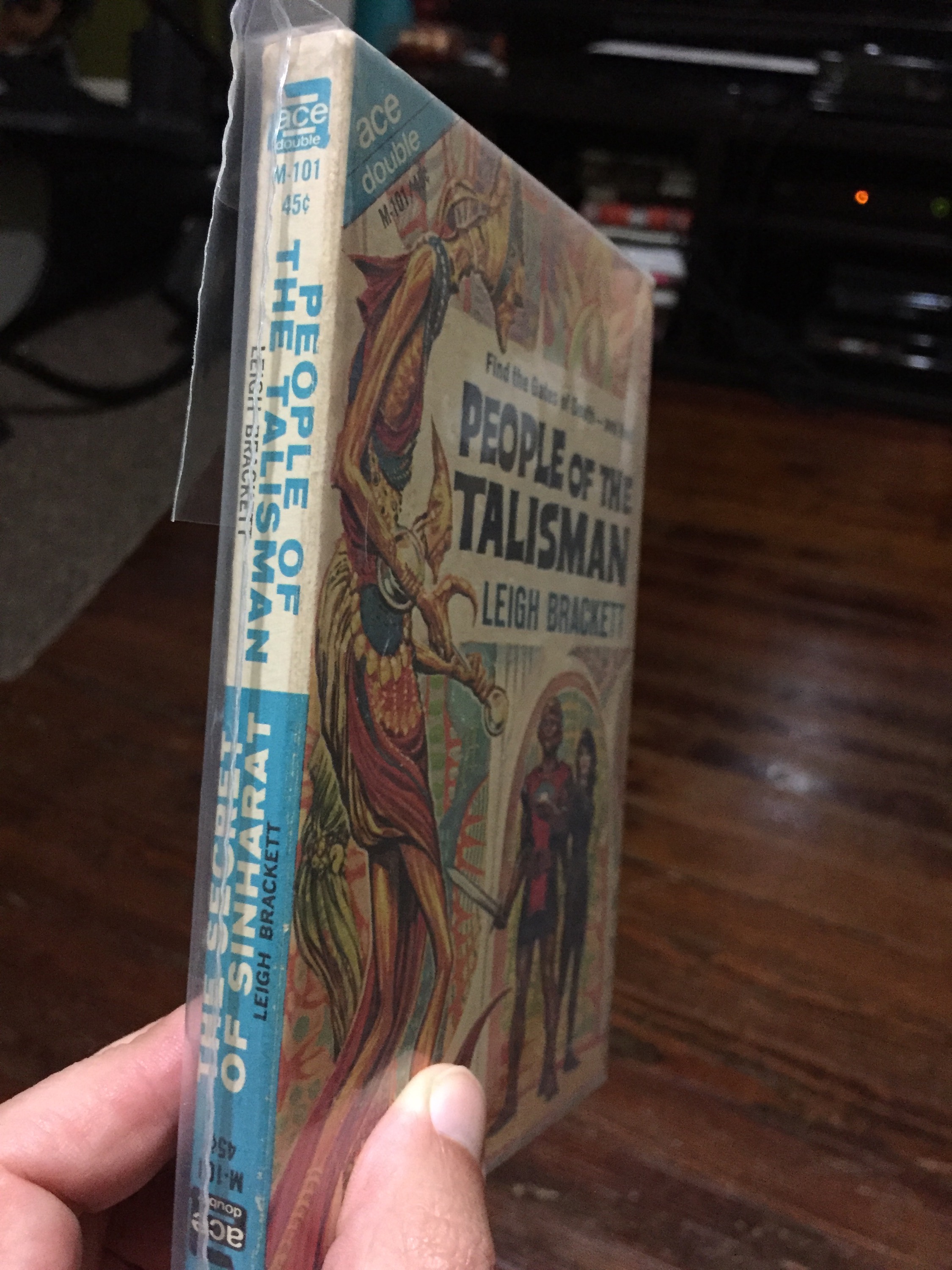
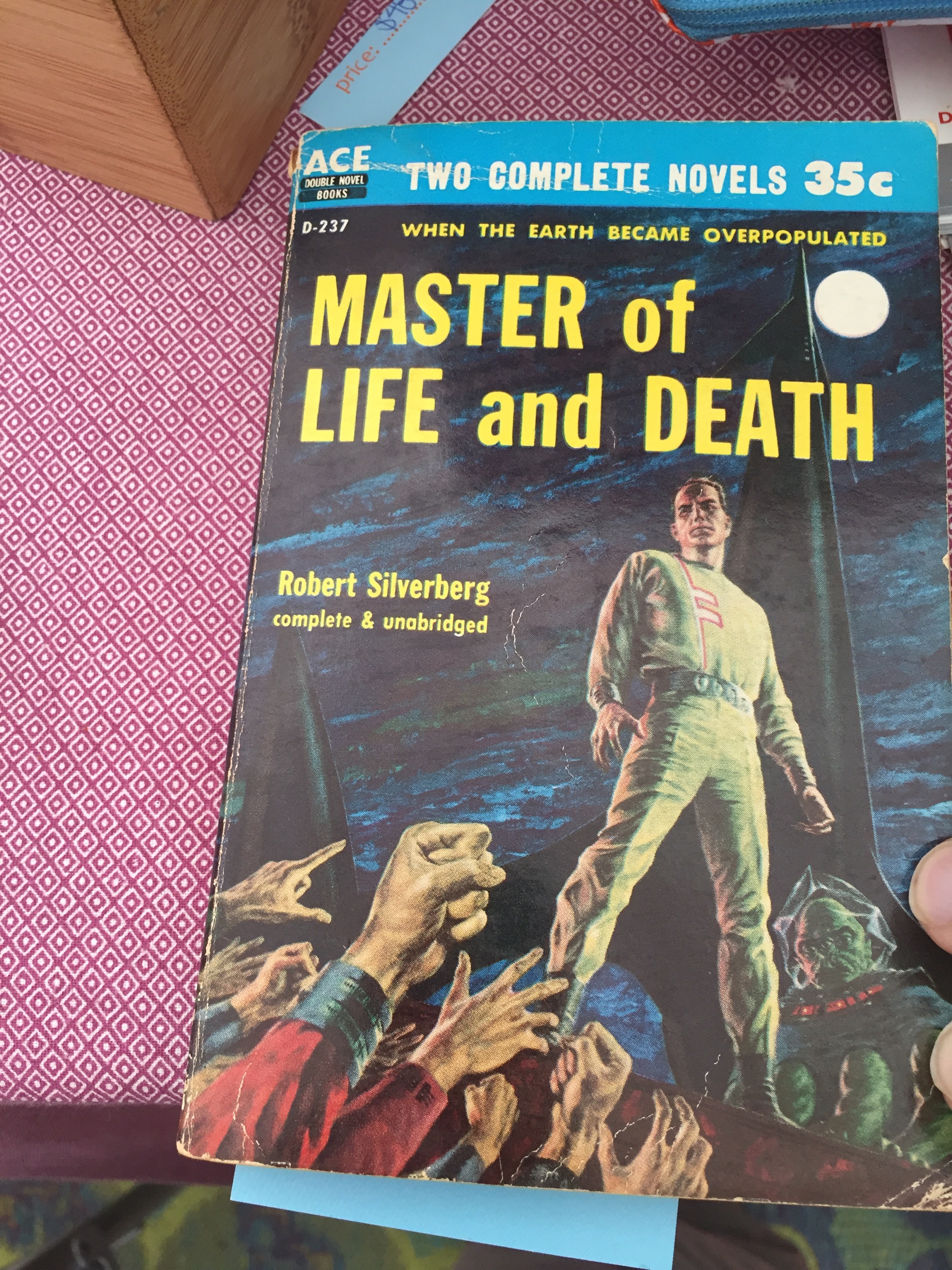 This was one half of an Ace Double (the other being The Secret Visitors by James White).
I read a novel by Silverberg many years ago… a sort of combination of science fiction and old school planetary romance called Lord Valentine’s Castle. It was part of a series and never read anymore. I remember both thinking the book was good, but not great, yet also having the contradictory feeling of sadness that comes after finishing a good book and knowing that one can never read it for the first time again.
I didn’t get that feeling from Master of Life and Death, but it was still a fast, bracing read. It’s science fiction, with some faster than light travel, aliens and a global institution responsible for both euthanasia and resettlement as a means to deal with overpopulation, but really, it’s more thriller, with a touch of conspiracy style espionage. The ‘hero’ is a fellow named Roy Walton and he quickly becomes the head of said global institution. I put ‘hero’ in scare quotes because, while he clearly means well, virtually every action he takes is morally dubious. Towards the end, his efforts to escape the tightening noose become so incredibly unethical that it becomes cringe inducing. Roy is being blackmailed by his brother Fred, while trying to preserve his job and also more or less carry out his duties and save humanity. Honestly, the science fiction is just an overlay on a thriller.
But like I said, it’s still pretty gripping and ratchets up the tension nicely. You’ll probably never encounter this book, but if you do and if early silver age scifi is your bag, then this book should be your brand new bag.
The prominent Shakespeare scholar, James Shapiro, came to the Folger Shakespeare Library for an engaging and reasonably wide ranging conversation. Rather than read much from his new book, The Year of Lear: Shakespeare in 1606, he read very briefly and then opened it up to questions for the rest of the time.
Luckily, the questions were generally well thought out and the product of (presumably) people reasonably well read on Shakespeare.
But…
I didn’t need a wide ranging discussion. He’s just published a book (I’m reading it now) and I would have enjoyed hearing more about it and its subject (Shakespeare in post-Elizabethan, which is to say, Jacobean, England). More focus, next time, please.
But, hey! Kudos to Professor Shapiro for this op-ed he wrote, trashing attempts to ‘translate’ Shakespeare into contemporary English.
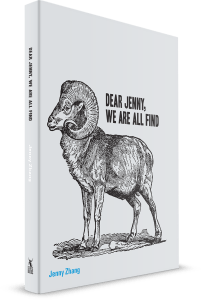 I felt rather prescient, because I started on this poetry collection a little before the poet got some attention for her response (published on Buzzfeed) to the ‘yellowface’ debacle in the latest edition of Best American Poetry. A friend of mine even sent that essay to me and I got to say, ha, I know about her! I’m reading her poetry. Always a satisfying feeling.
Of course, I hadn’t read much of Dear Jenny, We Are All Find at that point and my subsequent reading of it has been colored (not a pun, but what the heck) by her essay.
I read it as an angry, frustrated collection. While it is risky and usually wrong to read poetry as being intrinsically autobiographical, without classifying the poems as being particularly confessional, it is easy to see a repetition of themes on the body of a person of color as… not really the ‘other,’ but perhaps as a contentious object. The body as physical and organic (some scatalogical lines, references to sexual fluids), the body as frustrated by desire (whether by fetishization by others or by the body’s own unfulfilled desires).
Actually, those poems were the best. Her lighter poems, especially those touching on poetry culture and mocking Brooklyn, millennial, hipster, MFA style pretentiousness were… meh. Disappointing compared to the more aggressive, more political (not in the sense of addressing immediate issues like Syria or voting rights, but in the sense that the writings of Judith Butler and Elaine Scarry are political – and since her bio says she went to Stanford and got an MFA form Iowa… I don’t think it’s a stretch to think that philosophers like them came up in conversation) poems.
The poem below has a title that makes it sounds like the ones I’m not so fond of… but it’s not. Maybe not the best poem in the collection (though very good), but an example of what I’ve been talking about.
Don’t fucking text your friends when I’m reading a poem I took two years to write
or if you do it then be
right and if you are right be
relentless like this was relentless
when you spoke to that bitch
she was just That Bitch
and you were just A Good Guy
and that was the first time My Lips
wanted to be lips and they were
just the lips that your little movers
loaded in a van that lived in Norway
like you live in a place that is so faraway
my entrenched feelings have a way
of making themselves known
to know me is to know my mother’s bad English
the time I charmed you with not wanting
to not want to not take a shit
in my pants which were yours
the smell was also yours
you gave me the constipated figurine
I washed it like it was my own
and it was your face that gave me the finest idea
the idea of not having any more ideas
was good enough if it meant saving the idea
of you or the time you yanked metal
from your hand which does not leave me
even when my face is no longer a face
and my ideas no longer ideas
just the fine French doors you live inside
like I live inside this promise
like you live inside my dreams
the best ones where you did not yet exist
though I knew this fine universe
would create you eventually
and I would never stop thanking my mother
for creating me too.
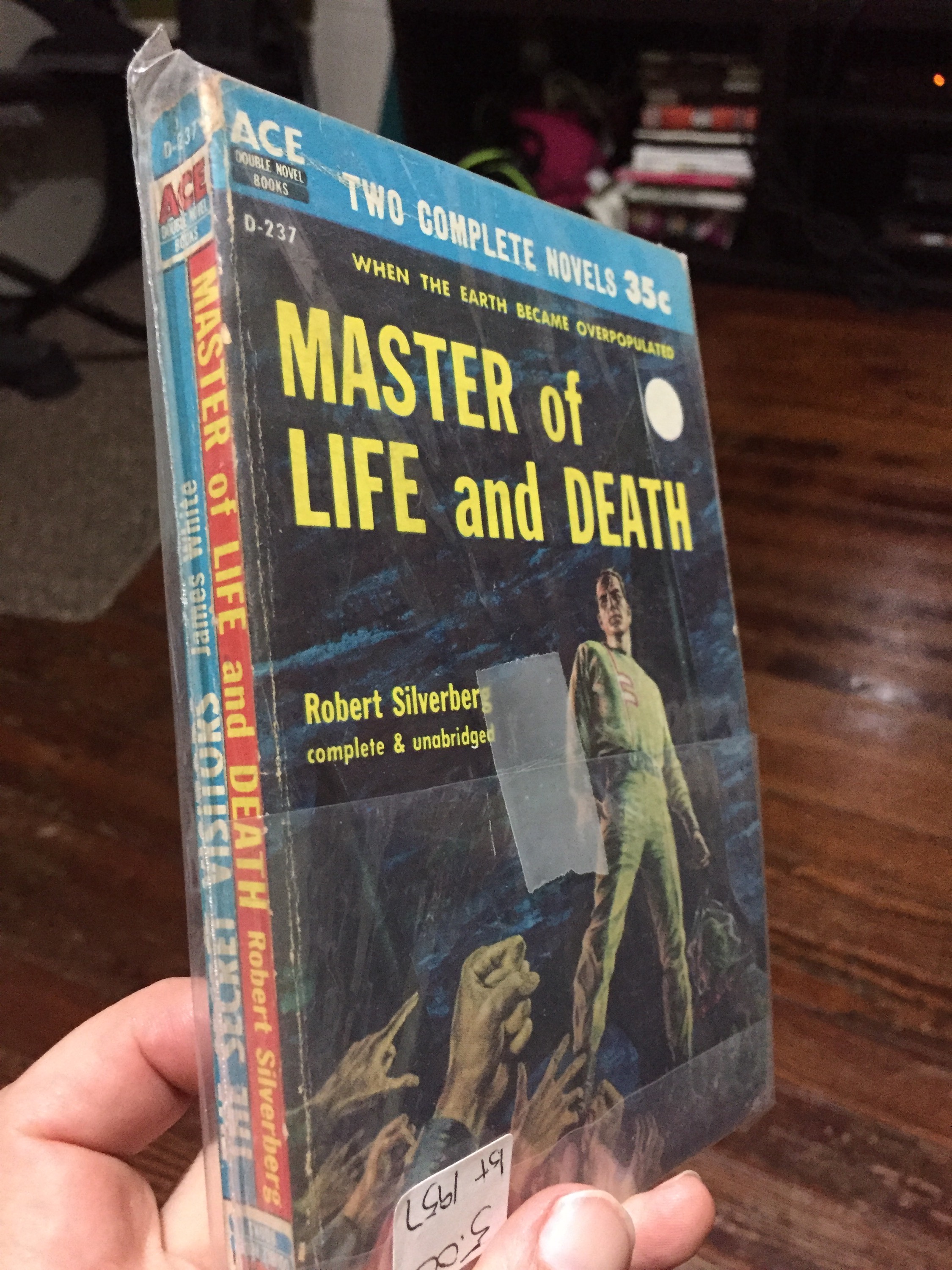
I had a birthday a little while back and among my present were a classic scifi magazine and three Ace Doubles – two books in one (just flip it over and start reading from the back after you finish the first one), including novels by Dick, Brackett and Silverberg.


 the coffee philosopher