The Born Queen


9780345440730With the fourth and final book of Greg Keyes’ Kingdom of Thorn and Bone quartet, the shark got well and completely jumped. I mean, there were hints in the third book, The Blood Knight, but in this one, Fonzie put on a pair of rocket propelled water skies and leaped across a flooded Grand Canyon filled with prehistoric sharks and Dick Cheney.

The first two book established an interesting, if not terribly original world. But as the third one hurtled to its conclusion, you could see things unraveling.

This one suddenly had plot twists that were completely unforeshadowed and not in a cool, ‘I didn’t see that coming way,’ but in a ‘wait, so everyone and everything in the last three hundred pages is now the exact opposite of what they were in the first thousand pages?’ Insufficiently explained deus ex machina, magical fights that were poorly described and confusing. And I don’t even really know what exactly a whole bunch of major (in the sense of having taken up a lot of total page space) characters did to contribute to the final… victory?

Comparison


My re-read of Remembrance of Things Past was partly inspired by my reading of Powell’s A Dance to the Music of Time. I don’t think it’s a stretch to acknowledge that the title of Powell’s later social epic is clearly referencing Proust (especially since late translations have used more accurate translations of the title, like In Search of Lost Time). But the comparisons, beyond length and focus on capturing a changing, upper class world, were usually acknowledged to be, ultimately, fairly superficial.

And, yes they are, but as I’m re-reading Proust, I also have to say, no they aren’t. Powell’s epic, despite many tragic moments, is ultimately a comic novel (not a comedy, but a comic novel), whereas the Frenchman, despite including many comic episodes and interludes, wrote a more melancholy piece – a tragedy, in fact. But despite that difference, having finished roughly two thirds of Remembrance of Things Past, I am more struck by similarities. Nick, from Dance is more of an observer of the outside world, whereas Marcel from Remembrance is chronicling his internal self as much as he is chronicling his world. But the observations of a vanishing (though the participants knew it not) aristocratic world by a figure both of and not of that world feel very similar. I think that maybe folks harp on the differences because of the undercooked final novel of Dance and the wonderful three book sequence that takes place during World War II, which is part and parcel of the whole (and arguably, the best part), but the most unlike Remembrance. But that leaves eight books out of the dozen that feel very similar to Proust’s seven volumes. None of which is to say that Powell is better than Proust, he most certainly is not.

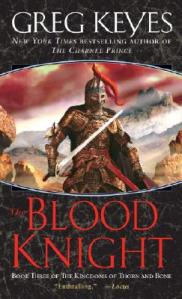
The Blood Knight


Blood KnightLet’s get this out of the way: the series is inexplicably compelling. It’s well written for genre fiction, but no one is going to be replacing their bust of Goethe with one of Keyes (nor even their bust of Asimov or Lovecraft, though the later’s horrific racism might inspire them to replace it with someone else [I would suggest the great queer African-American science fiction writer, Samuel Delany]). Which is all a way of saying I enjoyed.

But that’s not going to stop me from proceeding to criticize it.

Because the plot of getting out of control. Too many twists and turns. Worse, they weren’t foreshadowed in the previous two novels or even earlier in this, the third book. The side switching and occult (in both the sense of being hidden, cryptic, and confusing and in the sense of being related to cultic magic) conspiracies that start piling up like a rush hour crash were overwhelming and left a bad taste in my mouth that spoiled some of my earlier enjoyment.

Nonetheless, the next volume will be arriving and put on hold for me at my local library later this week. I’m going to finish this d–n series.

The Sunday Paper – Kung Fu!


14.-D.A.-Jasper_Two-Champions-of-Death-652x1024Did you know that there was a tradition in Africa of hand painted posters for martial arts movies? Me neither. But now I want one.

Reinventing Shakespeare(‘s book covers).

The Etruscan language is nearly lost and much of their culture a mystery, so, while this stele is not a Rosetta Stone, it is something rather big.

On a related noted (in that it’s also a question of archaeology), some folks were tipped off on the location of a second Viking settlement in the New World by some photographs taken from outer space. Actually, I hadn’t realized we’d only found one Viking settlement. Honestly, because their presence in North America has been known for so long, I’d just assumed it was more widespread. And it might have been widespread, but this is the first evidence that were was more than one (semi-)permanent settlement.

The fine folks at DCist have compiled a list of the best used and independent bookstores in the District. Of course, with the closure of the downtown Barnes & Noble, there are only used and indie bookstores in DC: not a chain in sight. And I appreciate this list acknowledging the truly magnificent poetry selection at Bridge Street Books.


Happy National Poetry Month!


So go read some poetry this month.

Seriously. They have some at the library. You can even read Shel Silverstein. Remember him? He counts. And he’s good, though, if you’re an adult, you should consider supplementing him with maybe some Whitman or Frost. And consider maybe challenging yourself a little? Some non-dead white males? Claudia Rankine’s last collection sui generis, Citizen is alive, not white, and not male, so you could read her and consider yourself to have done the bare minimum to fake being a cultured person in April.

Shakespeare: Life Of An Icon


You have officially missed the chance to see the Shakespeare: Life of an Icon exhibit at the Folger Shakespeare Library. Sucks to be you, because it really was awesome.

I’d rushed through it once before, during intermission at a performance, but knew I needed to go back and give it a thorough look through.

A page containing what is believed (but not confirmed) to be the only example of Shakespeare’s handwriting, beyond merely his signature. The only preserved letter written to Shakespeare (a neighbor’s request for some money). Paper, paper, paper.

Paper is beautiful. Books are beautiful. One of the best things about the Folger is that its collection is paper. It’s research library that believes its printed and written collections are museum quality. That was the most wonderful thing about the exhibit. We are human because of our minds and the written word is Western humanity’s repository of the history of what makes us human.

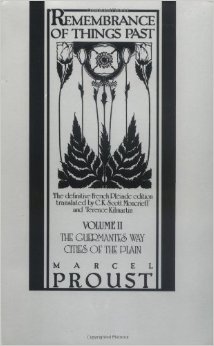
Cities Of The Plain (Remembrance of Things Past, Book Four)


The Guermantes Way & Cities of the PlainEarlier this year, there was a short piece in The Atlantic where an author talked about parties in literature and how difficult they are to make interesting. While I don’t necessarily agree with that (Great Gatsby, anyone?), it did make me think how awesome Proust’s parties are.

Obviously, I don’t mean the parties that Proust threw, but the gatherings, salons, and soirees of Remembrance of Things Past. In that respect, Cities of the Plain is the best yet. The narrator and author stand-in is well ensconced as a member of high society and much sought after for his apparent charm and delightful conversation (though, because the book is so interior, focusing on the narrator’s external thoughts, and at the same time so exterior, minutely describing others and the milieu, that we rarely see much of what so appeals to society, though we can clearly see his perspicacious intelligence), so much of the novel takes place in the finest gatherings of old money. It’s all the more interesting, because I would probably be bored to tears at an actual such gathering.

The French title for this novel is actually Sodome et Gomorrhe. The first city is used as a metaphor/codeword for male homosexuality and the later for female homosexuality. Along with parties, these are the other topics that absorb the narrator. He secretly observes the grotesque, pathetic, aristocratic, mercurial, and proud Baron de Charlus (a fairly major character) initiate an encounter with tradesman. Later, he observes the pains that Charlus suffers for his younger, lower class lover (also a talented violinist). The narrator himself is filled with suffering at the thought that his mistress, Albertine, could be secretly ‘gomorrhic,’ which is to say, lesbian or bisexual. The book even ends with his decision to marry her for almost the sole purpose to make sure she doesn’t sleep with a woman (the next book is called The Captive or La Prisonnière, so you can guess what lengths of surveillance were required to reassure himself that she wasn’t sneaking off to hook up with a young lady). In these days of lesbian porn, it is almost amusing the thought of being made so miserable and dejected at the though that she might once have been with woman (she is clearly also interested in men and enjoys relations with them). Of course, underneath all this is whatever conflicts and shames Proust might have felt around his own homosexuality, which is also what makes these passages so tragic and sad.

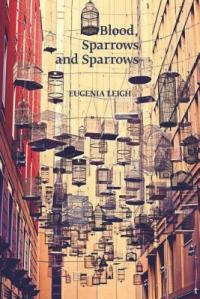
Blood, Sparrows And Sparrows


9781935536499Another book by another poet I’d read about and seen recommended. I was in Politics & Prose, dropping off an order (they stock Lil’ Fishy onesies, if you’re looking for a cool present or outfit for an infant) and couldn’t help going to the poetry section and there, as if by some random magic, it was. Honestly, the odds of any particular book poetry, much less one you are looking for that is not by someone dead or someone named ‘Collins’ or ‘Merwin,’ are not that great, so this probably counts as a minor miracle. I saw minor, because I doubt the particular influence of the hand of God in this. So maybe not so much a miracle, at all, as a cool coincidence.

Even though I’m writing this later, I actually bought this not more than a few days after reading Cathy Linh Che’s Split. When I first leafed through some poems, I was actually a little disappointed and thought that I’d made a bit of a mistake. So I set it down and picked it up something like a week later.

During that week, it improved considerably. No, it didn’t hit me the way Split did, but neither of them hit me the way William Wordsworth’s Prelude did, so maybe that kind of apples to oranges comparison is not useful (though recurring themes of abuse make the two more recent collections more similar than, say, anything Wordsworth wrote).

Visceral and formally varied, stanzas and line indentations give some nice visual shape to the poems, though never at the expense of the words. She’s got a nice sense of humor and sneaking spirituality (rather like someone who has left a church as an adult, but was taken every Sunday as a child, so has the liturgies stamped on her brain).

‘Iraqi Nights’ & Al-Mutanabbi Street Starts Here


On a Wednesday, I saw Dunya Mikhail at the Hill Center, where she was interviewed/conversed with the Post‘s Ron Charles. Sadly, it was the most disappointing of these events that I’ve attended. Whether it was the language barrier (Arabic being her first language and the one she writes in) or something else, the conversation never quite took off. Ron couldn’t seem to get an extended reaction nor dialogue out of her. It didn’t help that she wasn’t very familiar with the English language translations of her poetry that Ron was reading from.

I read her collection, Iraqi Nights and enjoyed it, but didn’t love it. The idea that this was a poetic take Iraq’s travails through the lens of The Arabian Nights never quite came through and some of the poems bordered on being just pithy lines.

On the following Saturday, I dragged a semi-reluctant friend for an event honoring the ninth anniversary of the bombing of Al-Mutanabbi Street, Baghdad’s ‘Street of Booksellers.’ Poets and musicians, including Dunya Mikhail, were there.

Unfortunately, there was a solid forty-five minutes of self-congratulatory back slapping by some white people that was just… too much.

This is Washington, DC and the year 2016 and we don’t need to be told that Bush’s invasions were colossally incompetent, misguided, and deceitful farces not worth the tiniest amount of the blood and treasure they cost. If you really want to drive this idea home, though, the best way would be to get out of the way and let the Iraqi artists speak through their works.

The last part of the event was a musical performance that sounded almost liturgical in chant-like signing accompanied by an oud and a piano (and wind chimes), but I left early, not because the music wasn’t wonderful (it was), but because those ridiculous opening ceremonies/lectures/chidings/backslappings had left a wound that festered and drove me out.

Fortunately, I did get to see a short video while I was still there – a video the showed the pointlessness of the opening lectures by older white people. It was a simple video. Some footage of the street, including archival footage from before the bombing, but mostly it was just focused on a man who owned a cafe on the street and had lost four of his five sons and one grandson in the bombing. Absolutely heartbreaking, especially once you realized that when he was talking about his son missing a leg, he wasn’t saying that his son was now crippled. He was saying that they couldn’t find all of his son’s body parts. When a man is telling you that story, you don’t need an anti-war lecture.
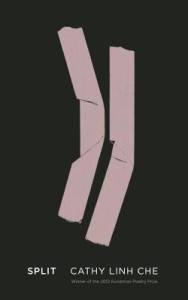
‘Split’ By Cathy Linh Che


SplitSomewhere I had read about this book and added it to my online wishlist on the Barnes and Noble website (which I use as a way to store books I want to read or feel I should read; sometimes I buy them from Barnes and Noble, sometimes from other bookstores, and sometimes I check them out from the library; this one, as I will specify in more detail momentarily, I bought at a Barnes and Noble). Traffic was bad the other day, due to horrible rain and the inability of many local drivers to drive in… weather.

Barnes and Noble seemed like a good place to kill an hour and wait for things to ease up. I looked at some lit mags, some sci fi, and, of course, the poetry section. And there I saw Che’s book. Honestly, I had never expected to randomly see it in a chain bookstore. Bridgestreet Books, maybe, but that’s it. But there it was.

Naturally, I bought it.

And I took it to the little cafe and ordered a snack and some herbal tea (I’m getting old, because I think that it’s not a good idea to drink caffeine in the evening; I miss the younger me, who drank coffee all night with his friends, talking politics, poetry, and philosophy).

Split blew me away. Heartbreaking (sexual abuse by a family member is a repeated subject, as well as other kinds of loss of innocence, including those from her parents’ status and immigrants and refugees; also, oddly, cameras – the mechanical nature of a physical camera – makes more than a few appearances) in it’s narratives and marvelously crafted. Tending towards short couplets and three line stanzas (triplets?) with some indentations to keep the reader on his/her toes, but also with prose and prose-like poems and other forms.

Here’s a little bit from Pomegranate:

In the Underworld
I starve a season
while the world wilts

into the ghost
of a summer backyard.
My hunger open and raw.

I had a little trouble picking something, because her poems are just a little too long to quote in their entirety and don’t lend themselves to excerptation.