‘Disorientation’ By Elaine Hsieh Chou


A funny, terrifying, and ultimately, honestly depressing book.

Ingrid Yang, the protagonist, is an unreliable narrator in her lack of self-awareness, which is part of the comedy and horror. She clearly hates her work as a PhD student working on the oeuvre of a Chinese-American poet that she really doesn’t care for and her bland fiancé is clearly a manipulative douche (Hong’s recent Minor Feelings identified his type, as the sort of middling white guy who has found that racism enables him to find an Asian partner who is much more attractive than he could otherwise ensnare). However, she only barely recognizes any of this.

The novel, which I feel is secretly a horror story, is about her understanding that her whole existence has been gaslit by white men.

It was inspired by a white poet named Michael Derrick Hudson submitting a poem under the name of an Asian woman: Yi-Fen Chou. Chou, in addition to being author’s name, is also the name of the Chinese-American poet in the novel, who turns out to be a white guy who actually indulged is ‘yellowface’ disguise to teach at her university for years.

The whole thing gets worse and worse, with her sinophilic (white) advisor having actually known and conspired in the deception, before turning into a demented Tucker Carlson-esque figure with his own MAGA style movement (DOFO – Defense of Freedom Organization) to protect the feelings of white people.

Chou (the author of this novel) stays true to the story’s movement in that it doesn’t have a happy ending. It’s not unhappy, but essentially, the bad guys win, which feels kind of unhappy.

The publishers also did this thing where you had to flip to book around, relative to the orientation of its cover, in order to read it. I get the metaphor (‘disorientation’) but really could have done without that. The book is good enough on its own.

‘The Second Shooter’ By Nick Mamatas


I can’t remember where I read about this novel. I think it was a Washington Post piece by one of their book reviewers, in a round-up piece. But I was inspired to put it on hold at the library and here we are.

Did I like it?

No.

Did I dislike it?

No.

Did I think it devolved towards the end into a poorly explained morass of occultism under a rationalistic veneer?

Yes.

The most interesting part was point of view character (the novel was written in third person limited) of Michael Karras, a writer of leftist and usually conspiratorial books for a small, left wing press. He had a bit of the air of a journalist about him and you are inclined to think of him as being a reasonably smart guy. And he was. But somewhere along the line, you are reminded that he’s also a conspiracy theorist kind of guy and you think back and wonder if you missed things because he’s far less reliable than you initially assume. Oh, and he kills himself at the end after taking an uzi from a guy in an invisibility cloak in hopes, one assumes, that by doing so, his semi-mystical status will make the world better, which, in the epilogue, doesn’t seem to have worked.

The Social Life Of Books: Reading Together In The Eighteenth-Century Home


As a scholarly work, it is more a series of thematic anecdotes than the explication of a sustained thesis, but it shows an admirable amount of archival research into the clues left behind by middle-class households in the 18th and early 19th century. It does a strong job of arguing that 18th century England (and this book is almost exclusively about England) was more literate than perhaps we give it credit for, though, as always, we should remember that the plural of anecdote is not data.

I enjoyed those glimpses into these lives and homes and learning about the way in which people read. Which also leads to the most interesting, if only cursorily examined, idea which she tosses out there in the chapter about novels: the rise of of the novel is directly linked to the decline of poetry as a subject of popular reading.

Much reading, she says, was done aloud. It was done by families in the evening, but also at social gatherings. And publications were designed for that purpose, which means not too long and easy to put down and pick up at a later time. If your neighbor came over and stayed while you read to your family, it wouldn’t do for him to hear just the middle of a dense novel, but something like poetry was perfect.

The novel, by its very nature, encouraged solitary reading and this led to the decline of certain shorter forms that were also strongly linked to oral traditions, i.e., poetry.

‘How To Pronounce Knife’ By Souvankham Thammavongsa


A lot of very good short stories. Some were weaker than others (the short story that gave the collection its title was not my favorite), but overall a good read.

Read more

‘Washington, D.C.’ By Gore Vidal


To my great joy, early in the book, a young man fantasizes that he is within the Barsoomian tales of Burroughs. Even more enjoyable, for me, at least, he name drops neither, just a character you’d only know from having read the books (or seen the movie).

This character grow into a sort of Vidal stand-in; an elite-born man who became a polemical political moralist, who also knew political Washington inside and outside.

Of course, the Washington of Washington, D.C. doesn’t exist anymore. Not in the least because you’ll rarely see Senators hanging around the city on weekends (they are back in the states they represent). But this book also realizes that. At one point, an aging, mostly moral, lion of the Senate muses that he almost lost re-election after being outspent and confesses some confusion over how television and radio ads changed things.

I gather he retroactively incorporated this into his ‘Narratives of Empire’ series, but it lakes the scope and sweep of the two I have read (Burr and Lincoln). It felt rather personal, not in the least because it covered a time when he was growing up in this older Washington.

That said, one can see in the aspiring politician Vidal’s critiques of Kennedy. In the leftist intellectual seduced by that rising star, Arthur Schlesinger (I don’t know what Vidal thought of him). But it’s not exact and more a nearby critique, than a direct one.

Lord help me, in many ways, it’s more Henry James than Gore Vidal, but the better for it. I had set aside my affections for him, but this reminded me that, actually, he’s a d—m fine novelist.

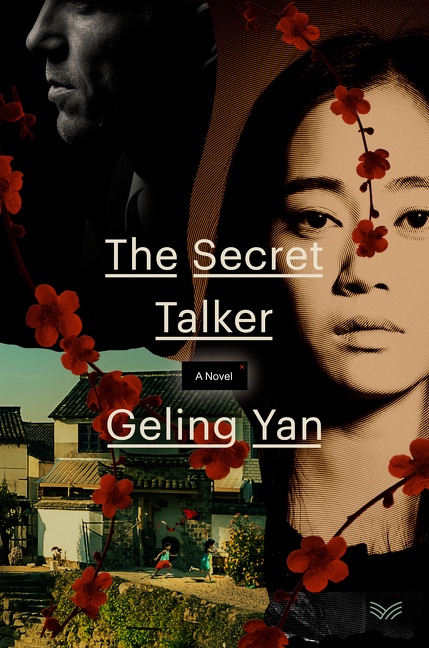
The Secret Talker


Fascinating, beautiful, intricate, but did not quite cohere.

The protagonist’s slow release is information and growing willingness to implicate herself and expose herself as more flawed and cruel than I would have guessed at the beginning. Also, her friend and sometimes confidante is deliciously wicked and rapacious!

Written in the early aughts (I hate that term), the technology is a little old fashioned sounding today. But the failure for me is that the final reveal left too many questions, including, how the heck did this person craft their identity, in a purely practical sense (you’ll have to read to understand what I mean).

‘Mortality’ By Christopher Hitchens


Of necessity, his last book (though I suppose a collection of miscellany could still, and perhaps already has, come out; but that wouldn’t have been written last).

Am amazing stylist and, equally or more important, a master of his craft. There are plenty of talented writers who never properly learned their craft and any decent reader can quickly discern the difference.

Mortality is not an example of Hitchens the craftsman.

Read more

The Mysterious Affair At Styles


My second Agatha Christie book within recent memory (my mother had some many around the house, that I feel certain I read some growing up) and the first mystery she ever wrote.

The last one I read was all about motive. Her most famous creation, Hercule Poirot, spent much of the book criticizing a police detective who spent a lot of time examining physical evidence, while Poirot shrugged his shoulders, said, meh, who care, motive is everything.

In this one… well, motive was pretty obvious, in the end, and it was all about physical evidence (though, sometimes, also about the absence of something), with the mustachioed Belgian even sending some samples of cocoa away to be analyzed.

I am too lazy to look for it, but I read a very nice article about Christie that posited a unifying feature in her work: a great belief in the evil of mankind. And, well, you can really see it here.

A lot of disagreeable people, including a thin-skinned, self-righteous, and not very bright narrator (though, in his defense, Poirot seemed to constantly making fun of him and disagreeably and spitefully withholding information).

Ninefox Gambit


After reading this science fiction novel and then recommending it to a friend (I won’t say it was great writing, though perhaps it is better in the original, but it’s good writing and I just found it very fascinating), he immediately noted the en media res factor, with Lee tossing into a well thought out, but very outre science fiction universe and society. Mathematics based around calendars can, apparently, affect reality in some way that winds up wreaking havoc on technology based around other ‘calendrical’ systems. It’s like if the presence of a vinyl record player caused your all your iTunes songs to either blow up your phone or play nothing but ‘Baby Shark’ at ear splitting volume.

He also commented on how this society placed an emphasis on the wearing of gloves and how that was also part of the society of the Radch Empire in the amazing novel, Ancillary Justice.

This got me thinking and I eventually decided that Frank Herbert’s Dune was the forerunner of all this. The culture and the social and technological mores of that universe were detailed, well thought out, and completely alien to us. While Ninefox Gambit is no Dune, I can see the lineage.

Swords Of Mars


I was, at first, excited that Burroughs had returned to the original hero of the Mars (or Barsoom) stories: John Carter.

Read more