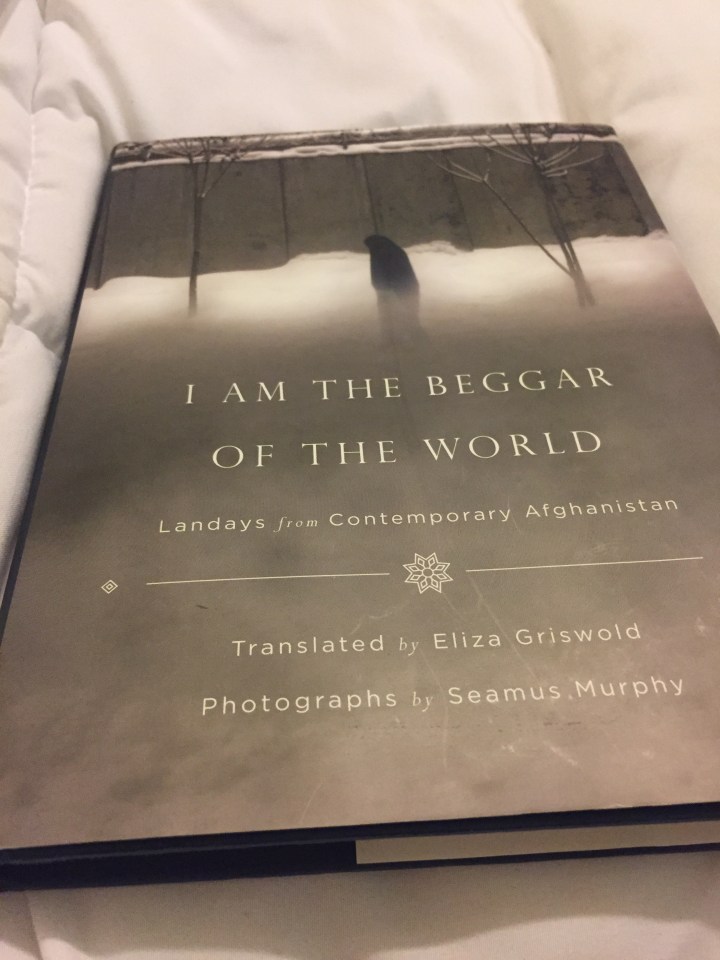
 It is a book that both is and is not to be read in terms of its literary value and impossible to disentangle this book from modern history. While I enjoyed it, it was also difficult for me to fully appreciate because I never fully reconciled the conflicted nature of the collection.
The Tale Of Genji: The Sacred Tree

 Towards the end, there is some sign that the titular Genji feels some real remorse for the emotional carnage he has left in his wake. But not much. Or, at least, not enough to my mind. But the author clearly seems to be showing some disapproval. Read more
Matthew Arnold & Silver Spring Books
 Matthew Arnold is a poet and essayist who I never quite took to, darkling plain or no; and Silver Spring is a small suburban city north of DC which once again has a bookstore, the clarifyingly and concisely named, Silver Spring Books.
Tintin In Tibet
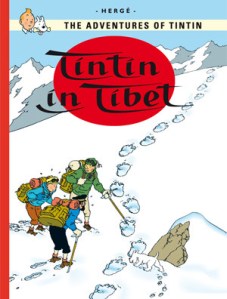 We actually bought this for a child, but she hasn’t been able to pick it up yet.
I read it years ago (though I was never a Tintin devotee, I was a fan) and when we were shopping at a children’s bookstore in Baltimore, it was one of the books I picked up (knowing that I would get a chance to read it before giving it away).
Tintin in Tibet is considered a bit of a turning point in the series, marking when they started becoming something worthy of classic status. And it is fun, exciting and a wonderful read for children.
‘June Fourth Elegies’ By Liu Xiaobo
I already owned this book, but re-read it because of the tragic death of Liu Xiaobo, which, felt both inevitable and like a punch to the gut.
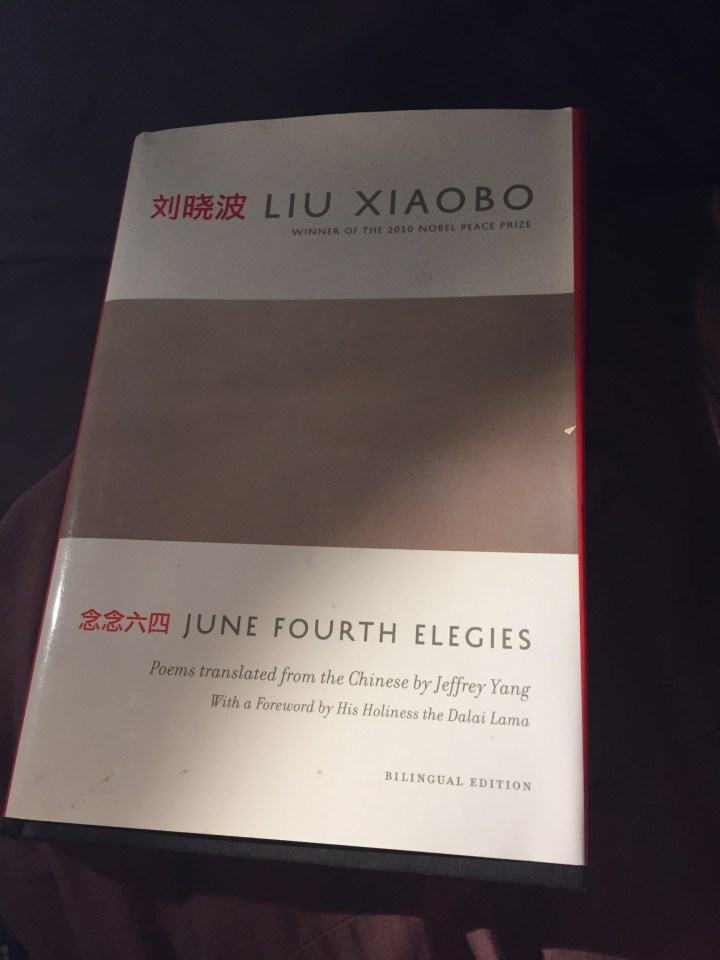 Of course, I ‘know’ him primarily as a poet, rather than as an activist. But now that he’s gone, I can’t separate the two enough to judge this series of poetic remembrances of Tiananmen Square, bookended with poems to his wife (also a poet: Liu Xia).
It does make our (still righteous) national grievances against Trump seem small.
‘Naturalism’ By Wendy Xu
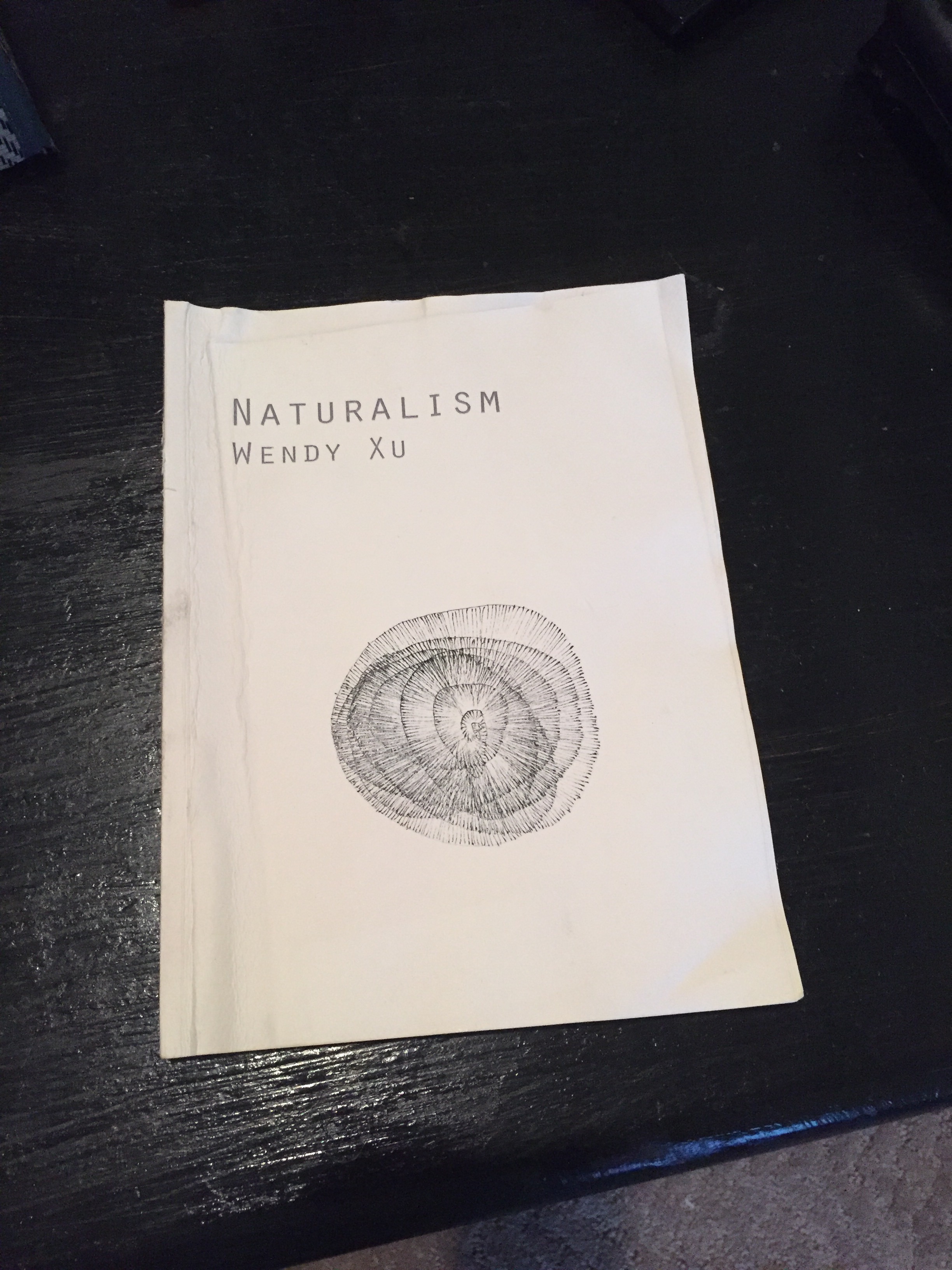 If the book looks like it was rode hard and put up wet… well, it was. And not so much metaphorically, as literally. It mail man placed it under our welcome mat, but it was in a relatively flat package and it was towards the edge, where people don’t normally step, so it remained unnoticed for I don’t know how long. By the time I discovered it, it had gone through more than one thunderstorm, so I couldn’t even begin to start it for several days after bringing to poor volume into the house.
It’s more of a long, super fancy chapbook than a full collection and it does feel like a work in progress. In fact, I swear that at least one of these poems also appears in her new collection, Phrasis.
Naturalism, in many cases, doesn’t feel quite mature. The best poems are very, very good. Some though, feel like filler; and in a such short book, it doesn’t take too many underdone poems to overwhelm the final sensation (nor does the fact that the very best poem appears at the very beginning).
I am happy to say, though, that Phrasis (which I am reading) is falling on the very, very good side so far.
‘Marius The Epicurean’ By Walter Pater
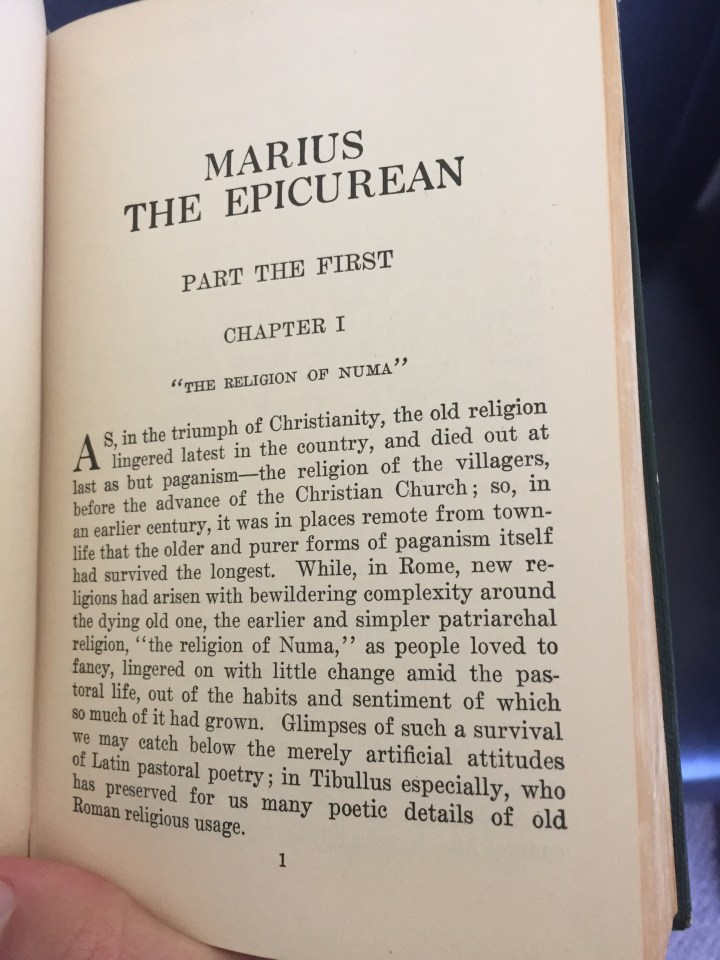
This is an old fashioned kind of book. Very much a certain kind of nineteenth and early twentieth century kind of book (this book was written in the early 1880s). A wordy philosophical novel.
It’s not a novel that illustrates or explicates a certain philosophy. You won’t learn much about Epicureanism (and really, Marius is never actually, so far as I can tell, a followed of Epicurus). But you will, if you’re willing, be able to drift back into a Rome of late antiquity (the Stoic philosopher-king Marcos Aurelius is emperor), but really, you’re in a European, upper class milieu of intellectuals.
The plot, insofar as there is one, is Marius, a devout young man, goes to school nearby (which schooling consists of learning history and philosophy) and then to Rome, where he is first deeply impressed by Stoicism, but slowly is impressed by a Christian family and possibly becomes a Christian at the end.
Marius the Epicurean is also an exercise in envy for the reader. What must it be like to have financial independence without much responsibility and to spend one’s time thinking about the meaning of life and what is good in life (which is not intended to be a Conan joke, but an acknowledgement of the primary question of Roman philosophy) and to read the best that minds have to offer and study at the foot of great thinkers. Again, all while not really having to worry about housing, food, healthcare, etc.
Finally, it is a slow read. Or should be. In truth, I finished the final third too quickly. My better half had noted how long I had been reading this book and I think that I felt a little sheepish about my slow pace and rushed a bit so that I could complete it while she was out of town.
Asian-American Literature Festival

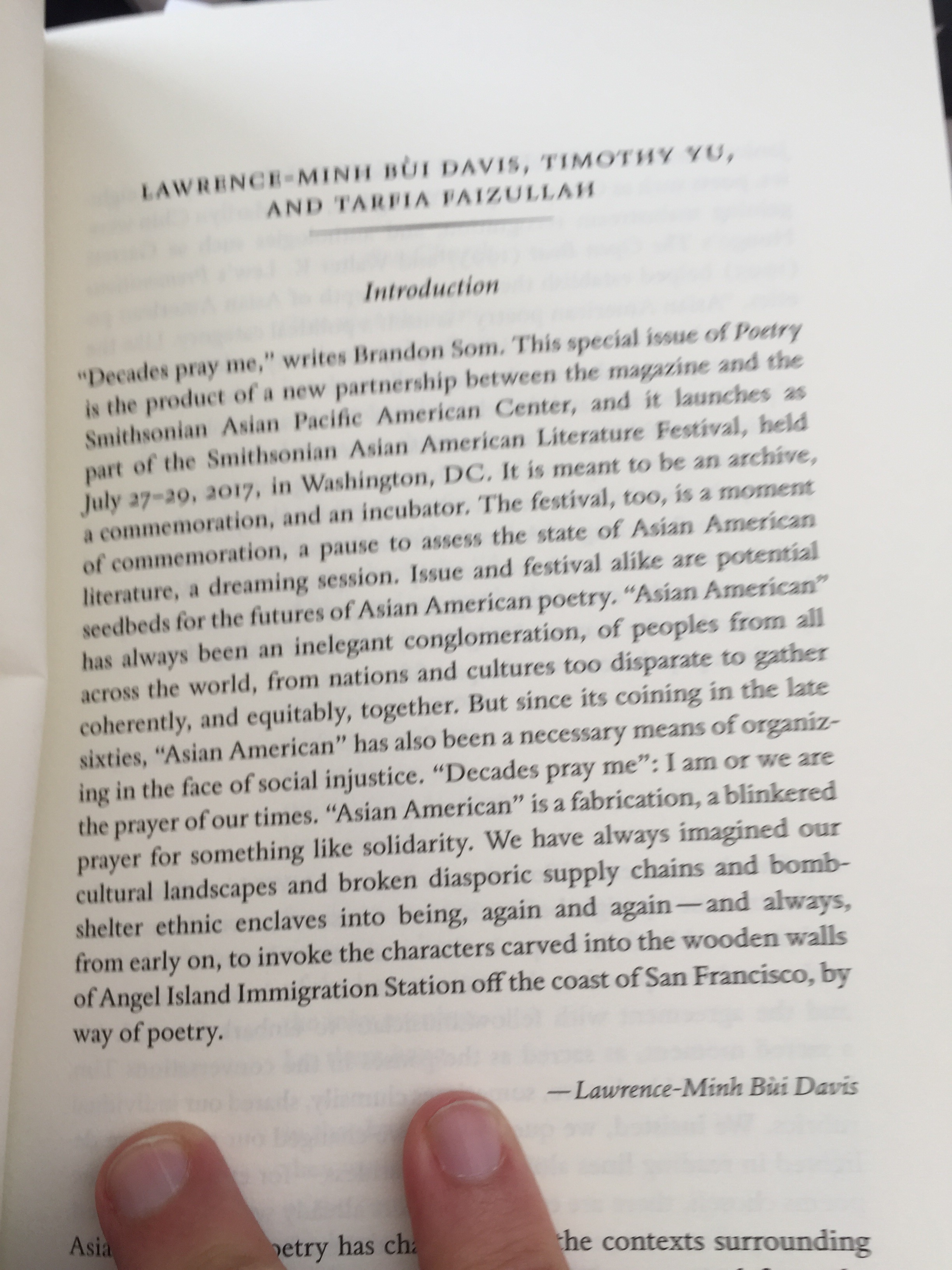 I won’t be able to make it to any of the Asian-American Literature Festival, taking place at various venues (mostly museums) around DC because I’m hard at work, but at least I was able to bring this with me.
Another Episode Of Facebook Poetry In Translation
It’s been a while, but it’s time for more “Found Poetry That Is Actually Facebook Translations of Posts from Thailand.” Enjoy.
I knew it.
It’s raining. It’s not going to go out.
It’s raining through a mirror
a movie.I’m putting sleeping pills in the rice again
Good night.My eyes… the birds are very satisfying.
It’s more fun than that, Dr. Wig,
eyes on the. A bird.
‘Cat Town’ By Sakutarō Hagiwara
 In case I forgot to say it before, it is almost impossible to go wrong when you buy a book from the NYRB (New York Review of Books) imprint. I don’t think I’ve encountered a bad book published by them (and I’ve read at least a dozen from them). More than that, the books they publish are almost always enjoyable; you can read a book by an author you can be proud to be seen reading on the subway and enjoy it immensely.
Cat Town is a fine example of what they offer. A fun, interesting (often melancholy) collection by a modernist, Japanese poet from the first half of the twentieth century.
Note to cat lovers: it’s not really about cats, or at least not very much. Except for a prose poem at the end, dogs probably outnumber cats.
There are some lovely, erotic poems, as well. Erotic, I would say, but not sexy, if that makes sense. Hagiwara suffered, apparently, from mental illness, and you can tell. This isn’t to say that this is a example of outsider poetry. He was clearly steeped in poetic traditions (the introduction makes it clear that the translator isn’t wrong to translate the poems as being influenced by poets like Baudelaire and Eliot) and an excellent poet, who just happened to struggle with mental illness (rather than a crazy person who wrote poetry, if you can see the difference).
 the coffee philosopher