The Tale Of Genji: The Blue Trousers


This volume I have tentatively nicknamed, A Tale of Mellow Genji.

Every so often, Murasaki lets us know approximately how old characters are, but it’s intermittent and she likes to do multiyear jumps forwarded. Genji turns forty during this volume and appears to end it in mid or even late forties.

There is more than a bit own petard hoisting, as Genji finds himself cuckolded. Though he really doesn’t feel that bad about it and is not nearly so embarrassed as you might think (though, of course, he still keeps it relatively secret, even though his son suspects).

He is pressured into marrying his half brother’s (a former emperor who abdicated the throne) favorite daughter, in order to guarantee she is will cared for. To modern sensibilities, this is icky for a couple of reasons, not the least of which is that the girl is thirteen and very childlike (she carries on a correspondence with Genji’s favorite concubine about the “activities” of her dolls).

One of his son’s friends develops an infatuation and has one night stand, as it were, with her (the novel constantly portrays it as being almost rude for a woman to say no to sex if the man has succeeded in getting her alone in a room and past a modesty screen), resulting in child which, based on the lack of recent sex (a year, Genji specifies) between her and her husband, is clearly not the product of the marriage bed.

The friend dies of grief and shame (sort of) and Yugiri goes on to seduce his widow.

It’s that kind of book.

Lady Murasaki (the character, not the author) dies, as well, leaving Genji, the reader feels, without a moral center.

I started to read the next volume and was quickly shocked. It opens with the country in shocked mourning because Genji is dead. This hit me pretty hard and I was legitimately upset and had to put it down for a bit.

Narratively, it makes sense because, ultimately, the personal narrative of Genji is of a man who constantly lets his lust and passions direct him. Whether trying to seduce two different girls he informally adopted, sleeping with the only girl for a hundred miles while in exile. He comes across not so much as sex-obsessed, but as someone who is easily distracted by the appearance of even the slightest chance of a some sly nookie.

But, still… sigh. I was constantly repulsed by his actions and thoughtlessness, but the author did her work well, because I miss him, in spite of it all.

The Tale Of Genji: A Wreath Of Cloud


I picked up Genji again after a long absence and, after some initial struggles getting back up to speed (it’s got a huge cast of characters and is episodic, so it’s both easy to lost and easy to make yourself push through to the next ‘episode’ or event), I was quickly re-immersed in that world.

While Genji himself has mellowed a little with age (he ends this third book of the tale in his late thirties), it is getting easier to see him as the villain of his own story.

He is more or less running the country on behalf of the Emperor (who is, secretly, his son, having had an affair with his father’s concubine, which is not nearly the creepiest sexual encounter of his life so far), but honestly doesn’t seem to be paying that much attention to affairs of state. As usual, women take a great deal of his attention.

There was a long, running thread of finding the long lost daughter of a woman who Genji had loved, but whose lover was not the titular protagonist, but his friend and sometimes rival, To no Chujo.

A series of coincidences allow Genji’s servant to rescue her and bring her to his palace where he immediately reunites her with her father, To no Chujo. Just kidding. He tells everyone she’s his daughter and manages to both encourage suitable men to court her and also to try and sleep with her himself. He doesn’t succeed, but the moral center of the tale, his primary spouse, Murasaki, reminds him that before they became lovers, she was a young girl he was raising as a daughter.

The beautiful flow of the tale and the strangeness of the time and place (at least to a western reader) often lets the reader glide past these things, but every so often, you think… yucky.

As always, a reminder that modern sexual mores about pre- and extra-marital sex are pretty recent (the sort of adopted daughter’s husband is basically chosen by which one she lets sneak into her room and make love to her).

And some personal fantasy nostalgia for a time and place where people would communicate by poetry on an almost daily basis (most written communication takes the form of short poems, with more or less allusive meanings).

Behind The Throne


This is a good old fashioned space opera. The technology is well thought out and reasoned to (mostly) logical conclusions, but this is not hard sci fi. This is blasters and space empires.

And pretty good ones. It’s exciting and fast paced, breezing you past some iffy world building to keep you in the action (which is the point; space operas don’t make complete sense, so it’s the author’s job to make sure it’s thrilling and interesting enough to keep your disbelief suspended).

A matriarchal space empire, founded, apparently, by folks from India, with a plots to steal the throne, poison the empress and inspire a rival space kingdom to invade. And the protagonist is a princess who fled to find her father’s killer and became a smuggler and gunrunner before circumstances force her to return and (eventually, I don’t think it’s giving much away) become Empress of the Indaran Empire.

I look forward to reading the next volume.

Oathbringer


I read some mediocre reviews of this novel, but I enjoyed it. In general, I’ve enjoyed the series (known as the Stormlight Archive; I find the use of the word ‘archive’ to be positively ridiculous).

It was exciting, with some interesting expansion upon the world building (Sanderson is very good at world building; his fantastical locales are well thought out, generally consistent and, while detailed, do not let the world building get in the way of a decent story). There was a sort of big reveal – a dark secret at the heart of this particular fantasy world – which I didn’t find nearly as morally earth shattering as, apparently, I was supposed to find it. But that’s a small(ish) thing.

A few things felt silly, but, c’mon, it’s a fantasy novel. In the end, it’s just quality pulp, right? Don’t be so hard on him for these things. The stakes felt high and while I wish he wouldn’t feel compelled to write such enormous, backpack busting tomes, it didn’t drag for me.

I suppose that I could try and describe the plot and events, but as the third book in a series where each book is longer than it’s predecessor (the first was, if I remember, eight hundred odd pages; this one is over twelve hundred pages), that seems like a fool’s mission.

Ice


Ice is considered a sort of lost classic and it didn’t disappoint. Technically science fiction in a post-apocalyptic mode, it takes place after an event (probably man made, but the unnamed protagonist honestly does not know for sure) results in a quickly creeping ice age enveloping the earth, constantly narrowing the band of habitable land and resulting in civil breakdown, wars for ever more scarce resources and the rise of local warlords.

The protagonist is obsessed with a girl with pale skin and nearly white hair who has known since she was a child. Abused in some way, she is drawn to abusive men. The protagonist, it is made clear, is probably no more than the best of a bad bunch.

The tone is stark and nameless (no names of people nor countries) and matched by the first person narration of a soldier for hire who is driven by his obsession/love/nostalgia for this mostly unattainable woman (partly because she is often kept by more violent and powerful men than he).

I hate to use this term, but I kept on thinking of this as Kafkaesque. The lack of definite names and quest for something close, but unattainable and also incomprehensible.

Great book. Really. Great.

Shadowheart


He, umm… he did not, shall we say, stick the landing.

The final volume of Shadowmarch series managed to both be frenetic and also to drag terribly, an impressive accomplishment, but not fun to read.

Much of the book is an extended battle sequence – a series of engagements around the primary locale (Southmarch, if you’re interested) that are so frequent that they cease to hold the attention.

The climactic battle, involving a freed/awoken (though not ‘woke’) god, depended on some world building that the book didn’t earn. And some story lines turned out to be absolute nothings. There was, for example, a potentially interesting and morally weak poet named Tinwright who managed to take a large quantity of pages only to not do anything important or meaningful, in the end. It was like someone fired Checkhov’s gun, but missed and then did nothing more with it.

Finally, the ending went on for something like two hundred pages after the climax. Sure, Tolkien did that… but he was Tolkien. I didn’t know Tolkien, but I read a lot of his works, and you, sir, are no J.R.R. Tolkien.

Not Catching Up


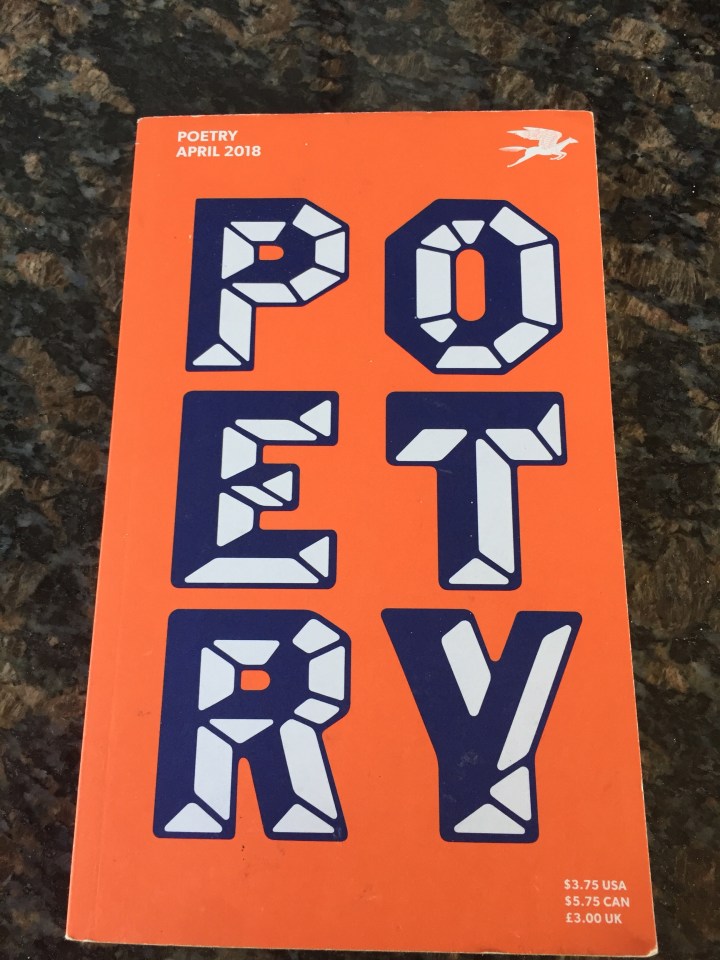
I am trying and not completely succeeding in catching up on my periodicals. The more timely ones like Foreign Affairs and The New Yorker are first and Poetry gets relegated because its news doesn’t get old.
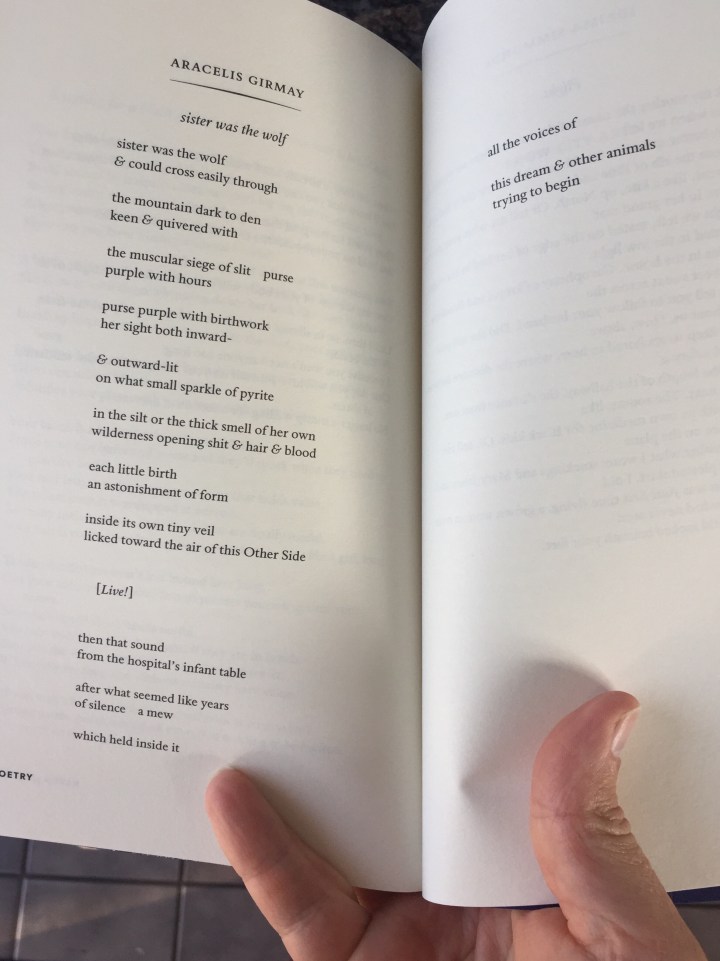
But if you find this one somewhere, it has a great poem by Aracelis Girmay (another Floridian, by the way).

‘Late Fame’ By Arthur Schnitzler


Many years ago, while still in college, I read Schnitzler’s Road to the Open. I was inspired by some reading about fin-de-siecle Vienna and a reference to Freud calling him his ‘doppleganger’ (intellectually, not physically, I gather).

For most of the book, I read it as a sort of building satire, wending its way to an uncomfortably cringeworthy comic moment.

And then it didn’t. Read more

‘Shadowrise’ By Tad Williams


The Tad is back! By which I mean that Shadowrise, the third book in his Shadowmarch tetralogy, is much better than the disappointing second, Shadowplay.

This one is more exciting and the characters have grown so that they are less irritating than they sometimes were in previous installments (though I would have liked more from the perspective of Chert, the funderling [read: fantasy dwarf]) and he seems to have firm control over the narrative.

I’m already reading the fourth book and will blog about it soon, if my daughter will let me finish it.

Poetry East


I just finished reading the latest copy of Poetry East, one of my favorite poetry magazines.

One could criticize it by saying that it publishes too little work by new and emerging poets and too many by dead poets (like, Shelley levels of dead). But when you read it… well, it’s hard to criticize such a well put together publication with so much great poetry and beautiful (if not original) artwork.

This one (actually from Autumn 2017) features Carvaggio paired with passages from the Gospels (do you consider that poetry?). Ovid and Bernini. Facing pages with the Italian and English translations of Petrarch. Selections from American writers who visited Rome. English writers (the earlier mentioned Shelley, for example).

And yes, some new poetry. As part of three short poems collectively entitled Storyflowers, Suzanne Rhodenbaugh included this small gem, called Iris:

Once I was all lips and tongue.
Now I am a fist.

Can’t wait until the next issue.