Orson Welles Reads ‘Rime of the Ancient Mariner’


Tarot Cards


The other day, I read this article, The Querent, about the writer’s relationship with tarot cards and fortunetelling.

I don’t believe in tarot cards or any other form of soothsaying. But I don’t deny it’s appeal. I don’t deny having had readings of various kinds done nor of having looked for meaning in them. It all sounds contradictory, I know.

A long time ago, I even bought a deck of tarot cards. A fairly “traditional” deck, the Rider Waite Tarot Deck. There’s a funny story about that. My father’s wife wanted to have an exorcism on me in order to prevent the devil from physically manifesting in the house via the cards. Those were interesting times.

The article struck my fancy because of the way the  author struggled through the cards to find some meaning and understanding. Though he clearly has a sort of belief that I lack, we both share an affection for the trappings and ideas associated with New Age bookstores (like my beloved Bodhi Tree Bookstore). Despite the fact that belief separates us, he seems to view the value of tarot cards in much the same way I do.

Ok. Soccer season has started in Europe and there’s an election coming up. Time to refocus.

Ezra Pound: Canto LIV


I’ll admit it. This Canto is intimidatingly long. Fifteen pages isn’t much for a piece of prose, but for a dense work of poetry on a topic I know little about…

The topic is, much as before, Chinese history. One of the conceits (also used in Canto LIII) is to put in the margin the date at which an event or conversation occurred. More than a thousand years are covered.

Pound is playing with lines much more than in the past: with length and indentation. I won’t say it is random because I will play with indentation myself and it is not random for me, but what gives it meaning is not form, so far as I can tell, but the unique artistic, literary, and historical inclinations of Pound himself.

He also plays a lot with capitalization. The names of rulers are typically in all caps, but he also throws a few curves our way. For example, the one time he also capitalizes ‘OUT’:

a.d. 444, putt ’em OUT

‘OUT’ takes on the form of something pun-ish because, we also have ‘OUEN TI’ and ‘OU TI.’

There is also what could be a pun in the line:

Then OU went gay and SUNG ended.

I don’t know for certain this is a pun, because I don’t know if  ‘out’ was used to refer to making one’s homosexuality public when Pound wrote this one. Certainly, if it was, we would have to consider this a bit of word play by the poet.

We also see Pound using at a times kind of rat-a-tat-tat style that I associate with movies from the 30s and 40s – a hyper stylized rendition of the speech patterns from an old gangster movie.

We still see a lot on the development of financial instruments, taxes, and payments, but less so than in the past. Like some of his earlier meditations on Renaissance Italy, we read a lot about the uses of power – and in my reading, what I see as abuses of power. Particularly the discrepancies between how a peasant or ordinary citizen experiences government policies and how an emperor imagines his policies will act out in the world at large.
#Fridayreads


If you are on Twitter, I encourage you to participate in the #Fridayreads hashtag.

Basically, you use the hashtag (on a Friday, of course) and note what you are on reading on that Friday.

The act of doing so sharpens one’s focus on the act of reading and forces one to think about setting aside some time with a particular book over the weekend. I’ll be reading The Carrier of Ladders, of course, as well as finishing up another Canto. Those seem like good books to read during Washington’s impending hurricane, don’t they?

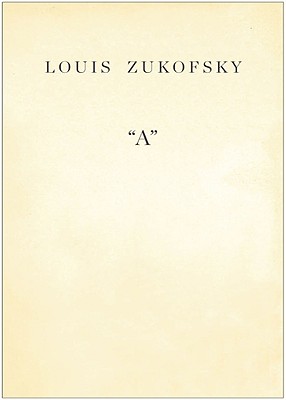
“A”


I am, as the gentle reader has no doubt noticed, well behind on my Cantos. I am perhaps a third of the way through and at this rate, will not be done until the end of 2012. But never fear: the coffee philosopher will prevail. He needs the Cantos as a proverbial notch on his bed post to give himself credibility when pontificating on high modernism.

But while I prevaricate (I am reading Middlemarch, A Dance with Dragons, and Possession far more assiduously than I am Pound), I wanted to comment on this article: Things Boundlessly 

Louis Zukofsky and his famous (more famous than read) “A” is definitely on the list. The great list of books to read, books to get around (that’s how I got started on The Cantos in the first place) includes it.  I first heard about him while reading an article about the “Objectivist” issue of Poetry that he edited in 1929 (I think; maybe it was 1928 or 1930; I wasn’t alive back then, so my memories from those days are necessarily fuzzy).

This quote from Things, Boundlessly seems to sum up some of the attraction of Zukofsky:

Neither Zukofsky nor “A” has any real claim on the public imagination. Even among poets he doesn’t seem to be much read, discussed, or taught, except by a handful of deeply entrenched partisans. I started to investigate whether—and why—this might be the case, but then I realized that I was squandering a huge opportunity. The question of whether Zukofsky is truly neglected (and of whether said neglect has been just) is far less interesting than the simple fact that one can approach Zukofsky with a readerly freshness—an innocence, if you will—that is perilously hard to come by for such art without equal. This is in starkest contrast to Pound’s Cantos, which has never fully emerged from its author’s divisive personal reputation (and probably never will). “A” is perhaps the last major work of American Modernism to feel like uncharted territory.

I know that “A” is an epic work. I know that it is political. I know that Zukofsky “founded,” after a fashion, the Objectivist school of poetry. I know little else.

Happy Birthday Borges!


Today is the 112th birthday of Jorge Luis Borges.

He’s dead, of course, so the celebrations will be a little muted.

My father gave me a copy of his collected stories (he never wrote a novel – just poems, essays, and short stories) many years ago. I confess that I have never read his poetry.

He was certainly a writer’s writer. Or perhaps a reader’s writer.

Yes, he wrote all those stories about gauchos, but it’s all those stories about Casaubon-esque authors, archivists, and librarians trying and ontological inability to contain all the knowledge one desires. Even when a character seemed to achieve something like that goal, the melancholy knowledge that, in life, one couldn’t, hovered over it all.

“I have always imagined that Paradise will be a kind of library.”
– Borges

Ezra Pound: Canto LIII


The Fifty-Third Canto might be the longest yet (twelve pages) and, at first glance, appears almost like an academic chapter, filled with Chinese characters, references to figures from the history of China.

Woven within a sort of history of Chinese rulers (and other figures, as well, but it is hardly post-colonial historiography that Pound practices), is another tale, that of the development of accounting techniques (like using knotted rope to record figures) and early money (metal disks, pierced in the middle so that they can be strung onto a string). Within also are admonishments to rulers on how govern effectively and justly.

And MOU-OUANG said:
                 ‘ as a tiger against me,
                          a man of thin ice in thaw
aid me in the darkness of rule’ 

While I won’t pretend to offer a definitive meaning (particularly since it is a fragment taken out of a much larger whole), I simply want to draw attention to that Asian style of writing – which, as I have noted before, should perhaps be better described as ‘style of English translations of Asian literature.’

Ezra Pound: Canto LII


As noted earlier, this begins a new section of The Cantos, though I can’t say whether this was a determination made by Pound or by the publishers at New Directions. Judging by the notes (warning?) that open this new section, we are entering into some Cantos heavy on the poet’s Chinese phase.

Know then:
             Toward summer when the sun is in Hyades
Sovran is Lord of the Fire
                  to this month are birds.
with bitter smell and with the odour of burning
To the hearth god, lungs of the victim
              The green frog lifts up his voice
                  and the white latex is in the flower

It goes on for some time in such a fashion. I would rather think of this passage, and similar transcendent and lyrical passages throughout, than on the most explicitly anti-semitic line yet, which occurs early in the Fifitieth Canto and which I don’t intend to repeat here.

Is Postmodernism Finally Dead?


That’s what this article says.

And an exhibition in the Victoria & Albert Museum on postmodernism does sound like it has been relegated to history.

But if so, will I miss it a little?

Yes, I suppose. I was certainly born and raised during its apogee. Whatever follows or is already following will be something intrinsically more foreign to me than postmodernism was, even if postmodernism was itself intrinsically inexplicable.

Library Book Sale


While wandering Eastern Market with my father on Saturday, I saw a sign taped to a trash can that spoke of a book sale at the Southeast Library, just across Pennsylvania Avenue.

When I was twelve years old, my mother took me to a sale at the Dunedin Library where we found a lovely three volume history of mathematics. It was actually a huge collection of essays by various folks, rather than a chronological history by a single author. Unfortunately, every other sale at that particular library was nothing but disappointing.

Fortunately, this one did not disappoint.

For the low, low price of four dollars, I picked up copies of the following:

Hestia, by C.J. Cherryh
Childhood’s End, by Arthur C. Clarke
Possession, by A.S. Byatt
Middlemarch, by George Eliot
Triton, by Samuel R. Delany
Spy in the House of Love, by Anais Nin

Middlemarch, in particular, excited me. For some reason, I had lately been struck by the desire to read it. Many years ago, I went through a nineteenth century novel phase, but someone, George Eliot’s oeuvre had escaped my attention (partly because I was a boy, so was much attracted to Dumas’ tales of derring do and partly because I was a moody boy, so also much attracted to Dostoyevsky’s architectural novels of philosophy leavened with hearty helpings of despair and Christian proto-existentialism).

And a funny little story about Anais Nin. My first introduction to her actual writing (I knew of her as person because of her association with Henry Miller) was from MTV. Yes. MTV.

In the early nineties, they used have actors and actresses read brief segments of famous novels and very alluring literary environments. Sherilyn Fenn read a brief segment from Nin’s Delta of Venus and I also remember Aidan Quinn reading from The Metamorphosis. Back when it seemed like MTV might actually be something cool and occasionally constructive. Sigh. Not anymore. Or maybe I’m just growing old.