Coffee Advertisement


vertueofcoffee-e1342378129629

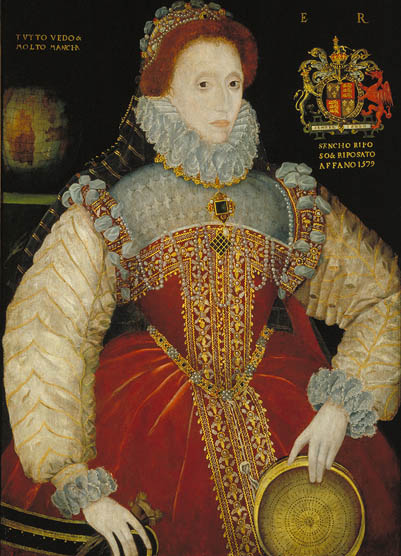
Sieve Portrait


When I went on my annual ritual of attending the Folger’s ‘Shakespeare Birthday Bash,‘ I came across a fantastic portrait of Elizabeth that I had never seen before.

Not so much that I previously believed I had seen all portraits ever made of her, but rather that I was mostly just aware of the Folger’s collection of paintings of Shakespearean themese from later centuries.

This was a beautiful bit of portraiture from the late sixteenth century and it’s just… just amazing. It’s known as the ‘Sieve’ portrait and was painted by George Gower.

Art Coll. 246171

Monday Morning Staff Meeting


The future was then!

Still remembering Amiri Baraka.

Being an author (wordsmith) in Asheville, North Carolina is awesome. Too bad the right wing government in Raleigh is so transparently abhorrent.

Probably.

Don’t cry. Or, actually, do.

Black Boy (By Richard Wright)


9780061130243Believe it or not, just last month was the first time that I had read Wright’s autobiography, Black Boy. It was one of the books that I read in Thailand. It has been sitting in my e-reader (a statement with some metaphysical implications; what/where is a book when it is in, no the general ether, but the ether of a particular device?)

It’s not the sort of thing that’s put on the high school curriculum, at least not in a state, like Florida, where the powers that be have very little interest in the history (nor the future) of African-Americans.

Good lord is it a wonderful, beautiful, brutal read. The first section, covering his life in the South in the early twentieth century. Yikes. Anyway who complains about cultures of violence or the use of the n-word within the black community needs to read this book (incidentally, Ta-Nehisi Coates has been writing some great stuff on this very topic lately; look it up). He writes about poor black kids and the bravado driven by this constant, crushing fear of white people. An uncle killed by whites for the crime of having been financially success and his aunt and mother afraid the leave the house or even ask for the body (much less assume ownership of the business or property). White employers trying to goad the author into literally killing another black adolescent. It’s just terrible to read and more terrible for knowing that it all happened – and that far worse happened, only without a future Pulitzer Prizer winner to chronicle them.

The second part covers his joining and departing the Communist Party. He leaves without disavowing the believe in class struggle and, really, without relinquishing his own, personal communism (small ‘c’), only relinquishing membership in a top down organization.

It reminded me of when I read the piece that Arthur Koestler (now there’s a fellow that no one reads anymore! and I stand by my prediction that, soon enough, Christopher Hitchens, for all his wonderful prose-fying, will find his work placed in the same basket) contributed to the collection The God That Failed. No one is praising Stalinism or suggesting that it was anything but a blight, but, despite the disavowals, not even a staunch anti-communist like Koestler can avoid capturing some of the romance of being a leftist and radical and a communist in the twenties and thirties. The idealism of it all. Wright doesn’t try to walk back the great thrills of that time in his life, like Koestler does, and the work is better for it. It reminds me of a review of a recent Family Guy episode where Peter takes up smoking. Yes, smoking is bad for you. Awful. The world would be a better place if no one smoked anymore. But it’s cool. It just is. Humphrey Bogart looked cooler smoking. Audry Hepburn looked sexier lighting her cigarette. And let’s not even talk about the way Catherine Deneuve could send shiver up the spines of any human (male or female, gay or straight) with the slightest fraction of sex drive just by blowing a puff of smoke from a gauloise. I feel that being a communist in the early thirties was like that.

Midweek Staff Meeting – Naptime


Rizzoli-BookstoreThis article contains the most useful map of Washington, DC that you will ever encounter.

This is a fantastic bookstore and I’ve found some incredibly interesting books there and it’s always on my list of places to visit when I’m in NYC, so it would be a terrible shame if were to close.

Some great ways to celebrate National Poetry Month that will also make your more employable. I’m not kidding.

How is this not blowing people’s minds? Or is it? It’s blowing my mind, I know that. The BLACK PLAGUE OF THE FOURTEENTH CENTURY WAS NOT THE BUBONIC PLAGUE BUT SOMETHING ELSE. That’s right. It was some kind of pneumonia thing spread by sneezing and not something with pus filled pustules spread by rats and fleas. Holy cow, Batman! I’m not kidding. This upends a lot of what I used to think I knew. And what about Camus’ novel, La Peste? How do you say sneeze in French? Le Sneeze? Should that be the new title? OMG!

Midweek Staff Meeting – Stop Screwing This Up!


dnd_products_dndacc_1eD3_pic3_en

Darn hippies aren’t doing it right!

It means that we’re going to hell in a hand basket!

Please be wrong.

No. And (if yes), the American reader.

Book of a lost village.

Ice-T is not a fan of Dungeons & Dragons.

Midweek Staff Meeting – Don’t Go Mistaking Me


We are not a southern city.

Build a better subway station and they will come.

‘Selfies’ and knowledge of the self. Not the same thing, apparently.

Adorno and the Ends of Philosophy

Books that changed people’s lives. We’ve all got them. But if you’re going to check this one out, I suggest you go down to Eileen Myles’ list. She’s a great poet and her opinions are worth listening to.

DC is good place to buy vinyl.

The (not so) strange friendship between Frank O’Hara and Amiri Baraka.

Ani, The City Of A Thousand And One Churches


s_a06_00000001

Weekend Reading – But It’s Hard To Read!


Orhan Pamuk’s melancholy observations of a melancholy poet (Constantin Cavafy, the muse of Alexandria).

‘Difficult’ does not mean ‘not pleasurable’ when it comes to literature.

Jim Crow in Florida.

Poetry, finance, and Marxism.

‘When Jesus Became God: The Struggle To Define Christianity During The Last Days Of Rome,’ By Richard E. Rubinstein (New Year’s Resolution, Book Forty-Four)


9780156013154This is likely to be the end of my New Year’s Resolution posts. There is still time left in the year. A little less than a week, to be precise. But with family coming and what not, I don’t see myself completing anything. Forty-four is not fifty-two, but it’s not a bad number for reading, when juggling reading with full time work that rarely ends at forty hours. I might even have made my goal if there hadn’t been a bad stretch when stress from work and life kept me from focusing.

But here we are…

When Jesus Became God is a narrative history, beginning roughly with the reign of Emperor Constantine and progressing through to the western Roman emperor, Theodosius, and that latter emperor’s active and not infrequently brutal support of what would now be considered doctrinally correct Christology within the Catholic church.

The first half or so of the book is a gripping historical roller coaster about the battle for the theological soul of the still new church.  On one side (eventually labelled the ‘Pro-Nicenes’) were priests and bishops who advocated for what became the Trinitarian view of Christ’s nature. On the other side were the Arians, who saw Christ as the son of God, but also as markedly different from the Father. Not necessarily consubstantial. Some even considered Christ to have, in a sense, been adopted by God. Jesus was not of one being with the Father, but more human and a symbol of human perfectibility.

For myself, I had no idea how desperate the struggle between the two sides was nor how closely fought it was. Early on, the author has a great grasp of the historical figures and the historical milieu. Figures like Constantine and the sometimes bishop of Alexandria, Athanasius, really ‘pop’ in the reading. Unfortunately, the same cannot be said of other the figures of milieu in the latter half of the book, which feels rushed and far less character driven.

I suspect that Rubinstein really buried himself in the primary and secondary sources relating to those early days of the struggle and felt a stronger connection than he did with the last half of the story, which is fine, but the reader suffers a bit for it. Honestly, the book is barely over two hundred pages and I don’t think it’s asking too much of a writer not to flag quite so much in the writing of it.