It’s A Brave New World, As They Say (I Think That My Father Used To Say That, Even Though He Was Never A Particular Fan Of Aldous Huxley; For Myself, I Think That ‘Crome Yellow’ Is An Underrated Novel If You Want To Read Something By Him That’s Not, You Know, ‘Brave New World’)


Perhaps it is because I (and other residents of the District and, indeed, almost everyone in America) have been protected by what has become a comforting layer of incompetence that covers everything he does like a bulletproof vest whose actual purpose is to protect everyone around the wearer.

Or maybe it’s because he’s never here and is busy inflicting himself on the patrons Palm Beach County’s Mar-A-Lago retreat for the super wealthy.

More likely though, I have been deluding myself.

After all, I have spent my career trying to make things better for this country. More specifically, I have spent more than a half decade helping to make tangible improvements in the lives of several groups working people in the DMV (that’s DC, Maryland, and Virginia). And this administration really has no time for that kind of thing. Insofar as they have an interest, it is in seeing that kind of work stopped.

Because his comforting incompetence has stalled so many of his priorities (so many of them hilariously and depressingly opposite from those he campaigned on), I haven’t had to think too much about the ways they would devastate the lives of my friends, my family, my neighbors, etc.

I assume the United States of America will survive this. It seems an article of faith. We survived a Civil War. We survived moral blights like chattel slavery, Japanese internment, and a mixture of accidentally and deliberately genoicidal actions towards native peoples, and while we didn’t come out as well as we might have hoped, we did come out a little better, surely. Of course, that ‘we’ is a white people ‘we.’ A reminder of an easily slippery slope. unless you somehow think American Indians came out better for my ancestors arriving and eventually founding this country, in which case, you are too stupid for me to even bother trying to sell you a bridge or mineral rights of a magazine subscription.

That easy slope is why he is so dangerous, too, right?

And maybe I’ll be fine, because I’m white and male and straight. And maybe my person of color better half will be fine because she will be protected by my beneficent aura of whiteness.

Or maybe we are all simply f–ked.

Choral Works At The National Cathedral


First of all, I was glad to see that nets were gone at the Washington National Cathedral. For a long time, post-earthquake (which was in 2011 or 2012, I think), there nets strung up inside the Cathedral to protect visitors and worshipers from falling bits of cathedral. While appreciated, from a safety perspective, it took away a bit from the sense of awe, grandeur, and general aesthetics.

The last time I saw a concert here, it was period pieces from the 17th and 18th centuries, composed or performed for the French court (and played using period pieces). The music was beautiful, but the acoustics just swallowed the orchestra’s sound (maybe it was the nets).

This time, the sound just soared wonderfully. It was the cathedral’s resident chorus, plus New York Polyphony (an all male vocal quartet), a guest soprano soloist, strings (roughly the size of chamber music orchestra, which is to say, larger than a quarter, but smaller than a full orchestra), and the cathedral’s own organ.

The selections were actually dominated (marginally) by either pieces by contemporary composers or else by pieces arranged by contemporary composers. With a few, arguable, exceptions, they were religious works – often liturgical. I say arguably, because one of the works set some stanzas by Whitman to music and, especially in America, Whitman could be considered to be almost religious.

That said, there wasn’t as much variety among the pieces as I might have liked. At a certain point, one Ave Maria starts to sound like another. That being the case, I could make the argument that they might have been better off taking a longer piece by someone like Tallis and playing that as the entirety of either the pre- or post-intermission half.

Alisa Weilerstein Playing Shostakovich (And Other Stuff)


By other stuff, I mean a short piece by Texas composer Tobias Picker and Schubert’s Great C Major Symphony (which I have always known as the Ninth, but apparently there’s not universal agreement on that number) which did not feature Ms. Weilerstein.

I’ve never seen Weilerstein play before, but you can put me down as a fan now. She really threw herself into the Shostakovich piece. Despite being in a major key, this was not a happy piece, but felt sort of desperate. I am not a musician, so many of intricacies of interpretation are beyond, but the playbill talked about it as being philosophical and I could hear as a sort of conversation. In the first movement, I heard a progressive (subversive?) professor speaking to his class, trying desperately to get them to think for themselves, with the final three movements being more of the dialogue that the playbill suggested (though I didn’t hear the horn as being the other side of the dialogue, so much as it suggested).

One thing I noticed. During some energetic, frenetic, staccato bowing, she was shaking her head with the movement, but her head seemed turned towards the First Violin and for a moment I thought, is she criticizing the First Violin? Took me a moment to realize it was just her head moving with the action of her cello, but the image stuck with me.

This was my first encounter Tobias Picker. I won’t be looking for more opportunities. The playbill called it emotionally neutral and tried to make that sound like a compliment, but the whole thing (thankfully, brief) sounded like the score to a Hallmark Channel movie.

Schubert is Schubert. Never been one of my ‘go to’ composers, but, of course, I appreciate him. Like Shostakovich, the key may have been major, but the emotions were in a minor key, but with fierce desperation. The playbill did try to brush off the final movement’s appropriation of bits from the final movement of Beethoven’s Ninth as being minor or unimportant, but I did find them very ‘noisy,’ so to speak.

‘Lingotto’ By Mario Merz


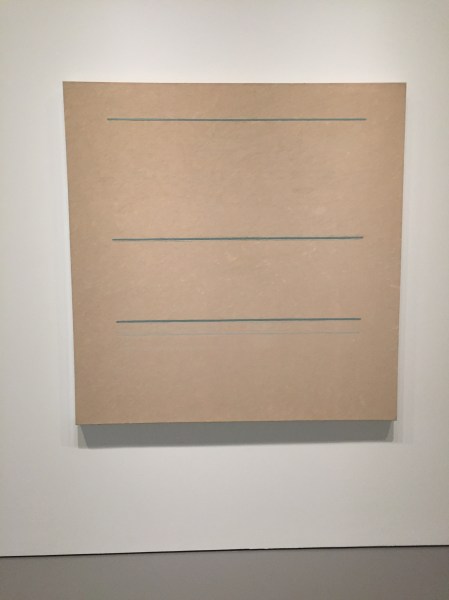
I have no idea who Mario Merz is (though I suppose I could look him), but I loved this piece. Maybe I couldn’t even tell you why.

I finally visited the fully renovated East Wing of the National Gallery of Art. They added a lot of useful gallery space and I give whole thing an unreserved thumbs on for practical improvements. For some reason, though, I was in a mood to see paintings by the time I got there. Not just paintings, but traditional paintings. Nineteenth century landscapes with ruins and picturesque peasants. You know the type.

But was making a good faith effort to walk through the galleries and I came out of one space and into another and Lingotto was directly opposite the doorway I passed through and I was instantly struck by a my own little Stendahl episode. There was just something about it. Maybe the ritualistic aspect, the shrine-like quality. But I was just amazed.

I’m Back, I’m Not Back


I’ve been away, first thinking only about the election and then contemplating the aftermath.

It’s not a happy aftermath. My wife is an immigrant and a person of color. I have low income family members who depend on Obamacare. All reasons to fear for the well being of people I love.

So, in what do we take solace?

I’ve been reading Cicero’s De Officiis in a lovely little miniature hardback edition. I love those books, on a tactile level, like the original Modern Library editions from the teens, twenties and thirties. This isn’t one of those, but the same principle. Also, just reading a literate account of how to be decent person in society. While some is specific to the society of the late Republican/early Imperial Rome, most is not. And in a post-Trump world, it seems both relevant and terribly sad. But perhaps Cicero, who wrote this after being forced into a sort of exile for his support for the norms of the Republic would relate. Though I still don’t see this as the end of democracy in America. A touch of class, too, in Cicero. Not that kind of class (though he’s very classy), but socio-economic class. And jealousy. On my part. Cicero can retire to his villa, send his son to study abroad (he’s learning from a Greek philosopher in Athens), and spend his days writing awesome things like De Officiis.

I was in my study the other day. Actually, if I’m being honest, I was video chatting my way through a Dungeons & Dragons game (thankfully, we’re meeting in person next week; sometimes, technology is a hindrance to play, a statement that you should take several ways). While waiting for technology to right itself or else during lulls in the action, I found my eyes wandering around to all my books. Honestly, I’ve got some pretty awesome books.

Among them, James Lasdun’s The Horned Man, I book that I read many years and deeply enjoyed and I felt compelled to reread upon seeing it on my shelf. Like Cicero, maybe I’m looking for parallels. In this case, an unreliable narrator who quickly constructs a strange and inexplicable conspiracy. So how does this relate? Trump, the unreliable narrator spinning his improbable narratives? Me, trapped in a world created by people who see conspiracies in the quotidià of modern life? Or am I the narrator, feeling a strange noose tighten for reasons I can’t understand (bear to understand?)?

Wordworth’s The Prelude which is one of the highlights of western civilization, but which, thankfully, has nothing to with Trump. Or does it? I just called it one of the highlights of western civilization and doesn’t that relate to Trump making his closest presidential adviser a man tied to a racist, separatist, apartheidist, ethno-european nationalist movement? That doesn’t make Wordsworth particularly racist (though I’m sure he was, being a man of his erea), but am I merely taking a more highbrow kind of comfort in the same white mythologies as Trump’s supporters?

I picked up Kenneth Rexroth and Ikoko Atsumi’s translated text, Women Poets of Japan and found myself less enthralled than I remember. While waiting in line to vote, I was reading The Book Genji and the titular Prince Genji and the beau monde in which moved frequently communicated via poems, but a quick, returning glance at that once favored collection of Japanese poetry left me itchy for something else. If that something else was a white, male poet (Wordsworth), does it make my reaction more fraught?


Emmanuel Ax, Beethoven, Shakespeare


Last week, I cashed in one of my birthday presents – two tickets to see Emmanuel Ax play Beethoven’s First Piano Concerto at the Kennedy Center, followed by a Shakespearean themed program.

This was my second time hearing Ax play and, of course, he’s good; and he really seemed to enjoy playing such a youthful piece. I’m not a music expert and can’t even play the triangle, but it did seem to me that he had some rough moments during the first movement, but then really hit his stride, especially of the middle movement.

When they have stars like this, I wish they wouldn’t put them first, because, after hearing a great pianist play Beethoven, pretty much whatever follows is going to disappoint. I like Berlioz, but if one of his pieces immediately follows Bach’s Passion of Saint Matthew, well… it’s going to be a bit of a letdown, isn’t it?

The three pieces that followed were Erich Korngold’s Much Ado About Nothing Suite, Richard Strauss’ Macbeth, and Antonin Dvorak’s Othello Overture. I liked Dvorak the best, but the Korngold was fun. Also, I found out that Korngold wrote the scores to two of my favorite Errol Flynn swashbucklers: Captain Blood and The Adventures of Robin Hood!

One of the cool things they did was have two actors who feature a lot locally come out and perform bits from the relevant Shakespeare. I lost the paper that told me who they were, but the man was someone I had seen in many, many plays at the Folger Shakespeare Library (off the top of my head, I’ve seen him in District MerchantsTwevlth NightRosencrantz and Guildenstern Are Dead, and Mary Stuart. He got a great presence and a delicate comic touch that works even better, because he himself is such a big guy.

Contemporary North Korean Art: The Evolution Of Socialist Realism


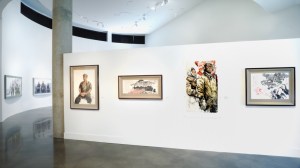
On the very last day of the exhibit, my better half and I went to the Katzen Gallery (the art museum of American University) to see a visiting selection of North Korean. There was also an exhibit of contemporary South Korean but, as interesting as that was, the real driver of our desire was not the autocratic society’s democratic neighbors.

At the end of this, I’ll include links to an article about the exhibit, as well as the gallery’s page on it.

My own thoughts…

I really liked it. A lot.

I didn’t go in expecting certain things. Formal innovation, for example. Deep subtext. I went open to enjoying what I was likely to encounter (and did also encounter some stuff that surprised me).

The large scenes of heroic military and industrial figures, but despite the size, focusing on a small number of relatively nondescript people, so that the otherwise quotidian individual becomes the focus – the hero of the painting.

I expected that. I did not expect the small ink paintings (actually, they were all ink wash on rice paper in a style/technique called chosonhwa) of dismembodied flowers/branches/flora framing some rough calligraphy (I really wish they had translated the calligraphy for us; were they poems? paeans to the Korean people or leaders? mapquest instructions to reach a nearby gas station?).

My favorite was an unfinished painting of people waiting at a bus stop. It was so marvelously prosaic and contemporary looking. While obviously a painting of Korean people, it was not otherwise culturally distinct, which made it weirdly wonderful. Little touches, like a young man who seemed like he might have been glancing at a pretty young woman who was at the comparative center of the painting.

As an art lover and, more importantly, someone who believes in public support for the arts, North Korea’s massive investment in artistic production and support for the artist as a professional is enheartening… but this North Korea. You can’t say anything good about the regime, can you? It’s brutal, totalitarian, and directly responsible for so many deaths.

Artsy editorial on the exhibit.

Katzen’s page on it.

North KOREAN ART

I had seen this painting before; I think it is relatively famous; the title is “Farewell” by Park Ryong

And Yet…


9781476772066The most recent (though probably not last) of the posthumously published collections of Christopher Hitchen’s essays lends itself to a sort of narrative arc, as the pieces inch closer to his terminal diagnosis with esophageal cancer and the reader’s mind naturally tends to see relationships (prophecy?) between his death and the chronologically later essays.

As someone who spent the first five years of the new millennium as a professional political campaign professional, the political essays around the 2004 election and shenanigans in Ohio were a painful reminder of a time that, until my memory was sparked, felt very long ago. Pleasingly, those and other discussions of then current events from the middle of that decade did not feel as dated as they could have.

His book reviews – at their best, excuses for lengthy rambles that show off, but provide the best platform for Hitchens ‘holding court’ – are the highlights, especially the long ones on biographies of Che Guevera and V.S. Naipul (Hitchens shows off his Britishness by referring to him as Sir Vidia).

It’s no secret that Orwell was a touchstone for Hitchens. As an essayist, he is often compared to Orwell; and I have often heard Orwell described as the great English essayist of the twentieth century.

But what have you read by Orwell? I’ll wager, gentle reader, that it doesn’t extend beyond his best known novels, 1984 and Animal Farm. And if you have read an essay, it was probably that short one he penned on the proper way to make tea. While an admirable tidbit, hardly what reviewers are referring to when they praise Orwell the essayist.

My point is related to a question that came to me when Hitchens died: how long will be remembered?

Having not written a pair of timeless novels, who will read his essays, beyond a handful of academic scholars, in twenty years? His reach will be less than that Edmund Wilson wields today (which, let’s not kid ourselves, isn’t much). His book length works are too timely, methinks. Maybe Letters to a Young Contrarian will be read, but it feels to self congratulatory to me to be the source of long lasting, posthumous relevance.

Another Bookstore Gone…


cq5dam.resized.270x180!While DC has been good about adding bookstores (like my neighborhood’s recent addition, East City Books), we do seem to be taking two steps back for every step forward (we lost Books for America and the downtown Barnes & Noble over the last year).

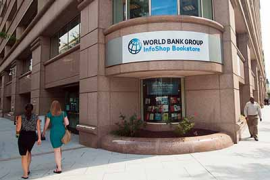
This time, it’s the only in DC World Bank Group InfoShop Bookstore.

That’s right. If you didn’t live in DC, you would never know such a thing existed. But it did. And it was super awesome.

In addition to World Bank publications, it had a fantastic array of very specialized books on economics and global development. I bought my copy of Tony Judt’s Ill Fares the Land from that particular bookshop.

And just… what a cool thing to have in your hometown?

Ugh. Another one bits the dust.

Robert Irwin Exhibit At The Hirshorn Museum


After opening with one of his later, convex disc sculptures, the exhibit moved on to a series of thickly painted, mannered pieces, with a three dimensional effect caused by the thickness of the layers of paint and the areas carved out of the three dimensional layers (some seemingly carved with a palette knife). The appearance, then, of his classic, geometrical, and spare line paintings was like a Stendahlian explosion (as in the syndrome). In some, the lines were so narrow and precise that I had to look closely to convince myself that they weren’t glued on. The dot paintings that followed, though, left me cold. Even though close examination allowed me to see the diffusion. shapes, and patterns, they felt contemptful of the viewer. Likewise, his ‘light and space’ sculptures – mostly convex discs (like the first item) and a couple of columns only made me want to walk back and see the line paintings again. At the end was a massive, site specific trompe l’oeil installation that has to be seen to be understood, so I won’t try to describe it. If you can’t get here to see it, well that doesn’t feel much like a ‘me’ problem, now does it?