This is a genuinely wonderful biography. Gopnik (a contributor to our very own Washington Post‘s art section) offer an intelligent, warm, enthusiastic, admiring, and clear-eyed view of the artistic career of Andy Warhol, née Warhola.

He writes more enthusiastically about the earlier years, tacitly acknowledging that his artistic output peaked in the sixties and this work in the eighties, in particular, is lacking compared to his creative peaks.
Where he provides the greatest insight is in Warhol’s intellectual and erotic life. He dismisses the idea of Warhol as being uncreative and, more importantly, lacking in an intellectual and theoretical understanding of art, in general, and his own artistic creations. Finally, he waves away the image (one I held) of Warhol as lacking interest in sex and chronicles his important and often relatively long romantic and sexual relationships.
He doesn’t spend much time on other artists in his milieu. Much of ‘understanding’ of Warhol was filtered through movies: I Shot Andy Warhol and Basquiat. While his shooting by Valerie Solanas was rightfully depicted as a turning point (and possibly marked the end of his artistic peak) and while she was an important character, my own view was skewed by the sublime performance of Lili Taylor. Similarly, Jeffrey Wright in his breakout role led me to think that Basquiat got short shrift. But, I reminded myself, this was a biography (and a hefty one; 900 odd pages) of one man: Andy Warhol.
Note: Though I enjoyed this book, I will also recommend (in addition to the book itself), this scathing review of it from Harper’s: Always leave them wanting less: How not to write about Andy Warhol

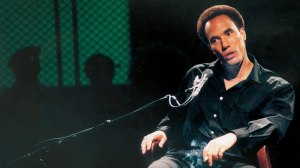 Guenveur Smith (who I had never seen before nor, to my knowledge, since) and powerfully staged and directed by Spike Lee in a very stagey manner, but in a theater that resembles a panopticon.
 Some eighty-five percent of the way through this novel, I realized that it’s actually a nineteenth century novel (a touch more explicit about the sex, but arguably with slightly less sex overall than its predecessors). The coincidences, the interrelations, the series of deus ex machina (what’s the plural for that?). Arguably, this one was better than Crazy Rich Asians for embracing its origins (though lacking the newness of that first book). I just hope the movie finds away to make sure Michelle Yeoh gets plenty of screen time.
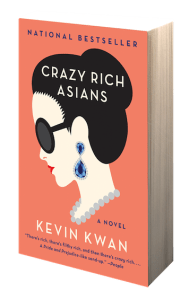 I can’t exactly say what inspired me to read this book, except that I live with two of Asians (one of whom is an eight year old ball of cute crazy, though not particularly rich). I also saw the movie, yes, and liked it.


 the coffee philosopher