Rae Armantrout At The Phillips Collection


For the last six years, one of the poetry readings in the Folger’s poetry series is held at the Phillips Collection, a private museum in DC. It bills itself (and I don’t doubt it) as the first modern art museum in America (it was founded in the twenties).

Rae Armantrout read in dialogue with an exhibit of Man Ray’s work entitled, Human Equations.

I got into the museum about twenty minutes early, so did a quick stroll through the Man Rays and also their permanent collection.

My father and I had just been talking about smaller, regional museums and their acquisition struggles. It is often a choice between buying first rate pieces by second rate artists or second rate pieces by first rate artists (the Phillips doesn’t have this problem – it’s got a first rate collection, through and through). Specifically, we talked about the Montgomery Museum of Art in Montgomery, Alabama. They have an excellent Hopper (my father noted) and a very good Rothko (I mentioned; though the Hopper is better).

Well, I’m strolling and what do I see but nearly half a dozen very fine Hoppers (though smaller than the one in Montgomery). A moment later, I walk by a sign for the ‘Rothko Room.’ Inside were four, good sized Rothkos (do you ever see a small Rothko? I don’t think I have). However, save one, they had color or color combinations that I found almost physically repulsive (that yellow!). I usually enjoy his work but… eewww.

Armantrout, it turns out, for me anyway, is better read on the page.

She admitted to not having a massive interest in art and having not had any particular interest in nor experience of Man Ray before being invited. Her comments about the pieces were shallow and the connections between her chosen poems and the art were flimsy and unconvincing. I can understand reservations about Man Ray, but she radiated a palpable disdain for the man and his work. I actually asked a question that came down to: Do you like Man Ray’s work? She said yes, but I am not persuaded.

Guy Raz from NPR moderated the conversation and it’s clear he know little about poetry. His questions were of a high school variety – variations on ‘how do you write a poem?’

Even though, once she’d signed my book, I still have forty-five minutes left to further peruse the museum (they’ve got a great De Kooning), I was so turned off by the event that I just left.

The Dali Museum


FullSizeRenderThe Dali Museum (or just ‘the Dali’) is the artistic and cultural crown jewel of not just St. Petersburg, but the whole Tampa Bay area. Really, it’s the only world class artistic institution in the region (though the Ringling Museum in Sarasota and it’s collection of Rubens and baroque art is a contender, but it’s not really part of Tampa Bay).

It was my first time visiting the new building. It’s definitely a more striking piece of architecture than the bland original home, but I was not convinced that they had necessarily improved the actual interior space in terms of its ability to effectively display the museum’s exhibitions.

There were two halls open: one containing a chronological retrospective of Dali’s career and the other jointly displaying Dali and Picasso side by side to illustrate the elder Spaniard’s influence on his famously mustachioed compatriot.

They were both wonderful, wonderful exhibits and provided me with a much better understanding of Dali. But it was also a little sad.

You see, because the Dali is such an important part of the cultural landscape of where I grew up, I take a certain familial pride, not just in the museum and the collection, but in the artist himself. He, as it were, belongs to me, if you take my meaning. I take pride in his position in the constellation of great artists.

The chronological exhibition showed his very earliest, adolescent works. There were painfully hackneyed and looked like stuff from the flea market. Of course, there were also his great masterpieces, of which the Dali has more than a few. But the memory of his juvenilia stuck with me like a toothache.

The Picasso/Dali exhibit similarly, by showing the great influence of Picasso and the occasional mimicry of Dali hurt my ego.

But that said, truly magnificent works. And Picasso is so overexposed that it is always a pleasure when some curator succeeds in presenting in a new light that actually reveals something about him and his work. I’ve more than a few Picasso exhibitions that come across like little other than a thin excuse for just putting some of his paintings in the same room. This was not one of those.

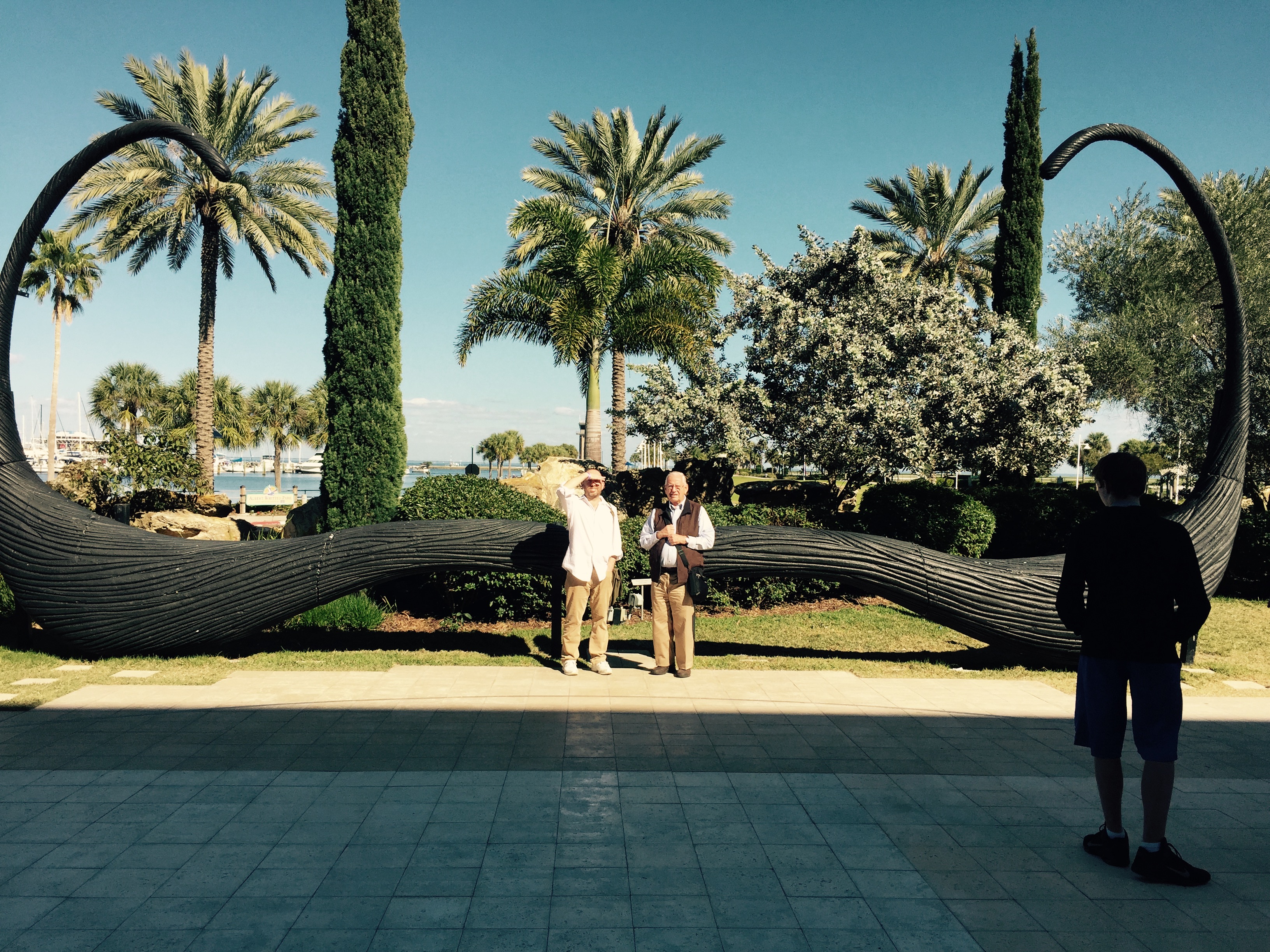
On another note, that it my father and I standing in front of giant mustache, outside the Dali.

‘The Dangerous Logic Of Wooing’ By Ernesto Neto


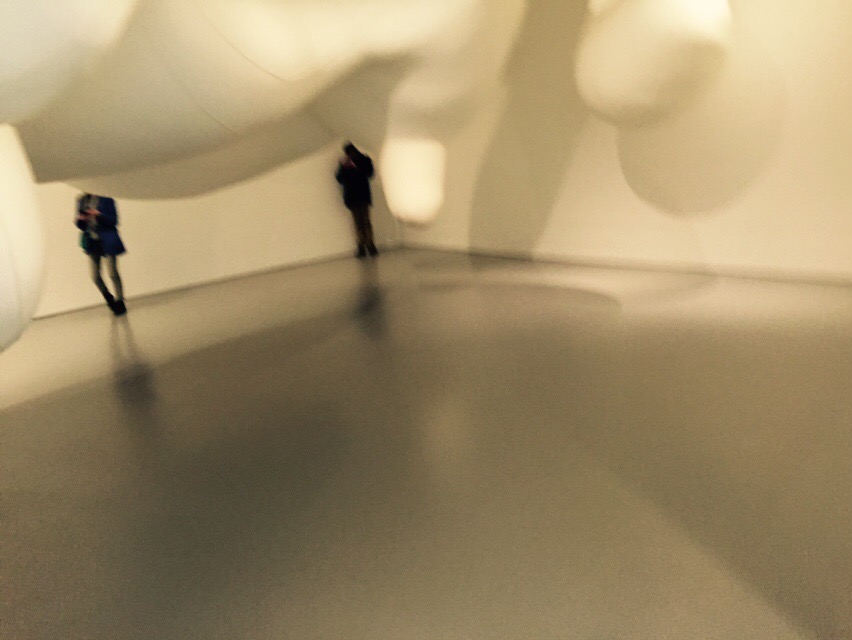
This isn’t a book, it’s large-ish art installation at the Hirshhorn Museum that particularly struck me a week or two ago.

Without knowing the title or reading the blurb, you could see that this was… not sexual, but reproductive. Organic.  The words and images that come to mind make it sound horribly unappealing and almost grotesque – pendulous testicles and breasts. But the work is not. It’s more primal, like an ancient fertility goddess with unnaturally wide hips and large, sagging breasts which is not intended to be a modern depiction of beauty, but rather of a certain kind of immortality of the human race, the ability to continue the species.

Forgive my terrible photography.

IMG_4463

IMG_4465

IMG_4464

Artist Statements


This is really just an excuse to show this awesome thing that the fine time wasters at Stumbleupon landed me on: Artybollocks Generator.

It instantly creates a marvelously meaningless, yet still maybe possible real sounding artistic statement to describe your… well, whatever it is that you are creating.

Create Your Own Instant Artist Statement

For your own edification, here’s mine:

My work explores the relationship between Critical theory and urban spaces.

With influences as diverse as Blake and L Ron Hubbard, new variations are crafted from both opaque and transparent layers.

Ever since I was a student I have been fascinated by the traditional understanding of the human condition. What starts out as contemplation soon becomes finessed into a hegemony of greed, leaving only a sense of failing and the dawn of a new order.

As temporal derivatives become transformed through studious and academic practice, the viewer is left with an epitaph for the edges of our era.

Ensemble Galilei At The National Gallery


I used to regularly attend the Sunday concerts at the National Gallery of Art. Usually they were some small group – a quartet or a duo (piano and voice; flute and guitar; harpsichord and violin; etc) – playing a mixture of older classics and some modern composers or off the beaten track.

This one was lured me in because it mentioned Marais, who was a great seventeenth and eighteenth century composer for the viol de gamba. But though they played a piece by Marais (and it was, of course, fantastic), they mostly played Scottish and northern European pieces and the combination was… eclectic. Frankly, I unsatisfied. I didn’t cohere for me. The mixture of Shetland reels, Greensleeves, and French composers from the Baroque was like a poorly curated exhibit, especially because little effort was made to explain to us (the audience) how the pieces made up a single program, beyond the simply fact of just being played together.

On the other hand, they have a nice exhibit of El Greco paintings. Mostly, they are paintings from the National Gallery’s permanent collection and some paintings from nearby museums (Dumbarton Oaks in DC and the Walter in Baltimore). Nothing spectacular, curation wise, but it’s just nice to see a bunch in one place.

Weekend Reading – The Lit Smugglers


2013-Evacuation-manuscripts-Timbuktu-copyright-Prince-Claus-Fund-3The rescued literature of Timbuktu.

Digitizing the east.

The physics of Jackson Pollock.

Monday Morning Staff Meeting – Art, The Savior


scififanzines4Investing in art is investing in community prosperity.

Salt from an ancient sea.

A poetry reading from the Miami International Book Fair.

Preserving sci fi zines for posterity. This is actually pretty cool. How many people printed and mimeographed wonderful collections of poetry and stories and art in zines and chapbooks, for them to be lost and destroyed and the authors, rather than being preserved in some part of human consciousness, to disappear with nary a ripple and finally leaving no mark on time?

Hirshhorn, Zola Jesus, Green Screens & The Sublime


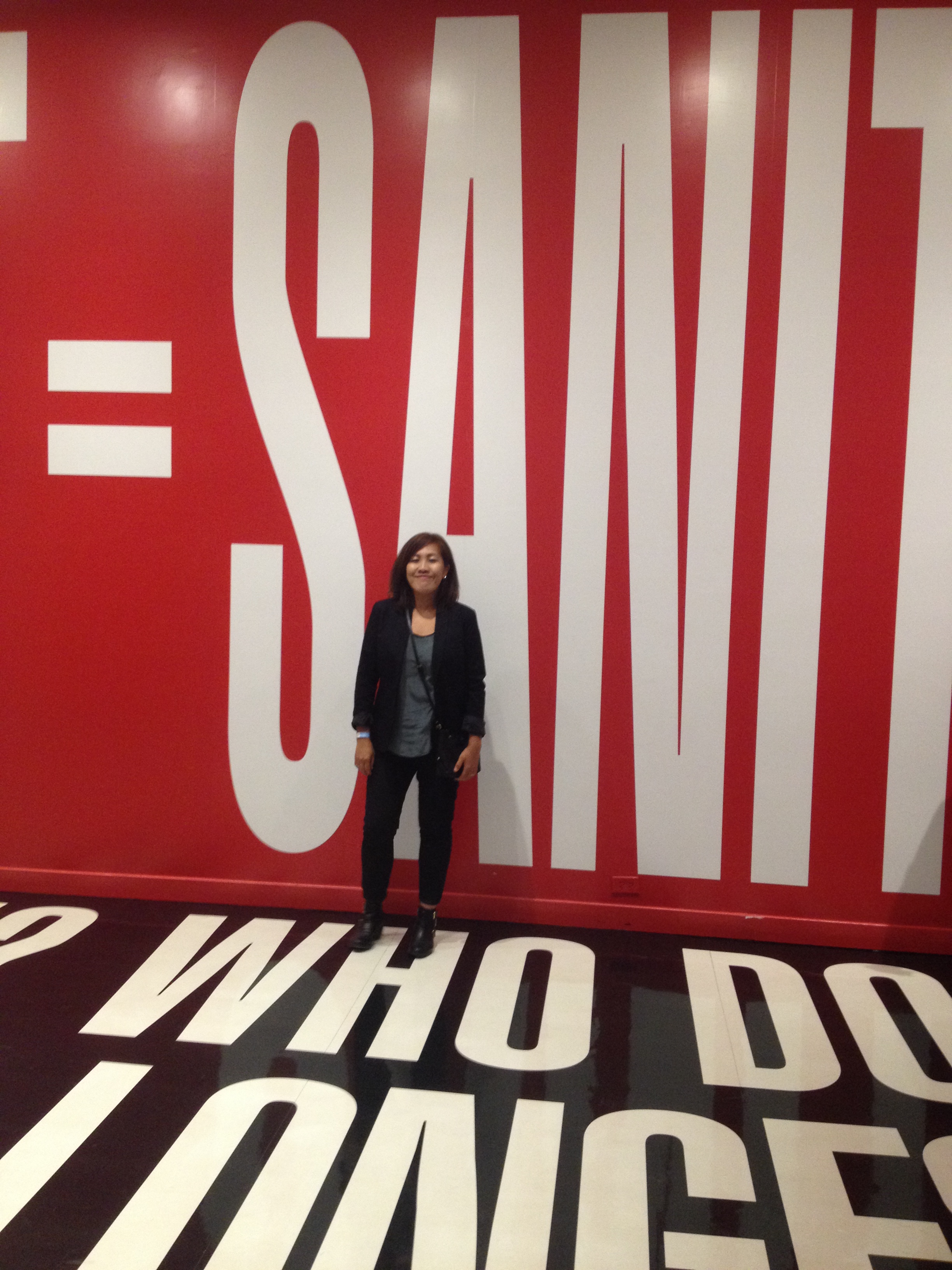
A beautiful woman at the Hirhhorn standing in front a wall that reads 'Sanity'
A beautiful woman at the Hirhhorn standing in front a wall that reads ‘Sanity’

Friday night was ‘Hirshhorn After Hours,’ which we went to four years ago. We loved it and I’ve kept checking for it, but this the first time I’ve seen it come back.

It was done for the opening of two exhibitions, Days of Endless Time and The Hub of Things. The former is a new exhibition of video installations and the latter was a somewhat disappointing curation of art from the existing collection.

The Hub of Things is advertised as a fresh look at some of the best works from the collection, but the selection and arrangement and overall curation just didn’t make any sense to me. I expect an exhibit to be something beyond ‘hey look at this cool stuff,’ but for me, this didn’t rise above that.

Days of Endless Time was cool, though. The first two installations were very affecting, especially the very first one, which featured a cellist with her back to us playing on an impossibly green plateau among the Swiss Alps. When she played, the sound echoed back, sometimes nearly perfectly, what she just played. The description of the piece (Su-Mei Tse’s L’Echo) talked about ‘the sublime.’ As soon as I saw that word – sublime – it really clicked. It’s a very Romantic vision of the sublime. Think of Wordsworth visits to the Alps or the Swiss born Rousseau’s (who is really the link between the Enlightenment and the Romantics) book about his walks or also Kant’s idea of the sublime (the noble sublime and the beautiful sublime; not really the terrifying sublime, in this case).

The singer Zola Jesus played outside. Unfortunately, there really wasn’t any dancing, but I liked her music. It was sort of the bastard child of Faith and the Muse and the Cranes playing a combination of Tori Amos covers and gothic noise musical settings of the final, scribbled ramblings of a poisonously suicidal Taylor Swift.

Also, there was done objection to the wearing of my super awesome Speed Racer t-shirt. But then a security guard walked up to me and yadda yadda I sang the Speed Racer theme song and there was general agreement that my super awesome Speed Racer t-shirt is super awesome.

Have You Ever Wanted To Own An Emily Dickinson Tarot Card Deck?


Well… now I do!

Available (apparently) from Factory Hollow Press.

untitled

Weekend Reading – Classic ‘Little Magazines’


Nothing to see here… nothing but a superawesome catalog of early twentieth century avant-garde/modernist magazines!

untitledSummer is almost over, but there’s still time for summer poetry reading! The New York Times has some helpful suggestions. Mostly, we’re just happy to see them writing about poetry.

What is it when we read?