slide_367734_4206654_free


IMG_5628.JPG

Have You Ever Wanted To Own An Emily Dickinson Tarot Card Deck?


Well… now I do!

Available (apparently) from Factory Hollow Press.

untitled

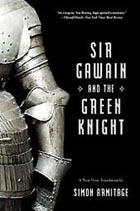
‘Gawain And The Green Knight’ Translated By Simon Armitage


FC9780393334159I purchased this particular book in this particular poem because Armitage will be reading at the Folger later in the season.

It’s a fast paced and enjoyable read. Armitage uses some alliteration and meter and also (as in the original Middle English) rhyming quatrains (ABAB) to end stanzas. The plot is that a green knight marches into King Arthur’s court, carrying an enormous axe (it’s later described as being ‘Danish’ in style). He says that anyone may take a swing at his neck with the axe and, in return, he gets to swing back on New Year’s Day next (it’s currently Christmas Eve, so in just over a year). Gawain, Arthur’s nephew, takes up the challenge and chops off the green knight’s head. The green knight promptly picks up his own head and says, see you in just over a year – by the way, you can find me at the Green Chapel.

Gawain dilly dallies and then heads off into adventure. A cold and unpleasant adventure. No great battles are described, but long, rainy nights and near starvation are described. He find a castle and takes refuge and lord of the manor goes hunting and offers to give Gawain whatever he wins at the hunt, if Gawain will give him whatever the Arthurian warrior wins at the castle. There then follows some humorous scenes of Gawain hiding under his sheets while the lord’s wife shameless tries to seduce him. She does ‘win’ some kisses, so when the lord comes home, Gawain gives him a kiss. Lather, rinse, repeat. On the third day, she also gives him a green sash, but Gawain keeps that rather than giving it to the lord.

He then goes off to find the green knight, he does and the knight’s axe merely nicks him. It was all a test. The green knight was the lord of the manor! But Gawain feels pretty guilty about the sash and takes that as a symbol of weakness, but the green knight laughs it off. Gawain goes back and starts a new fashion in sashes for knights in Camelot the end.

I was hoping for a bit more blood and thunder, but the bloodiest part if the description of the aftermath of the hunt. From lines 1325 to 1361 are the most graphic descriptions of how to butcher and skin a deer in the field that you could ever imagine. It’s bloody enough for torture porn and precise enough for an instruction manual. Yuck.

Armitage does a good job, but sometimes his tone is a little too modern for me. But in his defense, the Middle English (where intelligible to a fellow like me) is also clearly pretty relaxed and not ‘high falutin.’

‘The Sun Also Rises’ Redux


While on a long weekend in Delaware, I re-read The Sun Also Rises for the first time several years, at least. When I first read the book as a sixteen year old, it had an enormous impact, an impact that only grew as I re-read it regularly over the years, picking up on new facets. And no, no I did not figure out what the heck was up with Jake Barnes and his penis the first time I read it. Probably, I just didn’t want to think about it.

This was not the ‘original’ copy from over twenty years ago, but a copy that I bought at, of all place, a Thai grocery store in Arlington, Virginia. Honestly, it was the perversity of the location, as much as anything else, that inspired me to buy it. Just so I could sit here today and tell you, my short attention span’d blog reader, that I bought this book at a Thai market in America.

What can I saw that hasn’t been said? Probably nothing. The anti-Semitism is harder to stomach now. It’s so unnecessary. Not that it’s ever necessary, of course, but it doesn’t serve a useful narrative function except as a sloppy way to show that a particular character is irritating. Though I still want to meet the femme fatale-esque love of Jake’s life (‘curves like the hull of a racing yacht,’ my friend), she certainly appears less desirable to the older me as I have become less attracted to destructive women.

What I still love most is Jake’s narrative obliqueness. There is the famous closing bit where he pretends to agree, but doesn’t really, but the earlier ones strike me the most. My favorite is when the character of Robert says that the place they are drinking at is a nice bar. Jake replies, ‘There’s a lot of alcohol,’ I agreed. Well that’s not freaking agreeing! Robert didn’t say that it had a lot of booze, he said it was a good place. What is Jake actually saying? I suspect that he thinks it is crappy bar that just happens to be on the ground floor of where he works. But he does that a lot, he avoid confrontation by pretending to agree with people, but actually agreeing to something subtly but crucially different.

Charles Wright’s First Reading As U.S. Poet Laureate


9780374525361I saw him read at the Folger and was impressed by his warm, personable reading style. It was also the first time that I really gave his poetry a chance. At the time, I bought his collection of sestets, helpfully entitled Sestets: Poems.

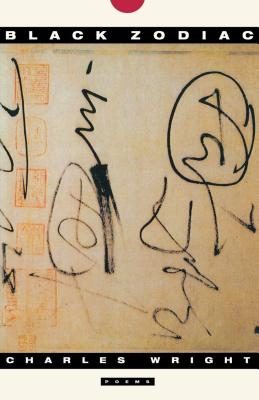
A reading at the Library of Congress is a less intimate event than at the Folger but has the advantage of being free. I bought his early collection, Black Zodiac, because the first time I had ever heard of him was when he won the National Book Critics Circle Award in 1997 for that particular collection (the awards ceremony was shown in C-SPAN2 and 1997 was probably the year when I watched the most ‘BookTV’ on CSPAN-2).

It’s a dark book. Actually, much of his poetry is dark. Even when playful, it’s got a sort of gallows humor to it. Black Zodiac, though, has less humor and more gallows. Really, it is a pretty grim collection. It’s also got this beautiful poem entitled POEM HALF IN THE MANNER OF LI HO that is partly, or at least superficially, about the T’ang poet and his fear of never being recognized for his work, which was really a fear of death (and he did die very young) and it’s also about implacable landscapes that have no interest in our desire for immortality or, rather, our desire not to be mortal. It’s too long to write out the entire poem and just writing out a few lines or a stanza wouldn’t do it justice, but if you see this book in a bookstore or library, even if you don’t buy or check it out, at least read this one poem and tell me it’s not heartrending. The reference to the ancient China is also another reflection of the deep influence of Ezra Pound on his writing, something Wright readily admits to.

The last poem, DISJECT MEMBRA has got this throw away reference to the ‘Rev. Doctor Syntax.’ I don’t know why it is in there, but several months ago, I splurged and spent $75 on a book containing all three, book length narrative poems detailing the comic adventures of Doctor Syntax. That’s all. Tickled me pink to know who the heck ‘Rev. Doctor Syntax’ was. Unless it is a reference to something else.

Also, check out the cover. Except for those tell tale stamps, you’d swear it was by Robert Motherwell or someone like that, but it is ‘Autobiographical Essay’ by Huai Su, a calligrapher from the T’ang era.

Just as an endnote, he got a standing ovation at the end and even walked back out for an encore.

It’s My Birthday And This Is What You Can Build Me For A Present


writing3My only concern is, why are so many of the bookshelves empty? So… you should probably buy me some more books, too. Happy birthday to me!

Estate Of Jack Kirby Settles With Marvel


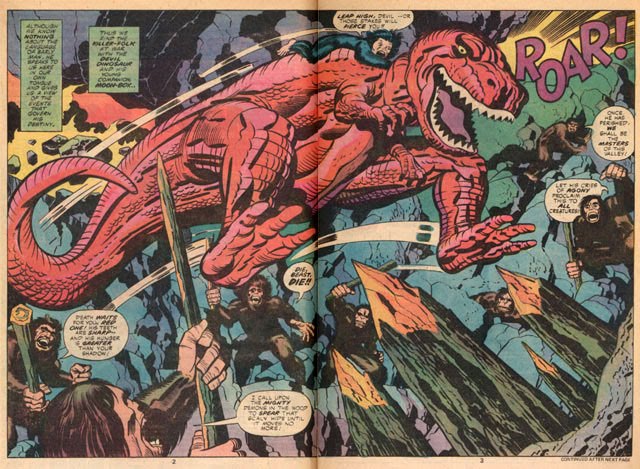
I hope the estate got a good deal. Count me on the side that felt that Jack Kirby got a bum deal for all his work for Marvel (and also DC Comics, but especially Marvel). He created or creatively reinvented some of the most iconic characters (Spiderman, Captain America, Iron Man and more; his early runs of Captain America and especially the Fantastic Four are awesome and, of course, he was responsible for my all time favorite comic – Devil Dinosaur!) and his action oriented style is still the gold standard.

The image is from Devil Dinosaur (a sadly short-lived comic, whose titular, flame colored tyrannosaurus rex is only occasionally trotted out these days, as he was for a recent, two issue, Spiderman crossover). The style is classic Kirby, who would do this big, horizontal panels, densely packed and giving it real ‘oomph’ and velocity by placing the hero at that angle, leaning right (forward, towards the next page), often almost parallel to the horizontal floor of the frame.

devil_dinosaur_2_2

‘Of Queens’ Gardens’: From John Ruskin’s ‘Sesame And Lilies’


So, we’re continuing to the second lecture in John Ruskin’s Sesame and Lilies. And this one is… I don’t want to sexist, even though it is, but it’s also rather forward thinking for a nineteenth century Englishman. But it is about the best kind of education – and by education, he mostly means reading material – for women.

At one point, he writes that there are no heroes in Shakespeare’s plays – only heroines. By which he means that all the male characters, except for a few milquetoast men, are deeply flawed, while the Bard’s plays are simultaneously full of nearly perfect women. Furthermore, the plots are set in motion by male folly and either there is no happy resolution or else what happy resolution occurs, occurs through the agency of a woman (of course, today, we might say that this is a sort of flaw in Shakespeare’s characterization of women). I haven’t gone back and read all of Shakespeare’s plays again, but based on a cursory recall from memory, it sounds pretty accurate. Cool, huh?

Women, Ruskin believes, should be able to read and study whatever a man might study, except… wait for it…. wait for it… THEOLOGY! Yes, theology. Apparently, the study of theology is so conducive to soul corroding error that it is entirely too dangerous for women to study. Weird.

You know, we just don’t mint essayists like we used to. Ruskin is amazing and while he is a sterling example of the nineteenth century British essayist, he is hardly the only example (Pater, Carlyle, Mill, Cardinal Newman, etc). Even our best contemporary essayists don’t really compare. Even folks like the late Christopher Hitchens and John McPhee still aren’t as good as that crew from 150 years ago. Sigh.


IMG_6605.JPG

First Folger Poetry Reading Of The New Season


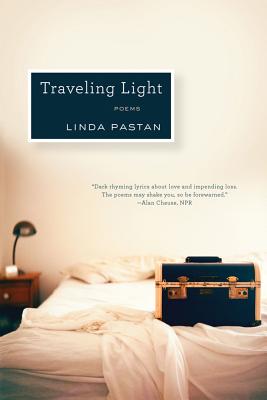
9780393342680It was a great lineup, featuring four poets who had all had early poems published in Bethesda’s Poet Lore: Traci Brimhall, Terrance Hayes, Cornelius Eady, and Lina Pastan. I’d seen Hayes read before, had never heard of Pastan nor Brimhall and Eady, at least partly on account of co-founding Cave Canem and having taught at American University, casts a pretty wide shadow ’round these parts. I brought with me a collection by Pastan which I had bought earlier. I chose one by Pastan for the excellent reason that it was the only one available at Barnes & Noble by any of the four poets.

The reading was briskly paced, with Poet Lore editors Jody Bolz and E. Ethelbert Miller providing engaging commentary and introduction. Hayes was probably the most engaging of the poets, with Eady (unsurprisingly) a close second.

I don’t regret getting Pastan’s collection, though. I’d picked up Traveling Light, a nicely elegiac collection with mostly short lines (though a couple of denser pieces with longer lines that almost resemble prose poems). The positive quote from NPR on the front talks about the ‘rhyming lyrics,’ but honestly, there are very few rhymes. There is a comparison with Emily Dickinson that can be(and has been) made, but Pastan is not nearly so elliptical as Dickinson. There’s a combination of a certain melancholy of growing older with a heaping dollop of the pastoral that reminds me of the Yves Bonnefoy poems I’ve been reading lately (but nothing so amazing as Bonnefoy’s poems about snow). The combination of short lines and two or three line stanzas really works for me, which is why I’m disappointed when I come to a ‘block’ poem. Subject-wise, too, the denser typographic poems tend to be more narrative and a little… I don’t know… flighty? That’s not right. But something.

But there’s something in the comparisons I’ve made. Pastan is very, very good. Really good. But she does frequently remind me of better poets, which pulls me out of the work itself.

For example:


Late September Song

With the sound of
a freight train
rushing
through the trees
the first strong wind

of autumn
makes each
leaf
sing the song
of its own
execution.


Tell me that doesn’t sound like Dickinson (though less elliptical and erotic than Dickinson’s best works)?

There is one very weak section entitled somewhere in the world that contains political poems. The poems, I’m sorry to say, are made of sentiments and conceits of the most trite variety. Sitting on the steps of the Jefferson Memorial and then, in the last lines, thinking about one of his slaves or the 9/11 poem which avoids the terrorist attack until the very end before explaining a version of ‘it changed everything.’ It’s all basic ‘talk about something else and then BAM! as if someone will actually be surprised that you’ve changed the subject to something serious but ultimately uncontroversial.’ Punches pulled. These are the politics of checkbook liberalism outrage.

Finally, congratulations to Hayes who just won a so-called ‘Genius Grant’ (formally, a MacArthur Fellowship – this year, it’s an award of $625,000 over five years).