If This Weren’t Just A Prototype, I Would Totally Get This For My Father For Christmas. And Maybe For Me, Mostly Because It Looks Cool!


Read more here.untitled

Monday Morning Staff Meeting – Art, The Savior


scififanzines4Investing in art is investing in community prosperity.

Salt from an ancient sea.

A poetry reading from the Miami International Book Fair.

Preserving sci fi zines for posterity. This is actually pretty cool. How many people printed and mimeographed wonderful collections of poetry and stories and art in zines and chapbooks, for them to be lost and destroyed and the authors, rather than being preserved in some part of human consciousness, to disappear with nary a ripple and finally leaving no mark on time?


IMG_9059.JPG


IMG_8324.JPG

Weekend Reading – Avant Garde Horror


LuckenwaldeLibrary, Luckenwalde, Germany

H.P. Lovecraft… The man! The myth! The experimental writer! Wait? Huh?

Libraries.

Privilege and poetry.

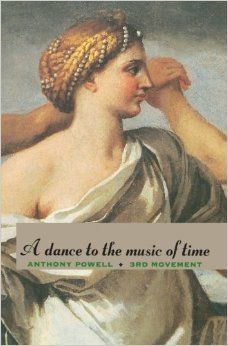
‘The Military Philosophers’ (‘A Dance To The Music Of Time,’ Book Nine) By Anthony Powell


63f5491de9bb3f204d274501fccbe53dIn retrospect, the key moments are easy to see, but that the time, huge swaths of the world might not even have known they occurred.

Today, we can point to the German war machine’s failure to (quickly) take Stalingrad as the moment when Hitler’s defeat became inevitable. But a low level British officer serving in England might not even have known that ‘Stalingrad’ was a thing.

That’s how I understand the way the war passes in this book. Jenkins is working with various liaisons to the British allies on the continent (the Belgians, the Poles, Free French, etc.). Things that I, as an American living seventy years later, know to be crucial, are mentioned only in passing by a character involved in his own work. For me, the reader, World War II, in this book, ended suddenly, but only because I was denied the usual markers.

The niece of Peter Templer, one of Jenkins’ school chums, plays an important role in this book. Powell, unfortunately, tends to slut shame her a bit. At least she is portrayed as strong and independent, even if I did cringe at the constant, implied disapproval of a sexually active young woman.

Widmerpool, who has twice before gotten involved in obviously inappropriate women (inappropriate in the sense that they were clearly bad matches; but it seems that he secretly longs for powerful, outspoken and sexually aggressive women to upset his sense of control and equilibrium), becomes engaged to this niece, Pamela Flitton.

In a public row, she accuses Widmerpool of arranging for her uncle to die. He denies it, but, of course, the reader is intended to see it is obviously true. Templer was posted with a particularly guerilla group and Widmerpool helped pull support for that group and Templer subsequently died while attached to those resistance forces. Incidentally, Stringham, who was sent to the Far East, died when the Japanese took Singapore.

Pamela is not very precisely described (black hair, fair skin), but Powell does something, because I am incredibly attracted to the fictional, unattainable woman. It gnawed at me while I read it. I don’t know what he did, but whatever it was, kudos. Great writing.



IMG_9271.JPG

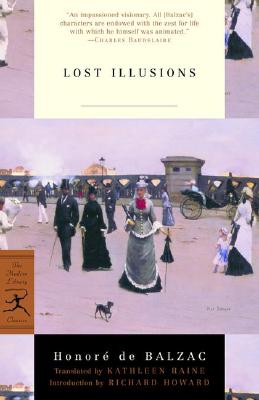
‘Lost Illusions’ By Honore Balzac


9780375757907We were on vacation in Colonial Williamsburg and I saw this book on a table in a bookstore. I didn’t buy it then, but the name (and back cover blurb) stuck with me. I am ashamed to say that I have never finished anything by Balzac before.

The story of two brothers-in-law, one named Lucien, whose sister marries David. David is an idealistic printer who is blinded into naivety by his idealism. Lucien is a poet cum journalist who is blinded into naivety by his ego and by his susceptibility to the finer things in life.

The most interesting part if when Lucien goes to Paris as the lover of a wealthy provincial noblewoman, gets tossed aside, and manages to find his way into various literary circles. First, a bohemian circle of poets and novelists and then a more seedy circle of journalists and publishers. Lacking real conviction, he is convinced to abandon the Liberal press for the Royalist press, but it was all a bit of a plot to pull him from his media protectors so that scorned parties among the aristocracy could tear him down completely. The whole thing is fascinating and written, not exactly from third person limited, but very much putting you in his perspective.

When it switches back to travails of his sister and brother-in-law back in the provinces, Balzac takes Lucien apart, showing the reader what an absolute little turd he is.

For a while there, the constant piling up of misfortunes was overwhelming. I felt like I couldn’t take much more. But the deux ex machina happy ending was also too sudden. And Lucien gets taken under the wing of a corrupt Spanish priest, more like Melmoth the Wanderer or an Ann Radcliffe villain than any of the other characters! What the h–l? And it’s brought up and quickly dropped? What happens to Lucien? I feel like another two hundred pages and a literal devil would come to claim his soul.

While Balzac has nothing so lengthy as Hugo’s discourses on the Battle of Waterloo or his massive essay within a novel on the sewers of Paris, I was bombarded with discussions of the mechanics and economics of early nineteenth century printing shops and on how provincial lawyers make their money. My eyes glazed, especially reading the later, and I probably know less than I did before on the subject for that reason.

As a side not, Nicholas Jenkins, in one of the Dance to the Music of Time, talks about enjoying Balzac in the French, but struggling to understand all the minutiae about the type of thatch roofs used atop print shops. Surely a reference to Lost Illusions?

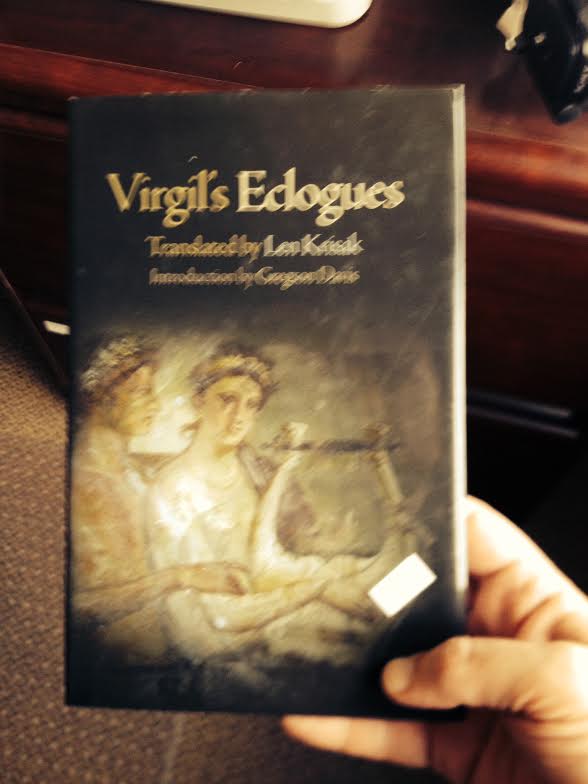
‘Eclogues’ By Virgil


unnamedThe Aeneid never did it for me. A poor man’s Latin rendition of the The Odyssey. But several years ago, I read his Georgics in one of those small, red hardbound books by Harvard University Press (the works from the Latin have red covers; from the Greek, green) that I bought at a used book sale at the National Cathedral, supporting the St Albans School (a private, Episcopal school), After reading it, I developed a new appreciation for Virgil.

The Eclogues show off his fine, earthy sense of humor and sense of the pleasures and travails of those who live off and upon the land (mainly shepherds and goat tenders). The beautiful young men and women (and nymphs) that they love break their hearts by preferring more civilized pleasures than fresh sheep’s milk and playing pan pipes in the valleys. And, too often, soldiers and war push them off the land, with the winners of civil wars being gifted the lands, which cannot help but remind one of the great English fencing off of formerly communal grazing lands by titled landlords.

But the song competitions, as rural folk face off in verse, make it all well (thankfully so, because I was switching back and forth between Virgil and Balzac and reading the terrible misfortunes that the Frenchman inflicts on his hapless characters was doing a number of my good spirits).

May Daphnus feel the love a heifer feels, when worn

With searching for her mate in groves and deepest woods,

She kneels beside a stream in verdant sedge, forlorn,

Forgetting she should leave when darkest night appears.

Let him feel love like that — and I may never care.


IMG_8884.JPG