If You Were Reading A Book Right, Your Stress Would Just Melt Away


IMG_0420.JPG

Live Forever! Through Your DNA Clone! Just $1200!


DNA Live.

For some reason, it was popping up as a sponsored post in my twitter feed and I am so glad that I clicked on it because it is hilarious.

You send this company $1200 and a some samples of your DNA, which are vacuum sealed and put into a fireproof safe, to be kept intact until the technology is there to grow your clone. $200 of your fee will be put into… I don’t know, a savings account, I guess… and used to pay for your new clone and provide a handy nest egg. This is the same theory behind paying for your dinner at the Restaurant at the End of the Universe. You put a penny into a bank account and when you’ve time traveled to the temporal end of the universe, interest has made that penny sufficient to pay for your insanely expensive meal.

And just in case you were worried, you can read wonderfully detailed and theologically sound argument for why this is totally cool with whatever your religion happens to be (as long as its monotheistic) and reassures you that God, the big guy himself, is personally totally cool with this and it’s actually totally part of his plan for you, so maybe not doing this is a terrible sin or something.

Check it out. The website looks like it was created on a CompuServ account in 1998.

‘Leaving The Atocha Station’ By Ben Lerner


Leaving the Atocha StationIt’s a great book. Well written. That’s obvious.

But I’m too told for it. Ten years, even, but especially twenty years ago (though you’d have to take out the references to the internet; maybe you could put in some stuff about AOL keywords, instead), I would have loved this book and carried it with me and made it into a shibboleth.

A young graduate from Brown University goes to Madrid on a fellowship to write poetry. He takes white pills for an unspecified psychological distress (I suspect depression or bipolar, but Lerner wisely doesn’t say). He smokes a lot of hash and drinks a lot more than the forty year old me is capable of drinking.

But things rang true. He has relationships with two young women (girls?) and I have experienced myself that feeling where suddenly what you thought was something is actually… nothing? Something? Certainly, less than one thought. Isobel (incidentally, the name of Nicholas Jenkins’ wife in the A Dance to the Music of Time novels) reveals that she hadn’t considered their relationship… monogamous. Her real boyfriend was just temporarily out of the picture. Or maybe not (later, some related statements are found untrue; or not; no one ever gets a chance to interrogate). Another, Teresa, is more aloof and the narrator (Adam; did I fail to mention that?) never does figure out what their relationship is (if it is more than some occasional fooling around that stops short of sex).

The novel is also partly about Adam becoming comfortable with the idea of himself as a poet with worthwhile things to say (in poetry, at least). But it is mostly about the pretentiousness of youth and myths we create around ourselves, while at the same time, we are confounded by the self protecting myths other create around themselves.

The ending comes across as almost a deux ex machina of success, except that the impression is of something too knowing. Lerner, if not Adam, seems to know that the happy ending is too pat to be come true in the way that the narrator envisions things unfolding beyond the last page.

Reading Ezra Pound


With someone like Pound, for instance, you can’t appreciate the poetry without anguish because you can’t disentangle its aesthetic achievement from its political affiliations; to do so would be to trivialize both.


I found that quote in an essay by Alan Shapiro in the Los Angeles Review of Books. The quote is attributed to Donald Davie.

I’m also interested in new ways to read Pound (though it’s been a while since I did) because, like Heidegger or like Man Ray, his personal/political history make it hard to disentangle from the aesthetic. And here’s this great summation: we don’t untangle because we can’t. And the idea of reading Pound with ‘anguish.’ What a concept. Amazing.

No Matter How Hard You Try, You Can’t Stop Monday


IMG_8350.PNG


IMG_9392.JPG


IMG_9393.JPG

Weekend Reading – Resurrecting Pound


The Woodberry Poetry Room is home to many previously unplayable vinyl and acetate pressings of poets reading from their works – which can now be heard!

The poem written but not read.

Atheism and polytheism.

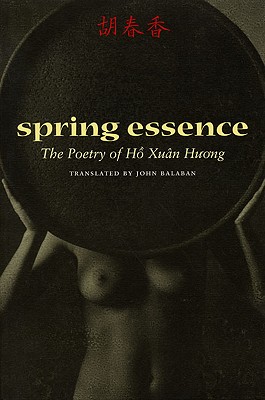
‘Spring Essence: The Poetry Of Ho Xuan Huong’


9781556591488Ho Xuan Huong was an eighteenth century Vietnamese poet. By profession she was a ‘second wife’ – something more formal than a concubine, but less than a first wife. Apparently, she was the second wife of two men (one of who, based on her poetry, she loved very much; another, based on her poetry, she despised).

The poetry is very beautiful and you see the Chinese influences (she was important by virtue of having been an early adopter of writing in Vietnamese, sort of like a Southeast Asian Dante; most poets before, had written in Chinese characters; but it’s not surprising that it still reads, to me at least, like English translations from the Chinese).

In the English translation, she is very earthy. By ‘earthy’ I mean that she writes beautifully of the natural world (though I wouldn’t call it pastoral or bucolic) and that her poems are often incredibly filthy. It’s like reading Anais Nin (some day, I’ll have to write about reading Nin in Delaware).

Three-Mountain Pass

A cliff face. Another. And still a third.
Who was so skilled to carve this craggy scene:

the cavern’s red door, the ridge’s narrow cleft,
the black knoll bearded with little mosses?

A twisting pine bough plunges in the wind,
showering a willow’s leaves with glistening drops.

Gentlemen, lords, who could refuse, though weary
and shaky in the knees, to mount once more?


That is one of the more erotic poems, that stays on the clean side of dirty (some of the poems have a Taming of the Shrew ‘tongue in tail’ quality or a Twelfth Night style ‘Cs Us ‘n Ts and the P comes out thusly’ affect).

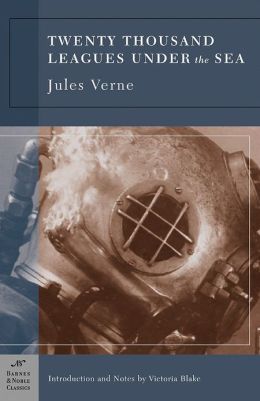
‘20,000 Leagues Under The Sea’ By Jules Verne


VerneMy first Jules Verne was Journey to the Center of the Earth, but I was too young (middle school) to properly appreciate what I was reading. Yes, Verne writes rollicking yarns, but they’re also wrapped up in nineteenth century novels.

So, after a fashion, 20,000 Leagues Under the Sea is my first Jules Verne. And it is thrilling, but also terribly didactic.

If you watched the Kirk Douglas, James Mason, you might be surprised to learn that Captain Nemo (James Mason) saves the life of Kirk Douglas (Ned Land) from the squid, not the other way around, as in the movie (though there was an earlier incident where Ned slays a shark en route to eating to Nemo). Also, it’s not a single, giant kraken, but rather a school of large, but not outlandishly, never before seen large squids.

The description of live underwater and the workings of the Nautilus are interesting, but it is Captain Nemo who holds the reader’s attention. As he loses his equilibrium, the captain’s mysterious revolutionary anger and search for some obscure vengeance becomes more compelling. He becomes less of a distant, cold killer and becomes someone whose motives maybe hidden, but whose emotions are eminently relatable.