The loss of faith and the decline of classical music.
‘The Riddle-Master Of Hed’
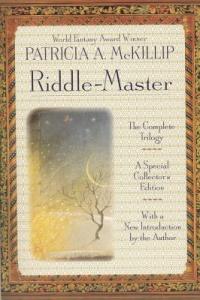 This book is very much in the style of Ursula K. LeGuin. Like LeGuin, even when the main character is male (and the titular Riddle-Master, Morgon the Prince of Hed, is a man), the book is insistently feminine – and that is in a good way.
There is a gentle style to it – definitely, high fantasy, but different than what you would expect from most. Knights, sword fights, magical explosions, etc, are almost entirely absent.
I had read this book years and was seized with a desire to read it again. I almost bought another book by this author at John K King’s Used Books in Detroit, but didn’t.
While visiting my parents, I found this – my original copy – on a shelf. I stuck it in my bag, but forgot to take it and brought that same bag on a trip to Chicago where I read it over the course of the weekend.
Like most fantasy, it’s a trilogy, so I’m going to have to seek out book two.
‘Dæmonomania’ By John Crowley
 This is the third book in his Ægypt Sequence, a… fantasy? Not really. Realist? Perversely, yes, but also no.
The fantasy aspects may or may not be real, but I have always interpreted them as being parts of a novel by Julian Fellowes, a dead, fictional author of historical fantasy from the series.
I was trying to figure out what makes these books good. And they most certainly are. At first, I thought it was to make the mundane more than it is, but actually, many of the things happening to the (more or less) contemporary characters are actually quite important and dramatic, yet Crowley keeps an even, slow paced tone that almost deemphasizes them. Things happen like the (kind of) main character’s girlfriend joining a religious cult and a dramatic custody dispute between another character and her ex-husband over their daughter.
For all of them, it’s a spiritual quest for meaning that the world refuses to release to them, or, if it does, slowly and with great difficulty and resistance. But really, I couldn’t even begin to describe what it’s about. A search for meaning by looking to a world that may or may not have really existed (a pre-modern world when magic worked – the land of, not Egpyt, but Ægypt) and a simultaneous account of magical practitioners in a world where magic is vanishing (real life characters like John Dee and Giordano Bruno).
Watching ‘Antogonick’ In Chicago
It was literally, the last day of its run: Anne Carson’s adaption of the final play of Sophocles Theban Cycle, mostly commonly known as Antigone but here called Antigonick.
If you’ve read my blog at all, you know that I have read a great deal of Anne Carson and like most of her work. This play actually premiered in DC, but I wasn’t able to see it, so I am so excited that I finally had the opportunity to see it as the Victory Gardens Theater.
The whole play was run through in this production and then, once it was over, it started over again, but with actor’s switching roles.
Antigone became the chorus, Kreon became Antigone, Euridike became Kreon, etc., etc., etc. The gender switching, but more importantly, the different readings, gave very different views of the same dialogue. It was like getting the chance to go back in time to change things yet, despite making changes to the past, watch it slide inexorably to the same tragic present.
I went with a friend and while we there, I thought, oh no! I’ve dragged him to my kind of thing and he’s going to hate this! But he loved it, so I have some support when I say it was awesome.
I Have Given Up Comic Books
For something like two years now, I have been regularly buying several series of comic books from my local comic book store (Aquaman, Batman, Action Comics, Moon Knight, and Deathstroke).
I think I’m done. I’m not sure I can justify the money. Also, I recently fell behind and that feels… ok. I’m not distraught about not knowing how story arcs will end. I’m okay with things. But I have enjoyed this particular interlude – my return to a portion of my misspent youth – and don’t regret it. And I’m sure I’ll find something else to spend the money on.
Arabian Nights
For some reason, I was recently possessed with a desire to pick up my copy of The Arabian Nights. Of course, that copy has to be the translation by the nineteenth century explorer, adventurer, writer, and libertine – Richard Burton. Nothing else will do.
No other translation dies so deeply into thick, decadent language. It’s like thick, sexy syrup. And it is so very sexy. As a child, I was put into giggles and delight by the sheer number of synonyms he found for sex and kissing (‘bus’ and ‘futtering’ being my two favorites). It’s like Scott Moncrieff’s Remembrance of Things Past. I may accept that it is not really the most accurate translation and that it may miss many clear stylistic authorial intentions, but it’s old fashioned rhythms are so much better on the tongue than the other English options.
Nimoy
Someone once said to me that she would break down and cry when (and if – modern medicine can do miracles, I hear) Patrick Stewart were to pass away. Of course, she wasn’t thinking of his masterful performances on stage as Lear and Prospero, but rather as Captain Jean-Luc Picard.
I love Patrick Stewart, but she was obviously younger than me, because my Star Trek memories are of the original series in syndication and the original movies (especially Wrath of Khan). As good at Stewart was, the others are only pretenders to the throne. Of the original duo, Kirk and Spock… Spock, aka Leonard Nimoy, has shuffled off his mortal coil.
He did more than Spock, of course (remember In Search Of?), but it is because he was Spock that I am reminded of a certain cultural mortality.
If I have children, they will never really know who Spock was and if I try to show them, they will merely mock an old man for watching something with such shoddy production values.
And one day, Kirk will be gone, too. And after that, there will soon be little memory of my Star Trek. Which, I suppose, is really just saying that one day, I will be dead and there will be a day, some time after – maybe years, maybe decades, maybe more, but there will be a day – when there will no longer be any memory of me or my world.
Happy hump day, folks.
2 3s
That’s just a silly bit of titling, really. Last week, I saw Emmanuel Ax and the National Symphony Orchestra play Beethoven’s Third Piano Concerto (for piano and orchestra), followed by an Ax-less performance of Beethoven’s Third Symphony. That’s the Eroica (not the Erotica; check your CD cover more closely and you’ll see that I’m right).
Both are nicely epic pieces. I’m not a good enough judge of piano playing to really know, but it was obvious that Ax conveyed great feeling through those keys. The orchestral moments felt like a massive tide of humanity’s emotions crashing and the piano as Beethoven’s personal, passionate dialogue with humanity.
The Third Symphony, which was famously had its title changed after Beethoven became disillusioned with Napoleon, is, of course, like the earlier concerto, an epic work. Ludwig didn’t do small symphonies. There were moments when the brass took center stage and you could feel, beneath an otherwise very positive score, a certain simmering resentment. Maybe it’s just, but it felt like those small moments were the expressions of his disappointment and anger with Napoleon’s perceived betrayal of revolutionary sentiments.
At the end, Ax came out and played a solo piano piece – I’m not sure what it was; possibly Chopin, but it sounded a little more recent than that.

‘Heart Of Darkness’
I read this article from The Atlantic (I know; reading The Atlantic is an embarrassing proposition these days) where the writer talks about loving Joseph Conrad’s Heart of Darkness. It is such perfect construction of a novel. Brief, yet dense.
And the writer points out his favorite scene – and it’s mine, too, and I suspect it might be everybody’s favorite. It’s nothing to do with Kurtz (directly; symbolically, yes, of course it’s related). It’s that French gunboat shelling the impossibly dense and dark African continent. No enemies visible. Just these pathetic pops as their bristling guns fire. At war with something implacable, impervious, and unnoticing of their very existence.
Not mentioned in the article, Conrad’s storyteller says that he heard they were dying at the rate of two or three a day of fever onboard the gunship.
There were other scenes and moments (I love the tiny bit about the ‘papier-mache Mephistopheles’ in one of the corporate/colonial outposts).
But that French gunship. Just there. No rhyme nor reason. More than ‘the horror, the horror,’ it is that boat’s actions that is the most indelible and existentially terrifying moment in an existentially terrifying novel.
 the coffee philosopher