08d7a562fb13d208053257c5a11873e4

Weekend Reading – Reviews


When the poems are better than the book (this is a review of a book by Terrance Hayes, but I once read about Sharon Olds something to the effect of: there is no poet whose poems I like so much and whose books of poetry I dislike so much; but that was more about too much Olds being way too much of a good thing, especially when themes and ideas overrepeat)

The faultlines of reference.

Apparently, there is a brontosaurus. Or there might be.

I am confused now. Let’s talk about poetry instead. Here’s an interview with Marilyn Chin.

Happy Emancipation Day!


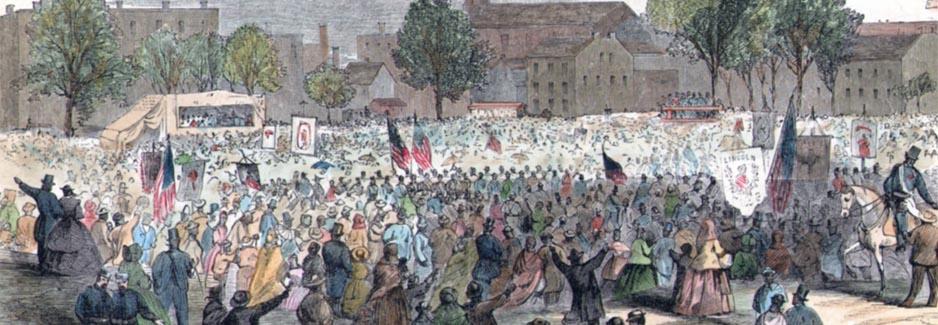
Emancipation_celebrationIn most of the country, the Emancipation Proclamation, which followed the hard fought American victory at Antietam in 1863, is the big one.

But in Washington, DC, there is a more localized and very important day – a city holiday – called Emancipation Day.

The DC Compensated Emancipation Act of 1862, enacted by President Lincoln, ended slavery in Washington, DC, freed 3,100 individuals, reimbursed those who had legally owned them and offered the newly freed women and men money to emigrate, if they so desired.

Midweek Staff Meeting – Who’s In Charge Here?


I volunteer to take charge of the Library of Congress, so feel free to contact me anytime. One hundred percent available for the job.

I actually have read Raymond Williams, a Verso Books publication of The Politics of Modernism, a nice little volume of aesthetics. I would recommend him, too, so, by all means, rediscover him.

Bronze age beer. Word.

A person, a democracy, a nation – all are nothing with the liberal arts.

Devil Dinosaur


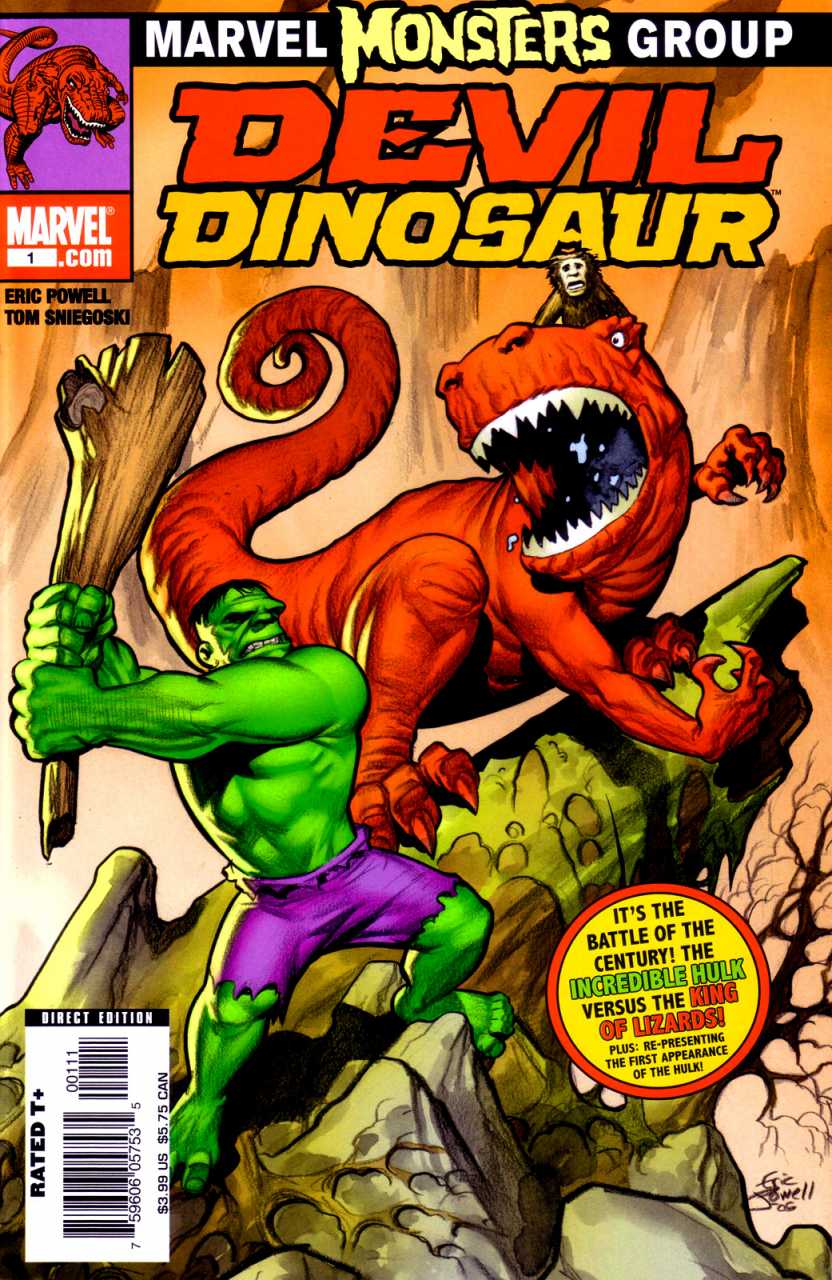
1790937-marvel_monsters___devil_dinosaur___00___fcYes, I’ve quit my regular buying of comic books, but I still make a few exceptions. In Toronto, there was a cool little comic book store/coffeehouse called the Black Canary (named after a DC Comics heroine; no superpowers, but just a tough woman).

I thought it might be a good time to look for some heretofore unpossessed (by me) Devil Dinosaur comics. I look first among the Godzilla comics (I know there was a crossover arc) and then the Devil Dinosaur box. Lo and behold, I found (for six Canadian dollars), a comic I had never read before. Super powerful aliens watch a scene from the original comics (when Devil defends Moon Boy’s people from some aggressive proto-humans) and, feeling sorry for the bad guys, give them an edge by beaming the Hulk into their midst. Hulk smashes Devil, but they think maybe they’ve made a mistake, so they give Devil extra strength and things go wrong from their, with two powerful monsters destroying the aliens’ stuff.

In the end, all goes back to the way it was.

Unlike a Devil/Spiderman crossover a few years back, this one didn’t treat Devil very respectfully. It made you realize how awesome Jack Kirby was – how in his original run, he used his artistic style to create very dynamic panels, where the action leaned forwards, towards the next page or panel, propelling things forward.

Flashman


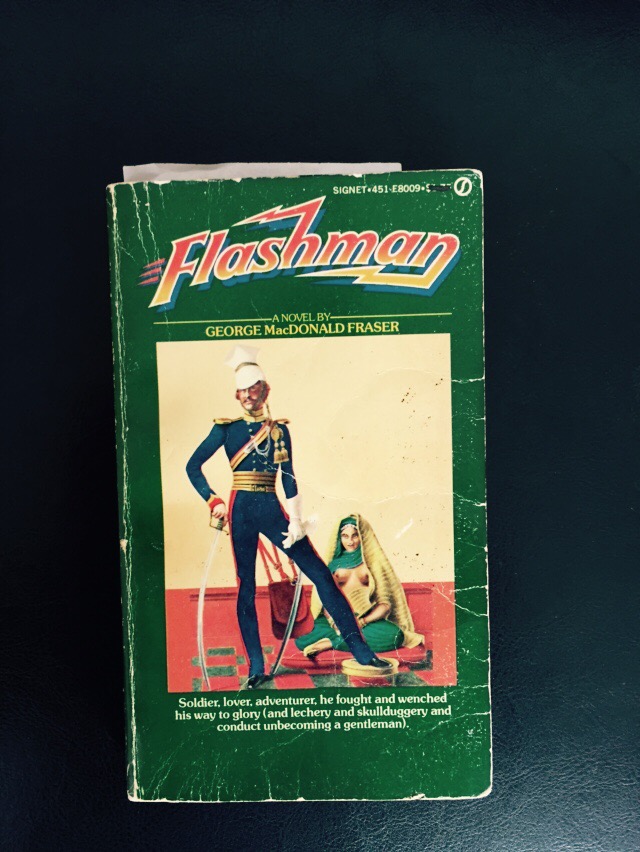
  I had heard about the Flashman novels – a sort of send-up of nineteenth and early twentieth century adventure novels. I’d seen the books in my local used bookstore and had been intending for some time to buy one and send it my father (who, like his older brother, has something of thing for Victoriana adventures; Kipling sort of stuff). But, naturally, I had to read it for myself first.

Flashman is more straightforward than I would have thought and the hero not so bad as I’d been lead to believe and less over the top. I wasn’t totally thrilled by his voice and it found it less than unique, but a rather straightforward pulp-style voice, only with a less admirable character.

There were some fun moments, mostly around Henry Flashman’s sexual failures. Firstly, when he tries to seduce a fellow officer’s wife, but she fights him off, not realizing that having one’s breasts fondled by a man isn’t a sign of ordinary affection, like shaking hands, but a sexual signal. Her shock and horror that he would have misinterpreted her accepting giggle of his boob fondling to be an implication that she wants a roll in the hay was lovely. Also, it was nice to see Flashman have to come to grips with (and accept) his wife’s apparent infidelity whilst he was in India and Afghanistan.

Also, I suspect that his account of the utter disaster of the British retreat from Kabul in 1842 (and also the events leading up to it) is not that bad.

By the way, Henry Flashman was a character in Tom Brown’s School Days and this Flashman is intended to be him – in fact, it begins with the expulsion of Flashman, related in that book.

Weekend Reading – Plausible Deniability


Merritt_jpg_250x300_q85An appreciation of A. Merritt’s commitment to incorporating scientific sounding explanations in his imaginative worlds (I read a novel by Merritt called The Metal Monster; don’t regret it and will probably read some more of him, but my appreciation is more or less specific product of my particular tastes, so I wouldn’t necessarily recommend him).

“Writing about moral philosophy should be a hazardous business,” said the late Bernard Williams.

Chinese poetry is happen’, man.

It’s still Poetry Month. Read some poetry, people. Buy a book. Support a poet.

‘Alien Hearts’ By Guy De Maupassant


9781590172605Alien Hearts is not a very nice book. The two leads are a vain and uninteresting woman who makes herself moderately famous in society by collecting artists and intellectuals by means of making them fall in forever unrequited loved with her and an even more uninteresting man who is rich and at edge of still being a young man and precipice of middle age and who has no real talent, unless you consider insecurity a talent. Oh, and the woman abandons her artists when she receives and opportunity to join higher, more aristocratic society in fin-de-siecle Paris.

The whole assemblage is appropriately alienating. It similar to, but so much more unsettling (and less enjoyable) than The Red Lily. Unlike that book, there are real casualties in this one.

The ‘hero’ seduces a young waitress and takes her as his servant and later promises to ‘keep’ her in a house in Paris with a maid as his mistress. All the while, he is just waiting/preparing to re-enter the ‘heroine’s’ society and possibly her bed. It’s really, really unsettling to read.

I think of The Great Gatsby:

They were careless people, Tom and Daisy – they smashed up things and creatures and then retreated back into their money or their vast carelessness, or whatever it was that kept them together and let other people clean up the mess they had made.

I keep on coming back to the word ‘alienating.’ Everything about the book is profoundly and deliberately alienating.

At least I learned a new word: Ewig-weibliche

Apparently, it means something like the eternal feminine. Goethe made it famous, I guess.

The Value Of Art


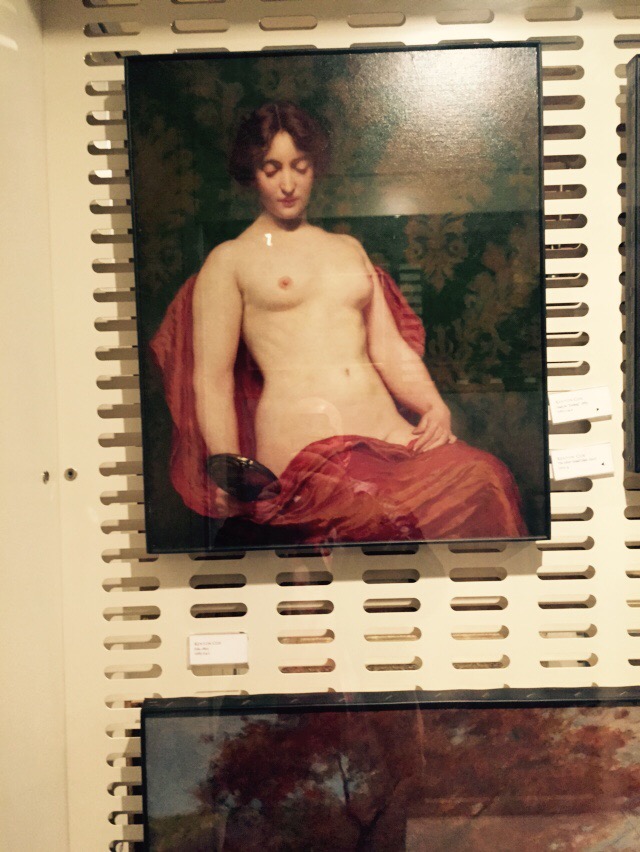
While walking through what I think of as my secret galleries in the American Art Museum, I was arrested by a series of nudes by Kenyon Cox. Something between Manet’s breakfast heresies, classical/traditional nineteenth century nudes, and Pre-Raphaelite romanticism. I couldn’t call them great paintings. They weren’t great paintings – certainly not equal to those predecessors – but inexplicably arresting. And I can’t deny that my interest – my affection – for these nudes was not just aesthetic, but also erotic.

After seeing those paintings, I wandered over to the painting conservation studio where you could watch the conservators work through glass walls. Despite being the painting conservation studio, the only item being worked on was a life sized neo-classical statue of a young woman. A conservator was crouched down, rhythmically brushing below the statue’s right knee with a soft brush. It must be a gift to be able to work in the arts, I thought to myself. I also reflected that it was nice that her co-worker, working on a computer not a painting nor sculpture, flashed me a pretty smile. Less happily, I wondered if they might actually be grad students with little hope for real and decent paying job in the field due to the sequester (recently) and general disinvestment in the arts (long term trend).

The artistic vocation is a bit of unicorn now, isn’t it? Art, including literature, is undervalued and we are no longer taught to appreciate it. Even worse, we are no long taught to engage with it.

I’m going to praise Taylor Swift, here. I know. Crazy, huh? But not for her music. God, no. But for withdrawing from the streaming service Spotify. Services like that teach us that artistic production has no value to the consumer. Swift formally said f–k you, my work has real monetary value and Spotify is not valuing it. That’s worth something.


Whenever I fragrant coffee drink,
I on the generous Frenchman think,
Whose noble perseverance bore,
The tree to Martinico’s shore.

– Charles Lamb