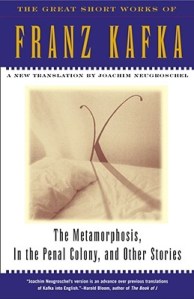
No one wants to read your crappy novel.
Typewriters are making a comeback!

 While enviously browsing the art theory section of the bookstore in the National Gallery of Art, I saw this book and was immediately intrigued by it.
Artful is not exactly non fiction, not exactly a novel, and not exactly a collection of essays, but is something of all three.
Smith’s husband, apparently a university lecturer on literature, has recently died and the book is structured around his notes for four undelivered lectures. She digresses, extensively quoting from poetry and sometimes assembling ‘new’ poetry from lines from poets like Wallace Stevens, T.S. Eliot, and others to create a ‘new’ poem. She is even, briefly, haunted by visions or hallucinations of her late husband visiting her and stealing things (though she also recognizes that it must be she who is actually the thief, because her husband is not there.
It’s a beautiful book, but my expectations were too high, I fear. Nonethless, it is beautiful and a moving, highly literate elegy.
Eat the wind
taking in the view
The Kitchen, the wind, the food is delicious,
when dark
Check out ‘In Translation, Volume 1’ for more info on what the heck this is.
I don’t know what to say,
but wanted to say
thank you, I was born.
She’s asking you to
God,
they want to pin cure cover.
Protect the safe journey.
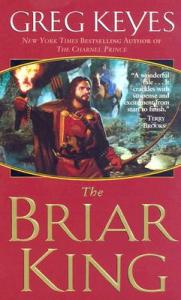 So far, The Briar King is a good, gripping read for a fan of fantasy, like myself, but also irritating in some important ways, both as a fan of fantasy and a general lover of fiction.
It’s pretty much required these days that no one right a standalone scifi/fantasy novel anymore. It’s simply not done. So I’m okay with it being the first of a series. And while it ends, clearly leading into another, it’s not an annoying cliffhanger. And Keyes avoids other pitfalls of the fantasy series by not letting the number of main characters get out of control. There are basically five main characters, but he keeps them paired up much of the time, so we don’t have a massive sprawl problem.
The world is generally well done. The ‘history’ is good, though I rarely get a strong feel for the cultures, except in the story’s heartland, which is kind of your generic fantasy land with technology similar to 14th century Europe, so knights on horseback in articulated plate armor with big swords. Some of the other areas are less well described.
There is a bit of a villain problem, because the world spanning threat, the titular Briar King… doesn’t seem so bad. Kind of nature guy. Does not inspire fear in me. Some of the human villains do – they’re pretty nasty. But it’s hard for me to feel that concerned about a apocalpytic baddie who comes across more like a less damp version of the Swamp Thing, just doing his thing and keeping his swamp (or, in this case, forest) safe. But that wasn’t what bothered me most. No, it was the names.
The names are lazy. Some are basic English names, like Anne and Neil. There’s an occasional attempt to get something more archaic or fantasy sounding into it, but generally, they’re cribbed straight from the British Isles and (disconcertingly) Italy. At least take some time to look up some old Celtic or Saxon names that sound a little different, a little alien and not immediately recognizable. What he did just creates a jarring clash. And… ugh Virgenya. A place in his world where people are and speak Virgenyan. I live next too Virginia and used to be a Virginian, so this just takes me out of it ever time he does it, which is pretty frequent. Oh, and there’s an ancient, founding heroine named ‘Genya Dare.’ Since ‘Virgenya’ is clearly in honor of ‘Genya,’ let’s put those together, shall we: Virgenya Dare. That’s right, the first child born in the English colonies in America. Ugh.
The good bits generally outweigh the bad, though. I’m glad I read it. But… Virginia Dare. Ugh.

I have a number of Thai friends and family and I follow some of them on Facebook.
However, I do not speak nor read Thai, so I hit the Facebook translate button and the results are endlessly interesting.
In fact, I have decided that they are secretly poetry, so I will now be posting them as found poetry.
Today, wish you were out 😇
the last day of being
the priest asked the charity
that I’ve already done this from the beginning until now,
the old me in the eyes, your cousin, the picture of you,
do you think it is medicine for the ship?
Him, angel eyes, you may be the eyes, him, her son, so the woman, her eyes,
and ask them to you, to stand in the times with it, Amen
 I’d read about Seidel before (a profile in the New Yorker, some years back, I think when a large volume of collected poems came out), but had never read him. If you’ve read about him, the poems in Ooga-Booga are everything you’ve heard: frequently written in the disdainfully elitist voice of a born to wealth Manhattanite who is better than you by birth and wealth; frequently sexists; frequently voicing lines and phrases that, while perhaps not racist, are certainly retrograde and insensitive; and consistently brilliant. You finish the book overwhelmed by his talent and how much better he is than ‘nicer’ poets. He frequently rhymes, including playing with slant rhyme and rhymes within lines, yet avoids regular rhyme schemes, with the effect being both assonant and yet more conversational than more traditionally rhymed poems would be.
I’d have to quote an entire poem to get the full effect for you, so it’s up to you to read him (he’s almost certainly in your library system, people; it’s not that hard).
Later, I came across another reference to a similar concept (also in a Paris Review article):
It’s a feeling I know well and which English lacks a good word for (and I’m not sure stealing from Portugal or Wales will resolve that lack).
When I read The Sun Also Rises, I was overwhelmed with a homesickness for a place and time I never knew, a mythical 1920s of high modernism. Of course, I was also a teenager, so I didn’t properly understand the sarcasm, satire, and self-loathing that drove the novel, or else I should not have felt saudade nor hiraeth.
More saudade, I suspect. Hiraeth is something more for my mother, a southerner who will never, despite her accent, fit properly in the South (with its desperate poverty and structural racism and the veneer which covers it up and makes believe we have moved past it in much of the ‘New South’), nor feel at home anywhere else (perhaps not surprising that she settled into Florida, which is neither here nor there).
I wonder if they are all myths. I think perhaps I have even lived through such times myself, but they are invariably disappointing to live through and unnoticed by the participants, who are merely getting by like everyone else and wishing to have been alive in the New York of the Abstract Expressionists or the Bay Area of the San Francisco Renaissance or even the pastoral delights of the Transcendentalists of the 1840s.

 the coffee philosopher