Last Moments Outside


‘Sidney Chambers and the Shadow of Death’ By James Runcie


ChambersI saw part of an episode of the PBS Mystery (presumably, originally a BBC thing) of this, which is why I decided to download it onto my Nook for my trip to Thailand. My mother loves British mysteries, but I never got beyond Sherlock Holmes and a couple of Agatha Christie stories.

Well, this is not a novel. Really, it’s a chronologically arranged short story collection. I’m guessing each episode of Grantchester Mysteries is a story from this or another Sidney Chambers story (who is an Anglican priest for the Grantchester parish).

The stories are okay. The landscape and time period (early fifties) done in broad strokes, rather than vivid ones. I’m still not sure what, if anything, makes this dude a good detective.

Also, a couple of things ate at me. In one story, I felt a little horrified by the ending. Did we establish that a doctor was probably giving patients extra large doses of morphine to euthanize them unwillingly and did we then decide that we’d probably (by means of surprisingly secular sermon) convinced him not to do that again and then walk away from it?

And did a priest give disturbingly blase answer to how he was able to deal with having shot people in WWII (before he was a priest)? While we can all agree that Nazi Germany absolutely had to be stopped, I expect my men of God to feel, at the very least, a little squeamish about any taking of human life, no matter how morally justified. Maybe that’s just me.

I probably won’t read any more. I suspect it’s a decent or perhaps even better than average genre book. But it’s not in my preferred genres, so I’m unwilling to cut it the slack I might to a science fiction novel.
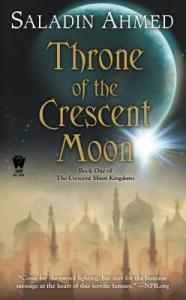
‘Throne Of The Crescent Moon’ By Saladin Ahmed


ThoneThis book got pretty good press when it came out; both as a good read and for the fact that it abandoned the traditional, Western European medieval style of fantasy world for one based on the actual medieval Middle East (or, really, on the fantastical Middle East of the Arabian Nights).

As it turns out, it is one half of a good story. A bedouin-esque girl who can turn into a lion; an ascetic swordsman; an aging ghul hunter; and a husband and wife team of magus and alchemist.

But it’s missing the other half. There are ancient pyramids and evil ‘Dead Gods’ from an ancient time (something between ancient Egypt and Robert E. Howard’s orientalist fantasies of Stygia) and child murderer buried alive in the tomb of an ancient something that was, apparently, not so dead. There are some great stories behind the villains, clearly. Too bad we never ever hear those stories. Just tiny bits. But no flavor. Not background. No glimpse of their perspective or motivations (which the reader is forced to assume are ‘power and world domination’). By the standards of today’s door stopper fantasy novels, this one is not so long and an extra hundred pages would have been well worth it. As it was, the final confrontation was disappointing because I had no feel for the enemy they were fighting.

Happy Birthday, Tom Baker


doctor-who-scarf-1-537x402

‘Gorgias’ By Plato


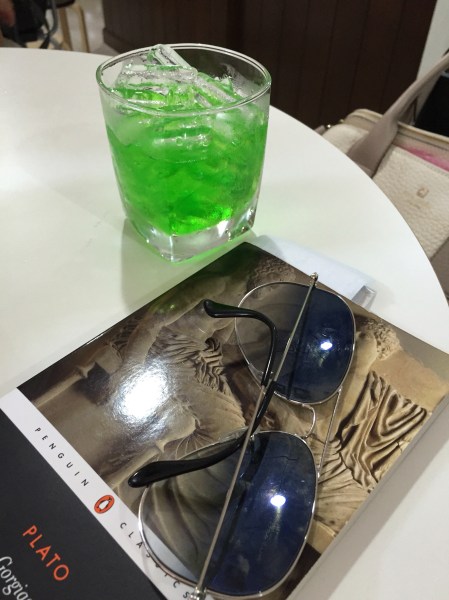
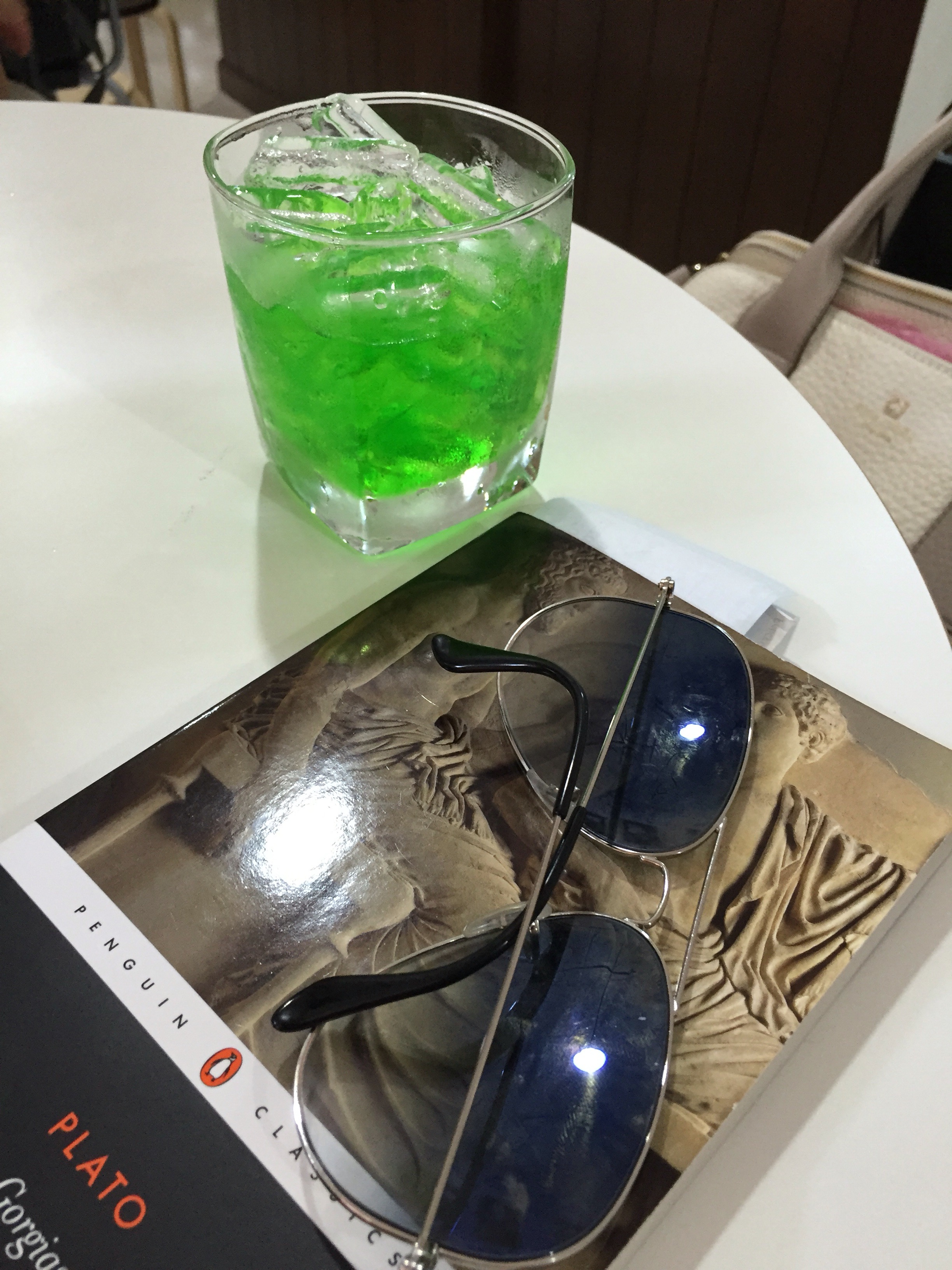
I was inspired to read Gorgias because Quintilian mentioned it frequently. I was frankly disappointed. Maybe it’s been a while since I read Plato. Maybe I just need to read more Plato to reacquaint myself with a greater portion of his ouevre and philosophical mission.

Quintilian often wrote about the true orator being also a moral person; the two things were inseparable, he claimed. This was in direct response to Plato’s critique (through Socrates) of oratory. He portrayed oratory as a loose cannon; a dangerous skill, untethered from morality and justice. Like giving someone gun, but not talking about gun safety, ethics, caution, nor even attaching a brief note saying, ‘please don’t point this at unarmed black children.’

One way or another, he is critiquing the means of advancing ideas in a democratic milieu, whether through money/power, oratory, or whatnot. Which, we can debate, but Plato’s viewpoint is fundamentally undemocratic and the characters he set Socrates up against, including Gorgias, are such sad straw men.

The introduction of the importance of the afterlife in determining morality was interesting, but the previous argument reminded me a lot of Boethius’ argument for morality in The Consolations of Philosophy.

I’m Back From Thailand


_1450058904

If Nothing Else


  If nothing else, have finished a lot of reading. Eight books to be precise with a good chance of finishing my re-read of Persuasion and of finishing the Elective Affinities. And of course, there has been much else, rather than nothing else.

The total stands at four fantasy novels (The Blade Itself, The City of Wonders, The Charnel Prince, The Throne of the Crescent Moon), one British ‘cozy’ style mystery (Sydney Chambers and the Shadow of Death), two philosophy (Gorgias, A Short Introduction to Art Theory), and one poetry (Lunch Poems).

Obviously not the final judge of a good vacation, but being as susceptible to the temptations of technological distraction as anyone, it is good to be in a position to be able to get some solid reading done. I’ll be on my own when I get back (my better half is staying in Thailand for a few months) and can hope to do some more reading when I return, but there is a certain feeling of accomplishment in plowing through a solid number of books.

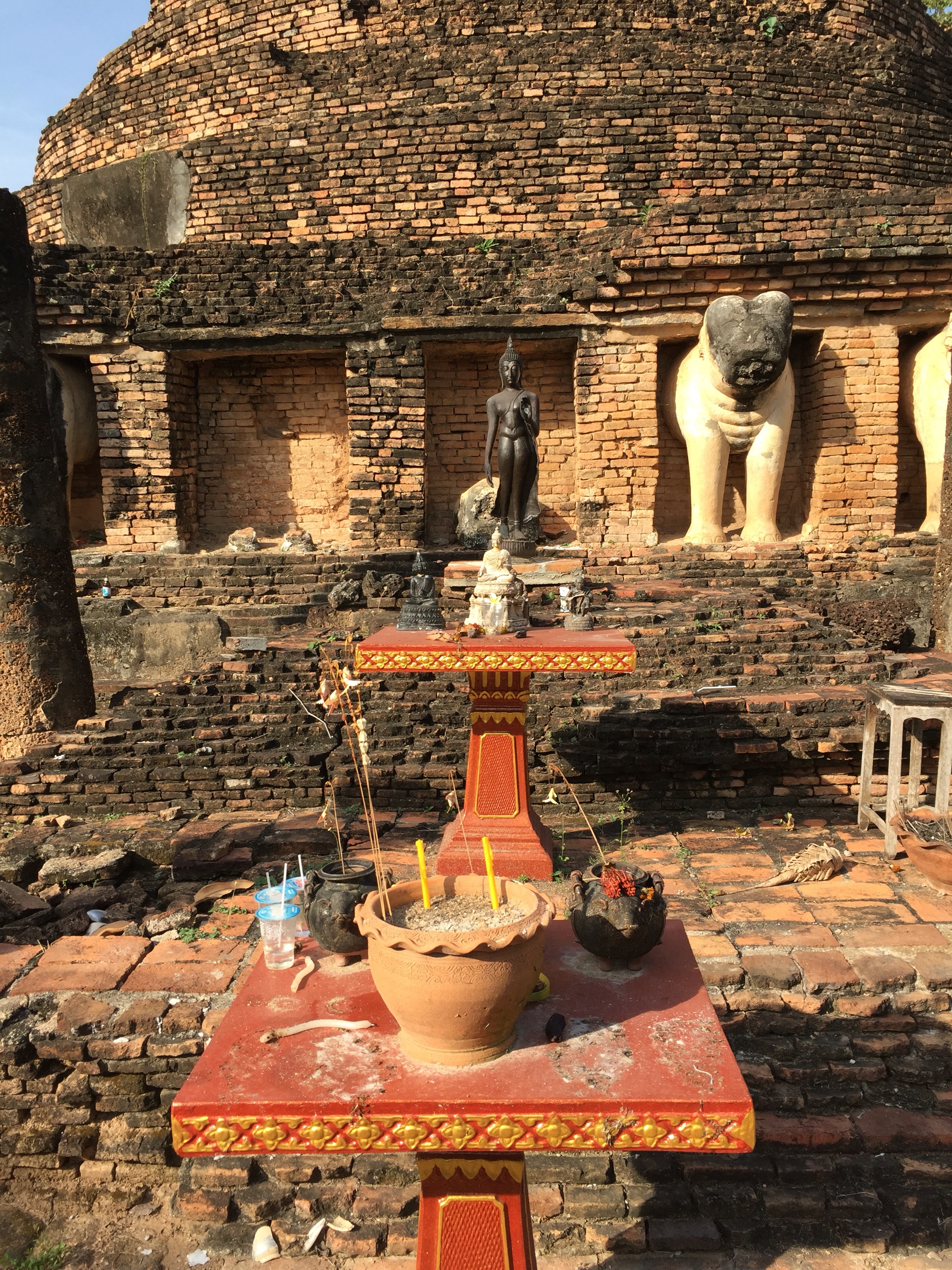
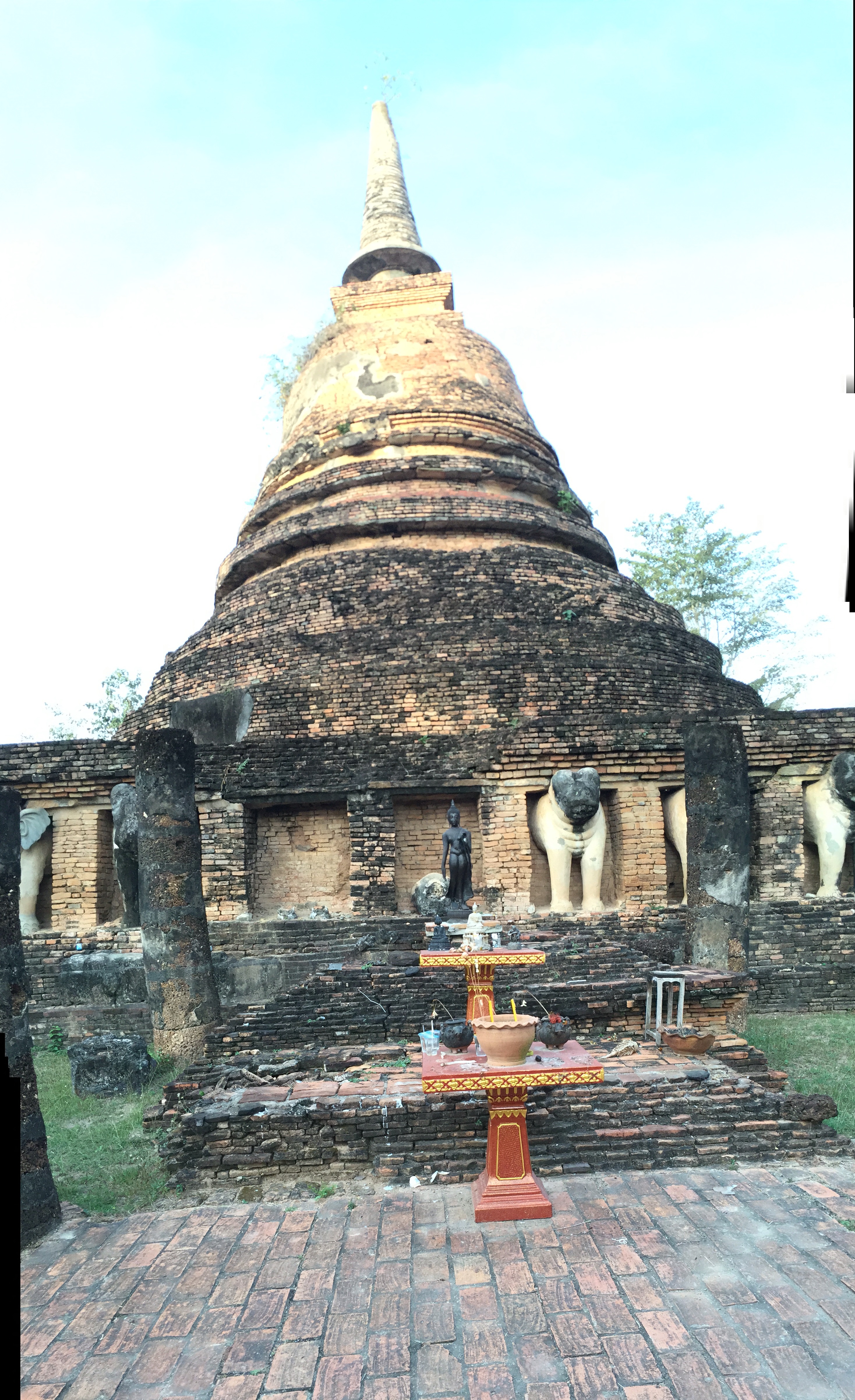
Wat Chang Lom


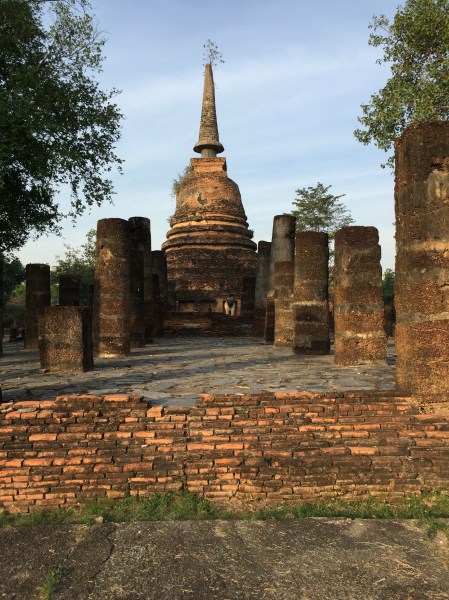
    Or Wat Changlom. I’ve seen it both ways. In either case, it is behind our hotel, the Legendha, through an unlocked gate and past a few mildly informative markers. But mostly, it is just there. I got up a little early to walk across and spent some quality alone time with history.

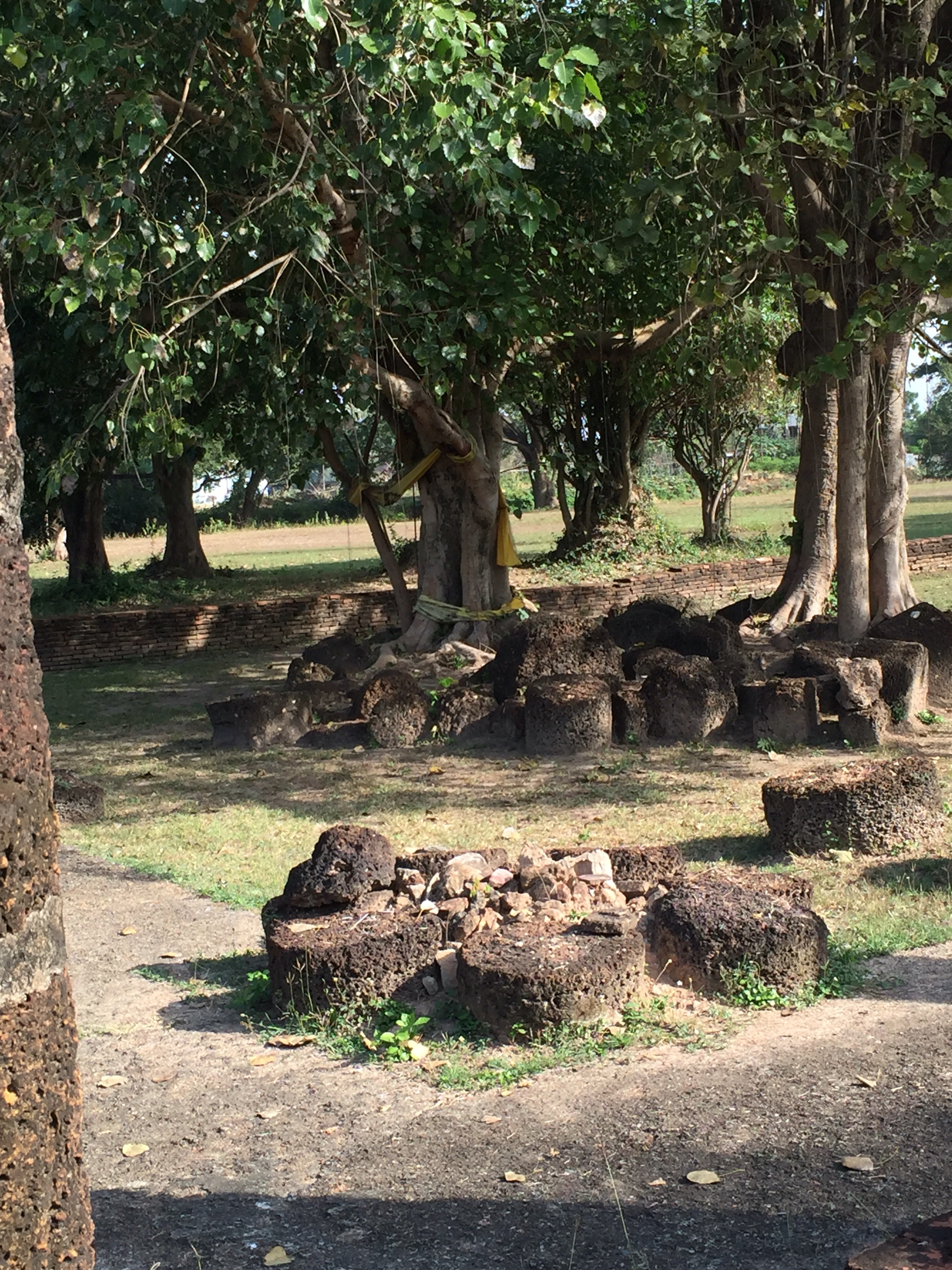
I walked a little further and found a homemade shrine, guarded by some frightened dogs.


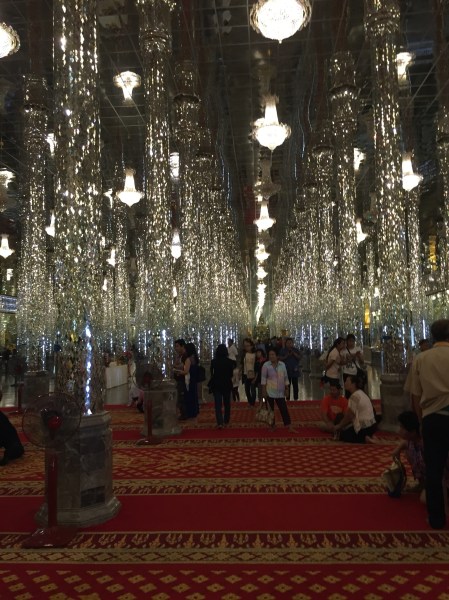
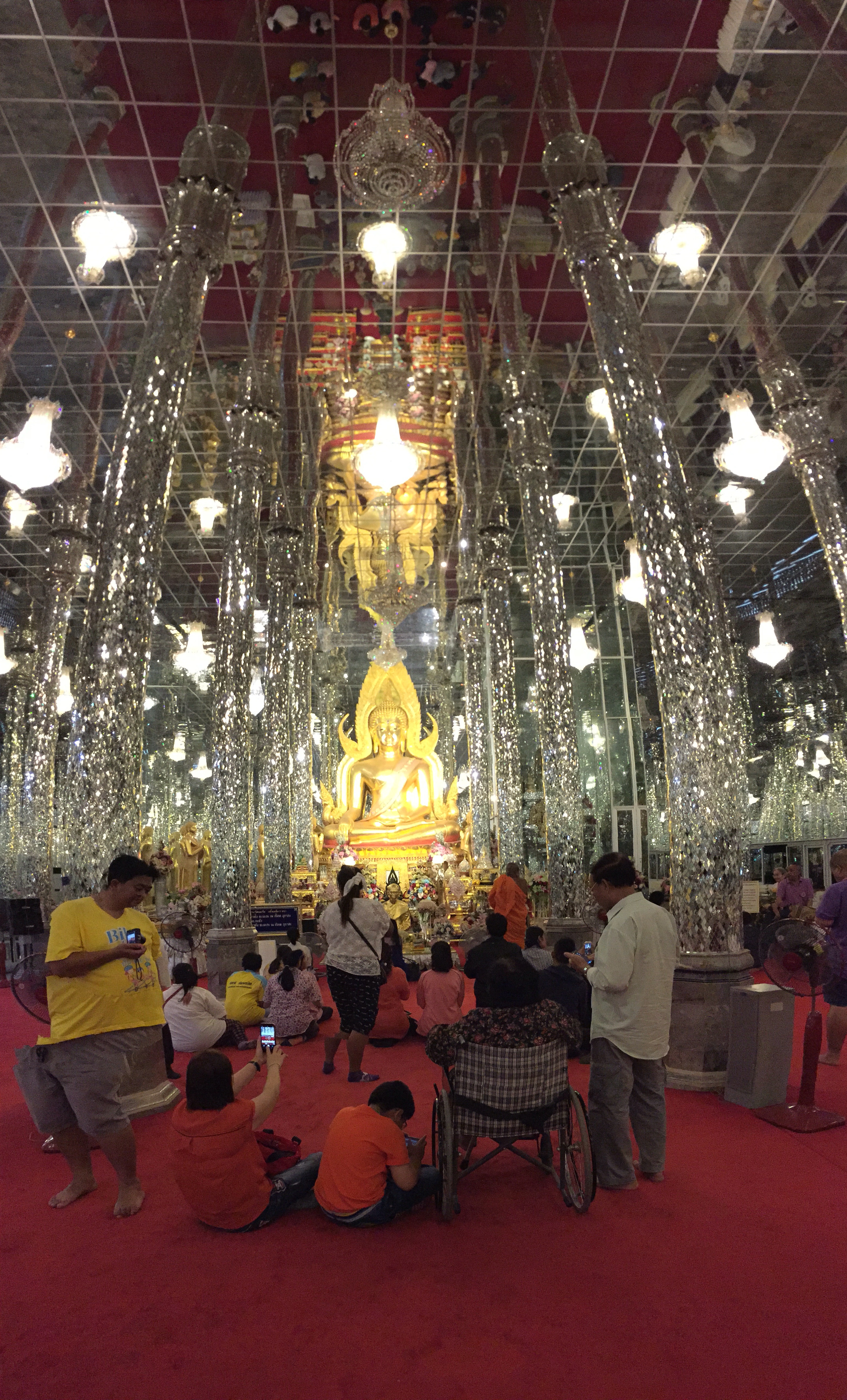
Watthasung


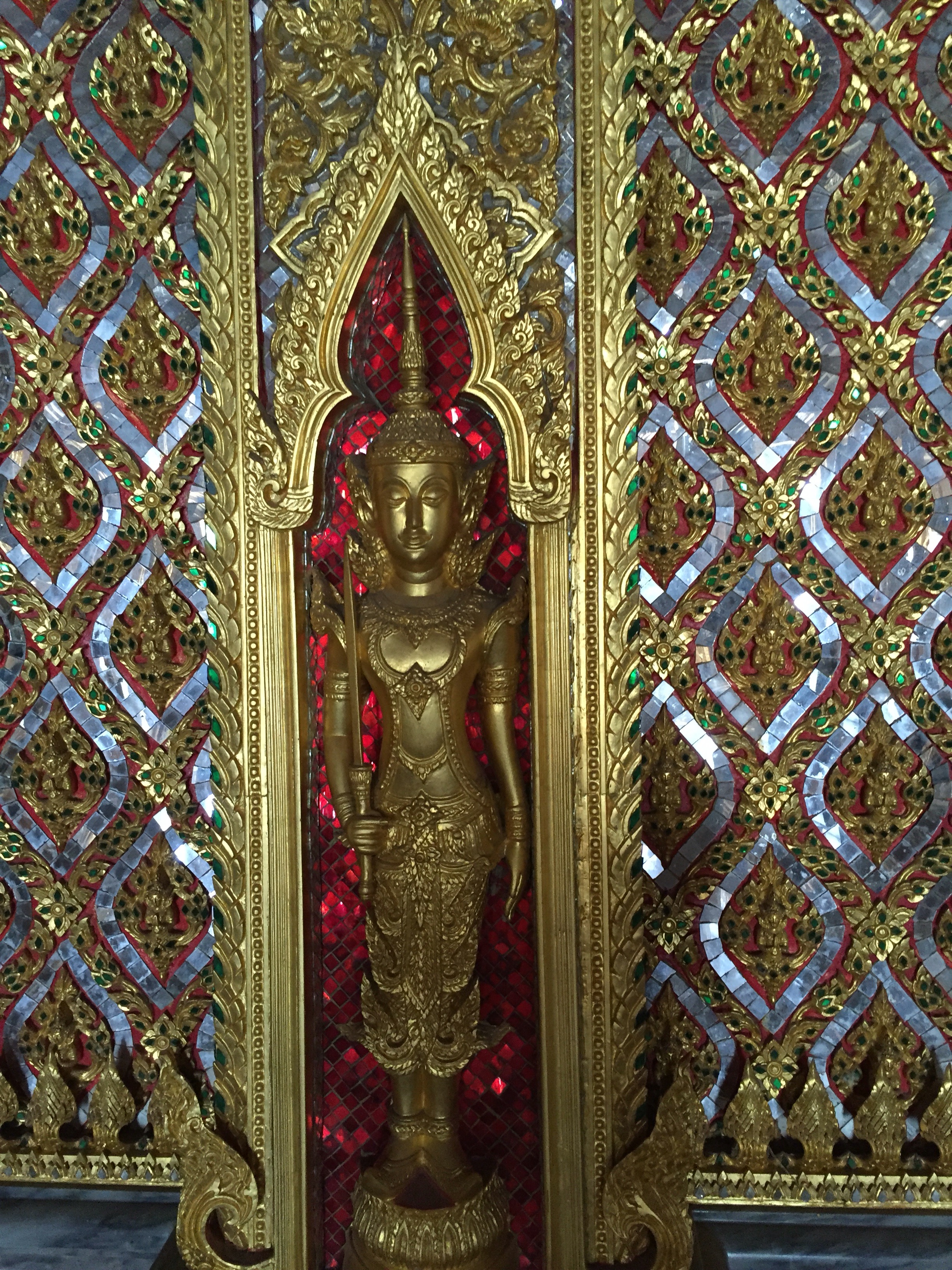
On our way to Sukothai – the old kingdom – we stopped here, at the glass temple.


Singapore Botanic Gardens


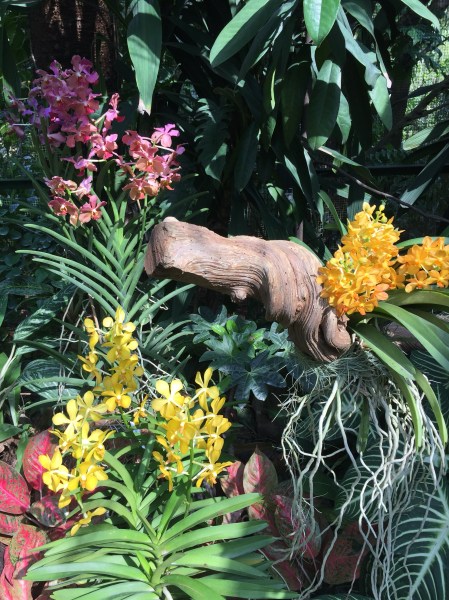
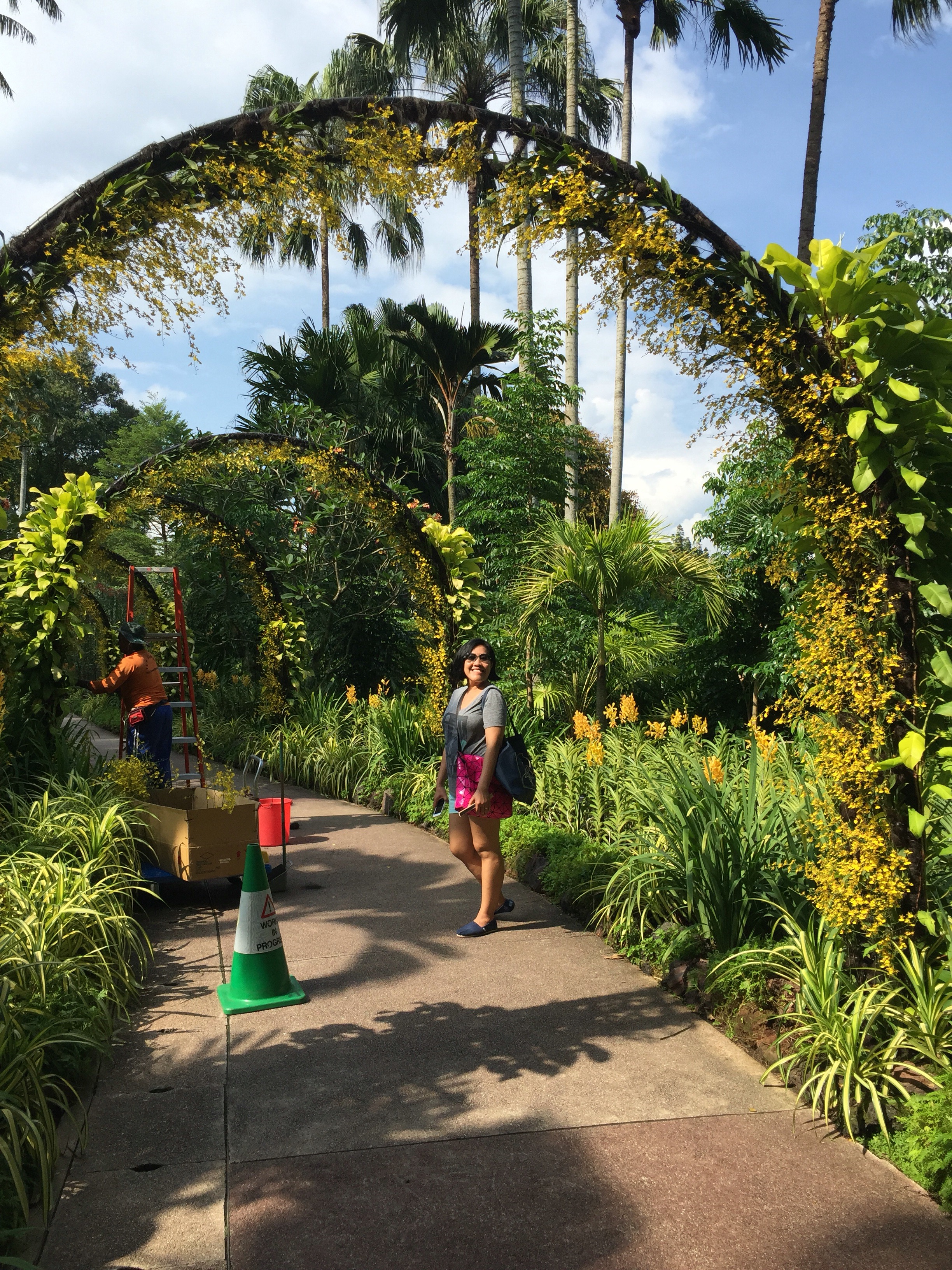
 That’s not a typo – ‘botanic,’ not ‘botanical.’ Less like an American botanical garden, which are rather like educational centers or nature museums, this was more like Rock Creek Park – a huge, public park for walks, jogs, exercise, and picnics. Only tropical. I say Rock Creek rather than Central Park, because it is sprawling, irregular, and a touch wild.

In case you hadn’t gathered, we spent a couple of days in Singapore – just a two hour trip from Thailand – and I’ll probably have more to write. But it may be a bit fragmented. I’m writing this at the airport (though the lack of internet means it will be posted later), but I suspect later ones (and much of what I write about this trip to the east) will transcriptions of haphazard notes that will make only partial sense.