Wilmington, Delaware


So, I was in Wilmington, Delaware the other weekend. On Saturday, I walked from Brandywine Park to the Delaware Art Museum, which is famous for its collection of Pre-Raphaelite paintings and related works. The museum was originally founded to house and preserve the works of Wilmington based illustrator, Howard Pyle, who died in 1911.

On Sunday, I walked through the park and up a set of stairs and wound up at an eighteenth century Presbyterian church which is only open one day month and only for two hours on that day and, by strange coincidence, I walked up there on that day.

My notes are all mixed up, so I’m just going to post a bunch of pictures up and make whatever comments I want in the caption.

This is from the church, obviously

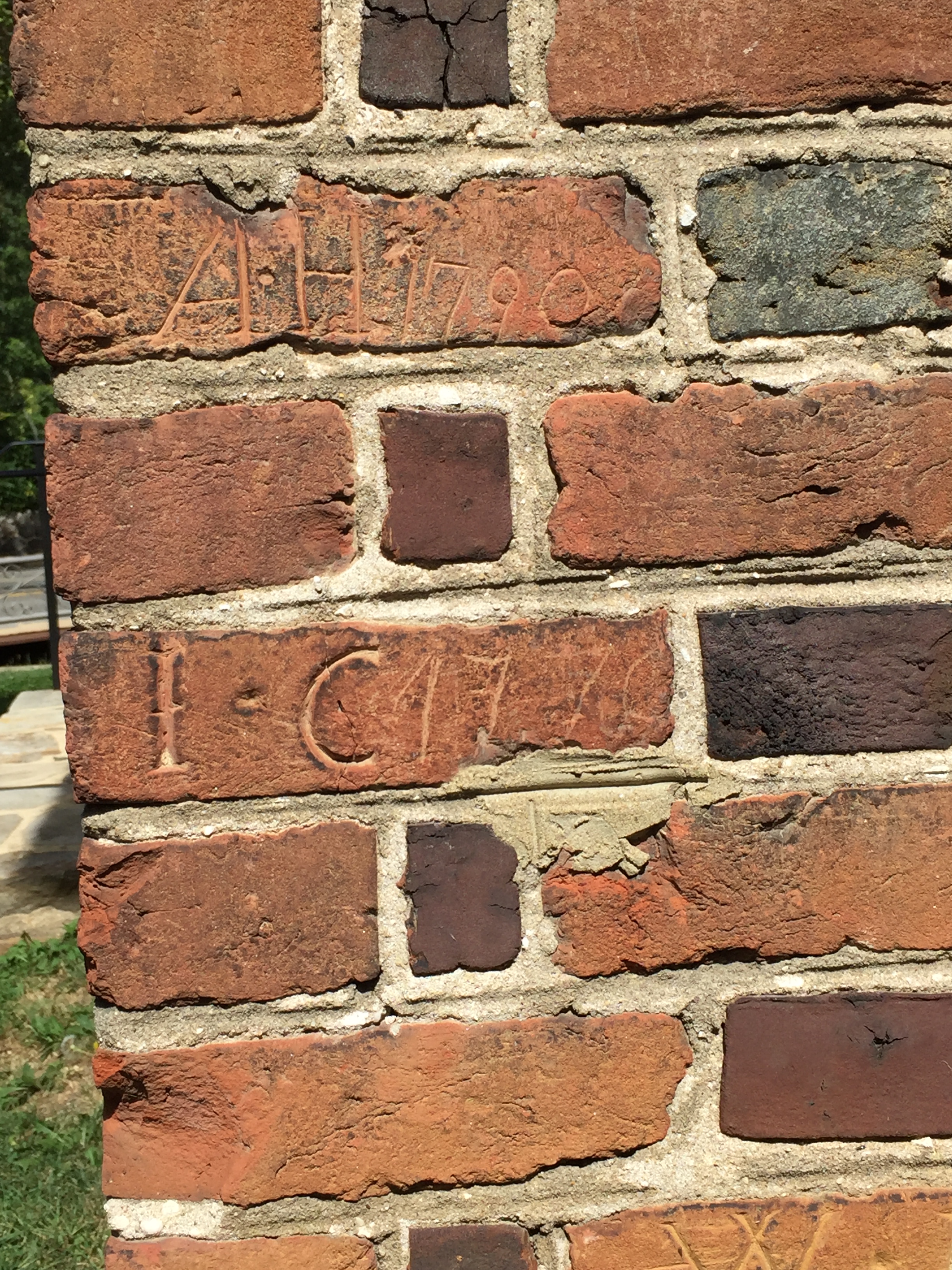
You can see the date of its construction written in 'brick' on the side
You can see the date of its construction written in ‘brick’ on the side

Colonial graffiti
Colonial graffiti

The classic colonial pulpit

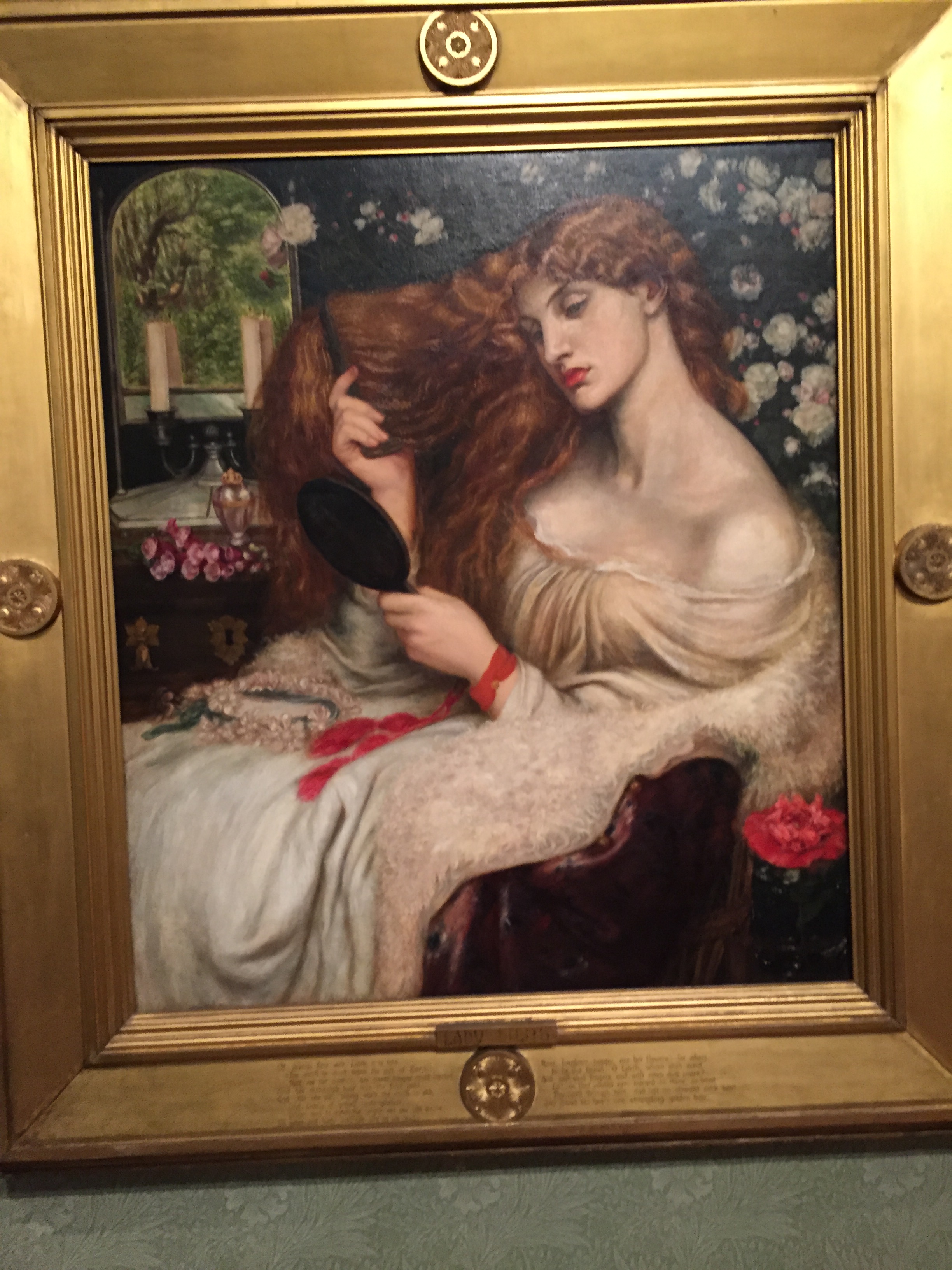
A quintessential subject (Lilith) by the quintessential Pre-Raphaelite artist (Rossetti)

'Hymenaeus,' by Edward Burnes-Jones
‘Hymenaeus,’ by Edward Burnes-Jones

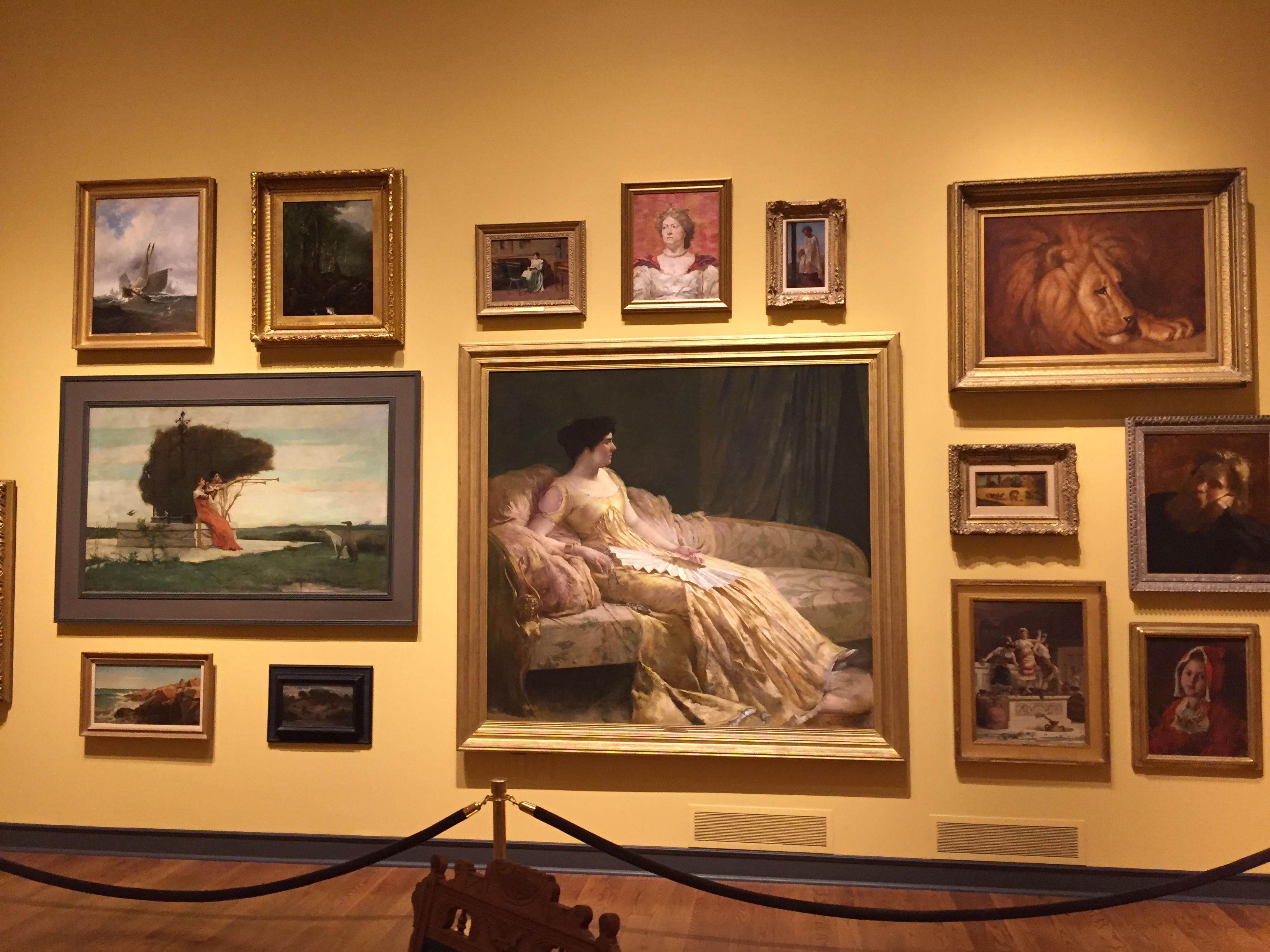
I took a picture of this just because of the salon style display of the works

Another example of how charmingly welcoming this museum is!

Most museums won't let you sit in the nice chairs in the galleries
Most museums won’t let you sit in the nice chairs in the galleries

Another very Rossetti-like Rossetti... they did love red-haired women
Another very Rossetti-like Rossetti… they did love red-haired women

From the Pre-Raphaelite gallery; I should note that the museum took a wonderfully liberal view of photographs; no flash, of course, but if the museum owned the piece, you are welcome to snap away

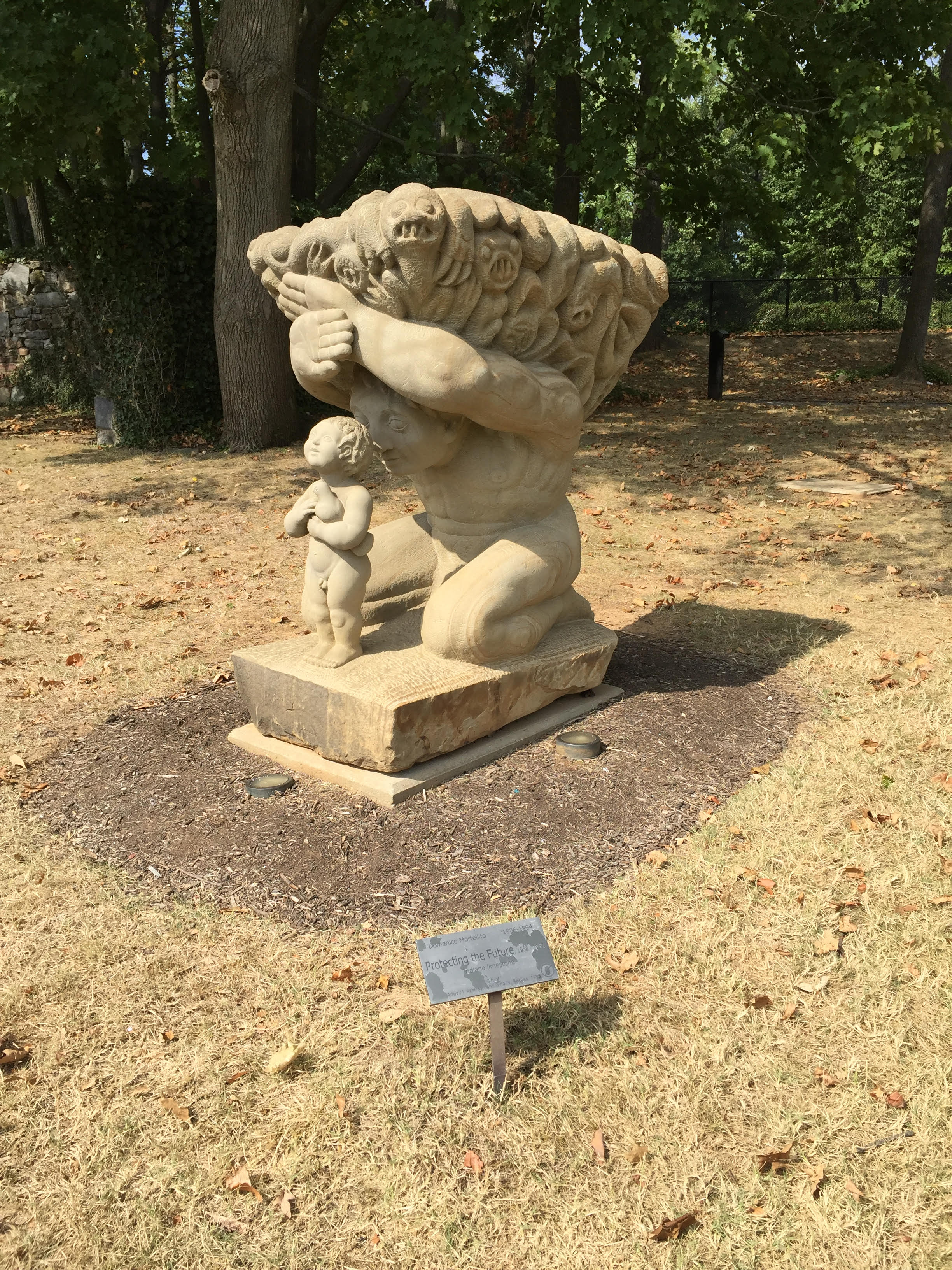
What I like best is that the man is smiling despite his burden; protecting children is inherently rewarding

This is a great Motherwell, but also exemplifies the challenge of the smaller, regional museum; how does one work around having an eclectic collection that doesn't really illustrate a movement or artist? What good is one Motherwell, in a way?
This is a great Motherwell, but also exemplifies the challenge of the smaller, regional museum; how does one work around having an eclectic collection that doesn’t really illustrate a movement or artist? What good is one Motherwell, in a way?

Completely random, but cool - a set of Art Deco elevator doors!
Completely random, but cool – a set of Art Deco elevator doors!

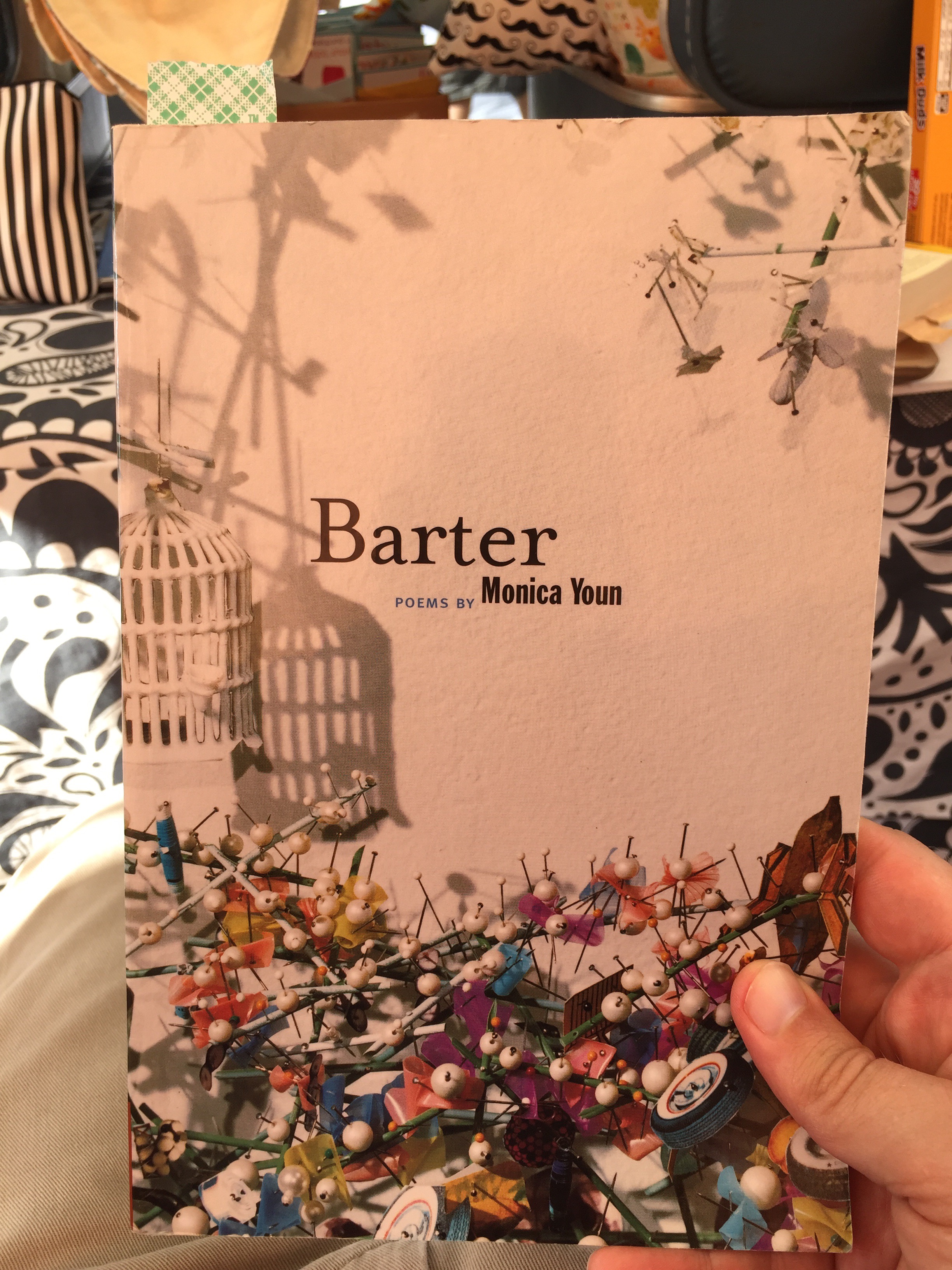
‘Barter’ By Monica Youn


I bought Monica Youn’s Barter at a used bookstore, which I don’t normally like to do, when it comes to living poets, because I like for poets to profit (financially) from their labors, but the book was on my list and there it was at Capitol Hill Bookstore, so I got it.

Barter is a dark book. The objectification and commodification of women’s bodies (and maybe, especially, the bodies of Asian women, but I can’t really be sure); immigrant bodies are also a recurring theme, albeit rather elliptically. Discomfort and disjunction. Life as trauma, perhaps. But not as being determined by traumatic experiences, so much as life being inherently so. Maybe. I don’t know. And much of this in the nominal form of ekphrastic poetry.

Derivation, or
The Unexamined Life

remorse: to be bitten
again. remonstrance.

to be displayed again;
shown again; arms

pulled back, head
following, how you

gloat, my reflection
smeared in the moonlight

window: why won’t
you look at yourself?


Maria Edgeworth, William Wordsworth & David Ricardo


I read this little piece on William Wordsworth’s visit to Ireland and the extent to which he was influenced by what he saw there (both in terms of the political and ecological content of his poems). It also noted his encounter with Maria Edgeworth, the author of Castle Rackrent.

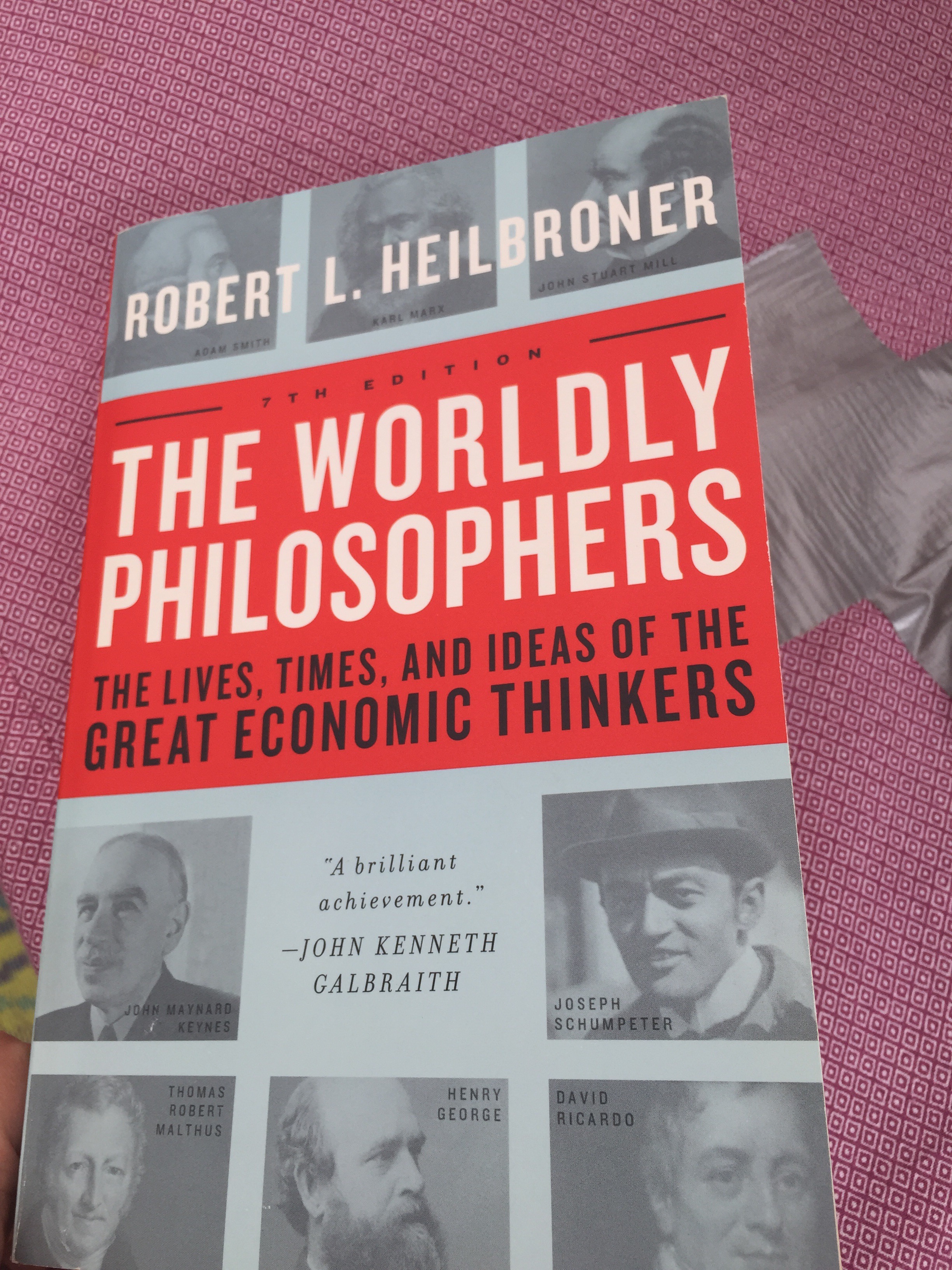
Later, I was re-reading my favorite bit of a beloved book, The Worldly Philosophers. My favorite bit of that book (after the description of Thorstein Veblen washing dishes with a garden hose) is the section on Thomas Malthus and David Ricardo in the late eighteenth and early nineteenth centuries. In that section, it notes the correspondence (and influence) one Maria Edgeworth had on Ricardo.

When I saw the Edgeworth name on page 85, I wondered, could that be the same one? Flipping over the page, when I saw Castle Rackrent mentioned, I obviously knew it was.

That’s it. Just a fun little thing. But you should definitely read The Worldly Philosophers. I actually had it in my bag because I have been intending, for some time, to loan it to a friend who going to be studying business. My father once semi-famously said that one should never confuse a business degree with an education. I thought that a book about influential economists might split the difference a little bit. So I had it in my bag, in case I should run into him.

Fifty Years Ago Today, The First Episode of ‘Star Trek’ Aired


I took that picture of Captain James Tiberius Kirk’s uniform at the Smithsonian’s Air and Space Museum on the Mall. And no, I’m not going to get into a discussion about Kirk’s middle name. But I should note that this is a uniform worn by Chris Pine, not by the eternally awesome William Shatner, though, after watching Star Trek: Beyond, which was the best of the ‘new’ Star Trek‘s and, dare I say, in the top fifty percent of all Star Trek movies, not to mention a rollicking good time, I now have a much better appreciation of Pine as Kirk, or how he has grown into the role. Real Star Trek fans will also have realized that Shatner could never have fit into that uniform, even at his youthful and swashbuckling best.

But that original series was just… awesome. And Wrath of Khan was one of the best movies of all time (I haven’t forgiven the first reboot movie from trivializing the motives that drove Kirk to cheat on the Kobayashi Maru simulator; the reboot made it a sort of joke, but in Khan, Kirk admitted that the simulation, which was intended to be training for how to deal with failure, triggered in him a deep feeling, beyond just being unable to accept no-win situations, but a terrible fear of failure).

So, not exactly happy birthday. But happy something. And thank you, Gene Roddenberry.

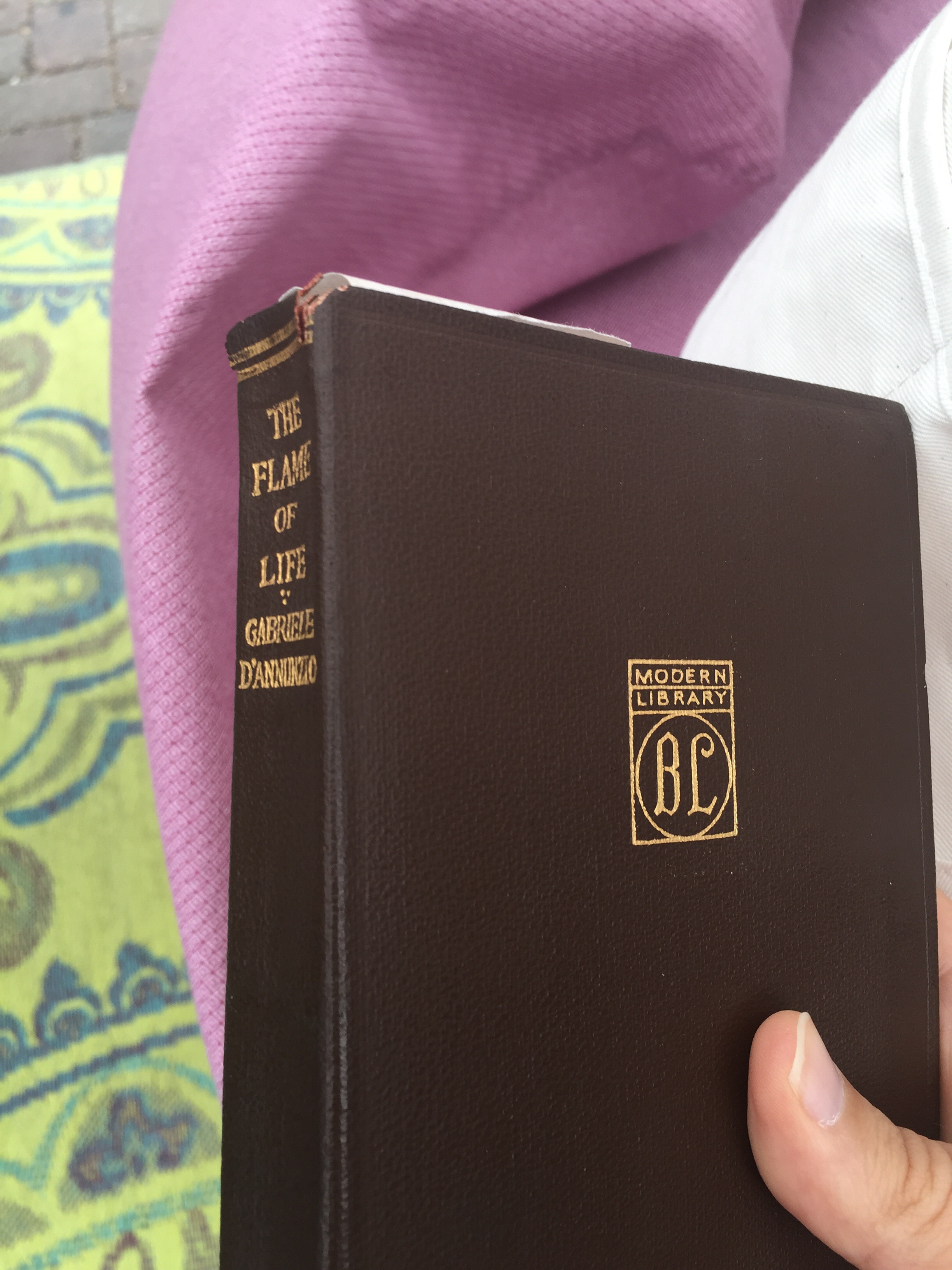
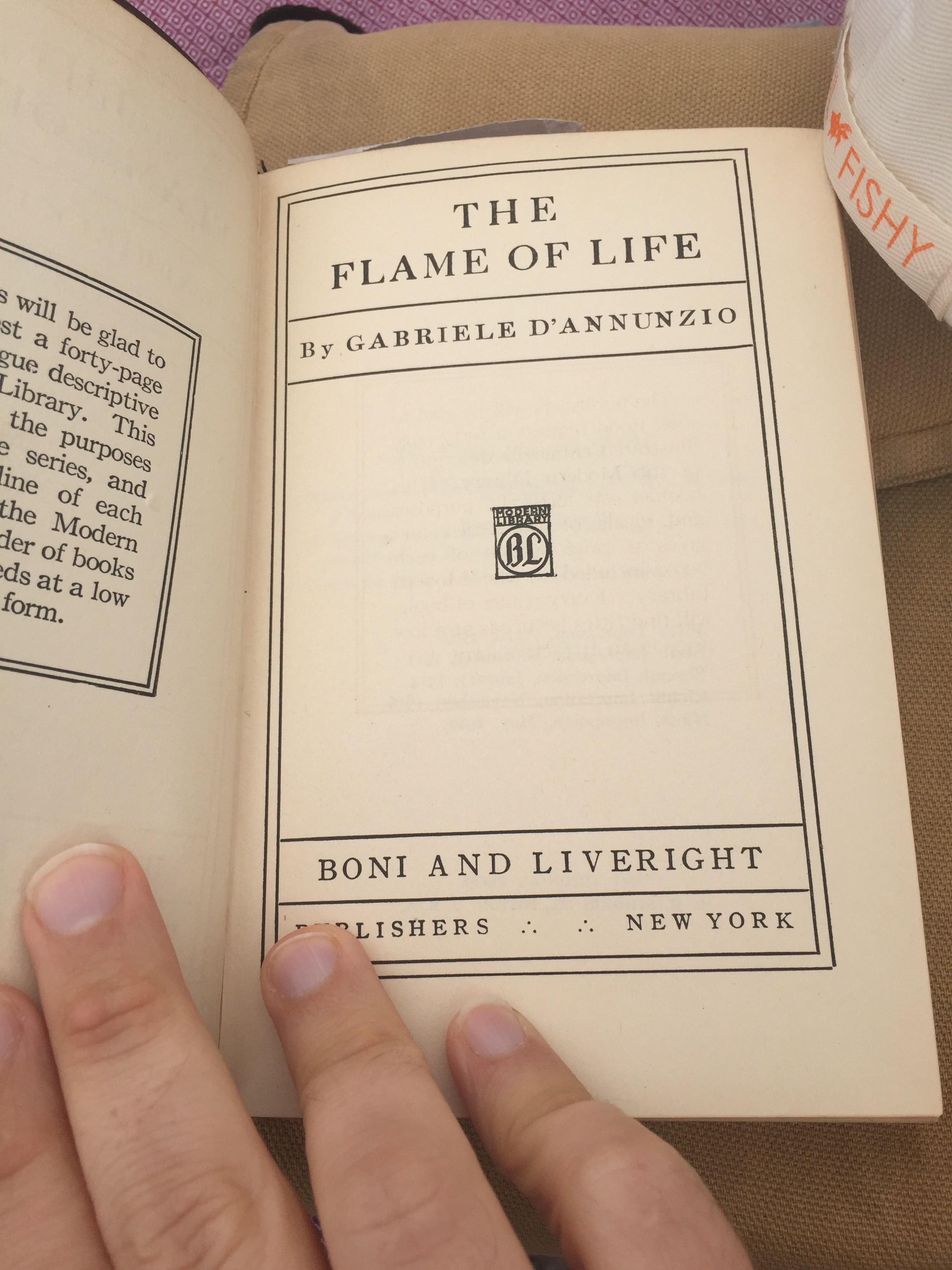
‘The Flame Of Life’ By Gabriele D’Annunzio


I bought this book in complete ignorance of anything buy visual and tactile beauty; as a physical object. But I wasn’t wrong in guessing that I would enjoy what would surely be some wonderfully overwrought prose.

The plot is wafer thin (Monty Python reference) and driven by issues and concerns that seem positively ridiculous. A dionysian poet named Stelio enthralls a lushly imagined Venice with his wild declamations on art and beauty. Among those enthralled a beautiful actress (former courtesan, too?) alternately called Perdita and La Foscarina. Their love (and presumably, their passionate sex, though that is never mentioned nor described) is voluptuously erotic, but it is haunted by La Foscarita’s greater knowledge of impending knowledge. Yes, she is a nearly decrepit thirty-four (I’m guessing the young genius poet is in his mid-twenties). I’ll admit, those concerns pulled me out of the narrative a bit. Maybe if he had been twenty and she was thirty-nine, I’d have seen the problem more clearly… She is also haunted by the memory of a beautiful and, needless to say, virginal singer named Donatella. Poor Perdita believes that Donatella is destined to be Stelio’s life partner.

But it’s not about plot. It’s about lengthy digressions on art and poetry and architecture and Richard Wagner’s death (which bookends the novel; placing the action around the year 1883). It’s about painfully decadent prose stylings that you will either love or that will force you set the book down before the fifth page.

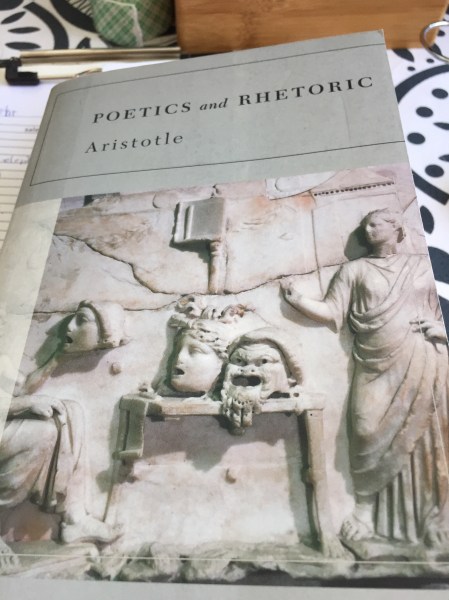
‘Rhetoric’ By Aristotle


I probably owned this book for at least a decade before I started reading it recently. Just a quick glance would have indicated it’s not nearly so long as it appears. First, because it also have the Poetics, which I’ve already read (not that it would hurt me to read it again, but we are focusing on reading Rhetoric for the first time) and second, because the left hand side of the page is just for notes on the text, which, even if you read them, means lots and lots of empty real estate on half of the pages.

I’ve been on a minor ancient (western) philosophy kick, having also read some Sextus Empiricus recently.

My motivation for picking this book was two fold: availability (I owned it) and a (misguided) belief that this would actually contain a great deal of logic. I don’t know where I got the idea, but I had been under the impression that a good chunk of Aristotle’s inductive logic writings could be found here. Smart readers of this blog will have figured out by now that I was wrong (less intelligent readers may still be waiting for the answer to be revealed).

Can’t really say that I got many deep insights in the actual art of rhetoric. In that respect, Quintilian is a much better guide. There was a little logic, in the form of Aristotle’s frequent references to enthymeme’s, a type of syllogism. But, of course, syllogisms themselves are discussed in the Topics, not Rhetoric.

So do I get some more Aristotle? Something beyond his Politics or De Anima and try to find one of his actual books on logic?

Maybe, but it seems like a lot of work and possibly relatively expensive and I’d have to hide the purchase from my better half.

No, I’ve got a nice looking copy of Cicero’s De Oficia on the shelf that I saw the other day, and that seems like a much more likely choice.

Amber


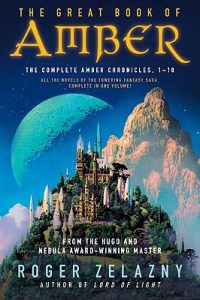
9780380809066Some years ago, I bought The Great Book of Amber at a used bookstore. The Amber books were one of those books I remember seeing on shelves in used bookstores when browsing for sci fi and fantasy as a kid, but were not ones that I read at the time.

These collection actually contains ten books and I only read the first five, but that first five contains the initial, extended story line of how Corwin saved Amber and possibly the entire known universe from… well, let’s just it’s a complicated plot.

The setting is interesting: the ‘real’ world is Amber and what we know as ‘Earth’ is one of many (limitless?) ‘shadows’ of Amber, some of which were created by the disappeared king of Amber and his many children. There is also the ‘Courts of Chaos,’ which is very poorly described and explained and winds up sounding very much like something from Michael Moorcock (Moorcock and Zelazny were both part of a new wave of British fantasy).

The hero, Corwin, embarks on a swashbuckling journey quest, which is thrilling, but, as you can probably guess, not as engrossing to me as it might have been. There are those who swear by these books. For me, I was totally gripped at the noirish mystery with which opened, with an amnesiac Corwin waking up in a mental hospital on ‘Earth’ and trying to figure out what the heck is going on, but once he learned, it became less interesting to me.

Nonetheless, better writing than most and not sorry I read it.

Contemporary North Korean Art: The Evolution Of Socialist Realism


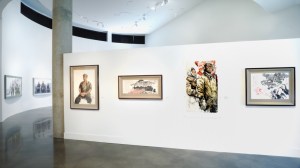
On the very last day of the exhibit, my better half and I went to the Katzen Gallery (the art museum of American University) to see a visiting selection of North Korean. There was also an exhibit of contemporary South Korean but, as interesting as that was, the real driver of our desire was not the autocratic society’s democratic neighbors.

At the end of this, I’ll include links to an article about the exhibit, as well as the gallery’s page on it.

My own thoughts…

I really liked it. A lot.

I didn’t go in expecting certain things. Formal innovation, for example. Deep subtext. I went open to enjoying what I was likely to encounter (and did also encounter some stuff that surprised me).

The large scenes of heroic military and industrial figures, but despite the size, focusing on a small number of relatively nondescript people, so that the otherwise quotidian individual becomes the focus – the hero of the painting.

I expected that. I did not expect the small ink paintings (actually, they were all ink wash on rice paper in a style/technique called chosonhwa) of dismembodied flowers/branches/flora framing some rough calligraphy (I really wish they had translated the calligraphy for us; were they poems? paeans to the Korean people or leaders? mapquest instructions to reach a nearby gas station?).

My favorite was an unfinished painting of people waiting at a bus stop. It was so marvelously prosaic and contemporary looking. While obviously a painting of Korean people, it was not otherwise culturally distinct, which made it weirdly wonderful. Little touches, like a young man who seemed like he might have been glancing at a pretty young woman who was at the comparative center of the painting.

As an art lover and, more importantly, someone who believes in public support for the arts, North Korea’s massive investment in artistic production and support for the artist as a professional is enheartening… but this North Korea. You can’t say anything good about the regime, can you? It’s brutal, totalitarian, and directly responsible for so many deaths.

Artsy editorial on the exhibit.

Katzen’s page on it.

North KOREAN ART

I had seen this painting before; I think it is relatively famous; the title is “Farewell” by Park Ryong

Church


About a month ago, my better, my parents, and I visited the ancestral homeland in rural Arkansas. A bit of a culture shock for my better half, as a POC and an immigrant, to make her way there, to say the least.

On Sunday, three of us (father, wisely perhaps, stayed in) went to a pentecostal style church with other members of the extended family.

I was kindly warned by other family members (ok, by my mother) and passed on some of those warnings to my better half.

But I didn’t think much of the warnings. I had, after all, been the pentecostal and evangelical churches before. Many times, in fact. Those were all African-American churches, and I didn’t realize how big a difference that would make.

The service itself (a little odd, for someone raised in the Episcopal tradition and presently an imperfect Catholic churchgoer) lacked ritual, but was, instead, twenty minutes of music and nearly two continuous hours of preaching.

Ahh… the preaching.

I give credit to any person who can pontificate (pun intended) for so long, but the content was absolutely horrifying to my own spiritual/religious/faith sensibilities.

The black prophetic tradition that I have encountered, even when talking about things that are wrong in the world, is ultimately, a positive one. Dr. King noted that he might not make it to the mountain, but the focus was not on that, but on the fact that the mountain was there and within reach of humanity.

For this (white) preacher, the focus was on despair and the negative. Yes, the positive (salvation is attainable) was mentioned, but the focus was on the negative. Same content, if you will, but emphasis matters. Oh, does it matter.

For most my time as a Catholic, I’ve had the fortune to have a wonderful sermonizer at the pulpit, in the form of a jovial priest named Father Byrne. Like most priests I have met, he’s a happy guy (based on my small sampling, job satisfaction seems through the roof for people who have taken orders). His sermons often opened with a challenge, but quickly moved to a loud and happily declaimed declaration along the lines of, “But I’ve got good news for you!”

The contrast was stark and, ultimately, horrifying to behold.

My better half luckily skipped the bible study before the service. Luckily, because there probably would have been altercation had the same comments been made while she was there as were made while she wasn’t (and I have to suspect that the person who made the most reprehensible remark lacks the self awareness to have picked up on the fact that saying what she said around a POC would be no less inappropriate, but wildly more personal offensive).

You’re probably wondering what she said, right?

Somehow, racism came up (along with the impending collapse of civilization, which one can’t help but feel they interpreted as ‘white civilization’) and a woman told the group about how her apparently perceptive/prophetic grandfather had, in the 1950s, predicted an eventual race war between white and black.

Now, a little reflection on that story might lead one to ask, what might have been happening in the 1950s to lead a white man in the South to say this?

Could it be a nascent civil rights movement? Could it have been early moves towards integration, like Truman’s integration of the military or the 1954 decision, Brown v Board?

But every seemed quietly acknowledge the woman as having made a valid point of some kind. Or maybe, like me, the rest of the attendees were cowards who said nothing.

I read this conversation between the poet Jenny Zhang and Nate Brown wherein a story is told about teaching a workshop where someone presents a story about several white college students in a mostly white town who encounter a black man who is, in the story, referred to/named as ‘Black.’

The teacher tries to drive the conversation towards some kind of dialogue about that, but no one seemed to get that referring to the only POC in the story by their color as being at all problematic.

That struck me, because I couldn’t help but think back to that moment at bible study… did the woman never stop to think that there might be more to this sixty year old prediction of a race war than mere insight?

And, once again, I call upon the wisdom of this line:

When you’re accustomed to privilege, equality feels like oppression.

And Yet…


9781476772066The most recent (though probably not last) of the posthumously published collections of Christopher Hitchen’s essays lends itself to a sort of narrative arc, as the pieces inch closer to his terminal diagnosis with esophageal cancer and the reader’s mind naturally tends to see relationships (prophecy?) between his death and the chronologically later essays.

As someone who spent the first five years of the new millennium as a professional political campaign professional, the political essays around the 2004 election and shenanigans in Ohio were a painful reminder of a time that, until my memory was sparked, felt very long ago. Pleasingly, those and other discussions of then current events from the middle of that decade did not feel as dated as they could have.

His book reviews – at their best, excuses for lengthy rambles that show off, but provide the best platform for Hitchens ‘holding court’ – are the highlights, especially the long ones on biographies of Che Guevera and V.S. Naipul (Hitchens shows off his Britishness by referring to him as Sir Vidia).

It’s no secret that Orwell was a touchstone for Hitchens. As an essayist, he is often compared to Orwell; and I have often heard Orwell described as the great English essayist of the twentieth century.

But what have you read by Orwell? I’ll wager, gentle reader, that it doesn’t extend beyond his best known novels, 1984 and Animal Farm. And if you have read an essay, it was probably that short one he penned on the proper way to make tea. While an admirable tidbit, hardly what reviewers are referring to when they praise Orwell the essayist.

My point is related to a question that came to me when Hitchens died: how long will be remembered?

Having not written a pair of timeless novels, who will read his essays, beyond a handful of academic scholars, in twenty years? His reach will be less than that Edmund Wilson wields today (which, let’s not kid ourselves, isn’t much). His book length works are too timely, methinks. Maybe Letters to a Young Contrarian will be read, but it feels to self congratulatory to me to be the source of long lasting, posthumous relevance.