 Unfortunately, I probably won’t be seeing this exhibit of works by Berthe Morisot because it doesn’t seem like it will be coming to a museum near me. Read more
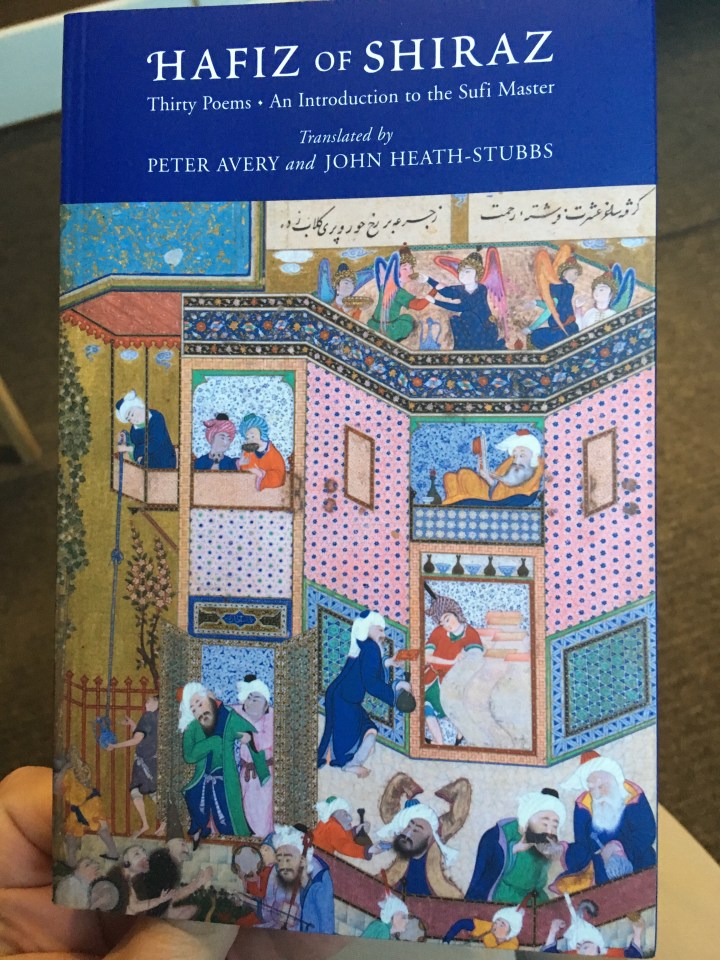
Hafiz Of Shiraz
 When, sometimes, it becomes difficult to believe that these are truly directed towards God, you see this: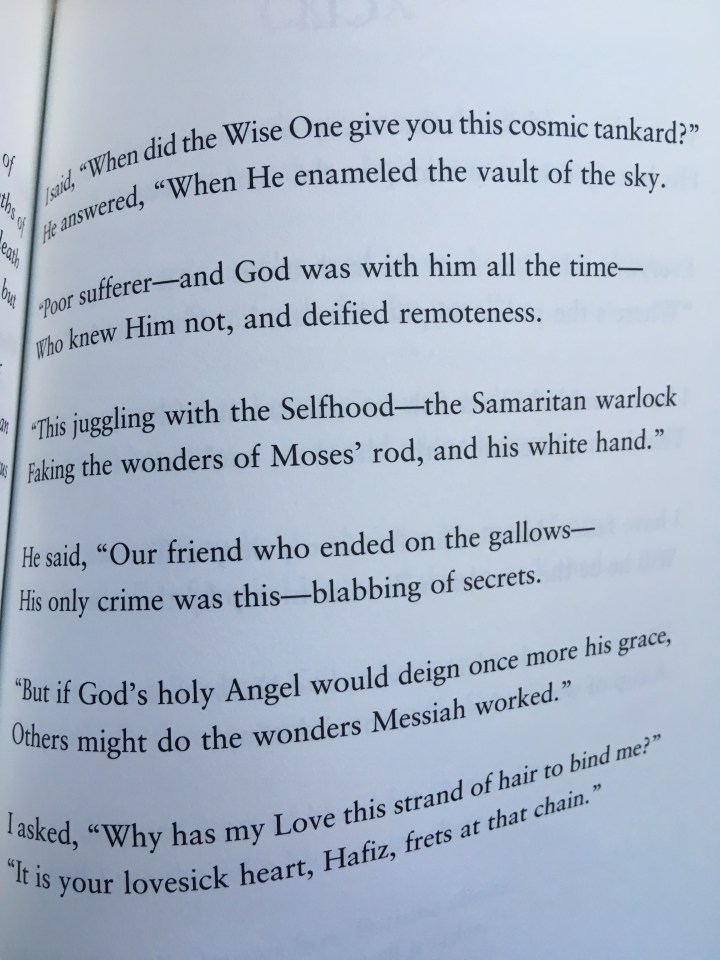
I have, honestly, never read nor wanted to read much of the trifecta of popular, mystical, Islamic poets known to western, non-Muslims (Hafiz and his even more popular compatriots, Gibran and Rumi), but I was glad I made an exception for Hafiz. And I have read enough into Sufism to understand that the erotic, alcoholic message is, truly a spiritual metaphor (and is it any more erotic than the religious poetry of Teresa de Avila?).
After The Crown
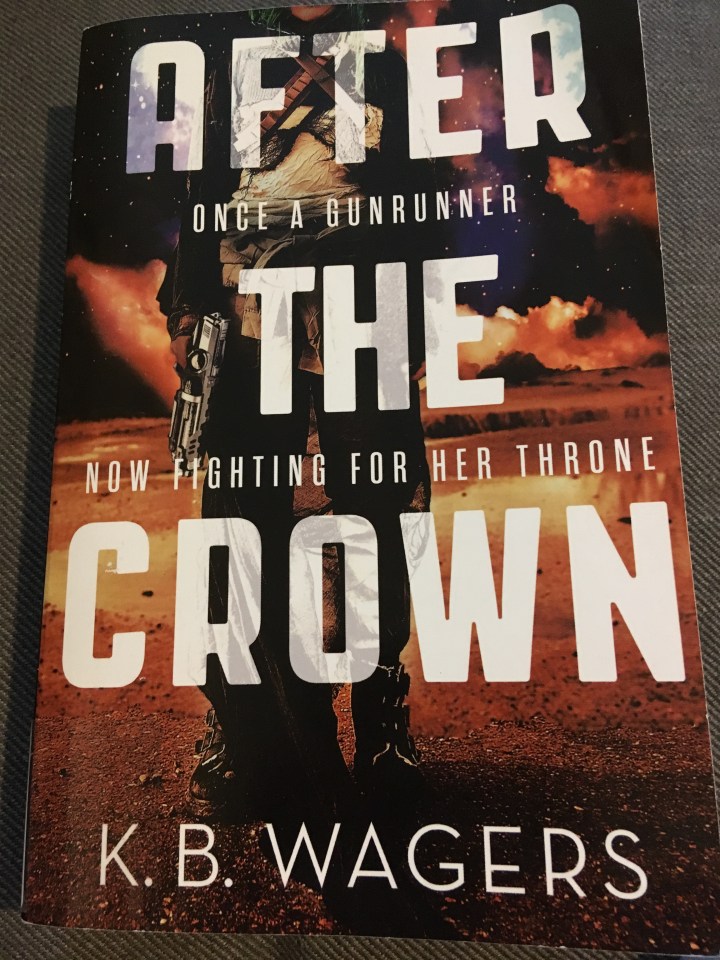 So it’s a marvelous space opera. Somewhat on a lark, I requestioned this from the library, remembering having enjoyed the first book. Now, I remember how good the first book was and this is, if not better (though it could be), more exciting. It truly is a classic space opera. Read more
Things Overlooked
Not really adding anything, because I’m not in a great position to go back and re-read and re-examine, but how, when I was reading Julian, did I not think to go back and look at it Pater’s Marius!
Both are about Roman aristocrats from late antiquity with pretensions towards philosophy. Marius, of course, goes from living as a pagan (or, as Julian would have called, a Hellenic) to becoming a Christian, whereas Julian was raised in a rapidly Christianizing empire, but chose to adopt the gods of his ancestors.
A missed opportunity. I did see Marius sitting on my shelf, however, and maybe I will try and go back while Julian is more or less fresh in my mind.
‘Phrasis’ By Wendy Xu
 I read her chapbook, Naturalism, some time back, and this fuller collection has a few crossover poems (including the titular Naturalism).
Phrasis is a very good and enjoyable collection, but not truly great. It struck me as the work of a very good poet, but it wasn’t one of those that really bowled me over, you know? Wordsworth bowls me over, but that can’t be the standard, can it? The first books I read by both Cathy Linh Che, Charles Simic, and Anne Carson both bowled me over.
But I don’t want to damn with faint praise. It’s very, very good. Sometimes she engages in some colloquialism or profanity that never quite takes – I don’t think she’s quite ruthless enough in her use of it – but her more ‘poetic’ lines and stanzas (that vast majority) are great.
Journey To The Center Of The Earth
 I read this book when I was in elementary and it was a little lost of me, not in the least because Verne almost always have a pedagogical goal, in addition to wanting to tell a roaring good yarn (which he did).
When I read 20,000 Leagues Under the Sea, I was somewhat disappointed in how the desire to educate got in the way of an exciting tale. Journey to the Center of the Earth had no such problem.
Though I will add, though I hope it’s superfluous, that much of the science has been… superseded by more recent discoveries.
If you have primarily seen the various movies (as a kid, I remember one with James Mason and I was inspired to reread the novel by having my daughter watch the surprisingly fun version with Brendan Fraser), you may be surprised by the lack of dinosaurs. There is a fight between a plesiosaur (of some kind) and an ichthyosaur (of some kind), each of a size that I think rather exceeds that of known members of those groups. There is also a herd of mastodons who are, apparently, being herded by a twelve foot high prehistoric man of some kind. Exciting stuff, but not really what I was looking for as a child. This would have been better for me to have tried to read in middle school.
But if you do want dinosaurs and want to stay in this sort of genre, Arthur Conany Doyle, of Sherlock fame, wrote a novel featuring Professor Challenge called The Lost World. Try that one.
Magician’s Land

So, I finished the trilogy.
It wasn’t bad. I get why people liked it. But I feel like it became more like just another fantasy series, as it moved away from the question of “what is worth doing if you are a rich and powerful magician under 25 who literally can just mess around, drink, and fornicate more or less indefinitely?” Read more
What Your Favorite Shakespeare Play Says About You
While not my favorite (for the record, I would, these days, say Twelfth Night), I loved the one for Antony and Cleopatra (arguably his best late period play)

The whole list:
https://electricliterature.com/what-does-your-favorite-shakespeare-play-say-about-you-c0d7d44d09b8
The Magician King
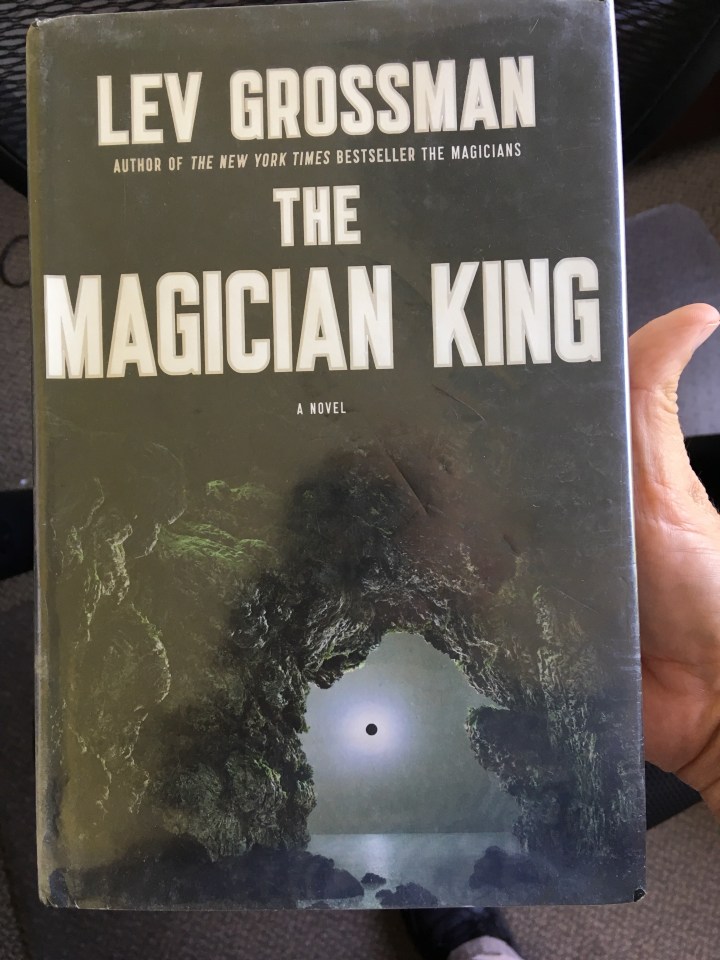 As a sequel to The Magicians‘ strange and fascinating tale of magicians as lost and debauched trust kids, The Magician King fails to build effectively on the asked question: what do you when you can do anything? Read more
‘Julian’ By Gore Vidal

 A reminder that, as wonderful a public personality and intellectual as he was, he was also a fantastic writer. Julian, while not as brilliant as Burr, captures so many of the strengths of the public Vidal.
The philosophy within Julian is, of necessity, I think, the sophomore year dorm room variety (not freshman, but not folks who are more than half way through their philosophy B.A.s). Novels are rarely deeply philosophical and we should not expect them to be. Perhaps only Plato could have done both successfully.
The anti-religious Vidal is naturally sympathetic to the anti-Christian Emperor Julian, but he also gently mocks the protagonist’s own adherence to pre-Christian Hellenic paganism. But the depiction of a time when education meant, primarily, an education in philosophy and history, seems so wonderfully idyllic to a person like me (even if sanitation was undoubtedly worse). The various teacher-philosophers of Athens and Antioch are used to portray an achingly attractive milieu. And, in today’s climate, the idea of a leader who surrounds himself with leading philosophers sounds wonderful.
Narratively speaking, the best innovation is the form. It is a correspondence between two former teachers and devoted followers of the (real) Emperor Julian. Libanius wants to publish the memoirs of Julian, which he acquires from Priscus, who managed to grab them in the aftermath of Julian’s death during his military campaign in Persia. As the memoirs are copied and sent to Libanius by Priscus, you also see the annotations and notes of Priscus (defending himself against supposed inaccuracies and raging against some of the rivals for Julian’s ear). Then you see Libanius’ occasionally outraged remarks about Priscus’ parsimony and puffery. It’s a fantastic depiction of gossip and literary politics among intellectuals and semi-celebrities and you can imagine that no one does it better than Vidal.
 the coffee philosopher