I Forgot Huckabee


I forgot Huckabee while writing about the GOP field. And he is a strange case.

He is a strange case partly because, for all the talk about the Tea Party, Huckabee manages to lead the GOP field while being very much an anti-Tea Party candidate. He has not tried hard to kiss up to them and his record is not all in line with their ideals. Yet he is the most popular GOP candidate and has the highest favorables.

If Huckabee runs and wins, it would signal the decline of the Tea Party as the dominant force in Republican politics (which is already happening, as a number of new congresspersons and senators elected with Tea Party support are backing away from them now that they are in office; I’m talking to you Marco Rubio!).

The GOP Field


Besides poetry, my other love is politics. Up until now, I have refrained from commenting much on politics, but a relative encouraged me to speak my piece a little. I will promise not to write about candidates in races where I have a vested financial interest, i.e., where someone is paying. I won’t necessarily tell you who I’m working for, but I won’t comment on their campaigns.

Senator John Thune (R-SD) pulling his name out of contention for the Republican presidential nomination is the best thing that could have happened to President Obama and to former Governor Tim “T-Paw” Pawlenty.

Obama is consistently polling slightly behind a “generic” Republican. But, once the names of the leading contenders are included, he jumps to a solid lead. Thune was the closest thing the GOP had to a “generic” Republican. With the exception of his vote for TARP, there were no major knocks on him. He was telegenic, handsome, conservative, and… well, generic.

Absent Thune, T-Paw becomes the closest thing the field has to a “generic” Republican. He has a decent shot of snatching the nomination against better known and better funded rivals, just on the basis of being less unpalatable than figures like Romney, Gingrich, Palin, and Bachmann.

Unfortunately for the GOP, while T-Paw is a decent campaigner, he will also lose his home state of Minnesota and is probably not dynamic enough to take out Obama. He would probably do better than those other names I mentioned, but he is unlikely to win the election.

Marginalia


The New York Times recently published an article bemoaning the expected end of marginalia. In addition the rise of e-books, they also point to the trend towards making books too sacred to mar with personal notes.

I admit, that I am one of those who finds himself unable to write marginalia on a regular basis. Sometimes, I make a particular effort to do so, but it does not come naturally.

Nevertheless, I will join them in mourning the death of marginalia, if it comes. Recently, I saw an exhibition at the Folger Shakespeare Library on the marginalia seen in books in their collection and it was a wonderful and eye opening experience.

10 Greatest Poets


Poet and professor Dean Rader is working a list of the ten greatest poets for the San Francisco Chronicle. The idea is to mimic the “10 Greatest Composers” put together by the New York Times.

Let me start of by saying how pleased I am to see a major city daily writing about poetry, especially on an extended basis (the series will go on for two weeks, as Rader considers very options within the pages of the paper).  Let me also offer my two cents:

1. William Shakespeare

2. Charles Baudelaire

3. Aleksandr Pushkin

4. George Gordon Lord Byron

5. Percy Bysshe Shelley

6. Rainier Maria Rilke

7. T. S. Eliot

8. Emily Dickinson

9. Dante Aligheri

10. Walt Whitman

Runners-Up: Paul Eluard, Boris Pasternak, Ezra Pound, Arthur Rimbaud, Pablo Neruda, Edgar Allan Poe

My list is, clearly, biased to only include the western canon. This is a limitation of my own knowledge and experience, rather than a statement on world poetry. It is also biased towards English language poetry, for much the same reasons.

Addendum to Borders


I must add a little post-script to my post about Borders. Last year, a Borders near Metro Center closed shop. That particular location was probably too close to its rival, Barnes & Noble. But now, the one near 18th and L, close to my old office, is apparently closing up. With that closure, there will be no Borders anywhere near my home in Capitol Hill.

Smith-Corona Typewriter


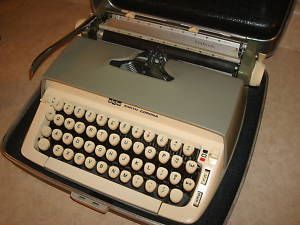
On Friday, February 18th, the ribbon for my typewriter arrived. Several years ago, while I was still living in Los Angeles, California, I purchased a manual typewriter on EBay.

This particular model is a Smith-Corona Galaxie SCM manual in suitcase/carrying case (if you are a would-be writer, you probably know the type). According to my research, this machine dates back to sixties (Machines of Loving Grace pins the year at 1968).

When I first bought it, I kept merely as a piece of decoration. A pretentious announcement to visitors that a “Writer” (capital w) lived here. It remained little more than decoration for a number of years.

But at last, I ordered some ribbon through Amazon. I did not actually buy it from Amazon, but through another seller on Amazon’s network. Specifically, through an office supply company called EBS that specializes in hard to find office supplies. The exact ribbon I bought was a Smith Corona Typewriter Ribbon Spool – Black – SC-20-SCM Compatible for just $9.75, plus shipping (for a total of $14.38).

And I am so glad that I did.

Composing on a manual typewriter is amazingly satisfying. The only other time I tried was once or twice, just after I graduated high school and was living in the famous Parisian bookstore Shakespeare & Company. The owner, George Whitman, kept an old manual in one of the upstairs rooms for his “tumbleweeds” (as he called the itinerants who slept in his bookstore) to write on. At the time, though, I did not use it much, preferring pen and paper.

Using this machine requires one to slow down considerably. You must forcefully pound the keys, or else the letters will come out to faint to be read. This slowing down makes you very aware of each and every letter, giving you a greater aesthetic appreciation of language at its most basic level – that of the word (apologies to Ludwig Wittgenstein who, in his Tractatus Logico-Philosophicus, insisted that the basic unit of language was the sentence). I also have, over the last few months, fallen in love with fonts that resemble that of classic typewriters. Even on my computer, I have been experimenting with this sort of typography.

So far, I have not tried composing poetry or essays on it, but I did write a letter to my good friend, Ryan Leonard.

My intention is to continue to drive towards a sort of nostalgia. One is always seeing new collections of letters from famous writers and poets being released, but the rise of email and Facebook has rendered this form of communication obsolete. My reasons for this small scale resuscitation of it are both presumptuous and selfish. The truth is, I still hope to be somewhat famous as a poet or writer (though my current, meager publications are hardly likely to inspire such renown) and would like to leave some correspondence for future grad students to sift through.

I suppose the next test is to see if Ryan is inspired to write back in turn and, if so, to discover what device he will use (printer, typewriter, pen).

My Favorite Bookstores: The Bodhi Tree


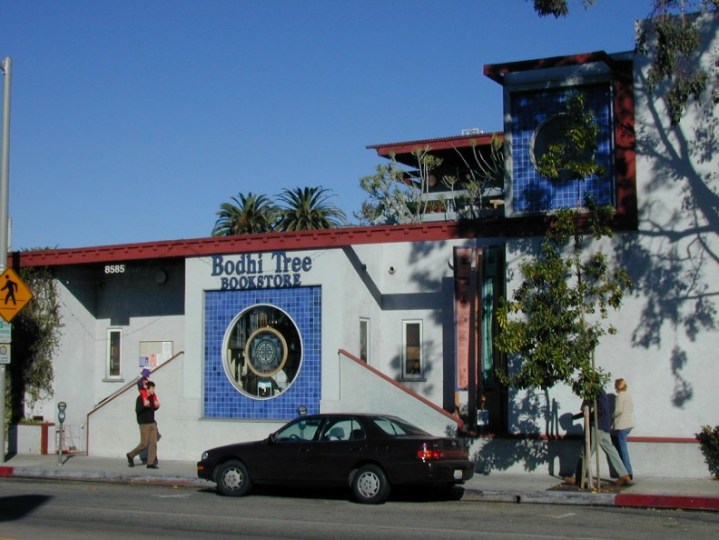
I have only rarely done yoga. I’ve never been particularly spiritual. I don’t believe in New Age theories. Yet I am fascinated by the collection of spiritual and New Age books at the Bodhi Tree Bookstore in Melrose in Los Angeles. I discovered it quite by accident, just exploring the town one weekend, but came back frequently.

Unfortunately, the Bodhi Tree is in imminent danger of closing. Right now, it is only guaranteed to be open through the fall of 2011, though they are working hard to find a new owner who will keep it alive in the manner which it deserves.

For the moment, though, it is a wonderful community gathering spot.

Even if, like me, you are not into New Age stuff, they had a solid poetry section, a wonderful selection of primary texts in Asian philosophy and thought. Also, as a historian, I find Theosophy fascinating and they had a great many primary texts by Blavatsky and here successors, students, and followers. And they did not ignore Christian, Jewish, and Islamic thought and texts, either.

I don’t know what will happen to the Bodhi Tree, but I pray it can survive in a form which can continue to serve those who seek some sort of solace from its shelves.


The LA Lit Scene


I came across this great little piece about some of the wonderful lit mags being published in Los Angeles County. I loved living in Los Angeles and feel the town does not get enough credit for its literary scene. Besides hosting some of my favorite independent bookstores like Skylight Books and the Bodhi Tree Bookstore, I also attended some great readings and literary happenings. And that article focuses only on the big dogs of the local lit mag scene, but overlooks the fantastic ‘zines being put out in the area. Skylight Books famously has a great collection of these locally produced ‘zines and I bought a great many from them while I lived there.

One of My Favorite Bookstores: The Borders Books & Music in Hollywood


I admit to being very fond of Borders. Yes, this is hypocritical of me, having spent so much blog space arguing for spending one’s dollars at independent bookstores. And I do try. But when I lived in Hollywood, I used to visit the Borders on the corner of Sunset and Vine several times a week, buying a new book almost every week (god bless Borders‘ rewards program!). I did prefer Skylight Books, but Borders was within easy walking distance.

Borders, admittedly, was not so comfy as Barnes & Noble (the standard decor of a Borders is a little anti-septic). This was exacerbated by the fact that my Borders (the one in Hollywood) didn’t have nice little café to relax in (though there was a wonderful little coffeehouse just a block away where I used to take my laptop and do a little bit o’ work).

There were so many books and authors that I discovered at the Borders: Fredric Jameson’s Archaeologies of the Future, Simone de Beauvoir’s The Mandarins, Haruki Murakami’s The Wind-Up Bird Chronicle, France Yates’ Giordano Bruno and the Hermetic Tradition, Kenneth Rexroth’s The Complete Poems of Kenneth Rexroth and 100 Poems from the Japanese.

So, if this is the beginning of the end for Borders, I will mourn for it. The one nearest me now – it used to be on 12th in downtown Washington, DC – is gone. There is another, a little further away (though close to my old office) on 18th. It is not as cozy as it could be (as this article explains – though in answer to the question it poses, the answer is yes, we should mourn).

Let me direct you to this article explaining why the demise of Borders is bad for all of us (though he is wrong about the reverberations spreading to Barnes and Noble).

In honor of my fond memories, I have chosen to direct anyone who clicks on the links to any of the books I mentioned to Borders‘ online store.

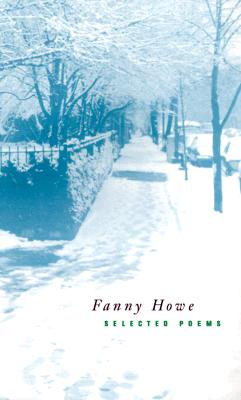
Fanny Howe


Many years ago, I signed up for a membership in the Academy of American Poets. I got a nice little membership card and some free swag. I am pretty sure that I let my membership lapse, but even though I have stopped getting American Poet, the Academy‘s quarterly magazine, I am still getting the occasional free book in the mail.

The most recent book I received was a signed copy of Fanny Howe: Selected Poems. I had never heard of Fanny Howe until last year, when she started to become a sort of poet du jour and you read a lot of pieces singing her praises (I think the first thing I read was an Ange Mlinko piece in The Nation, but don’t hold me to that). I added her to the list of poets to read, but never quite got around to her.

Let me simply say that I am a believer. As a relatively recent convert to Catholicism (from a sort of atheism/agnosticism, though I was raised in the Episcopal Church) and someone who has a difficult relationship to God (during my recent illness, I became, despite my best efforts, very angry at God; and though I believed in his love, I did not always feel it), I have wondered how to include questions of faith and religion in my poetry.

Well, Fanny Howe has solved that problem with incredible power. An experimental poet, in a similar vein to Rae Armantrout (at least, in this would-be poet’s humble opinion), she writes very movingly about God, the spirit and faith.

In an interview she gave with Lyric Review, she speaks about being an agnostic Catholic. Specifically, about having come to the Church from a rationally inspired, intellectual atheism. She also speaks about still being able to understand the view of atheists.

For myself, as someone who found the Catholic Church from a very much a place of the mind (I was only able to accept that Church because of its rich, intellectual tradition and its focus on education and rigorously thought out theology), this provided a clear answer to why I found her religious poems so moving.

So, if you like Rae Armantrout and are curious how to write a religious poem in this brave new world, I direct to Fanny Howe.