Ezra Pound: Canto LV


This Canto is very much like the previous one – a history of Chinese rulers with a focus on economics (viewed from the top, of course – no Marxian social history for Pound). In fact, it picks up with the other one left off: LIV ended at 756 a.d. and this one picks up at 805 a.d.

I am beginning to see some sense in how Pound arranges his stanzas here. To a limited extent, the Canto is broken into stanzas that represent incidents or mini-themes within it.

Much of the economic discussion is about taxes.

He also throws in some little futurisms – at least relative to the topic of medieval Chinese history – such as:

Y TSONG his son brought a jazz age HI-TSONG

Kim Stanley Robinson’s ‘Mars’ Trilogy


Red Mars, Green Mars, Blue Mars.

I don’t remember how I first heard of them or where I read the strong recommendation of them. It certainly came as I was busy (as I still am) digging into science fiction and fantasy.

These books by Kim Stanley Robinson are definitely in the genre of hard science fiction – which is to say, sci fi that works very hard to scientifically accurate. My friend Ryan once told me that the best sci fi (and he is definitely someone who prefers hard sci fi to its counterpart, space opera) has single scientific conceit. Something not currently believed to “real” or possible – faster than light travel, some kind of mutation… whatever – and then extrapolates everything else from there based on known science.

In this case, it is the settlement, colonization, and slow terraforming of the planet Mars.

I am currently just beginning the third and (I think) final book.

It is definitely not space opera. It focuses primarily on two things: the socio-political implications of the colonization of Mars (who controls it? what would ‘martian nationalism’ look like? what factions would arise?) and how would a realistic terraforming process evolve? Robinson’s main conceit, used to keep the original colonists present in a multi-generational epic, is the development of a gerontological process to extend life spans dramatically.

So far, I have read them all on my Nook. In fact, it could be said that I deliberately purchased the last one on for my Nook just to keep up the tradition.

I still won’t say that hard science fiction is my absolute preference, but these are definitely great books. Well written, detailed in their science. Not always completely compelling, but always able to pull you along based on the underlying belief that the author is, within the boundaries of science fiction, trying to put forth a truly realistic depiction of how things could (would?) play out.

Long Live the Typewriter! – The Typewriter Is Dying


The typewriter lives on in India (even if they are not manufactured there anymore).

Orson Welles Reads ‘Rime of the Ancient Mariner’


Tarot Cards


The other day, I read this article, The Querent, about the writer’s relationship with tarot cards and fortunetelling.

I don’t believe in tarot cards or any other form of soothsaying. But I don’t deny it’s appeal. I don’t deny having had readings of various kinds done nor of having looked for meaning in them. It all sounds contradictory, I know.

A long time ago, I even bought a deck of tarot cards. A fairly “traditional” deck, the Rider Waite Tarot Deck. There’s a funny story about that. My father’s wife wanted to have an exorcism on me in order to prevent the devil from physically manifesting in the house via the cards. Those were interesting times.

The article struck my fancy because of the way the  author struggled through the cards to find some meaning and understanding. Though he clearly has a sort of belief that I lack, we both share an affection for the trappings and ideas associated with New Age bookstores (like my beloved Bodhi Tree Bookstore). Despite the fact that belief separates us, he seems to view the value of tarot cards in much the same way I do.

Ok. Soccer season has started in Europe and there’s an election coming up. Time to refocus.

Ezra Pound: Canto LIV


I’ll admit it. This Canto is intimidatingly long. Fifteen pages isn’t much for a piece of prose, but for a dense work of poetry on a topic I know little about…

The topic is, much as before, Chinese history. One of the conceits (also used in Canto LIII) is to put in the margin the date at which an event or conversation occurred. More than a thousand years are covered.

Pound is playing with lines much more than in the past: with length and indentation. I won’t say it is random because I will play with indentation myself and it is not random for me, but what gives it meaning is not form, so far as I can tell, but the unique artistic, literary, and historical inclinations of Pound himself.

He also plays a lot with capitalization. The names of rulers are typically in all caps, but he also throws a few curves our way. For example, the one time he also capitalizes ‘OUT’:

a.d. 444, putt ’em OUT

‘OUT’ takes on the form of something pun-ish because, we also have ‘OUEN TI’ and ‘OU TI.’

There is also what could be a pun in the line:

Then OU went gay and SUNG ended.

I don’t know for certain this is a pun, because I don’t know if  ‘out’ was used to refer to making one’s homosexuality public when Pound wrote this one. Certainly, if it was, we would have to consider this a bit of word play by the poet.

We also see Pound using at a times kind of rat-a-tat-tat style that I associate with movies from the 30s and 40s – a hyper stylized rendition of the speech patterns from an old gangster movie.

We still see a lot on the development of financial instruments, taxes, and payments, but less so than in the past. Like some of his earlier meditations on Renaissance Italy, we read a lot about the uses of power – and in my reading, what I see as abuses of power. Particularly the discrepancies between how a peasant or ordinary citizen experiences government policies and how an emperor imagines his policies will act out in the world at large.
#Fridayreads


If you are on Twitter, I encourage you to participate in the #Fridayreads hashtag.

Basically, you use the hashtag (on a Friday, of course) and note what you are on reading on that Friday.

The act of doing so sharpens one’s focus on the act of reading and forces one to think about setting aside some time with a particular book over the weekend. I’ll be reading The Carrier of Ladders, of course, as well as finishing up another Canto. Those seem like good books to read during Washington’s impending hurricane, don’t they?

The Carrier of Ladders


I am not a fan of W.S. Merwin’s overall body of work. I don’t think that’s a secret.

But when I walked into Capitol Hill Books on C Street SE, made my way up the book cramped stairs and into the back room where poetry is stacked on counters, shelves and two stolen library carts… I saw it. Right near the door, in one of the library carts, in fact. It hadn’t been there the other week. I would have noticed, believe.

The Carrier of Ladders.

Merwin’s 1972 masterwork. A politicized collection of eco-poetry, sprinkled with anti-war sentiment.

What can I say? It’s amazing.

It’s a reminder how, in comparison, virtually everything he’s written in the succeeding thirty-nine years is just so much c–p. Pale, shallow, bloodless, workshopped imitations of his greatest work.

But this here is the stuff. It’s why people will bother reading him in a quarter century. His latest ruminations will be forgotten, but his early elegiac, passionate poems, bursting beyond the limits of his free verse forms to achieve something meaningful and memorable, will be remembered.

I wish I’d had a copy of this when I got his autograph at the Library of Congress.

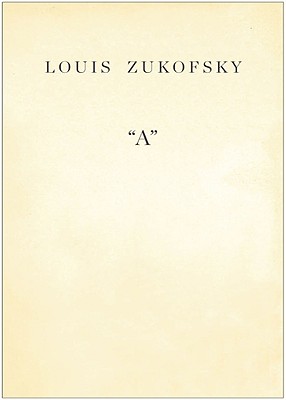
“A”


I am, as the gentle reader has no doubt noticed, well behind on my Cantos. I am perhaps a third of the way through and at this rate, will not be done until the end of 2012. But never fear: the coffee philosopher will prevail. He needs the Cantos as a proverbial notch on his bed post to give himself credibility when pontificating on high modernism.

But while I prevaricate (I am reading Middlemarch, A Dance with Dragons, and Possession far more assiduously than I am Pound), I wanted to comment on this article: Things Boundlessly 

Louis Zukofsky and his famous (more famous than read) “A” is definitely on the list. The great list of books to read, books to get around (that’s how I got started on The Cantos in the first place) includes it.  I first heard about him while reading an article about the “Objectivist” issue of Poetry that he edited in 1929 (I think; maybe it was 1928 or 1930; I wasn’t alive back then, so my memories from those days are necessarily fuzzy).

This quote from Things, Boundlessly seems to sum up some of the attraction of Zukofsky:

Neither Zukofsky nor “A” has any real claim on the public imagination. Even among poets he doesn’t seem to be much read, discussed, or taught, except by a handful of deeply entrenched partisans. I started to investigate whether—and why—this might be the case, but then I realized that I was squandering a huge opportunity. The question of whether Zukofsky is truly neglected (and of whether said neglect has been just) is far less interesting than the simple fact that one can approach Zukofsky with a readerly freshness—an innocence, if you will—that is perilously hard to come by for such art without equal. This is in starkest contrast to Pound’s Cantos, which has never fully emerged from its author’s divisive personal reputation (and probably never will). “A” is perhaps the last major work of American Modernism to feel like uncharted territory.

I know that “A” is an epic work. I know that it is political. I know that Zukofsky “founded,” after a fashion, the Objectivist school of poetry. I know little else.

Happy Birthday Borges!


Today is the 112th birthday of Jorge Luis Borges.

He’s dead, of course, so the celebrations will be a little muted.

My father gave me a copy of his collected stories (he never wrote a novel – just poems, essays, and short stories) many years ago. I confess that I have never read his poetry.

He was certainly a writer’s writer. Or perhaps a reader’s writer.

Yes, he wrote all those stories about gauchos, but it’s all those stories about Casaubon-esque authors, archivists, and librarians trying and ontological inability to contain all the knowledge one desires. Even when a character seemed to achieve something like that goal, the melancholy knowledge that, in life, one couldn’t, hovered over it all.

“I have always imagined that Paradise will be a kind of library.”
– Borges