Home…


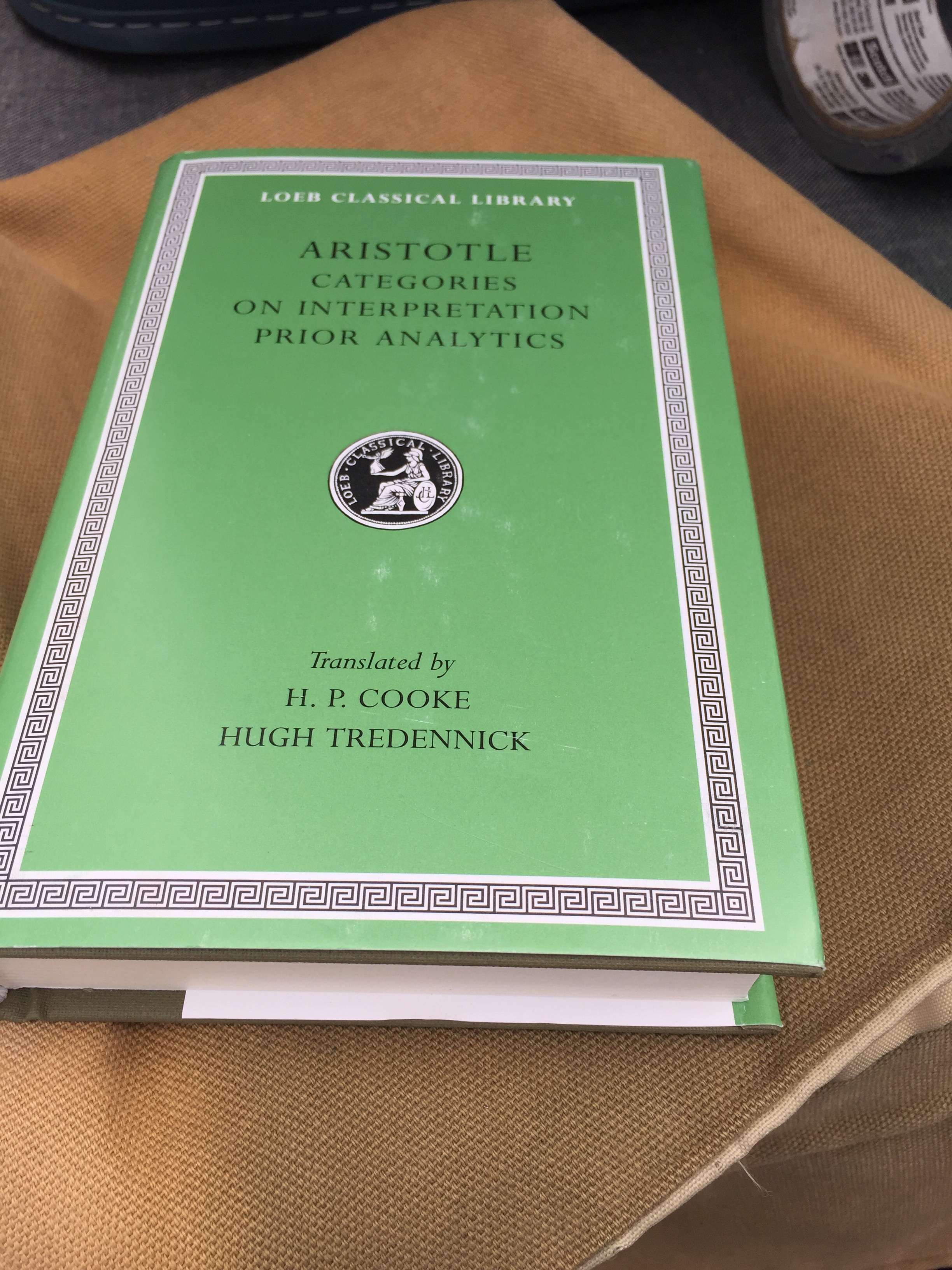
‘On Interpretation’ By Aristotle


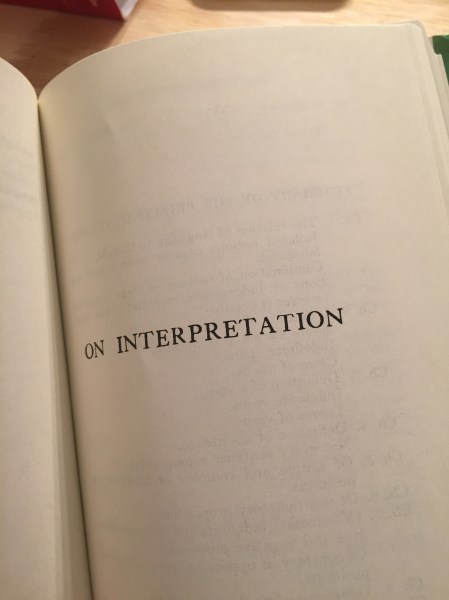
It was shorter than I had expected (the volume contains three book: Categories, On Interpretation, and Prior Analytics). Which, you might say, that is good. But maybe it is actually not good (or not-good, which you might also translate as bad), because it means that Prior Analytics will be longer and I’m a little scared.

So this middle volume hinges on that ‘good,’ ‘not good,’ and ‘not-good’ thing mentioned earlier. And contradictories and contraries and how they do and do not match up (or if they do; in at least one instance, the conclusion to the book felt inconclusive on that subject). I remembered a good bit from college: some are, all are, none are, some are not, etc. I’d brush up, but that old college textbook on my shelf is possibly more intimidating.

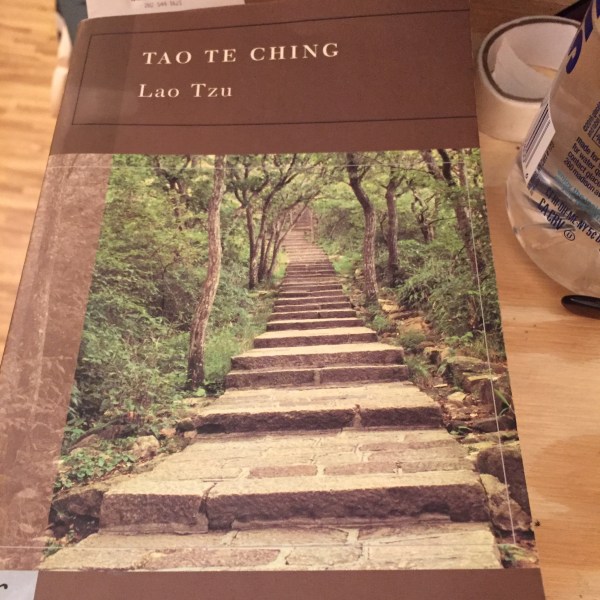
Tao Te Ching


To be totally honest, by the time I reached the last half, for reasons unrelated to Lao Tze’s wisdom, I just wasn’t in the mood to digest his guidance. I was more in a mood to be moody.

But a couple of times, I was still pulled up short by the Tao. A line about attacking by surprise during warfare that could have come from (or was cribbed by Sun Tzu). Recommendations on rulership that read like the subtext to Machiavelli’s true goals. And certainly, ‘sage’ is on my list of ideal jobs.

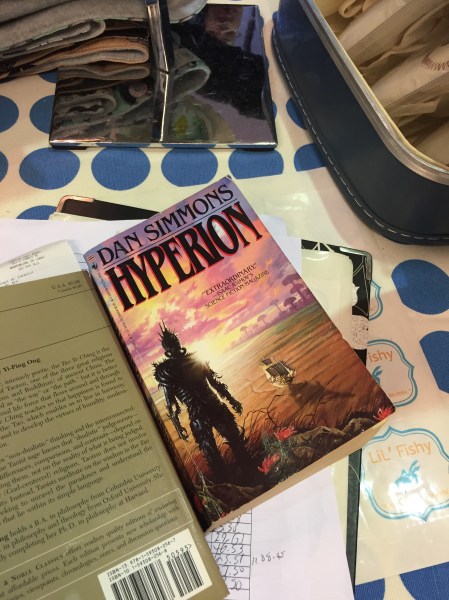
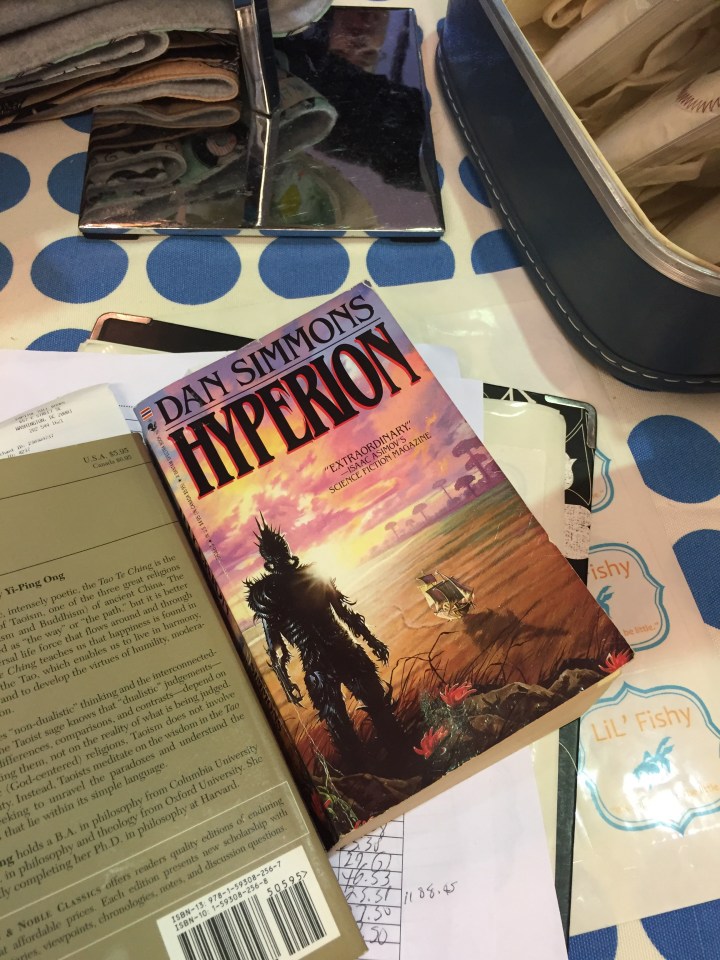
‘Hyperion’ By Dan Simmons


I swear that I didn’t know it was part of a series. I knew he wrote other books about the planet Hyperion, but I really thought this was a self-contained story. Feeling a little betrayed.

But it’s an excellent and intelligent space opera. Keats comes up a lot and he plays with Chaucer’s pilgrims (though much grimmer and with less sex and comedy).

The world is well realized (though it’s actually a vast universe) and the layers and multiplying plots are exciting rather than frustrating, overdone, or contrived. Really, if it didn’t require me to read a second book, I’d call it an unmitigated success.

Aristotle’s ‘Categories’


Now that I finally have this book and am reading it (the volume also contains On Interpretation and Prior Analytics) I am consumed with the fear of forgetting. Having finished Categories in a careful and deliberative fashion, I still feel that I will move on to the next and remember almost nothing of what preceded it.

I minored in philosophy at college and still read it for pleasure, but while logic was my favorite branch at college, it is a right pain to read later in life, no matter how useful (and make no mistake; studying logic in college was incredibly useful; if you are in college, I highly encourage you to take a couple of logic courses, because it will give you a new and valuable perspective on things).

Alas, but I may still hope to retain something and the peripatetic master has forced me to consider the meaning of the things I say (though I wonder how many of his categories were inspired by ancient Greek’s declining nouns?).

The Tale Of Genji


So technically, I haven’t finished the entire volume, merely the first of the five books that make up the Tale.

I don’t know when I first learned about Genji. Certainly, it’s been decades since I deciding I needed to read it. But I’m alittle disappointed. Is that odd? Not to say I’m not loving it, but it’s paling in comparison to other ‘great’ books (in both size and cultural cachet) I’ve read over the last few years.

Partly it’s that Genji himself is such a shallow cipher. While the narrator of Remembrance of Things Past is often the least interesting person in the room, he’s always, nonetheless, a figure of psychological interest, whereas Genji lacks most introspection. Or maybe I’m just jealous at how easily he seduces women?