The Great American Novel


Do the French have a concept of ‘the Great French Novel?’ Or other countries – ‘the Great Canadian Novel,’ ‘the Great Chilean Novel,’ ‘the Great Russian Novel?’

Of those, I can imagine the Russians having such a concept, mainly because of figures like Dostoyevsky, Pasternak and especially Tolstoy – Tolstoy being a sort of towering figure of seeming universality. I say ‘seeming’ because I see things from my own, limited perspective and from the vantage point of being a white, heterosexual, western male (none of which are bad things, but could easily have something to do with seeing three white, heterosexual males who are part of a generally Western culture [not something  universally applicable to all of Russian culture] as the candidates for the role). Also, with Russia, poetry plays a larger role in literature than America. Pasternak only wrote one novel, but reams of amazing poetry. And Pushkin is such a massive cultural figure in Russia. And Yevtushenko (who I once met) is someone who aspires to the role of being the equivalent figure (and poems like Zima Junction and especially Babi Yar aspire to a status similar to ‘the Great Russian Novel’).

Adding poetry, what would it mean to add the possible contenders for ‘the Great American Novel’ poems like Langston Hughes’ Harlem or Ginsberg’s Howl? One, a poet of color and the other a gay poet, so getting beyond the straight white thing (though not beyond the ‘male’ thing). But really, the only contender among poems would be by declaring (not without justification) Whitman’s Leaves of Grass a single, book length work.

Which hits on part of the image of the ‘the Great American Novel.’ It’s got to be big, or at least it can’t be short. The Great Gatsby is barely long enough, really. And it’s got to cover something that we see as unique to ourselves and our American identity. And the candidates tend to be white, male narratives like Huckleberry Finn or maybe On the Road.

Do more recent novels like Pynchon’s or Delillo’s Underworld deserve inclusion (Delillo was certainly aiming for something like that)?

And where am I going with all this? I think I’ve forgotten. Something about concepts of American exceptionalism in views about a certain kind (uniquely American?) of national literature.

Thoughts?
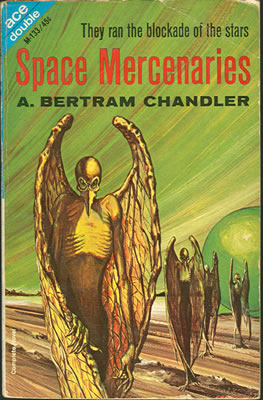
‘Space Mercenaries’ By A. Bertram Chandler


SpaceMercenariesAceM133This is one of those old Ace doubles, which means two books in one. One side has one cover and you flip it around and on the other side is the cover for a different book. This was used a lot for sci fi (and probably mysteries, too). You could take two books of less than 150 pages each and package them together. The flip side is a novel called The Caves of Mars, but I have so far only read Space Mercenaries.

I started with that one because… c’mon, space mercenaries. How cool is that?

It’s apparently the second in a sort of trilogy known as the Empress Irene books, but this one is fine as an episodic, standalone novel (it’s the second of the three). A former empress, now private citizen has taken a top class warship and become a trader and her first job is blockade running. There’s some cool stuff with Chandler’s version of hyperspace/hyperdrive/warp speed – which actually seems more like Dune style ‘folding space’ (they’re outside of space-time and there’s stuff about synchronizing and the like but… I mean, it’s all just hyperdrives, really). A lot of stuff about figuring out legal ways to open fire while smuggling and without violating space law.

The book is a fast an enjoyable read. Style-wise, it reminded me of a less didactic Gordon Dickson (though I’m basing that on a single novel by Dickson, None But Man) and it’s a decent example of silver age sci fi. If you like that stuff and you see it in a used bookstore, pick it up. If you don’t, then you’re probably not browsing the science fiction stacks anyway, so I don’t imagine that it will come up.

Myself, I found this in an awesome little bookstore in Dunedin, Florida called Back in the Day Books that is well stocked in cool little semi-rarities like this (I’ve also gotten a ton of old pulp magazines from them, as well).


Poor Jeb Still Can’t Get His ‘Moment.’


Jeb’s campaign rollout has been, by and large, professional, yet also notably underwhelming, mostly, it seems through no fault of his own (welll… almost; hiring a publicly racist dude for a senior role on his campaign can be laid at his feet).

He gets public and forms the right kind of committees and everyone is all excited and there’s about to be a ‘Jeb Moment’ and then Romney comes along and takes all the wind out of his sails and there’s actually a kind of ‘Romney Moment’ (which is more than Romney got when he was actually running for president).

Okay, but Romneymentum dies down and now Jeb is poised to be ‘the guy,’ but then Scott Walker comes along, who’s everything Jeb is and more (he’s ‘establishment,’ whatever that means; been elected governor of a swing state; etc – and he’s also blue collar and has some Tea Party bona fides).

Scott Walker-mania kind of dies down and, for no discernable reason, fellow Floridian Marco Rubio suddenly becomes written about as the flavor of the moment and, even worse, as someone with some legitimate hope for winning.

It’s gotta be galling. Nothing Jeb does seems to get good reviews (his Detroit speech was pretty roundly panned with a universal, ‘meh’). Even worse his so-called strength in education has become  weakness over Common Core (I say, ‘so-called,’ because, let’s face it: Florida schools sucked as much under Jeb as they do today, and the suck pretty bad today). Even worse than that, he’s being pilloried as some of moderate, which must really get under skin, because anyone who lived in Florida under Jebocracy knows that he makes Barry Goldwater look like a French socialist.

I’m not sure how I feel about all this. Obviously, I want a Democrat to win, but I’m torn, because it almost looks like he’s the next Mitt: someone who gets nominated as a smart, competent technocrat able to use his brains, corporate know how, etc to win the presidency, but who is actually unable to put together a competent campaign organization or, you know… win.

‘Thuvia, Maid Of Mars’


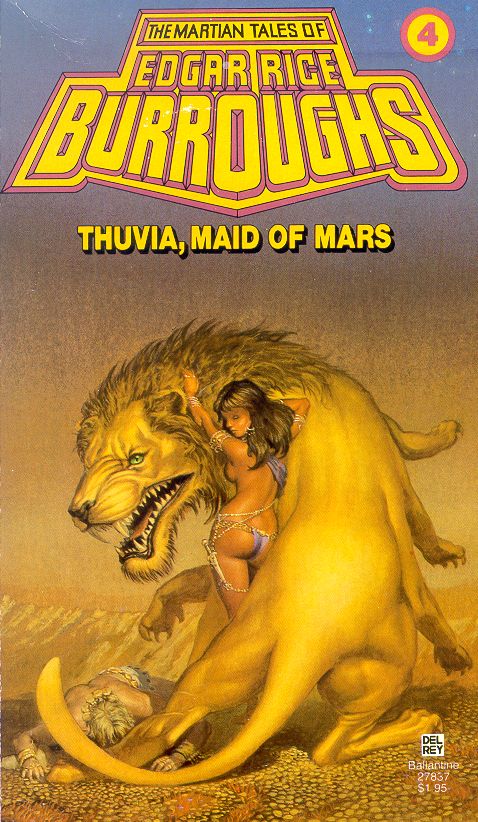
We’ve revisited Edgar Rice Burroughs Mars (also known as Barsoom).

This time, John Carter’s son, Carthoris, who inherited some, but not all of his father’s super strength (on low gravity Mars, at least) and most of his chivalry and fencing skills, is the hero.

Personally, I kind of miss John Carter, but what can you do?

So anyway… new sword fights, new allies, new enemies, new Martian/Barsoomian races, and, mercifully, few of Burroughs racial prejudices to jar you out of the story.

Oh, and, in case, you weren’t sure, Carthoris does win the love of the titular Thuvia (who is actually a princess, but Burroughs already wrote a book called A Princess of Mars).

thuvia


Weekend Reading: The Persistence Of Memory


On the persistence of print.

The loss of faith and the decline of classical music.

How do we read cases of divine deception?

The immortal fame of the poet’s soul.

‘The Riddle-Master Of Hed’


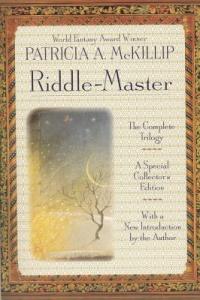
9780441005963This book is very much in the style of Ursula K. LeGuin. Like LeGuin, even when the main character is male (and the titular Riddle-Master, Morgon the Prince of Hed, is a man), the book is insistently feminine – and that is in a good way.

There is a gentle style to it – definitely, high fantasy, but different than what you would expect from most. Knights, sword fights, magical explosions, etc, are almost entirely absent.

I had read this book years and was seized with a desire to read it again. I almost bought another book by this author at John K King’s Used Books in Detroit, but didn’t.

While visiting my parents, I found this – my original copy – on a shelf. I stuck it in my bag, but forgot to take it and brought that same bag on a trip to Chicago where I read it over the course of the weekend.

Like most fantasy, it’s a trilogy, so I’m going to have to seek out book two.

‘Dæmonomania’ By John Crowley


9781590200445_p0_v1_s260x420This is the third book in his Ægypt Sequence, a… fantasy? Not really. Realist? Perversely, yes, but also no.

The fantasy aspects may or may not be real, but I have always interpreted them as being parts of a novel by Julian Fellowes, a dead, fictional author of historical fantasy from the series.

I was trying to figure out what makes these books good. And they most certainly are. At first, I thought it was to make the mundane more than it is, but actually, many of the things happening to the (more or less) contemporary characters are actually quite important and dramatic, yet Crowley keeps an even, slow paced tone that almost deemphasizes them. Things happen like the (kind of) main character’s girlfriend joining a religious cult and a dramatic custody dispute between another character and her ex-husband over their daughter.

For all of them, it’s a spiritual quest for meaning that the world refuses to release to them, or, if it does, slowly and with great difficulty and resistance. But really, I couldn’t even begin to describe what it’s about. A search for meaning by looking to a world that may or may not have really existed (a pre-modern world when magic worked – the land of, not Egpyt, but Ægypt) and a simultaneous account of magical practitioners in a world where magic is vanishing (real life characters like John Dee and Giordano Bruno).

Watching ‘Antogonick’ In Chicago


It was literally, the last day of its run: Anne Carson’s adaption of the final play of Sophocles Theban Cycle, mostly commonly known as Antigone but here called Antigonick.

If you’ve read my blog at all, you know that I have read a great deal of Anne Carson and like most of her work. This play actually premiered in DC, but I wasn’t able to see it, so I am so excited that I finally had the opportunity to see it as the Victory Gardens Theater.

The whole play was run through in this production and then, once it was over, it started over again, but with actor’s switching roles.

Antigone became the chorus, Kreon became Antigone, Euridike became Kreon, etc., etc., etc. The gender switching, but more importantly, the different readings, gave very different views of the same dialogue. It was like getting the chance to go back in time to change things yet, despite making changes to the past, watch it slide inexorably to the same tragic present.

I went with a friend and while we there, I thought, oh no! I’ve dragged him to my kind of thing and he’s going to hate this! But he loved it, so I have some support when I say it was awesome.