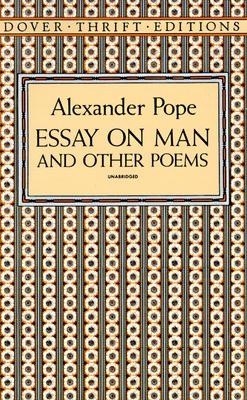
While I had surely read some snippets of Pope before, this was my first real dive into his writings. The shorter pieces, the lyric poems, were good. Good enough to say that, had Pope written nothing or little else, he would still be remembered as a worthwhile minor poet of his age. Rather like Ralph Waldo Emerson. But like Ralph Waldo Emerson (who was a serviceable poet, but no great), he is better known for his essays.
But Pope’s essays tend to be a little different from the New England mandarin’s.
This really struck me while reading the poem, Essay on Criticism: Alexander Pope is writing a critical essay entirely in verse form. In heroic couplets, to be specific (which are, and I had to look this up, rhymed couplets written in iambic pentameter).
Imagine opening a copy of The Nation, The New Republic, Harper’s Weekly, or The American Conservative and reading an article on a serious subject, like drone war, that written entirely in rhymed verse form. And written seriously, not as a meta-commentary on something or as a joke (which is why I left out The National Review, because, since Buckley’s death, that rag is more home to a particular brand of youthful idiocy, like Jonah Goldberg’s unreasoned idiocies, than anything serious). Go back further and what if Podhoretz’s editorials for Commentary had all been rhymed sestets or Petrarchan sonnets?
Beggars the mind.
Oh, and the Essay on Criticism includes the line:
A little learning is a dangerous thing;
Pretty cool, huh?
He gets into a great many localized, time specific references – The Rape of Lock is entirely about a particular scandal du jour – and my edition doesn’t really give the reader an heads up on this stuff.
Though not a long collection, Pope is slow read. To appreciate his rhymes and also the lines of his arguments is not a fast process. I had thought to finish it in well under a week but actually struggled to finish it by today.
Conclusion? I would read Pope again.
 the coffee philosopher