New Publication


My poem, Pontiac Sunbird, 1994 was accepted by the magazine Ceremony for publication in the Spring 2011 issue. In the meantime, the editor has posted it on their website, The Sheltered Poet.

Spring 2011 seems like it will be a popular time for me – what with four of my poems being published that quarter. Might even make up for the fact that my paying work seems likely to significantly dry up around that time (curse you, political cycle!).

Online Rejections


Rejections appear to be on a lot of folks’ minds these days.

Not exactly my reasoning for being wary of rejections through online content management programs, but the Broadside blog has an interesting (and deliciously visceral) objection to such things and also misses the days when we received letters.

Free E-Books


It’s worth it to pay for e-books.

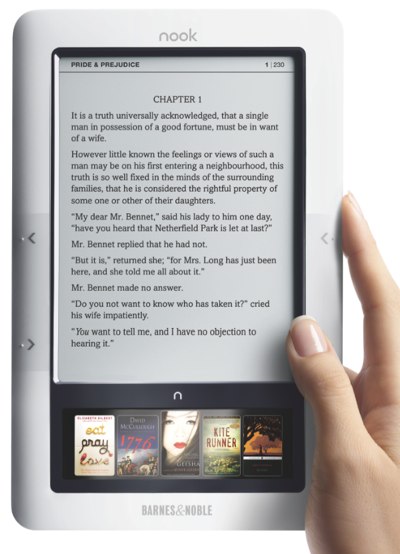
This is the inescapable conclusion I have reached, based on a couple of weeks now with my Nook.

There is a ton of free stuff out there, but basically, you get what you paid for. As a result, my Nook is now filled with free books I will never read, because of the relative quality of the transference. I would have been better off paying a couple of bucks for a good copy of Ann Radcliffe’s The Mysteries of Udolpho.

So, instead of reading the freely downloaded correspondence of the eighteenth century economist, David Ricardo, I am reading an inexpensive e-book version of Kim Stanley Robinson’s Red Mars. Nothing wrong with that, of course. But it is a reminder that I will have to buckle down and purchase myself some David Ricardo.

[If Barnes & Noble would care to compensate me for this little plug for both the Nook and for the concept of actually purchasing books, by all means – bribe me!]

Am I Abusing the System?


Whenever I download a free book on my Nook, part of me feels like I am abusing the system – the system of making sure that renumeration for books used and appreciated gets back to authors, publishers, and booksellers.

But it is just so easy on a Nook!

So far today, I have already downloaded free works by Ann Radcliffe, David Ricardo, John Keats, Andrew Marvell, Alexander Pope, John Dryden. Granted, I did also pick up this weekend $16 (plus tax) worth of histories on medieval and renaissance Florence from Capitol Hill Books this  weekend. But I do not doubt the total dollars spent on books will ultimately go down. While this may be good for me, is it good for literature?

My New Nook


I am not referring to the fact that I am getting a new apartment – this time with a special room that will become my library/man-cave/spiritual sanctum. Of course, we are referring to my new e-reader. The Nook, developed by the good folks over at Barnes & Noble.

The Nook may seem a counterintuitive choice, but it was very deliberate (I say choice – but this was actually a gift, though the young lady chose this brand because of my evinced feelings towards the more popular Kindle).

I laid out most of these reasons earlier, but I reckon the world will not end if I repeat myself.

In the first place, I want to be supportive of bookstores. Those physical, brick & mortar buildings where we all browse and sip coffee and lounge in big, comfy chairs before going home to order something from Amazon. The bookstore is a precious place in western culture. When I was 18, I actually lived in one for a while; it was a bookstore that first published Ulysses (actually, both of those anecdotes are in reference to Paris’ famous Shakespeare & Co. Bookstore); a bookstore employee turned me onto the idea of found poetry; and how many famous writers, poets, and thinkers spent some part of their formative years working in a bookstore?

Bookstores are – or should be – our temples of culture and the humanities.

It is true, Barnes & Noble is not Shakespeare & Co. Nor is it City Lights, nor a dozen other centers for literature around the country. But, unlike Amazon, it is a true bookstore – a place where bibliophiles and can do congregate. For many people, it may be the only bookstore within reasonable driving distance.

We will never be able to attend a book signing at Amazon, never be able to develop a relationship with the staff of Amazon as you seek recommendation (and no – their suggested reading or “people who looked at [insert name of product] bought [insert name of other product]” does not count), Amazon will never work double and even triple duty as coffeehouse/performance space/university/employment program for MFA grads.

Barnes & Noble, by providing a large, well stocked bookstore in places like Montgomery, Alabama gave me a place to read and think. To browse a philosophy section that had real, academic tomes and not just some combination of the Bible and new age fluff. To scan the titles of shelves filled with poetry and poets I had never read – instead of nothing but a couple of sad looking copies of Shakespeare’s sonnets.

Though I may now choose to focus on taking my commerce to independent bookstores, Barnes & Noble holds a special place in my history and I will respect it for that. And if it comes to a choice between Amazon and B&N – I choose the one with the brick & mortar buildings every time.

My second reason for preferring the Nook is that the Kindle uses a proprietary technology. The Kindle, essentially, locks you into the Amazon store. But the Nook holds far greater promise of going beyond just a single provider through programs like this.

So what am I reading?

The Nook came pre-loaded with Pride and Prejudice (I will read that), Dracula (I could see myself reading that again, but not right now), Little Women (it might be sexist of me – but I don’t see myself reading it, no matter how much it changed my mother’s life).

For 99 cents, I purchased the French Decadent novel The Cathedral, by Huysmans (I previously read and didn’t particularly enjoy A rebours, but loved The Damned).

For $6.29, I went for Kim Stanley Robinson’s science fiction novel (the first of a trilogy), Red Mars.

For free, I picked up Cornelius Agrippa: The life of Henry Cornelius Agrippa von Nettesheim, doctor and knight, commonly known as a magician, by Francis Barrett (I had actually wanted to pick up something by Agrippa himself, but nothing was available).

Finally, and also for free, I downloaded The angels of Mons: The bowman and other legends of the war by early twentieth century fantasist/horror writer, Arthur Machen.

E-Books


I remember watching local news in Minneapolis back in 1995. The anchor was talking about early versions and ideas about e-books (though that term wasn’t in use back then). He referred to paper as being a three dimensional object and this as being one the major changes. As you can tell, that comment stuck with me. Even though e-books still exist in a piece of hardware that exists “somewhere” (whether on a server somewhere or on your e-reader or personal computer), the distinction always feels like that difference between something exists out there in the “ether” versus a physical book on my shelf.

I should probably admit that I don’t have an e-reader, though I suspect that a present for my upcoming birthday will include a Nook.

I expressly indicated that I would prefer Barnes & Noble’s Nook over the more prevalent Amazon Kindle. My reasoning being that I want to support Barnes & Noble over Amazon. While neither is anything close to an independent bookstore, B&N at least keeps physical bookstores and surely that is worth supporting. In addition, the Kindle uses proprietary technology that essentially locks you into Amazon’s Kindle store. With a Nook, I have hope that I could take advantage, for example, of independent bookstores that are talking about banding together the sell e-books.

Neuromancer


I finally finished Fredric Jameson’s collection of essay on science fiction, Archaeologies of the Future: The Desire Called Utopia and Other Science Fictions. I actually bought it something like three or four years ago, but only recently settled down to systematically plow through it. Like any good fan of science fiction, Jameson resists the urge to classify even the best science fiction writers as purveyors of high literature. He does not argue that there is a valid case to be made for the inclusion of writers like Philip K. Dicks and Ursula K. LeGuin, but rather that we should, instead judge writings within the genre primarily on criteria specific to the genre. Of course, when I read Jameson telling me how to judge a literary work, I always think of the gymnastics he performed on Ulysses to explain how it could of any value using the criteria set forth in his book, Political Unconscious (I love Ulysses and have admired Jameson since reading Postmodernism, Or, the Cultural Logic of Late Capitalism, but the two, clearly, just don’t mix very well).

That was a long a digression just to say, while reading Archaeologies, I came across his review of William Gibson‘s Pattern Recognition. Jameson rates Pattern far higher than I  do. I consider it better than, say, his two sequels to Neuromancer, but I also consider most of what Gibson has written since Neuromancer to be disappointing anti-climax compared to that novel.

But reading Jameson on Pattern Recognition did remind me of how much I love Neuromancer. Jameson does hit upon part of the genius of Gibson.

The branding.

The naming of objects, styles, and things in Gibson is wonderfully evocative. The tendency to use brand names and cataloging the create atmosphere is not uncommon on contemporary fiction – think of the lists of possessions in Chuck Palahniuk’s Fight Club, or the use of period signifiers in Bret Easton Ellis’ American Psycho or the obsessive lists of David Foster Wallace’s Infinite Jest (and though I don’t watch it, could the meticulous use of period detail in the television show Mad Men also qualifiy?).

Gibson’s innovation is to use brands that don’t exist, yet which still perform the function of evoking a time and place (though a time and place that doesn’t yet exist). The image evoked is also, necessarily, unique for each reader, because it is unlikely that our minds have filled in the same outlines around these made up brandings.

For example, in Neuromancer, he describes a bar as being a combination of “Japansese traditional and pale Milanese plastics” and a girl as being dressed in “French orbital fatigues.”

The “Milanese plastics” may refer to an actual style – I’m wondering if it doesn’t refer to the Mod interior design style of 1960’s Italian furniture – but I can’t be sure. In the absence of commonplace commercial passenger space flights, I am pretty sure that “French orbital fatigues” is not actually a style of clothing I just missed.

Either way, it sets a mood and allows the brain the fill in details from half remembered images to create a unique environment in which the reader’s mind can populate the book.

Sadly, It Was Not to Be


I have gotten my first rejection of a poem submitted via a content management system.

Yes, A coffeeshop overlooking the intercoastal in Gulfport, Florida has been rejected by Saw Palm.

They wrote:

Thank you for sending us “A coffeeshop overlooking the intercoastal in Gulfport, Florida.” We appreciate the chance to read it. Unfortunately, the piece is not for us.

Thanks again. Best of luck with your work.


Sincerely,
Winnona Pasquini
Saw Palm
sawpalm@cas.usf.edu

I am supposing this bodes poorly for the other three poems they have in their possession.

We can also see another downside of the short form encouraged by the online process – it positively encourages the editor to be dismissive of one’s efforts.

I don’t mean that they are more inclined to reject – but I feel that absence of real critique (“the piece is not for us”) is, perhaps, something endemic to the medium. Online, one feels encouraged to move quickly – knowing that the results will be apparent immediately to both parties. Does this, perhaps, discourage the deeper criticism, suggestions and even encouragement that keep the budding writer from becoming plainly suicidal?

Or maybe my work simply did not merit more comment.

It might not have been that good. Who knows?

* * * * *

A little post-script to this blog posting:

Well, this particular effort has come to a close – the remaining three poems that Saw Palm was holding onto were finally rejected. Even worse, I appear to have deeply offended an editorial assistant with this posting you are now reading, such that she wrote on Facebook (sarcastically, of course), in response to my blog that “[I/she] must be a real bitch.” (Apparently, this person did a search on their name and came up with my blog – but who among us hasn’t googled ourselves these days? I freely admit to doing it, myself).

Fortunately, there was at least one friend ready to defend the poor, beleaguered editorial assistant, commenting: Based on the rest of the blog, I’m guessing it just wasn’t that good. I doubt it has anything to do with the medium in which it was submitted. Just a guess though. Maybe their poetry editor is an ego-maniacal monster out to crush other poets beneath her feet.

The editorial assistant laughed it off and responded: absolutely. i want to crush other poets. especially guys who write about menstrual blood.

(And yes – one of my poems did reference having sex with a woman during her period. Not graphically, to be sure – I won’t say it was done tastefully, because surely that’s in the eye of the beholder, and also, clearly she did not find it so.)

I do feel bad that I touched a nerve. So let me say that my point was not that you, personally are a “bitch” – nor that publications (nor their editorial assistants) that rely on electronic transmission are inherently flawed. It was intended to be more of a question of how the medium affects the message (without going all Marshall McLuhan on everyone). Without getting into the post-structuralist weeds, I think we can all agree that writing done for instantaneous, electronic formats (instant messaging, email, blogs, etc) tends to be shorter. The burden of proof for a point made tends to be less than in traditional, print formats (is this posting itself an example of that? poorly argued and using the medium’s lower standards of evidence to coast by?).

Also, I am old enough to remember when we still wrote letters to people. Now, letter writing has become a self-conscious anachronism. Be honest – who out there really writes many letters anymore? Even thank you letters are more often done via a phone call now or even an email or text.

As a final note, the editor did email that I shouldn’t  “let the rejections keep [me] from continuing to write and study the craft.” She even wrote this before calling me out on Facebook, for what it’s worth.

But I can still remember when rejections (and even acceptances) came in the mail. Sometimes with fairly personalized letters, but more often with a form letter, but with note (often hand written in the margins) explaining what they did and did not like about the work, in what direction they would recommend taking the work. In some cases, even what they would require to get them to reconsider it in a revised form.

But maybe my poems did not deserve such treatment. As the editor assistant’s friend suggested, maybe “it just wasn’t that good.” If that’s the case, so be it. I was talking to a friend a mine who teaches at a local university and spoke in favor of the traditional gatekeepers whose job it used to be to tell us what is good and worthwhile and what is not. I did not speak in an unqualified fashion, but the decline of these traditional gatekeepers makes it more difficult to sort through the vast quantity of chaff produced out there in the ether (including my work? how sad to think that!) and show us what the true wheat looks like.

Somewhat ironically, this self same editorial assistant wrote in her personal blog about the struggle of trying decipher short and occasionally cryptic remarks that make up 90% of modern day rejection letters (not that acceptance letters tend to be more enlightening – the one time I got a very detailed letter back, it turned out to be paperwork I was expected to sign, affirming that I would not put these poems online in any way between now and their official publication). It would appear that she came across my little post not long after receiving some bad news from some literary magazine and, unsurprisingly, in no mood to be trifled with.

On the plus side, after all this, my little blog, which generally gets ignored (I haven’t even promoted it to family and friends) got a nice little spike in visits after the little Facebook/blog flame war sparked for a few hours.

Perhaps I should just close by saying, I wish us both luck and recommend that neither of us take rejections too seriously.
The Dangers of Online Submissions


The real danger in online submissions comes from the desire for a response and ability to constantly seek for one.

Since submitting four poems to Saw Palm, I have been checking their content management system every other day, at least, searching for signs of life.

Today, I found my first glimmerings.

My poem, A coffeeshop overlooking the intercoastal in Gulfport, Florida was gifted a new status – “in progress.”

How often do you think I’ll check back to see if others emerge into the state of “in progress?” To see if they move from “in progress” to “accepted/rejected?”