Kim Stanley Robinson’s ‘Mars’ Trilogy


Red Mars, Green Mars, Blue Mars.

I don’t remember how I first heard of them or where I read the strong recommendation of them. It certainly came as I was busy (as I still am) digging into science fiction and fantasy.

These books by Kim Stanley Robinson are definitely in the genre of hard science fiction – which is to say, sci fi that works very hard to scientifically accurate. My friend Ryan once told me that the best sci fi (and he is definitely someone who prefers hard sci fi to its counterpart, space opera) has single scientific conceit. Something not currently believed to “real” or possible – faster than light travel, some kind of mutation… whatever – and then extrapolates everything else from there based on known science.

In this case, it is the settlement, colonization, and slow terraforming of the planet Mars.

I am currently just beginning the third and (I think) final book.

It is definitely not space opera. It focuses primarily on two things: the socio-political implications of the colonization of Mars (who controls it? what would ‘martian nationalism’ look like? what factions would arise?) and how would a realistic terraforming process evolve? Robinson’s main conceit, used to keep the original colonists present in a multi-generational epic, is the development of a gerontological process to extend life spans dramatically.

So far, I have read them all on my Nook. In fact, it could be said that I deliberately purchased the last one on for my Nook just to keep up the tradition.

I still won’t say that hard science fiction is my absolute preference, but these are definitely great books. Well written, detailed in their science. Not always completely compelling, but always able to pull you along based on the underlying belief that the author is, within the boundaries of science fiction, trying to put forth a truly realistic depiction of how things could (would?) play out.
Long Live the Typewriter! – The Typewriter Is Dying


The typewriter lives on in India (even if they are not manufactured there anymore).

Orson Welles Reads ‘Rime of the Ancient Mariner’


#Fridayreads


If you are on Twitter, I encourage you to participate in the #Fridayreads hashtag.

Basically, you use the hashtag (on a Friday, of course) and note what you are on reading on that Friday.

The act of doing so sharpens one’s focus on the act of reading and forces one to think about setting aside some time with a particular book over the weekend. I’ll be reading The Carrier of Ladders, of course, as well as finishing up another Canto. Those seem like good books to read during Washington’s impending hurricane, don’t they?

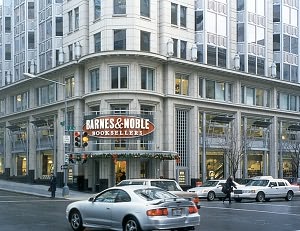
Is Apple Considering Buying & Then Gutting, Skinning & Leaving To Rot Nation’s Largest Remaining Bookstore?


Apparently Steve Jobs and Apple hate Amazon almost as much as Borders did and Barnes & Noble still does.

Even though iPads are still selling well, people are mostly reading books on them with the Kindle app and no one is really buying or reading much of anything from/with iBooks (I assume that is the cutesy name they picked for this particular product; certainly, I am too lazy to look it up and be certain).

In classic Silicon Valley fashion, the folks over at Apple are considering solving this problem by buying a competitor to the Kindle, namely the Nook. And they will buy the Nook by… buying Barnes & Noble.

I wish I was obscenely wealthy and could solve my problems this way. Then I could solve the parking problem on my street by buying the street from the city.

Of course, in this scenario (which is still purely hypothesis and rumor), Apple isn’t really interested in managing bookstores. Maybe some stay open. Maybe none do. Certainly, the best locations get changed into glossy, cold Apple stores.

All bookstores are, in some fashion, repositories for some portion of our world’s knowledge and culture. That portion, as a percentage of the whole, is insignificant, but that portion is also hugely significant as a percentage of the means of dissemination. The same also applies, of course, to libraries.

To see such  a comforting and inviting repository disappear to be replaced with something of less cultural importance is sad.

To see hundreds of them replaced with stores that sell consumer techno porn is not just sad, but bordering on the immoral. It calls for priests, ministers, rabbis, monks, and lamas to thunder invective down from the pulpit.

God, I hope this isn’t true or doesn’t come to pass.

Apple Getting Tough On E-Book Shops


Apple’s modus operandi has always been to funnel all transactions taking place on their mobile devices (iPods, iPhones, and iPads) through their own merchant account.

This has been nothing but distressing to every other seller, especially e-bookstores and periodicals. It’s not just about the money and the cut Apple takes. It’s also about Apple holding on to the data acquired – so Amazon can’t mine the data acquired through your purchases through apple for their own marketing (though Apple can and does use that data).

So, virtually every major e-book retailer has changed their iPhone and iPad app so that you can’t purchase directly. This includes the Kindle, Nook, and Kobo. The GoogleBooks app is just gone.

By changing the way their app works, they will lose some spur of the moment sales, but will be able to keep the data and not pay Apple a middleman fee.

Vintage Typewriters Are In Style Again


So says this article.

Me? I say damn straight they are!

How to Make a Book


Those were the days, weren’t they?

Making  Books Is Fun

A Vending Machine for Books


If I had any skills as a mechanic or craftsman, I would build this truly awesome contraption.

More About Literary Criticism


This article provides a nice addition to the discussion I referenced here.