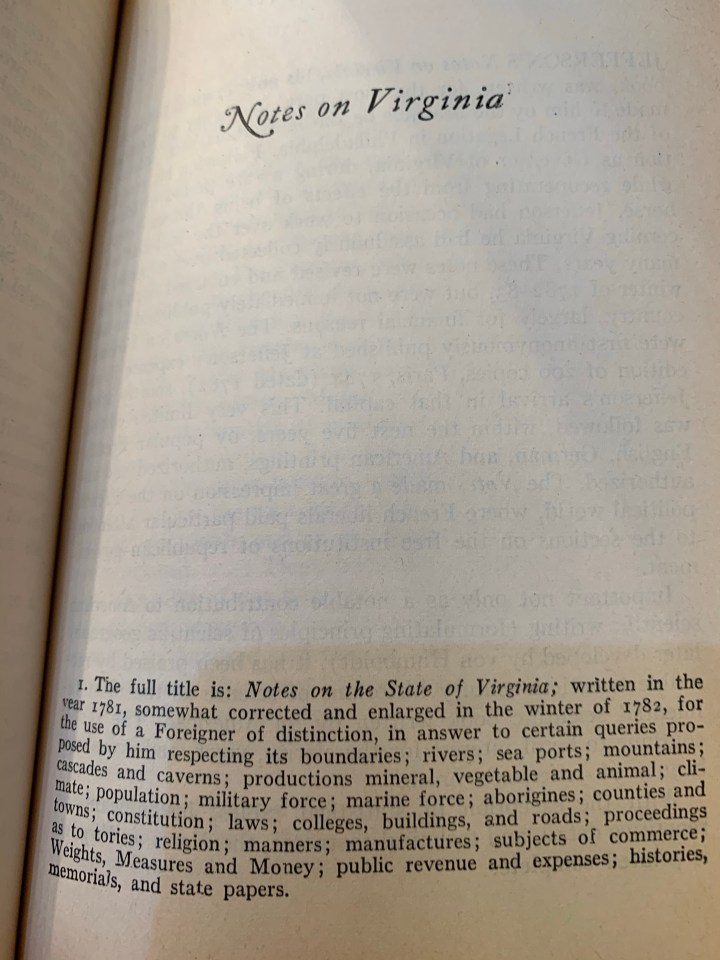
Notes On Virginia


You can see Jefferson’s regular topics and conceits clearly here. A chapter on religion is mainly about the religious freedom he so assiduously (and successfully; he wrote the statute) championed in Virginia. On education, it reflect the inadequacy of both the physical and curricular structure of William & Mary, then the state’s only college; arguments no doubt in support of his quest to establish the University of Virginia at the base of his mountain. You see Jefferson the amateur scientist (and a fascinating digression into some amateur archaeology that he undertook on a Native American burial mound.

On manufacturing, his disdain for large scale production is clear (despite the fact that very nearly his only profitable venture was a nail factory he built on his lands). It feels a little naive, to disdain creating finished goods here, beyond basic items, but it fits with his pastoral/agricultural republicanism. Like Socrates, he seems to think smaller polities are better.

On race… the less said the better. He was at a point where his views were evolving and not for the better. He is open to the idea that the native peoples could achieve a cultural status close to whites, but that “generosity” only reminds the modern reader of the anti-black racism running through his brain.

Takeaway quote (from the religion section):

It is error alone which needs the support of government. Truth can stand by itself.

And you know what? In this day, his vigorous, anthropological critique of religious oppression may seem commonsensical today, in the eighteenth century it was far more daring and outre.

Doesn’t make up for the racism, though.
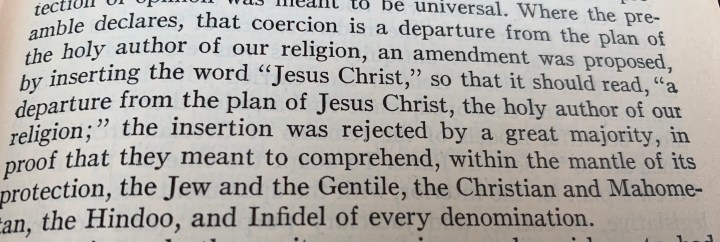
Religious Freedom


From Thomas Jefferson’s Autobiography:

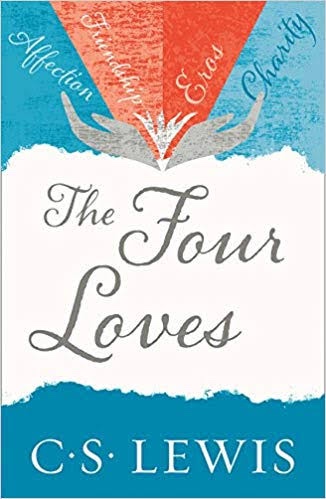
‘The Four Loves’ By C.S. Lewis


I bought this because I had recently read a book about the Inklings and because Solid State Books has a wonderful selection near the bar (yes, they have a bar) on the philosophy shelves. Read more

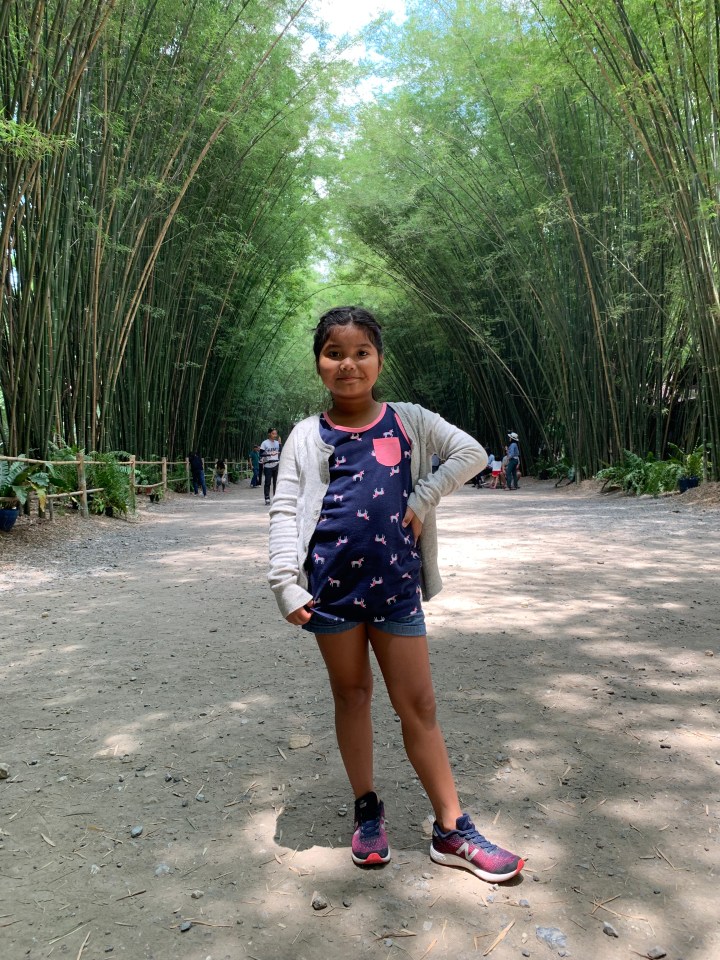
Wat Chulabhorn Wararam


Famous for this bamboo shaded path, it was very peaceful. The more so for being well outside of Bangkok.

And while I didn’t take a picture because it seemed disrespectful, I saw my first monk smoking a cigarette.

A Touch Of Zen


No, not the classic wuxia movie, but this recreation of a Tibetan Buddhist shrine. I spoke to one of the security guard’s who said that she transferred to the Asian Art Museum just because she wanted the tranquility that rooms like this offered.

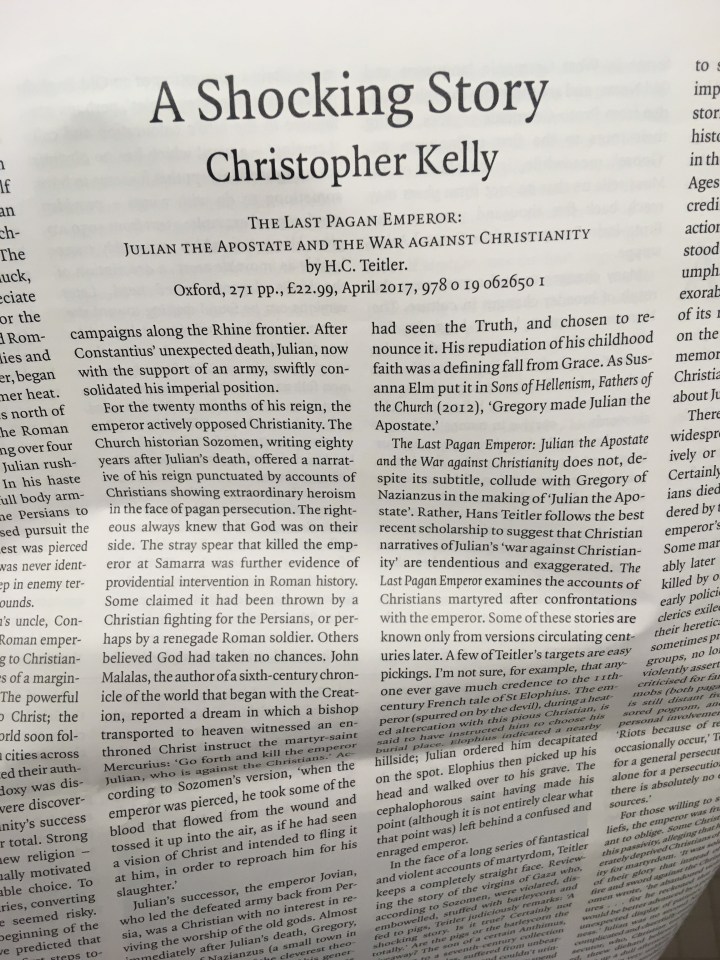
Julian The Apostate


Of course, this article from LRB drew me because of Gore Vidal’s novel, Julian. And this review, while never mentioning the novel (an odd oversight, I thought, even if you are not a Gore fan), suggests that the novel’s history is t bad.
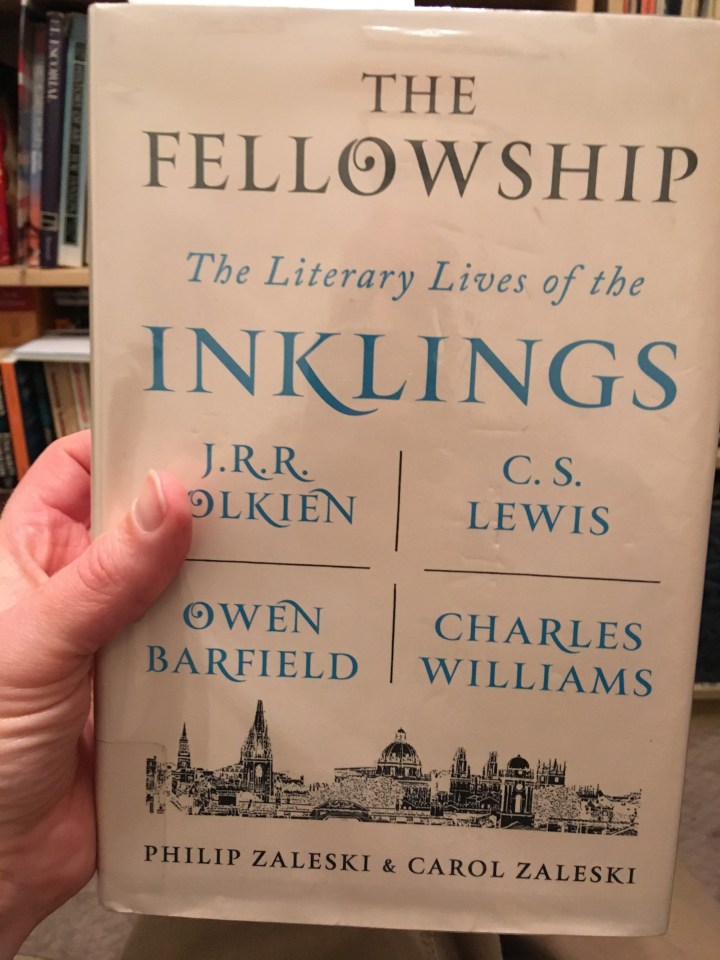
The Fellowship: The Literary Lives Of The Inklings


This is a somewhat half hearted effort to convince the reader that Barfield and Williams are at least half as important as Lewis and Tolkien, undermined by the authors’ own apparent lack of belief in that aspect of the project and by a consensus of opinion which they seem disinclined to challenge.

Towards the end, they set up poor Barfield, by describing his intent to meet the challenge laid down by his peers’ successes and to write his magnum opus. It’s a big set up, narratively, but ends with the admission that few liked it and barely more than that even noticed it was written.

Structurally, they probably could have just focused on Lewis and Tolkien and then included a wider variety of other Inklings.

But, I learned a lot about them and it was interesting, because I like Tolkien and Lewis. I like ’em a lot.

The Zaleskis, without becoming prurient or even mentioning it again, makes a good argument that Lewis and Mrs. Moore were having a sexual affair, which convinced me. It doesn’t change my opinion of him, it’s merely nice to have some resolution, in my mind, on the matter.

Likewise, I had not realized just how devoutly Catholic Tolkien was nor how important it was to his Middle Earth novels (he went to mass daily for most of his life).

But… I can’t help but be a little disappointed. I had been hoping to learn about another Bloomsbury group or another Transcendentalist circle or another Paris in the twenties, instead, learned about a group of intelligent and interesting academics, two of whom happened to become very, very famous and were very important writers. And I put the book feeling that the authors didn’t really like the works of Lewis and Tolkien all that much, which feels almost like a personal insult to one such as I, raised on Narnia and Middle Earth (though they seemed to like two lesser read Tolkienalia, Farmer Giles of Ham and The Smith of Wooton Major, both of which I loved and read over and over again as a child).

The Brightened Mind


For the life of me, I can’t remember what possessed me to put this book on hold. The best guess I have is because I read it was about Thai Buddhism. But, while the author appears to be a convert to that practice, it’s really just another, new age-y book about mindfulness and meditation for the keenly felt stress of being white and having money in a country that values both those qualities immensely (and where both those qualities are deeply intertwined).

Meh.

Poetry East


I just finished reading the latest copy of Poetry East, one of my favorite poetry magazines.

One could criticize it by saying that it publishes too little work by new and emerging poets and too many by dead poets (like, Shelley levels of dead). But when you read it… well, it’s hard to criticize such a well put together publication with so much great poetry and beautiful (if not original) artwork.

This one (actually from Autumn 2017) features Carvaggio paired with passages from the Gospels (do you consider that poetry?). Ovid and Bernini. Facing pages with the Italian and English translations of Petrarch. Selections from American writers who visited Rome. English writers (the earlier mentioned Shelley, for example).

And yes, some new poetry. As part of three short poems collectively entitled Storyflowers, Suzanne Rhodenbaugh included this small gem, called Iris:

Once I was all lips and tongue.
Now I am a fist.

Can’t wait until the next issue.

DC Artist Anne Truitt


Ok. I hadn’t actually heard of her until I read a (positive) review of the exhibit in the Washington Post. But I did go see her in the tower gallery at the East Wing of the National of Art. And I liked her.

It helps that she was a DC artist. Not just someone from DC (and technically, she was born in Baltimore) who then moved away, but someone who lived and worked in DC for most of her career. Thank you. We are an artsy city and unless your name is New York or Paris, we can probably kick your butt, arts-wise.

Her minimalist work, spaced out in the large, high ceilinged, and vaguely trapezoidal gallery, gave the space the feeling of a secular temple (maybe like the Rothko Chapel, to which I’ve never been). Which made it so disappointing that there was only one small bench, set off to the side were you really couldn’t see much of the art very well. This exhibit was just begging for a couple of rows of pews, where people could pray or meditate in a setting that really called for an appreciation of art as a spiritual practice.