National Poetry Day


Thursday, October 7th is National Poetry Day.

Please, please remember to celebrate it, even though it is, technically, an English holiday.

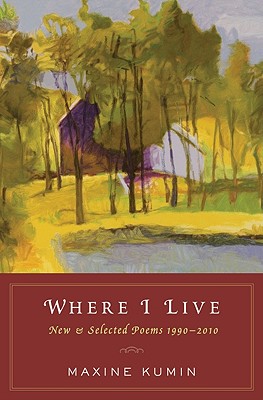
I intend to listen to Maxine Kumin read poetry on Thursday at the famed Politics & Prose Bookstore in Washington, DC (well known to geeks like myself who actually watch  BookTV on C-SPAN2’s weekends).

Banned Books Weeks


September 25-October 2, 2010 is Banned Books Week (BBW).

I hope you’re celebrating by reading Howl or A Farewell to Arms or Huckleberry Finn or Ulysses or The Interpretation of Dreams or Madame Bovary or The Flowers of Evil or A Season in Hell or The Divine Comedy or The Prince or The Communist Manifesto or Naked Lunch or…

Well, you get the point.

Politics and Literary Movements


Obviously, some literary movements are intrinsically tied up with politics – the anarchical writings of folks like Vaclav Havel, whose writings were part of the long history of the literature of resistance movements.

But beyond these more overtly political movements, are literary movements and schools inherently political? One thinks of Camus – a leftist, to be sure, and a member of the Resistance to boot, but also one who resisted many kinds of politicization.

When we talk about modernism or post-modernism or whatever being “right,” “left,” “conservative,” or “progressive,” are we saying anything of value at all?

Is Modernism Sick?


I am not talking about some particular strain of post-modernist thought, but literally about people who don’t like modernism.

While reading Scarriet the other day, I saw Alan Cordle’s posting on modernism. He posits a couple of points – that the major figures of modernism (and also post-modernism) are primarily left leaning figures who view themselves as opposed to “late capitalism.” His second point is that this project was always doomed to failure, because modernism is intrinsically wound up with late capitalism.

I found some of the connections he made to be a little tenuous (Ron Silliman as a modernist? Post-modernism and modernism just lumped together?). Certainly, I don’t see modernism as inherently conservative (though I am very aware of the conservative trends running through post-modernism).

But what really got me thinking was his conclusion: “Centuries hence, Modernist art and poetry will be seen as sick, not great.”

He hedge his bets, by ending with a reference to Mann: ”

Of course, most of believe, without realizing it, what Thomas Mann told us: that artis sick, and therefore, yes, poetry like “The Waste Land” is a triumph. For now.”

Is modernism sick? I can buy, for example, The Waste Land as representing a sort of diseased and decadent sensibility (though I don’t mean that in any negative sense – Hamlet exhibits a diseased wit, for example).

Is modernism inhuman? Worse – is it dehumanizing?

That is the implication of Cordle’s accusation.

The whole discussion brings up all the nasty feelings inherent in appreciating the work of often unsavory people – Heidegger on account of his support of the Nazis; Pound for his anti-semitism and fascism; Hemingway for his misogynist streak; Eliot for his anti-semitism (anti-semitism seems to be a trend – linked perhaps to the relative importance of Jewish writers and artists to modernism?).

Yevgeny Yevtushenko


I met Yevgeny Yevtushenko in the spring in 1993. A local poet (this was in Saint Petersburg, Florida) with a Hemingway beard called Guy (whose last name escapes me) had some how managed to bring him to the University of South Florida for a reading.

Yevtushenko legendarily used to fill football (read:soccer) stadiums in the former Soviet Union for his readings of poems that spread across the nation, passed around in samizdats (according to the Cape Cod Times, he brought in 42,000 at a reading in Russia last week – but I have also read that the days of Russian poets as rock stars may be at or, at least, nearing an end).

His poem, Babi Yar, is also the text for the vocals of Dmitry Shostakovich’s 13th Symphony.

I got to read some of my poems to the crowd (which was embarrassingly small – perhaps 50 people – for an appearance by a such a renowned figure of world literature). I won’t say that I was very well received – but, give me a break – I was eighteen. Unless your last name is Keats, chances are, you weren’t writing much poetry that was any good before you were twenty-five and your best stuff probably didn’t come until you were at least thirty-five.

Despite my personal failings, Yevtushenko himself was unfailingly polite and enthusiastic, reading and speaking with great gusto. I think he was even hitting on another poet of my acquaintance, named April (again – I can’t remember her last name).

A little older now, I understand that Yevtushenko’s name is not universally beloved and that maybe he was not always the rebel he made himself out to be in the eyes of the state. But I also understand that I once stood next to one of the last poet-rock stars.

Young Men’s Books


Young men should read certain books. They should read certain books because they are part of becoming a well educated and critical thinker. They should also read certain books because, when they are older, should they try to pick them up, having not been exposed to them in their youth, they will find that the moment has passed and they are no long capable of appreciating it.

Catcher in the Rye is an obvious example. Salinger’s novel has much to sustain the older reader, but true love, in this case, depends on a certain youth.

Lawrence Durrell’s Justine (as opposed the Marquis de Sade’s) is another. The lush language is ironically overwrought, but the initial love I felt for it emerged from the sensuous language. I love it now for other reasons (though I have found the succeeding volumes of the Alexandria Quartet to progressively disappoint in most ways), but would not had the first stirrings of love not emerged as a young man.

All of this goes towards a sort of backhanded apologia for one of the most deservedly derided writers of the twentieth century – one whose pernicious influence keeps reappearing. I am speaking of Ayn Rand’s The Fountainhead and Atlas Shrugged.

The characters are static bits of cardboard, mouthpieces for straw men, forced ideologies, and generally for round pegs and square holes.

But, I can also see how a young man (I don’t pretend to speak for or understand young women) could fall under its spell.

Especially The Fountainhead. Underneath the poorly wrought Austrian school of economics is a story about an artist striving to achieve his vision. Of course, underneath the story of a struggling artist is a steaming pile of crap. So it’s the heartwarming story of a struggling artist sandwiched between crappy writing and the right wing political economies of pre-war Germans.

The attraction of Atlas Shrugged is more difficult for me to comprehend. The failure of so many to see through the cut out figures and shameless straw men of the novel represents a general failure of critical thinking, but… I can see a young man, who sees himself as destined or desiring more from life, pulling out of the novel a vision of lone idealism – the sort that is very attractive to an alienated youth.

The Dying of Christopher Hitchens


I don’t know what I think about Christopher Hitchens. And I suspect that a lot of young, left-leaning intellectuals feel that way.

He still sometimes describes  himself as a “soixante-huitard” and life a revolutionary-cum-public intellectual is one any would be poet worth his or her salt aspires.

But…

The whole Iraq war thing.

And it is clear that he welcomes my feelings of discomfort – which are mixture of disgust, a sense of betrayal, and raw envy. This is also compounded by my own Catholic faith and his own (and my once) strongly felt atheism.

I also wonder if Hitchens is not the Arthur Koestler of the those generations who came of age after Stalin? Will Hitchens, like Koestler, fade into a sort of gentle obscurity as the wars he gave his life over to cease to have meaning? Not just the Iraq war, but his polemics on such ultimately ephemeral figures as Mother Theresa and and President Bill Clinton. Which of his writings will survive?

My Aunt Millie gave me a copy of Letters to a Young Contrarian one Christmas. This seems to me to be the most likely to survive, though I could not take much of his advice. And perhaps, because I could not, it is not just envy and betrayal, but also shame he inspires.

But don’t we also want him to feel ashamed, too?

Anyway.

He is dying. His rakish hair is gone, but he still has the insouciance of a classic bad boy intellectual.

I don’t know how I should feel. In a strange way, I am reminded of the way I did not know what to feel when Hunter S. Thompson died. He was a larger than life figure from my adolescence I had outgrown by the time of his death.

That’s all. Except that maybe I’ll re-read Hitchens’ Letters.

The Cantos


A local bookstore was going out of business and what with prices being slashed on everything, I took the opportunity to pick up a copy of Ezra Pound’s Cantos (also Anne Carson’s Nox).

I mentioned Pound during my review of cummings – though I failed to write how deeply (yet also superficially) Pound influenced me and my writing.

Deeply in that reading Pound for the first time as a teenager was like a bag of bricks falling from the clear blue sky and cracking me on head – staggering me and forcing me to look up and ask the question, “Where the hell did that come from?”

And where did it come from? Well, as Hamlet said, “There are more things on heaven and earth than are dreamt of in your philosophy, Horatio.” My literary world was mostly bounded by Poe and by a large collection of pulpy science fiction and fantasy writers (not dismiss those – I am currently going through a big of personal archaeology as I actively work to rediscover those writers). Pound opened my eyes and showed me the way to this stunning, erudite place – also known as High Modernism – that is still one of my favorite temples.

But my appreciation was also superficial. It was actually his earlier, Imagist poems that had so struck me. But his magisterial work – The Cantos – was still mostly unknown to me. In truth, only now, for the first time, am I systematically reading through this massive poem. Before, I was, as much as anything, struck by the idea of Ezra Pound.

And certainly, my idea of Pound glosses over his the reactionary, right-wing political sentiments that caused him to side with the Fascists in World War II. In that vein, let me admit openly, I do not know what one should do about his politics – his odious, anti-Semitic remarks – anymore than I know how exactly to read Martin Heidegger.

Right now, I am only some 20 pages into the poem. There’s a lot more to go. All I can say, besides commenting on how delicious the language sounds and feels, is that Tiresias (the blind, prophet who lived both as a man and – for seven years – as a woman), who featured so prominently in the heavily edited by Pound final draft of The Wasteland) does not appear in nearly enough contemporary poetry (paging Anne Carson!).